Хочете будувати кар’єру в Data Science та AI? Vodafone Big Data Lab відкриває новий набір —>
Марія БровінськаWar
24 September 2026, 12:36
2026-09-24
From domain registrar to the largest hosting company in Ukraine: the story of MiroHost, which is currently out of business due to the destruction of the data center in Kyiv by the Russians
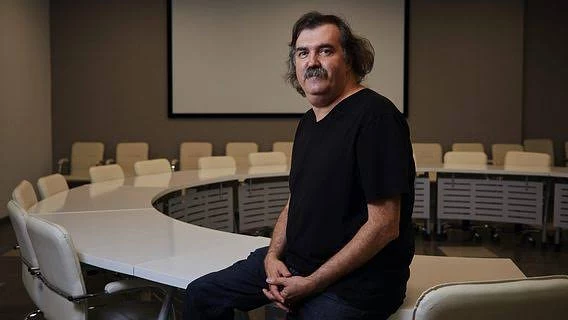
On September 23, 2026, a Russian attack on Kyiv destroyed a data center that housed the facilities of one of Ukraine’s largest hosting providers —MiroHost. The founder of the company and head of the Internet Invest holding, Oleksandr Olshansky, told dev.ua that there are no restoration deadlines yet, and only the Ukrainian location was affected: about 90–95% of MiroHost clients are served abroad, and services are working normally for them.
We tell you how a company that started as a side project of a domain name registrar grew into one of the largest hosting providers in the country over 20+ years.
On September 23, 2026, a Russian attack on Kyiv destroyed a data center that housed the facilities of one of Ukraine’s largest hosting providers —MiroHost. The founder of the company and head of the Internet Invest holding, Oleksandr Olshansky, told dev.ua that there are no restoration deadlines yet, and only the Ukrainian location was affected: about 90–95% of MiroHost clients are served abroad, and services are working normally for them.
We tell you how a company that started as a side project of a domain name registrar grew into one of the largest hosting providers in the country over 20+ years.
Beginning: 2001 and the Internet Invest holding company
MiroHost is a project of Kyiv entrepreneur Oleksandr Olshansky, who has been working in the Ukrainian Internet business since 1999 and was at the origins of the creation of the Ukrainian traffic exchange network UA-IX. According to the company’s official materials, Internet Invest LLC (trademarks Imena.UA and Mirohost.net) was founded in 2001. Ukrainian Wikipedia, on the other hand, records 2003 as the moment when Olshansky headed the Internet Invest holding, which included Imena.UA and MiroHost.
Olshansky himself explained this discrepancy in an interview as follows: in 2003, he did not establish a hosting and domain registrar from scratch, but bought out and merged two existing small companies — hosting provider MiroHost and domain registrar Imena.UA. At that time, they had eight people working for two, and income from domain registration was about $6,000 per month.
"My friends thought I was crazy. However, I was buying time. Starting a new business from scratch, I would spend at least two or three years developing it," Olshansky recalled in an interview.
Imena.UA and MiroHost became the holding’s two core products — the former still remains the largest player in the domain registration market in Ukraine.
Later, other projects were added to Internet Invest: the UBS banner exchange network (since 2006), the Mail.UA mail service, and the PingWin advertising agency (both since 2007).
Own data center and growth
In 2008, MiroHost launched a new data center in Kyiv — at that time equipped with 1 MW uninterruptible power supply systems and precision air conditioning. According to the technical specifications published by the company later, the data center occupied 230 sq. m, had a capacity for 10,000 units of equipment, a total channel bandwidth of 180 Gbps (including 60 Gbps international channels) and three diesel generators for backup power, ensuring the stated availability level of 99,9%.
MiroHost’s server infrastructure used Intel Xeon-based platforms, and network equipment from Juniper Networks, Cisco Systems, and Extreme Networks. The company developed the eVPS (Elastic Virtual Private Server) line, a virtualization technology that automatically connects additional capacity during peak loads.
Before the full-scale invasion, MiroHost described itself as the largest hosting provider in Ukraine, with a client base that, by some estimates, exceeded 250,000 accounts, and a user geography that extended far beyond the country’s borders — including Turkey, Germany, Poland, and (before the war) Russia.
In parallel with the development of MiroHost, Oleksandr Olshansky became one of the prominent figures of Ukrainian Internet business: he headed the Committee on E-Commerce of the Internet Association of Ukraine, was a co-founder of the annual IT conference iForum (held since 2009), and was recognized as the Person of the Year in the Ukrainian Internet in 2010, 2012, and 2013 by InternetUA and AIN.ua.
Hosting during war
The full-scale invasion was a serious test for the entire hosting and data center industry in Ukraine — companies had to ensure the operation of servers during massive shelling of energy infrastructure and long blackouts. According to industry surveys, some Ukrainian data centers in 2022 kept downtown at a level of a few hours throughout the year thanks to powerful backup generators and personnel who refueled fuel tanks under shelling. MiroHost, according to available open data, continued to operate during 2022–2025 without reports of large-scale destruction of infrastructure.
This changed during the massive attack on Kyiv on September 23, 2026. The data center where MiroHost facilities were located was completely destroyed. The company’s founder, Oleksandr Olshansky, confirmed this to dev.ua, clarifying that this concerns exclusively Ukrainian infrastructure — foreign facilities, where the vast majority of the company’s clients work, were not affected and continue to serve users as usual. At the moment, the company cannot even name an approximate time for the restoration of the Ukrainian location.
The attack also affected other players in the hosting and communications market in Kyiv: the Cityhost data center was affected (part of the equipment was destroyed, the team is deploying backups on foreign servers), as well as the "Pavutina" networks, UTELS, KyivLink, Crazy Network, and the Etherlink Internet provider node, which temporarily left some Kyiv residents and businesses in the city center without access to the network.
Olshansky: the data center where MiroHost’s facilities were located was destroyed, so there is currently no recovery time. Foreign infrastructure is operating normally