Хочете будувати кар’єру в Data Science та AI? Vodafone Big Data Lab відкриває новий набір —>
Стас ЮрасовThat's Life
15 September 2025, 09:04
2025-09-15
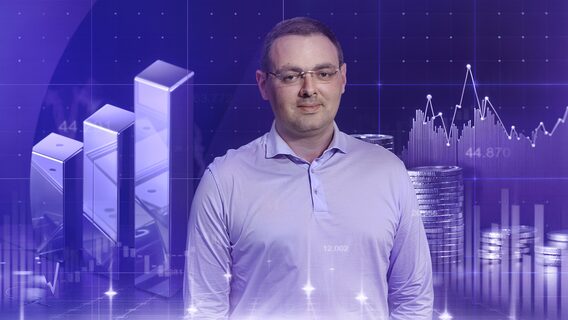
“I believe the war will end, I don’t believe investors will come.” Interview with Dnipro businessman Vyacheslav Mishalov, who manages investments worth a billion hryvnias.
Vyacheslav Mishalov is a Dnipro businessman who managed to get into local politics and become disappointed in this type of activity. He was a deputy of the Dnipro City Council, is a co-founder of one of the largest Internet providers, which has not yet become part of large telecom companies, such as Kyivstar, Vodafone Ukraine or lifecell. Vyacheslav is also well-versed in Internet business. He was once a co-founder of one of the largest Ukrainian portals i.ua, which was later sold to the UMH media holding. Now Mishalov owns a fairly large Internet media outlet — Informator.
Vyacheslav Mishalov is a Dnipro businessman who managed to get into local politics and become disappointed in this type of activity. He was a deputy of the Dnipro City Council, is a co-founder of one of the largest Internet providers, which has not yet become part of large telecom companies, such as Kyivstar, Vodafone Ukraine or lifecell. Vyacheslav is also well-versed in Internet business. He was once a co-founder of one of the largest Ukrainian portals i.ua, which was later sold to the UMH media holding. Now Mishalov owns a fairly large Internet media outlet — Informator.
We talked to Vyacheslav about whether Fregat is being sold now and why, in his opinion, Kyivstar went public on the NASDAQ exchange, discussed the error in the declaration, which indicated that the businessman allegedly owns 18,000 bitcoins. Mishalov admits that he certainly does not have such amounts, but he manages a large package of investments in various businesses, which is estimated at more than one billion hryvnias.
Vyacheslav emphasizes in an interview that «In Ukraine today there is neither piety nor respect for business. And this is a very bad sign.»
So does it make sense to engage in local investments in Ukraine now? What is the government’s position on business? Why do good businessmen never go into politics? And will our country prosper after the war?
Vyacheslav Mishalov answered these and other questions during our conversation.
FRIGATE AND KYIVSTAR
–First of all, I am interested in issues related to IT and telecom. I know that you have been developing the Internet provider «Fregat» for a long time, which is among the top ten providers in the country. I think that today it is even among the top five. Is that true?
— Five, yes.
— Currently, the provider business, at least the large one, is being bought up by the big three players — Kyivstar, Vodafone Ukraine, DVL. Have you also been offered to sell?
— I’ve been saying for a long time that this market is simply screaming that it needs big money, more players. And the first agglomeration has already happened, I guess.
That is, there are clearly a dozen leaders and there are still a thousand small ones.
It makes no sense to buy small ones at all, because their costs and integration are more expensive than their entire networks.
The process that has begun, I believe, will lead to only two or three major players remaining, and, as in any civilized country.
And the price will increase. Because the quality is good. For example, I am now in Dubai and the quality of the Internet here is worse. And the price for it is 10 or 15 times what we pay in Ukraine.
From the point of view of selling «Fregat»: this is a business, and any business always sells and buys, otherwise it is not a business.
I think the next wave of piles will begin at the moment when some horizon of stability appears.
We lived with «Fregat» for many years and understand that the Internet is needed under bombings, without electricity and so on. That is, the Internet is needed more than water. If they give me water for 2 hours a day, then I will live peacefully. If they give me Internet for 2 hours a day, then it is already very uncomfortable.
We are not ready to enter this market at any dumping price, because for us this is a clear business. We have been building it since the days of Dial-up.
— Has anyone approached you with a purchase offer?
— Yes.
— And who exactly?
— I think it’s incorrect to name specific people or deadlines now. But such conversations are definitely taking place, that’s obvious. And I think that in the near future someone will move from discussions to concrete actions — then the wider public will learn about it.
— How do you evaluate the company today?
— Like a good business: successful, without loans, stable, growing, with its own market share, a strong technological base and team. This is an expensive asset. We are talking about tens of millions.
— So there is no exact estimate?
— There are mid-market approaches, but today they do not work in Ukraine due to the war and all the factors related to it. We are in place, we continue to develop and invest. Some of the investments had to be made under duress. If it were not for the war, we would not have done this. For example, during the war alone, we spent about UAH 100 million on network modernization, UPSs, backup and stabilization of work. This affected not the quality of the service, but its stability and readiness for any scenarios.
— How many subscribers do you have now?
— Paid a little over 300,000.
— Who are the company’s shareholders today?
— There are several legal entities, the structure corresponds to the register. I have an option — the right to buy out the company at a previously agreed price. A few years ago we changed the ownership structure a little, but I don’t remember the details.
— Did new minority investors appear during the war?
— No. And we don’t buy small ones ourselves, and we don’t plan to integrate anyone. It’s like asking McDonald’s to cook spaghetti: technically possible, but illogical. It also makes no sense for us to buy small companies with a «crooked» topology. Because rebuilding it to our standards is long, expensive, and painful for customers. Practice shows that such deals do not pay off.
— Are you currently rebuilding the network to optical?
— Yes. This is a constant process for any large operator. Today it is PON, in two or three years it may be something else. The main thing is that the client is as close as possible to the optics, without unnecessary losses, with the right rings and redundancy. This is an endless process: there is no «game over» or level 80 here.
— Are you the largest provider on the Dnipro market?
— Yes, and we are definitely number one in the region too.
— Have most subscribers already switched to PON?
— Yes, more than half. We are building new nodes every day, connecting houses and entrances. We are using the so-called «square-nest» method to completely switch to optics in two years. One year has already passed, so the plan is practically at the equator.
I used to know very well where we had quality problems. Today I can say: I really like the quality of our service.
— How do you assess the recent listing of the telecom market leader Kyivstar on the NASDAQ exchange?
— I see this as a way to protect the company from nationalization. Because no one will nationalize a listed company there, or impose sanctions.
— Do you think this is a forced step?
— Forced, yes. And I think they let me go for nothing.
— What, should it have been nationalized?
Yes, nationalize and sell it after the war. Because Kyivstar is a strategic enterprise that has fantastic information, data about what is happening inside the country.
And no matter how much they assure me that everything is clear there, everything is checked, but it’s ridiculous. These are guys who know where, who, when, and with whom they are communicating. You don’t even have to listen.
Where, when some phones are lit, phones at some points. That is, someone who can monitor this traffic (and for this you don’t need much. And you don’t need a complex access system, and you don’t need a lot of people) and who can have backdoors there — it’s impossible to calculate.
Therefore, my opinion is that this is very bad for warring Ukraine.
— Why do you think they didn’t sell it? Didn’t they nationalize the company? There were attempts.
I don’t want to voice conspiracy theories. The score on the scoreboard: they didn’t sell — and they didn’t sell. There was enough time. Listen, you can buy it. This is a good company. Kyivstar is one of the best companies in the country, in fact, in terms of its position, in terms of the team, in terms of financial indicators. This is a wonderful, very successful team and company.
And so, it was necessary to invite the first three auditors to evaluate it in a humane way, take the arithmetic average, write out a state debt for it, collect bonds for it, calmly pay, do a technical audit and today sit calmly and not think about it. Because this information, which Kyivstar possesses today, is much more of a state secret than that of many state institutions, even military ones.
Because Kyivstar knows about them all. And considering today’s pace and speed of information analysis, remember, there was a good saying: «give me a fulcrum of a lever, I will turn the whole world upside down.» So, whoever has access to Kyivstar’s primary information owns a fulcrum. Owning Kyivstar is cooler than cracking the Enigma during World War II.
CRYPT AND MEDIA
— It was reported that you allegedly declared 18,000 bitcoins in 2020. Is this true?
— Unfortunately, no. It was a mechanical error by the person who helped fill out the declaration. I respect cryptocurrencies, but 18,000 BTC is fantastic. If that were the case, I wouldn’t mind (smiles).
— So you still have investments in cryptocurrency?
— Yes, there are significant ones. But I don’t want to give exact numbers — it’s a security issue. I have a good attitude towards crypto and believe in its future. I think that cryptocurrencies and related technologies, along with artificial intelligence, will change the world very quickly in the coming years.
— In what way?
We are witnessing numerous transformations, as recently both cryptocurrencies and the technologies underlying them, including artificial intelligence, have demonstrated the potential to fundamentally change the world. At some point, these processes will gain such momentum that society will be amazed by the speed of their deployment.
The first question that arises in this context is the need for intermediaries for large public companies — primarily exchanges. If companies do not feel a shortage of marketing opportunities, then why do they need an additional intermediary chain? A share as a financial instrument today exists only in the form of a digital record in a register — no one has owned paper certificates for a long time. And yet someone continues to monetize the very fact of maintaining these registers.
But smart contracts and decentralized networks like Ethereum already exist that can provide the same functionality without intermediaries. In such a paradigm, the logical question arises: why maintain exchanges and custodian institutions that mostly just accumulate profits by exploiting customers on both sides of the market?
— What IT businesses do you invest in?
— Mostly in fintech. For example, the company «There is Money» in Ukraine.
— Is this microcredit?
— Yes, from the client’s point of view, it’s loans. But in reality, it’s a high-tech IT product. It’s impossible to serve over a million clients manually, by phone. There are more than 1.2 million unique users in the Ye Groshi database (and revenue for 2024 is UAH 1.6 billion — Ed.).
— Is this entirely your company?
— No, I am not a supporter of sole ownership at all (through JSC «ZNVKIF «FORTRESS» Mishalov owns a minority stake of 11% in FC «E Groshi» — Ed.). I see myself as an investor, not an operations manager. In large companies, there should be a balance between shareholders.
— Who is the majority voter in «There is Money»?
— Everything is visible in the register (majority shareholder is Violeta Polyanska). This is a regulated company, with a transparent structure, financial reporting, and taxes.
— Yes, a long time ago (in 2011 — Ed.). This was before the sale of UMH (to Serhiy Kurchenko in 2013 — Ed.). I had a share, I sold it and received tens of millions. Then UMH was resold even more expensively. That’s how business should work.
It’s a mystery to me why this company eventually ceased to be the clear market leader. They had a fantastic set of assets and a strong team.
— Do you mean UMH?
— Yes.
— Well… I think everything is pretty obvious there. When Serhiy Kurchenko came, most of the professional journalists left, and only those who were ready to work for money that didn’t smell bad remained. Reputation played a key role .
— But they had a powerful IT component: Bigmir, Korrespondent, I.UA, and other online products.
— Are you a co-owner of Informator today?
— Yes, I’m there as an investor. There is a managing partner, Sergey Shishkin.
— Does he live in Dnipro now?
— He is in the Dnipro, yes. And we ourselves are from a collective farm called Dnipro. We love this collective farm.
— Is «Informant» profitable?
— Before the war, yes. Today, advertising is going through the most difficult times. The main thing is to keep the team. A building can be built from scratch, but it is very difficult to rebuild a media team.
— Although there are now media businesses that are feeling quite good. For example, Forbes. Their officially declared revenue is more than 200 million UAH in 2024.
Forbes is a fantastic name that is known all over the world. But, to be honest, «Informant» is not much smaller than Forbes.
— And what was your revenue last year?
— I think it’s better to clarify this with Serhiy, he will tell you more precisely. But if we take into account all our platforms and all sources of income, the amounts are very comparable to Forbes. I don’t want to give the exact figure.
— Is it hundreds of millions of hryvnias, or tens of millions of hryvnias?
— Well, let’s put it this way: two hundred and hundreds, it sounds different, but the order is like this. But Forbes is a brand. It’s a name, it’s a lot of advertising. Everything is completely different. When UMH was still under the «criminal power», I was one of those who promoted the idea of bringing Forbes. The first Forbes website was made by the i.ua team.
— Was this during the time of editor-in-chief Volodymyr Fedorin?
— Yes, exactly under Fedorin. We were engaged in technical development. The site was very similar to Focus at that time, because it ran on the same engine.
— So, your team actually created this site?
— Yes, it was a rotational format. I remember well this first Forbes.ua website.
— What other media assets do you plan to enter or invest in?
— In Ukraine, no. Outside Ukraine, yes. Many Ukrainian teams are already changing jurisdictions to Western ones. Because today in the Ukrainian IT sphere, the best business is helping teams travel, and the tourism business is not mine.
— So you don’t live in Ukraine now?
— No, I live in Ukraine. I just fly often: yesterday (the interview was recorded on September 5) I flew to Dubai, tomorrow I’m going there again for a day.
— How do you move around so freely and no one touches you?
— A father of many children. I recommend: you need to have only three children under the age of 18. I can give instructions on how to do this. Not necessarily from one woman :).
— And what foreign projects do you invest in?
— Mostly in fintech. It can be any successful team with a good product that the market needs. The main thing is to have a strategic investor who understands this segment. It is desirable that he speaks English or Ukrainian.
— Do you have investments in Russian teams?
— No, it won’t. Even though there are strong products and people who have left, I fundamentally don’t want to.
INVESTMENT ATTRACTIVENESS OF THE DNIPR AND ATTITUDE TOWARDS BUSINESS
— I wonder what your assessment of the investment attractiveness of the Dnipro is?
— As a negative. I often visit Dnipro and Kyiv. I live in Dnipro, and in Kyiv, when I am in Ukraine, I spend a few days every week in the capital. But today it is like two different worlds. And in general, I travel around Ukraine a lot. Therefore, the investment attractiveness of Dnipro is negative. Most investors want to leave with investment losses.
Because the front line is getting closer, because the number of shellings is still increasing, because the population and the purchasing power of the population are falling. Because the «white bone», the youth, are trying to leave by any means, at any cost.
And this is exactly what the country is built on: young people, relatively speaking, from 18 to 30 years old — are the most enterprising, the most hardworking, the least lazy, the ones who move everything forward. After that, I consider myself old :).
What will happen in Dnipro — I don’t see the prospects well. In any case, we are not starting all our new investment projects. And we had a fairly large pipeline. We are finishing all previously started projects, modernizations, etc. And for now we have decided to stop and not do anything new.
— Why?
— Because, well, it’s scary. Just scary. And it’s scary both because of the military risks and because of domestic politics. In Ukraine today, there is no piety or respect for business. And this is a very bad sign. Moreover, for any business that creates added value.
— What do you mean when you say there is no respect for business? How does this manifest itself?
— This is manifested in the fact that the system — permitting, law enforcement, and so on — is set against business development. None of the officials has KPIs for how many companies they have opened, how they are growing, what their indicators are. The entire system is built on oppression of business.
— Why is that?
«That’s how we voted. We forged our own happiness.»
— Don’t you think that the impact of the war played a role?
The war has had the effect that the big powers are focused on the war and the international agenda, while all other powers feel no… How to say this correctly?
«Borders? Coasts?»
— Beregov, yes.
Therefore, the situation is absurd. Two years ago, I bought a property from the State Property Fund together with a friend. The State Property Fund canceled the auctions five or six times. We won these auctions five or six times, then they canceled them. Then we went to court. Thank God, the court sided with the healthy side and we went through the first, second, and third instance with the State Property Fund.
— And what next?
— And the court on behalf of Ukraine concluded a purchase and sale agreement with us. The State Property Fund does not sign the act of acceptance and transfer. We went to court, went through the first, second, third instance again. We won everything, that is, we won 6 courts, and before that we won 5 or 6 auctions. And the State Property Fund still has not signed. The head is changing. Although, in a good way, in a stabilized country, someone from the State Property Fund should be in prison.
Imagine how much money they spent with their actions. Public money that you and I paid in taxes.
And they never count it. They think it’s money that just falls on them from the sky. And the fact that behind this money are people, taxes, companies, lawyers, loans, and so on — no.
No one understands how much money and effort we spent on lawyers, two years of frozen money. And there is no accountability.
— What projects are you launching now?
We are now launching an electricity generation project. And the number of permits, licenses of all kinds that we have received, I wrote about it on Instagram, is something like 25. We refused some projects because we were told that you have to pay some big bribes so that we can allow you to build generation in this place.
— Is this the station?
— Small stations. The entire project is about 15 megawatts. Nothing supernatural. But that’s not the point. We refused two locations because they told us: «Are you going to build a generation plant? During the war? But we have this much electricity — wow!» I say: «Well, build it yourself. It’s simple.»
ON THE SOLID FUEL BOILER SCANDAL AND ENTERING POLITICS
— I read about the story of the purchase of 22 solid fuel boilers for schools in 2016, where you — in your status as a deputy of the Dnipro City Council — were accused of allegedly colluding with companies of relatives. Is this true?
— A complete fake. Eight years have passed. Then I had a conflict with the local authorities, the internal affairs. I calmly left the city council, thanked everyone, said goodbye — and never returned there again — never crossed the threshold of the city council again.
— But there were applications, inspections, right?
— Yes, I was checked by all possible authorities, even those that had no authority to do so. Nothing was found, because there was nothing to find. Thank God, no one thought of fabricating anything. These were just the inventions of individual people.
And again, there is no liability for defamation in Ukraine, especially on the part of people who receive salaries from the budget.
— Why then did these accusations appear?
— Because someone wanted a sensation. People love gossip, «the old woman on the bench said.» But there was no real basis. It’s all not worth a damn.
— You left politics. Why? What influenced this?
— I believe that my campaign, even for deputies, even for the city council, is the most useless, senseless waste of time in my life.
— Why did you decide that?
— Because this is not a place for successful businessmen. If I could go back, I would even pay extra to not waste my time. I wasted almost two years of my life and I’m still listening to all sorts of nonsense. I don’t want to at all.
— When you went to the local council, were there any motives?
— Yes, of course. And today they are still in my head. But as I got older, I realized that you can’t be an absolutist and a romantic.
«What were you looking for when you went there? What was your goal?»
— Like any young man, I wanted changes. I thought I had enough strength and energy to implement them. Then I faced reality — and the romanticism passed.
I thought: what am I fighting for? This is definitely not where I want to be, and where I will be effective. Politics is an art, so to speak, a weak fornication: you have to say what the voters want to hear.
— So you didn’t go into politics anymore?
— No, never. I’ve had offers several times, even now someone is fantasizing about a political season in Ukraine. I’ll just watch through my laptop. It’s a different life, different rules, different values. Never again.
ABOUT BUSINESS WITH THE CRIMEAN BUSINESSMAN LEV MYRIMSKY (LAST DECEASED)
— I can also ask about one of your old businesses — «Soviet Mobile Casino» — that was the name of the company. You were a partner there.
— Yes, it was such a business. It has been closed for a long time. This company has not really existed for about eight years. It is an old online casino.
— How did you and Victoria Myrymska meet in it?
— Lev Myrymsky had the share there, he was also a Crimean. This was before 2014. Her husband also had the share. Then her husband died, and she inherited this share in the company, which at that time no longer existed. This is formally legal, she entered into the inheritance rights.
— So, until 2014, you and Myrymsky had a joint business?
— Yes, there were me, Lev Mirymsky, and two other partners — a total of four shareholders.
— How did you meet and start your business?
— I met him in Kyiv, I had an IT party, Lev often went there. He was an investor, he invested his money in the business.
— Did you also invest money?
— Yes, but the business was invented by two other partners. They were minority shareholders, looking for investment. Then they moved to America, the business ended its cycle around 2013.
— Was it a mobile casino?
— Yes, it was a mobile casino before the historical period. Back then, there were no well-thought-out mechanics, it was just classic games: blackjack, baccarat, roulette, random number generator.
We started when it was allowed, then we got banned. There was no way to get a license and no knowledge of how to transfer the business to another jurisdiction.
The design was red and gold, with spikelets, like the old PrivatBank logo. I was not responsible for the naming and design, it’s none of my business.
— And after 2014?
— Myrymsky was mostly in Kyiv, we talked on the phone several times, but there was no longer any joint business.
— How did you remember him?
— As a cheerful man with a good sense of humor.
ABOUT THE FUTURE OF UKRAINE
— What do you currently consider the main direction of your business? What brings in the most money?
— Only investment business. I look at business not as an operations manager of some company, but as a pool of businesses that I own: I analyze indicators, team, development directions and decide where to invest in the near future. At the same time, I diversify risks, I don’t keep all my eggs in one basket.
— What businesses are currently generating the most revenue? Metallurgy, telecom, media?
— My investment fund «Fortress» brings in the most money.
— How much money are you currently managing in investments?
— I think more than a billion hryvnias.
— What is most promising for you in Ukraine now?
— Nothing yet. I’ve stopped and am waiting for the horizon of stability to appear, although I’m always reviewing something.
— Do you think the war will continue in 2026? How will this affect business?
— Bad, like any other business.
— What will happen to business in Ukraine if the war lasts another year or two?
— Business will only get worse. There will be fewer people, more people will leave. And then it won’t even take years to win it all back. Another 3-4 years of such stagnation, and we won’t see a big economic comeback anymore.
— Why is that?
— A missed generation of timely investments.
— So, will we fall behind the world’s development?
— Yes, lag is inevitable.
— Some say that the war will end, and a lot of money will come from investors who will develop Ukrainian projects. Do you believe that?
— I believe that the war will end, I don’t believe that investors will come. This is a virtual entity, I’ve been hearing about investors who are about to come to Ukraine for 20 years.
— So, do you think that Ukraine will not be an El Dorado after the war?
— No, of course not. So why, where would he come from? As long as Ukrainian business is not doing well, Western business will not come.
I’ve said this many times, whether Western or Eastern, it doesn’t matter, investors are cynical creatures. They count money very well.
Everyone who comes to Ukraine today is an investor looking for high returns, relatively speaking, at 100% per annum, they are actually engaged in robbery. No normal global investor will come for 15–20% per annum in hryvnia — they will be eaten by auditors and shareholders.
Have important news to share? Message our Telegram bot
Key events and useful links in our Telegram channel