Олександр КузьменкоGadgets
7 February 2025, 12:48
2025-02-07
Figure AI says it can produce 100,000 humanoid robots in 4 years. They will have the company's own AI, not OpenAI models.
Figure AI announced that it has signed a deal with its second major commercial partner, whose name is being kept secret. Figure AI CEO Brett Adcock said that the deal could allow it to deliver 100,000 humanoid robots over the next four years.
Figure AI announced that it has signed a deal with its second major commercial partner, whose name is being kept secret. Figure AI CEO Brett Adcock said that the deal could allow it to deliver 100,000 humanoid robots over the next four years.
According to the CEO, Figure AI’s new partner is«one of the largest American companies,» which could indicate a large retail chain or a technology company with significant labor needs. Adcock added that it is important for Figure AI to establish deep relationships with large customers, rather than scattering the company’s efforts across many smaller customers. This is reported by Interesting Engineering.
«This gives us the potential for large-scale supply, which will help reduce costs and collect data using artificial intelligence. We believe that both customers can create 100,000 robots within the next four years,» added the CEO of Figure AI.
The company’s first publicly named client is automotive giant BMW, which signed a deal late last year. Figure AI’s new announcement could mark the beginning of a widespread adoption of humanoid robots, especially in large-scale operations such as manufacturing, logistics or healthcare.
Adcock also reiterated Figure AI’s strategy of working in two markets. «We’re focused on two markets: commercial and home,» he said. While the commercial market can encompass distribution centers, factories and other industrial facilities, the home market opens the door for home robots that can assist with tasks ranging from everyday tasks to more specialized roles in healthcare.
What makes Figure AI’s work special?
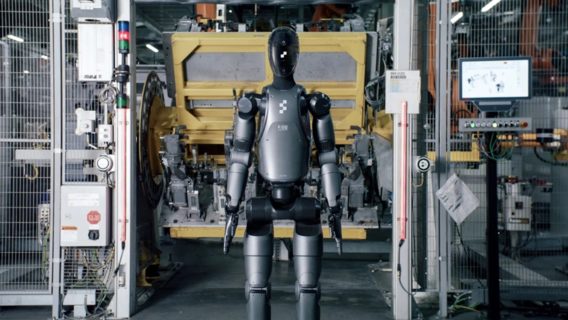
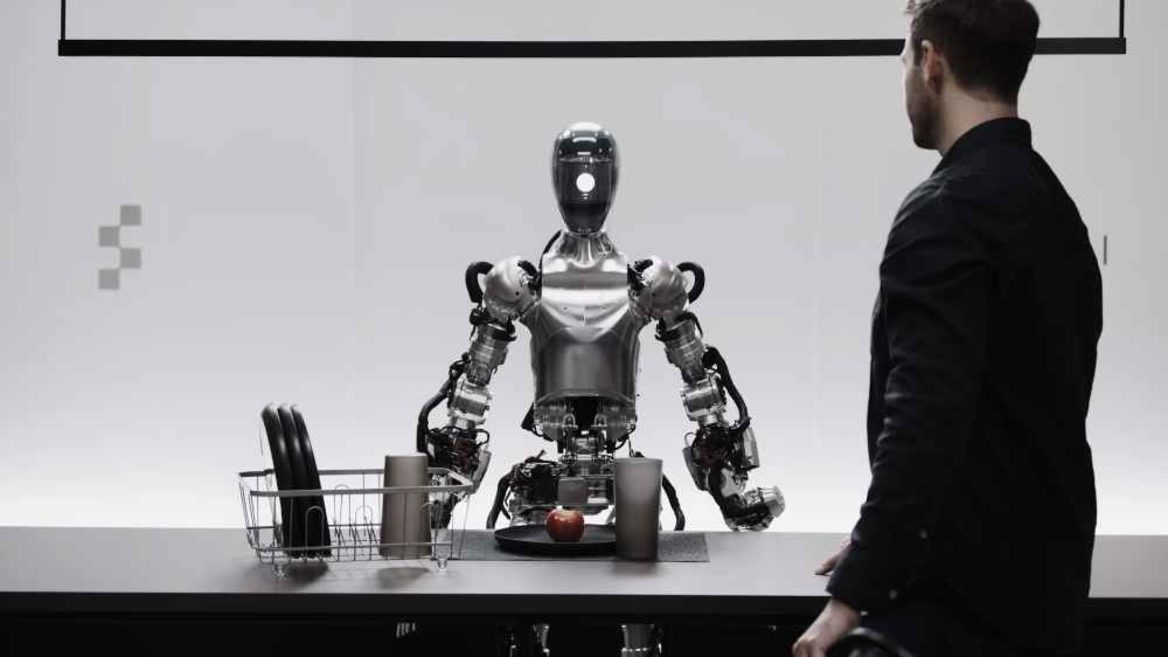
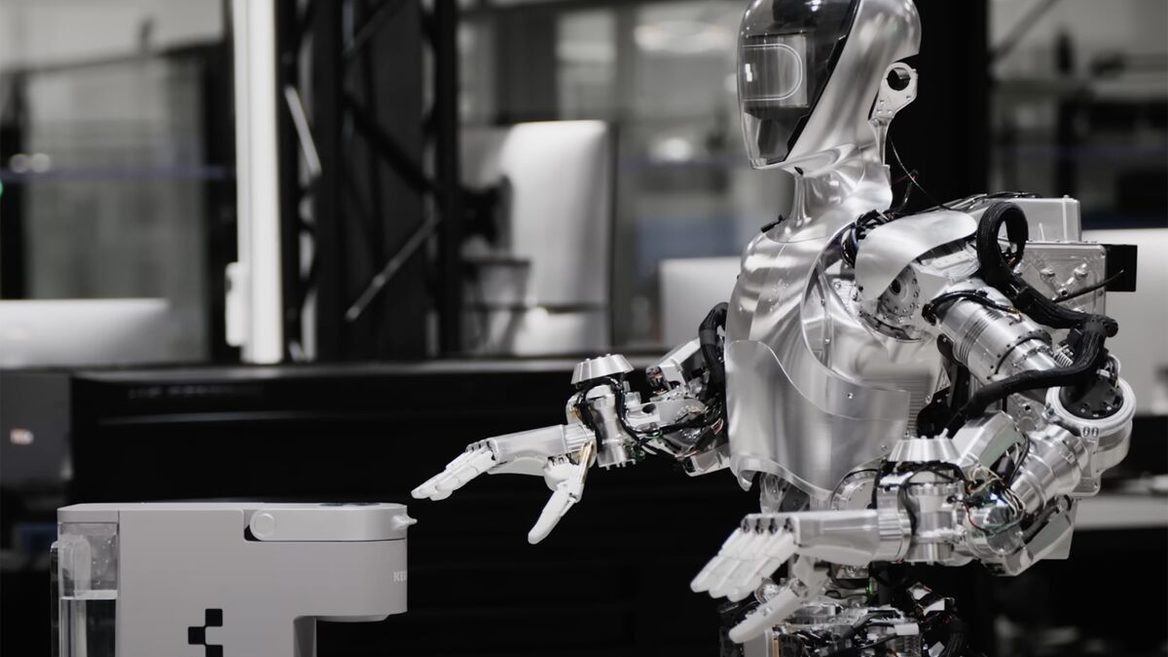
Figure AI is known for its speed in product introductions. The company released its first humanoid, Figure 01, just 31 months after its founding, and later shipped Figure 02 and is already working on Figure 03.
Figure 01, which debuted in January 2024, operated at about 17% of the average human walking speed. Figure 02, the current iteration, reportedly increased that speed sevenfold, moving at 1.2 meters per second. While that’s still a bit slower than a typical human stride, Figure AI is confident that further improvements are inevitable.
An important feature of Figure AI robots is that they rely on artificial intelligence.
«Last week, we successfully ran an end-to-end neural network on a new customer use case. Learning the use case scenario using AI is the only way to go, as heuristics cannot be written», — Adcock said in his updated post.
His company recently announced that it was ending its partnership with OpenAI, opting to rely on its own AI models instead. Previously, Figure AI used OpenAI’s AI to give its robots the ability to understand ordinary language.
Adcock said the main reason for the split was the difficulty of integrating OpenAI’s models with humanoid robotics. OpenAI, known for its expertise in building large-scale AI systems, focuses more on software intelligence than on embodied AI, which involves deploying AI in physical robots.
Adcock emphasized that Figure AI needs a «vertically integrated AI system» designed specifically for humanoid robots, rather than relying on external AI solutions.
«We found that to solve the problem of embodied AI in the real world, we need to vertically integrate robot AI. We can’t outsource AI for the same reason we can’t outsource our hardware,» Adcock said, promising to present the company’s «significant progress» in AI within a month.
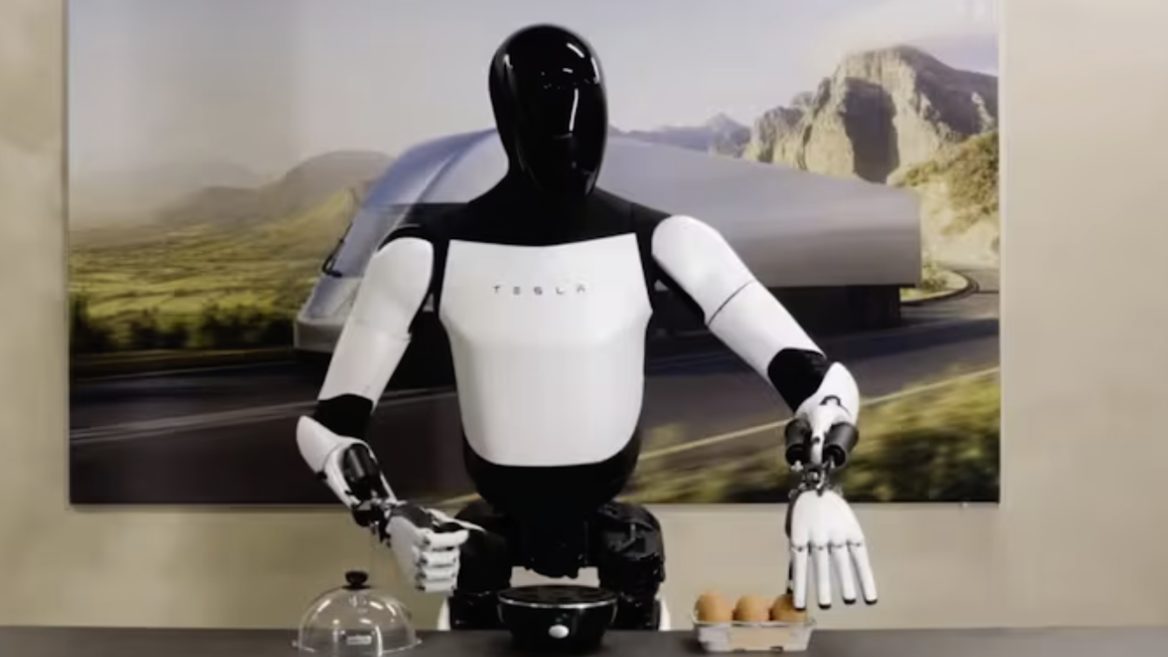
Figure AI is not the only one looking to conquer the nascent humanoid robot market. Players such as Agility Robotics, Tesla’s Optimus project, Unitree, Apptronik, Sanctuary AI, and Agibot are also trying to gain a foothold in this market.
And recent initiatives by Chinese companies and the government indicate China’s ambition to become a leader in humanoid robotics. In December 2024, Zhiyuan Robotics, also known as Agibot, demonstrated its ability to produce 1,000 humanoid robots by the end of the year.
Following this, MagicLab introduced its third-generation humanoid, MagicBot, designed to compete with world leaders such as Boston Dynamics' Atlas, and further strengthened its capabilities by deploying a fleet of these robots for industrial training.
Як нейромережі бачать вільну та незалежну Україну? Тест dev.ua
Нейронні мережі для генерації зображень бачать світ по-своєму, їхню логіку зрозуміти часом зовсім неможливо. Але таки хочеться. На честь Дня Незалежності України редакція dev.ua вирішила провести невеликий експеримент.
Ми задали чотирьом різним нейронним мережам п’ять однакових запитів: «прапор України», «День Незалежності України», «український Крим», «перемога України» та «українці». Отриманими результатами ми ділимося з вами нижче.
У TikTok тепер можна генерувати фон за допомогою нейромережі. Ми протестували її та ділимося результатами
У TikTok з’явилася нова функція «Розумний фон». З її допомогою як фон для тіктоків можна підставляти згенеровані нейромережею зображення. Редакція dev.ua протестувала цю технологію і ділиться своїми враженнями.