Наталя ХандусенкоHot News
19 June 2026, 18:40
2026-06-19
The end of "dead zones": scientists have created plastic 3D panels that improve mobile communications
Dead zones are one of the oldest problems in wireless communications. Whether it’s a basement office, a warehouse aisle, a tunnel, or a crowded indoor space, signals often struggle to penetrate every corner. This problem is expected to worsen with the advent of future 6G networks. They will move to higher radio frequencies that can transmit enormous amounts of data, but they have a much harder time penetrating walls, furniture, and even groups of people.
Dead zones are one of the oldest problems in wireless communications. Whether it’s a basement office, a warehouse aisle, a tunnel, or a crowded indoor space, signals often struggle to penetrate every corner. This problem is expected to worsen with the advent of future 6G networks. They will move to higher radio frequencies that can transmit enormous amounts of data, but they have a much harder time penetrating walls, furniture, and even groups of people.
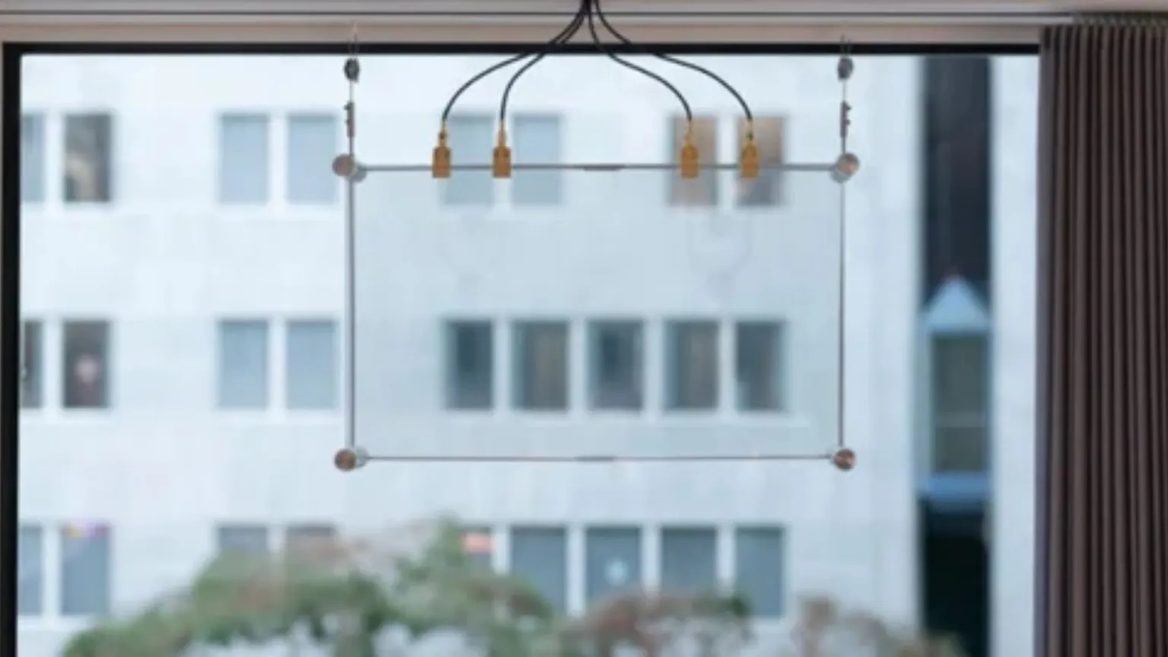
Researchers at Aalto University believe the solution lies not in adding more antennas, repeaters or other network equipment that requires power. Instead, they have developed passive 3D-printed structures called metacrystals. Thanks to their carefully calculated geometry, they are able to redirect and manipulate wireless signals, reports SciTechDaily.
Unlike traditional wireless infrastructure, these panels do not require electronics, power supplies or active control systems. Once installed, they continuously adjust the shape of the radio waves to improve coverage in areas where the signal is usually weak or completely blocked.
“When the room is too dark, you can bring in more lamps—or you can use regular mirrors to direct the light you already have. That’s what metacrystals do, but with radio waves,” explains graduate student researcher Mahdi Asgari. “Unlike previously proposed single-layer smart surfaces, these three-dimensional metacrystals can be designed to independently control multiple input signals or frequency bands simultaneously—a key requirement for real-world wireless communication.”
Signal redirection without electronics
The panels can be mounted on walls, ceilings, furniture, and other surfaces to direct signals around corners, into areas with poor coverage, or directly to specific users and devices.
Unlike many existing smart surfaces that are limited to a single function or signal direction, these panels can process multiple incoming waves simultaneously. They are capable of operating in different frequency ranges in parallel, operating in both reflection and transmission modes, and even completely absorbing unwanted signals.
Traditional reconfigurable smart surfaces rely on numerous customizable components and complex control systems, which increases both their cost and the difficulty of deployment. In comparison, metacrystal panels can be manufactured using 3D printing, with the cost of consumables estimated at only a few tens of euros per panel. The manufacturing process also allows the panels to be adapted to specific locations instead of using a universal template.
“For industry, the most attractive use cases are static or slow-changing environments: factories, indoor 5G/6G networks, warehouses, and long corridors,” Asgari notes. “In such locations, a passive panel designed for a specific layout can be significantly cheaper and simpler than an actively managed surface that requires constant maintenance.”
From laboratory concept to real-world application
According to Asgari, advanced electromagnetic features can now be integrated into a low-cost plastic structure that simply mounts to a wall. Once installed, such panels improve wireless coverage without the need for further operation or maintenance, relying solely on their physical design to direct signals.
The research group is currently exploring the commercialization possibilities of the technology and is seeking industrial partners interested in programmable metasurfaces, intelligent wireless infrastructure, and affordable passive signal management systems.
The researchers' next goal is to move beyond fixed designs and develop reconfigurable panels that can adapt to changing wireless conditions. Since current smart surfaces are often too expensive and complex for mass industrial implementation, the team is looking for simpler methods of manufacturing adjustable panels that will remain practical and affordable.