Хочете будувати кар’єру в Data Science та AI? Vodafone Big Data Lab відкриває новий набір —>
Ігор Вишневський Історії
11 September 2025, 09:00
2025-09-11
“Working on a ladder in a bulletproof vest is very difficult. Besides, for the enemy it’s like a red rag to a bull.” The director of an internet provider from Kramatorsk told how he lost 80% of subscribers at the beginning of the full-scale war, but kept the business, and now he’s even investing in development
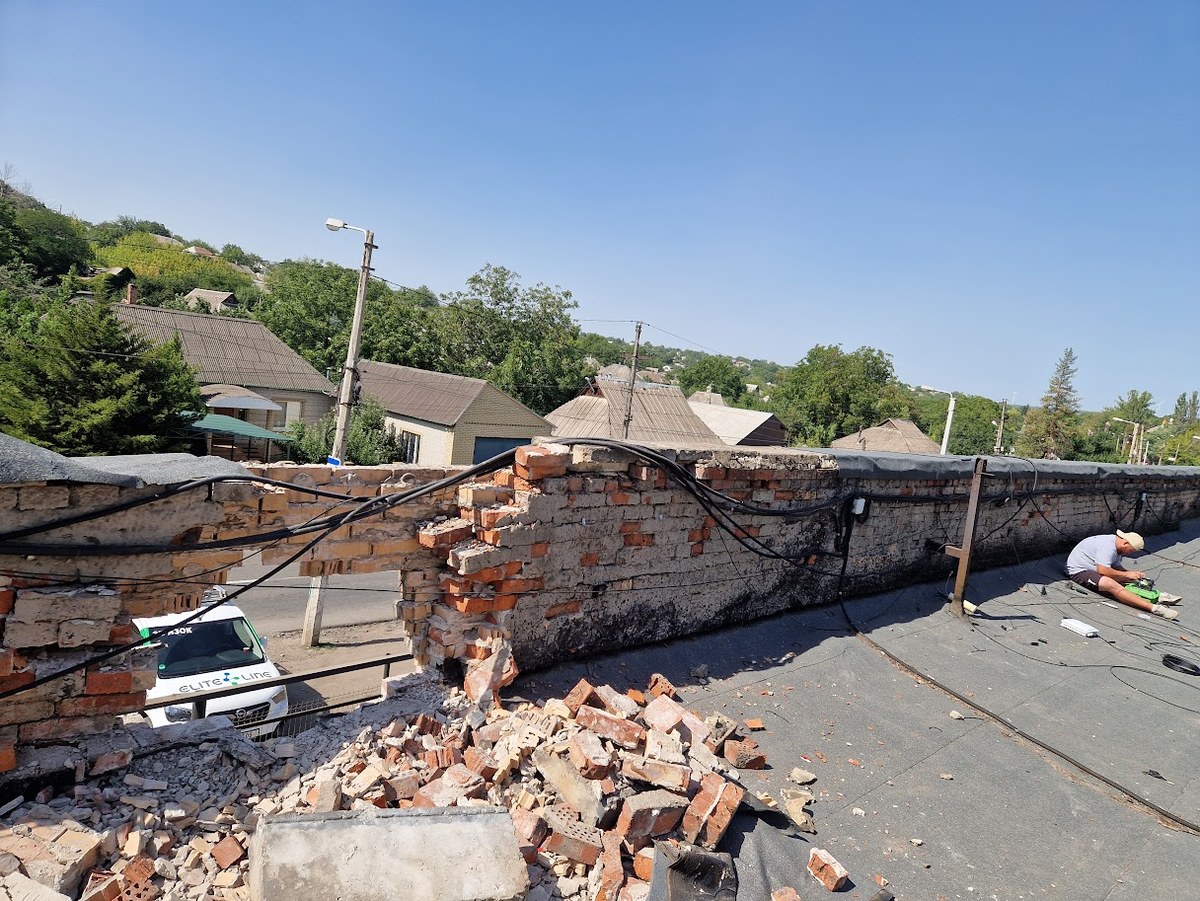
On the eve of the interview with dev.ua, employees of the local Internet provider Elite-Line were eliminating the consequences of the arrivals — in Kramatorsk they deal with this constantly. According to the director of the provider, Mykola Kucheruk, while their team was working on it, three KABs flew literally 500 meters from their office. The consequences of this arrival will also have to be resolved quickly, because some subscribers were again left without the Internet.
Elite-Line specialists arrive at the destination in a few hours, having endured a pause: no one has canceled the tactic of repeated strikes against the Russians, so it is highly undesirable to leave immediately. In this regard, the Internet provider’s employees are exposed to the same risks as rescuers and medics arriving at the scene.
On the eve of the interview with dev.ua, employees of the local Internet provider Elite-Line were eliminating the consequences of the arrivals — in Kramatorsk they deal with this constantly. According to the director of the provider, Mykola Kucheruk, while their team was working on it, three KABs flew literally 500 meters from their office. The consequences of this arrival will also have to be resolved quickly, because some subscribers were again left without the Internet.
Elite-Line specialists arrive at the destination in a few hours, having endured a pause: no one has canceled the tactic of repeated strikes against the Russians, so it is highly undesirable to leave immediately. In this regard, the Internet provider’s employees are exposed to the same risks as rescuers and medics arriving at the scene.
We talked to the director of the Elite-Line provider, which provides Internet to residents of Kramatorsk, Druzhkivka, and surrounding villages, about the peculiarities of working during a full-scale war, about doing business on the frontline, risks for employees, problems with personnel and booking. We also discussed the flow of customers from large nationwide operators and why large international platforms are «banning» the unoccupied part of the Donetsk region just as much as the occupied one, and the Ukrainian authorities cannot (or do not want to) do anything about it. More about this and more in the conversation with dev.ua by Mykola Kucheruk.
— First of all, what are the main security risks for you now?
— Fortunately, at least the artillery is not finishing it off. But if the enemy advances another five kilometers in our direction, then this may change. And so — KABs and MLRS are arriving, as well as drones of many different types, in particular, sometimes FPVs are already arriving. The other day, the Kyiv-Dovzhansky highway was closed in the Sloviansk area, because enemy FPV drones are flying en masse.
Lancets are flying in, gerberas are flying in… Well, everything is flying in. From my observations, most of the arrivals in Kramatorsk are from nowhere, not in the direction of any military targets. The vast majority are private sector or residential sectors, not connected with the Defense Forces in any way. That is, pure randomness or a targeted policy of terrorizing the locals — so that no people remain here, so that all enterprises stop working.
— How do you act in these conditions as an employer?
— Fortunately, we didn’t have any injuries among the workers, but the guys were hit by cluster munitions. Either I or my deputy almost always go with the guys to all the arrival sites. That is, we understand the risk of our installers and share it with them. If something happens, we are in the same conditions as them.
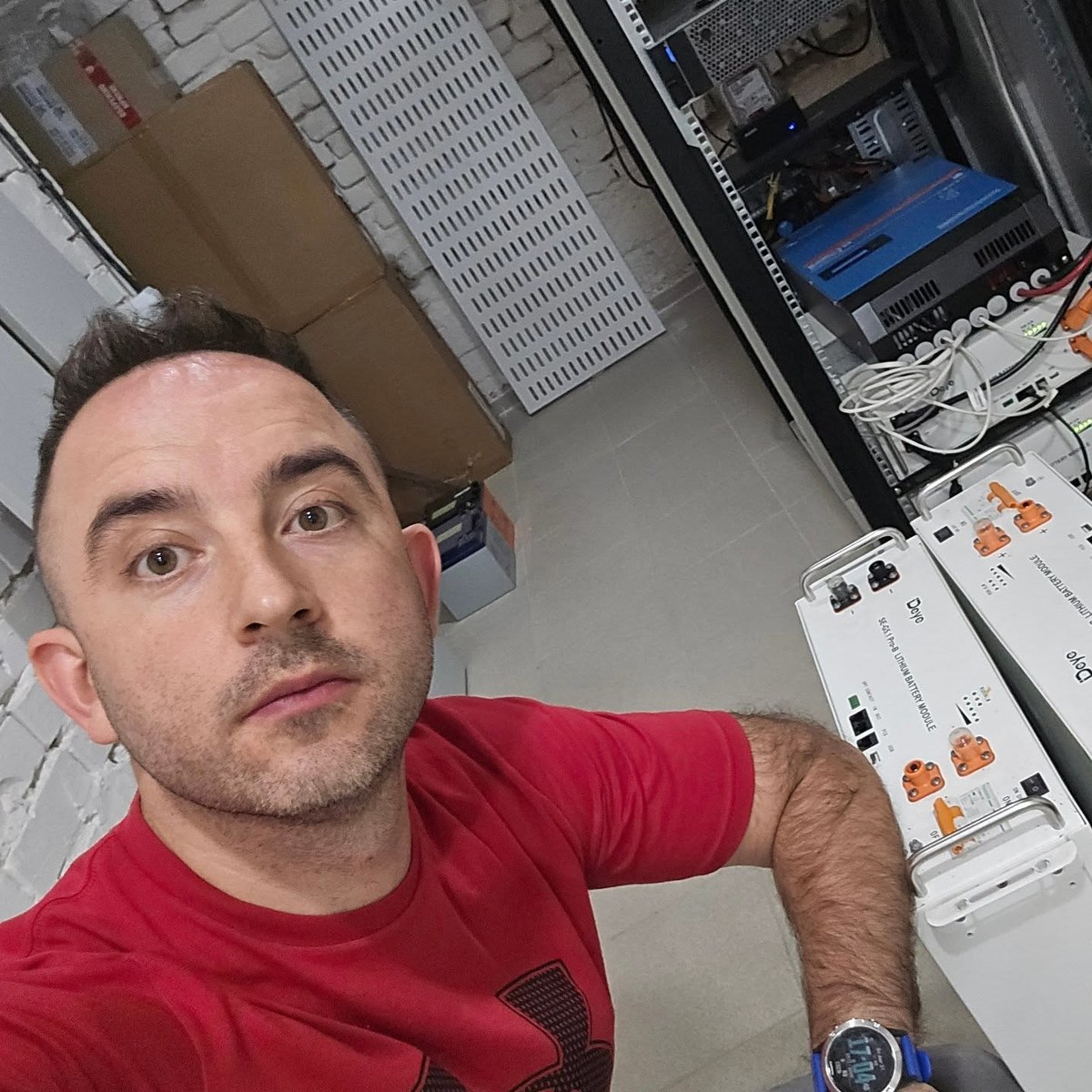
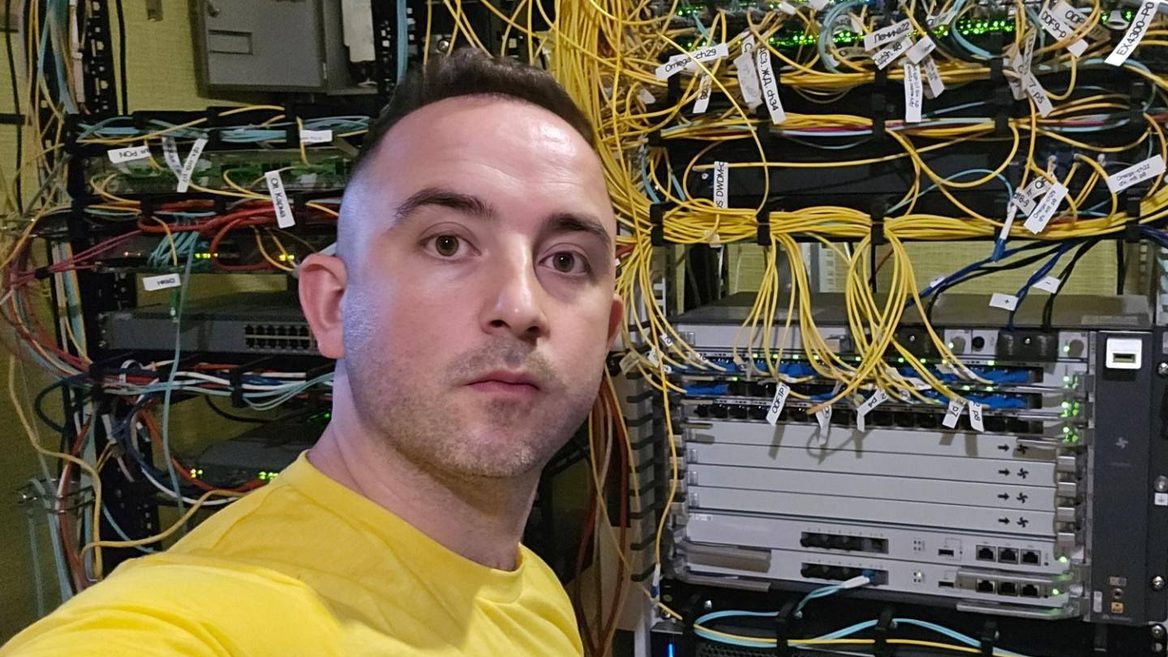
Mykola Kucheruk with new equipment to increase the energy independence of the network
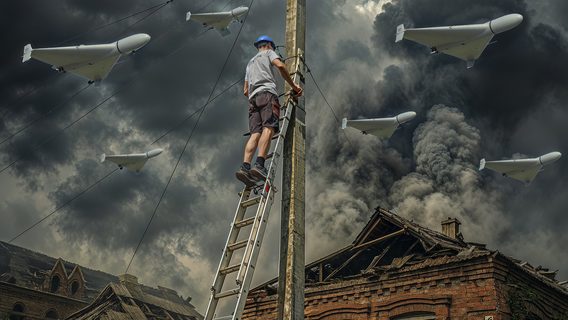
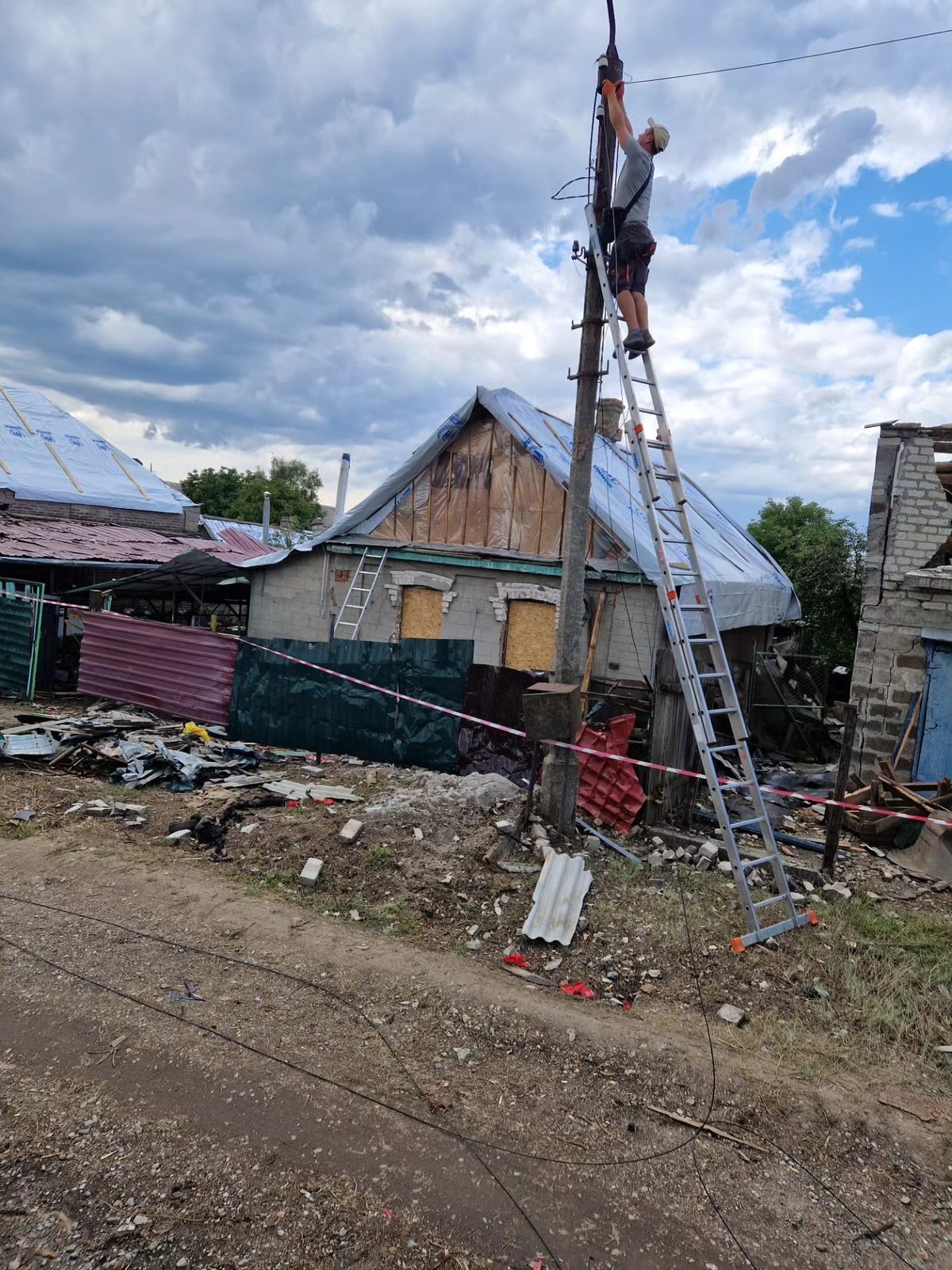
As for personal protective equipment, we have, for example, bulletproof vests. But you need to understand that work usually has to be done at height, and putting on a 20-kilogram bulletproof vest and working with it on a ladder is very difficult. So we stopped doing it.
They stopped doing it for another reason. FPV drones can fly to us, and a person in an armored vehicle will be like a red rag to a bull. If you stand on a ladder, dressed in military equipment, the probability of being attacked is even greater. For the same reasons, we do not put electronic warfare systems on cars now. This is a human factor: we have seen many examples of Russians attacking civilians. But if you have any military ammunition on you, the risks are even higher.
There were cases when our guys came to repair the damage almost immediately after the shelling and there they would fly again. They literally jumped in different directions, hiding behind the first wall they came across. But, fortunately, everyone is safe and sound.
The guys understand the risks and we discuss all possible situations with them. And, of course, in case of something, we will not leave anyone without help. But I would really like nothing like this to happen.
Internet providers provide important communication services, but, unfortunately, they do not have any guarantees from the state in the event of such arrivals.
We raised this issue at a meeting with Mikhail Fedorov and at other relevant discussions, but there has been no progress on this issue yet.
— Are there situations with your own employees when you go to some dangerous area, and the person simply says: «No, sorry, but I won’t go there»? Simply because it’s dangerous.
— At the beginning of the full-scale invasion, the first significant damage we suffered was after the arrival of the Iskander. We lost an area with a large number of subscribers. It was scary, especially considering that this was the first such arrival, and no one knew how to behave.
We went there together with my deputy. We came from there and said: «We need two people, who will go with us to repair?» And it turned out that everyone went, except for one person. He said that he had to think about his family, and this person left the city very quickly.
Photo from Mykola Kucheruk’s Facebook
I have absolutely zero questions about it, because, firstly, people perceive this situation and react to it in very different ways, and secondly, family is the main priority. I can handle the arrivals normally, over time some kind of «elephant skin» forms. Although mentally I still can’t get used to it, and every time something still squeezes you. But there are people who physically can’t do anything about it, they fall into a panic or stupor. For example, some of our female employees left, but, fortunately, we have the opportunity for them to work remotely.
But I want to say that for employees who go to eliminate the consequences of shelling, we have a separate financial motivation — additional payment and certain bonuses. And the salary of installers in Kramatorsk is higher than the average in Ukraine. I understand that any funds cannot compensate for moral trauma and risks when you arrive, and there is a person with severed legs, or a dead person, or damaged houses, but still.
During these 3.5 years, we have seen a lot of different things, and it is emotionally difficult. That is why I never have questions for those employees who have resigned and left the city. In Kramatorsk, you have to be very psychologically stable, it is difficult to live here, you cannot sleep peacefully. We can have dozens of arrivals and explosions within an hour. When a KAB arrives, this 500-kilogram piece of crap, the whole city shudders, and it can just fly one after the other.
There were cases when one of the guys did something bad: he was supposed to go to work today, but he simply didn’t pick up the phone, and then three days later he said he was in another region of the country. But we will be happy to see everyone who left us, after warning and explaining the reasons, when they return. I understand these people perfectly.
— As a provider, you can’t always eliminate the problem of the consequences of enemy shelling on your own. After all, conditionally, you depend on the work of energy workers, the State Emergency Service, and other services. How do you act in such situations?
— I want to say that when it comes to power engineers, they are great and repair everything very quickly. Even when the towers are destroyed due to incoming flights, they restore them within a day or two.
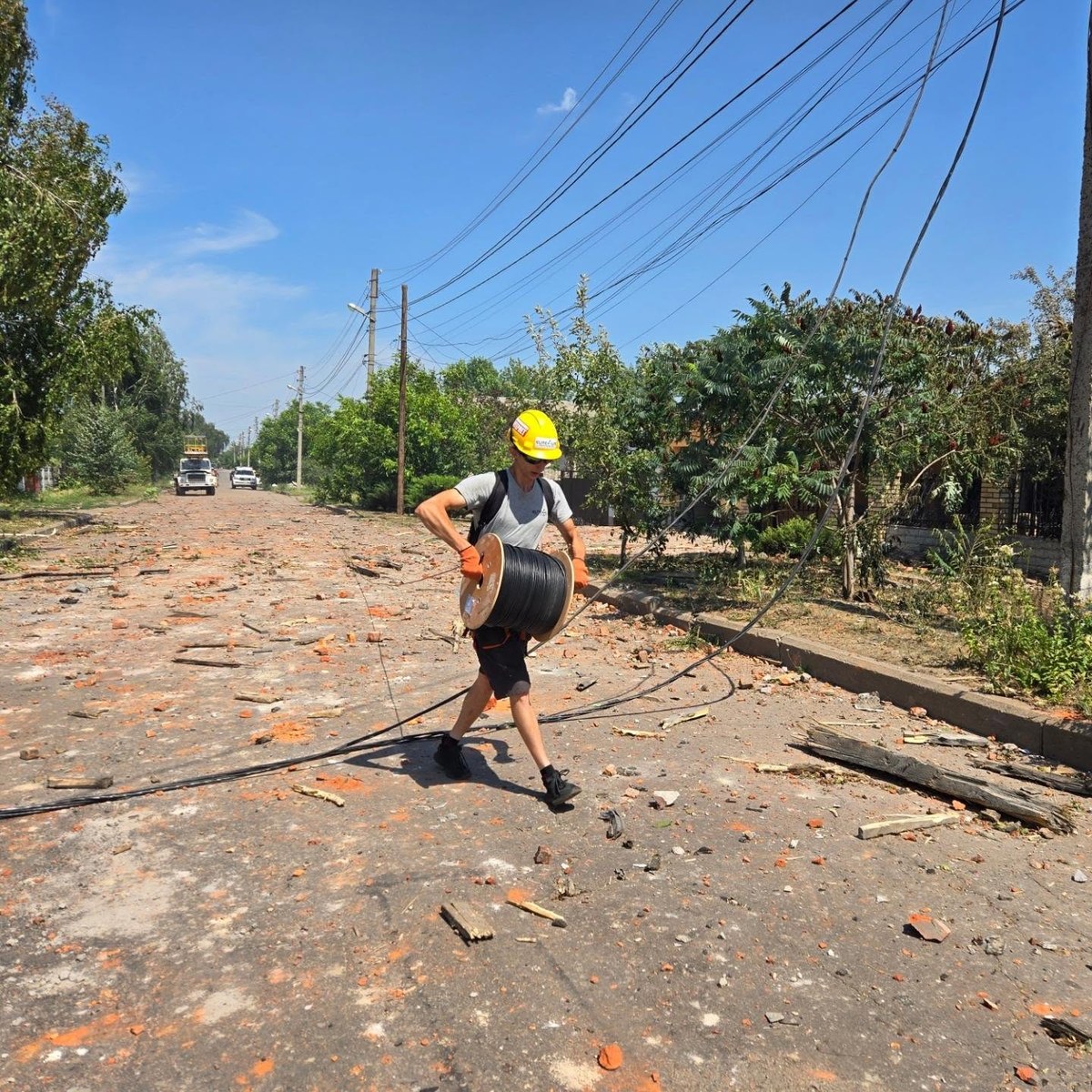
It all depends on what area it is. If there are only a few customers, then we can, of course, explain the situation to people and wait for a while. But if it is a large area with hundreds of customers, then we find any temporary options. We attach the wire to the trees, and once we stretch about a kilometer of cable around, so that people have communication until the relevant service restores everything.
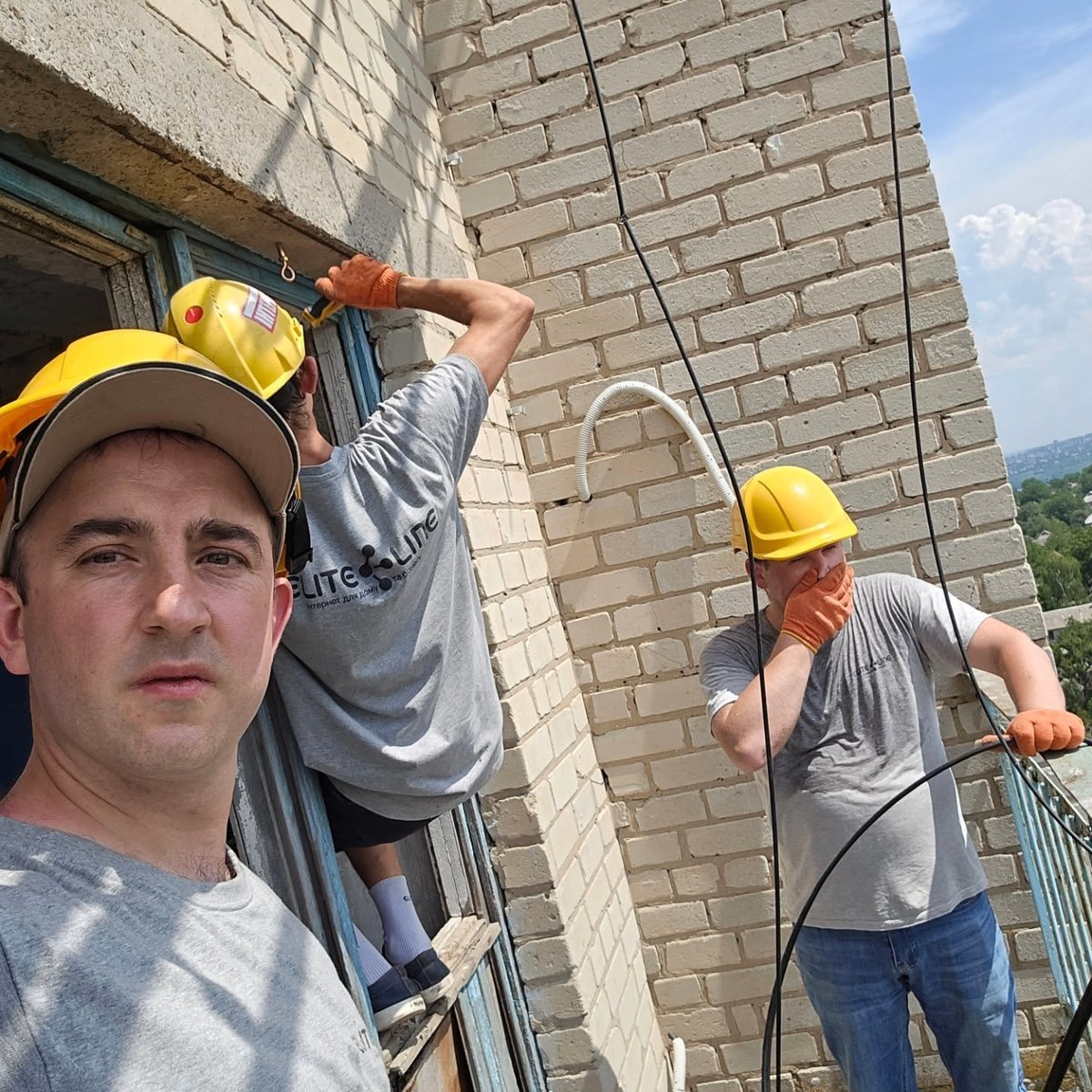
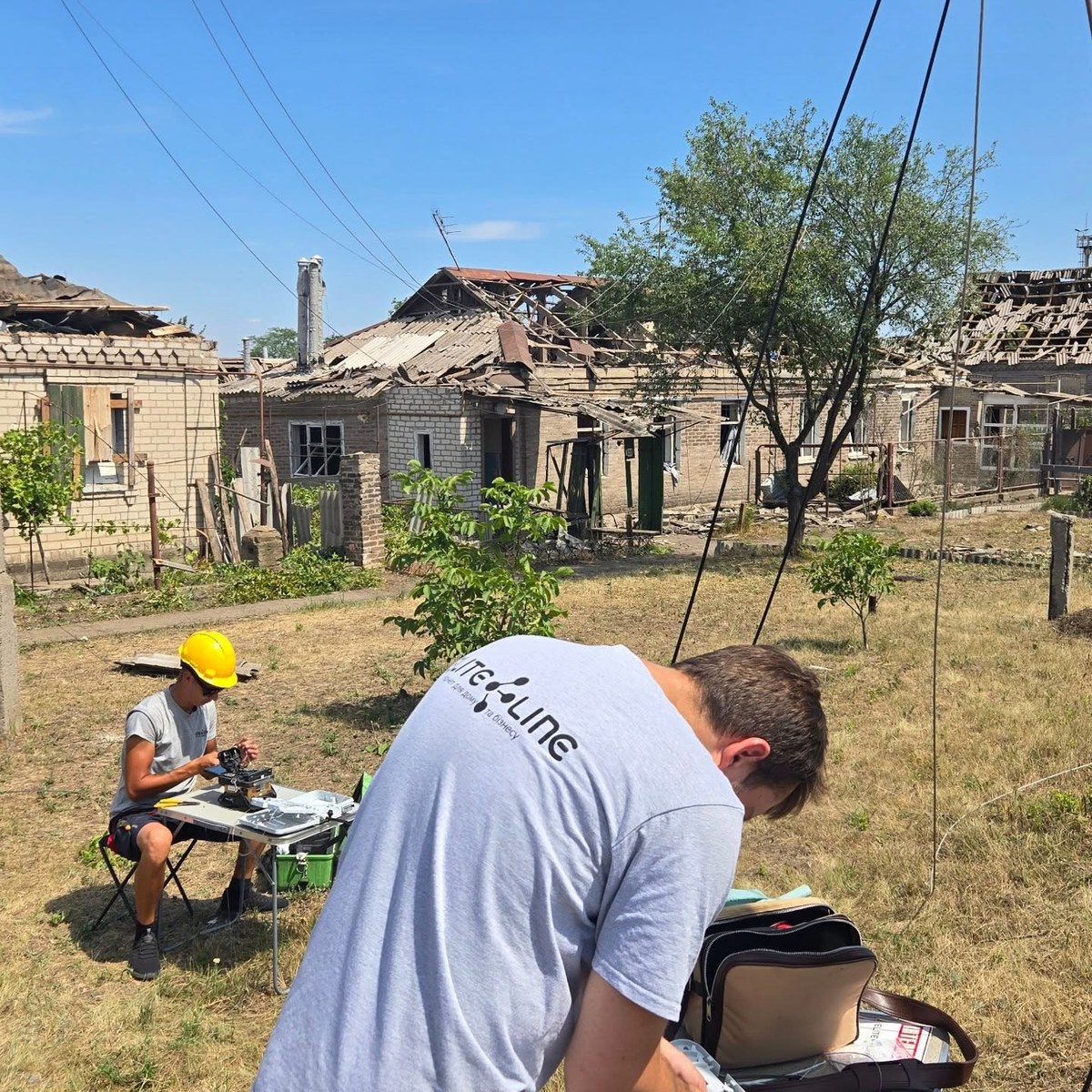
Mykola Kucheruk with employees at the facility. Photo from his Facebook
That is, it is rare for us to be completely dependent on someone and not be able to do anything for a long time. We find some solutions, at least temporary ones. Of course, for us these are expenses, we could «hide in a house» and wait. But this is not our option.
We can somehow make it work for a few days, and then redo it. This approach is like the famous «broken windows theory». So we constantly restore the entire network to the state it was designed in. If something is fixed «on the fly», then when there is time, we try to restore everything to 100%.
— How many people work in your company? How difficult is it to find specialists when many people are coming from frontline areas or from the country in general, plus there are problems with booking?
— We now have about 30 people. There were several waves when employees left. The first was right at the beginning of the full-scale invasion. Several people simply left on the first day and did not go to work. At the end of the summer of 2022, there was another wave of layoffs, because people had relatives leaving the city, and they began to put moral pressure on those who remained to leave as well.
Elite-Line employees are working at the arrival site, eliminating the consequences
Now we have a new wave, because people can’t stand it. Especially after the situation when there was this defense breakthrough in the direction of Dobropillya and people once again felt a sense of threat that if the Defense Forces don’t hold the line, the enemy could come close to Kramatorsk. Living in Kramatorsk is very difficult, everyone has sharp emotional swings. It’s also difficult to find people, because we can’t armor everyone.
Just recently, a new government decree was issued that all frontline enterprises that are critical to the economy can reserve all employees. We are currently preparing documents for the local VCA and hope that the reservation quota will change to a larger one.
— And what was the booking situation before that?
— There is a big nuance — we can book 100% of technical workers, but this applies only to those who have been working with us for more than three months. Conventionally, we booked all the installers, because we had a permanent team. But now, when we have minus two employees and we are recruiting new ones, we cannot book them right away. And as soon as we hire them, we send a message to the Trade and Industry Center. And the Trade and Industry Center immediately sees that the person is not booked, and they take him away. That is why we tried to recruit only those who are under 25 years old. Although we communicate with the Trade and Industry Center representatives absolutely normally, and they also understand our needs — that we are not just some average business, but provide important work.
We recently had a guy who is 18 quit his job. He decided to go abroad because he’s afraid he won’t be able to leave later.
Now we have found another guy who wants to work for us, but he is 26 years old and is wanted by the CCC. So, since we work officially, as soon as we hire him, the CCC will immediately know about it, and they will take him away. And he has experience, he worked for another provider, so for us he is a very valuable person.
There are few people with experience in Kramatorsk, so there is no one to choose from. And I am very glad that we have a certain backbone, a core team. The guys are really motivated, they work, they are not going anywhere. We communicate with a lot of people about what we will all do if things get really bad.
A colleague from Dobropillya encountered the fact that when this recent breakthrough occurred and Dobropillya began to be seriously threatened, all the technical staff simply left work, and not a single installer was left in place.
I think that one of my guys will definitely stay in such a situation. We will try to hold out as long as the security situation allows. If, of course, there is electricity in the city. Because if there is no electricity for a month, then it will be impractical to keep an Internet provider staff.
— How has your client base changed during the full-scale operation? Has it decreased significantly or, due to the fact that Kramatorsk is a large hub for the military, has it remained at about the same level?
— Before the full-scale war, we were an operator for almost 15,000 customers. Since the start of the full-scale operation, we have decreased by about 15% in the first week. But the largest outflow of subscribers occurred during the period when the Kramatorsk railway station was shelled in April 2022. Then, almost everything in the city was massively closed, and the highway to Pokrovsk, where there are two lanes in each direction, was completely clogged with cars.
Then we dropped by 80% in general, and 20% of the pre-war base remained, only a few thousand subscribers. It was very difficult, because there was nothing to pay salaries. We exported then only at the expense of reserves.
It was also lucky that there were some materials in stock. We were planning a «major construction» for the spring of 2022, so we had about 50 km of optical cable in stock.
Service costs increased, although the number of customers decreased by three to five times. But we gradually emerged from this crisis, as we worked stably and constantly recovered. Which I cannot say about all our competitors.
In total, there are about 12-13 operators operating in Kramatorsk — both national («Volya», «Kyivstar», «Ukrtelecom») and local ones. And they all work differently, they all restore the connection in different ways. Some do it quickly, and some, primarily large players, may not restore anything at all for a month. Therefore, there was a significant flow of subscriber base to us, because there were a lot of disconnections during that period. So little by little we recruited people again.
It should be understood that at the beginning of the full-scale operation, we were not a very large operator in terms of service area. At that time, we connected the entire private sector, and among the high-rise buildings of Kramatorsk, we connected a small part of the city.
We have now fully connected all high-rise buildings to PON technology, which can operate without electricity. And now we have a long queue of local customers waiting to connect.
— And how much do all these military risks make your activities more expensive, and how is this reflected on the end consumer? How do you solve this economic problem?
— You can go to our website — our Internet prices in Kramatorsk are lower on average than in Ukraine. Why is that? As I said earlier, our subscriber base is mostly local residents. Kramatorsk is currently experiencing problems with work, and the largest enterprises are closed. Now the city functions around the military: cafes, military stores, service stations, some leisure activities. But people don’t have extra money.
Photo from Mykola Kucheruk’s Facebook
Yes, of course, we were forced to raise prices, because we couldn’t export anything. First, we took advantage of all the promotions that were a competitive advantage. Due to great competition, even before the war, the connection cost us 1 UAH with a cost price of 2,000 UAH. That is, the operator invested 2,000 UAH in each client and there was also some promotional period when, conditionally, the Internet cost only 100 UAH for six months.
When large operators faced technical problems, we had a wave of applications for reconnection. We saw that we were not taking these actions financially, so we stopped them. Now we connect for money, although it is still cheaper than the cost price. Currently, the cost of connecting optical Internet in Kramatorsk is 1,000 UAH, although the cost price has increased and is more than 2,500 UAH.
In addition, we currently do not have any promotional conditions on tariffs, only regular tariffs. This helps us to somehow recoup connection costs throughout the year.
Now the question is not how much to earn, but how much to maintain and modernize the network, because this process cannot be stopped. As soon as you stop, you will begin to degrade, and the network will begin to lag behind technically — we are now seeing this in our competitors. This is especially true for large players — no modernization, no investments, so the network is aging, and customers are fleeing. We have a queue for connection now — a week. And we really don’t have time!
We are forced to invest in development, for example, buying new batteries. Last month we bought batteries worth 400,000 UAH, because now there is talk that there will be blackouts again in Ukraine. And we are already seeing it, it has already started here.
We generally have a difficult situation with electricity, because the Russians are purposefully hitting energy facilities. Now they have also damaged something, so there will be outages. Our situation with electricity is much more complicated than in most parts of the country. And for everything to work, we have to invest significant funds.
— On social media, you raised the issue that large international digital platforms perceive the controlled part of Donetsk Oblast exactly the same as the occupied one and deny local residents their services. What is happening and what are you trying to do about it?
— When we met with Mykhailo Fedorov, I repeated this many times, like a parrot. We raised this issue with the Ministry of Digital, then we went to the level of the Ministry of Foreign Affairs, wrote to the Cabinet of Ministers and the Verkhovna Rada. Everyone promises that it will somehow improve, but it only gets worse, and these blockages are increasing. And not only from international platforms, but also from the Ukrainian state-owned Privatbank!
I recently wrote about a situation where PrivatBank blocked a payment with an incomprehensible argument about the occupation. I myself constantly encounter banks refusing us loans for new cars, but this situation of my friend from Kramatorsk is complete nonsense.
If we return to the reasons for this phenomenon, it is a question of international sanctions imposed on Russia and the so-called L/DPR. It is easier for large international platforms such as eBay, Duolingo or Zoom to block the entire Donetsk region than to figure out who occupied what there. Not to mention the fact that the Russian Federation «incorporated» certain regions of Ukraine into its composition by changing the constitution. So a number of digital services simply do not work here.
As an internet provider, we have learned to partially circumvent this and relocated our IP addresses — now we say that we are Kyiv. This sometimes helps: some resources simply look at what we say and do not check. But a lot of them check it precisely through the geolocation of the smartphone, and a comparison takes place. If we say that we are Kyiv, but the smartphone stubbornly sees that we are Kramatorsk, then this platform will «wait» for 10 more people from this location and transfer our «IP addresses» to Kramatorsk.
TikTok uses this feature, AliExpress also doesn’t allow me to pay. So I can’t pay for goods from AliExpress in Kramatorsk, because the payment is immediately blocked. If I order something on AliExpress, I write a Kyiv address and pay via VPN.
— And how to combat this — was it your initiative or feedback from your clients, who simply found many services inaccessible?
— This situation started practically from the very beginning of the full-scale invasion, even Google wanted to block our email addresses because, like, we are Kramatorsk. Fortunately, Google has an office in Ukraine that intervened and helped us figure out what was occupied and what was not.
However, for example, residents of Kramatorsk, using our Internet, still cannot use Facebook and Instagram to promote their pages. But not all providers have the same problem — conditionally, if they are Kyiv providers, like Kyivstar, then they do not have these problems. We are a local provider, and we position ourselves as a local provider, we work here. So we received a lot of complaints with the argument: why doesn’t it work for you, but Kyivstar does, why is it blocked for you, but Vola doesn’t.
A conspiracy theory has formed in the minds of some of our clients, and at the same time, a very simple answer: if so, then we probably get traffic from Russia.
And, unfortunately, this topic is a fairly common opinion among those who face blocking. Because if Ukraine has not resolved this issue in 3.5 years of full-scale invasion, then this operator is to blame, because he is «taking traffic» somewhere.
We approached various state institutions with a proposal to conduct a census of all operators in the Donetsk region, collected data on all operators who worked there, including IP addresses. We sent all this to state bodies with a request to somehow «separate» us from the occupied territories, to contact international partners, and so on.
This is Ukraine and here is a list of IP addresses that belong exclusively to the controlled territory. There is a specific operator, he provides services in specific settlements. All this was done, it was also sent to the VCA, but, unfortunately, no reaction, no progress. The situation is only getting worse, although we tried to offer a lot of technically simple solutions.
For us, this is a very big negative, because customers don’t understand why we are being blocked. And by doing this, some people think, the state is actually sending a worse message — if it doesn’t want to resolve this issue, then maybe it has already given up on these territories, because they will be occupied anyway.
And it’s very difficult to explain to people that the state simply doesn’t know how to do it, and that eBay is blocking them on its own, and all this is not part of some conspiracy.
I can’t register on Binance myself because I have a residence permit in the Donetsk region. I can’t use financial services like Wise because when they see my passport during verification, they refuse to register me. But this is just the tip of the iceberg of what residents of frontline areas face.
— Kramatorsk is located some 20 km from the front line. What is the actual situation with local Internet providers in the occupied territories?
— Of course, there are local providers in the so-called DPR and LPR, but from what I heard, there is a fairly massive squeeze on business there. And each operator installs the so-called SORM, which reveals all traffic and provides the FSB with the keys to decrypt it. That is, operators there are automatically forced to cooperate with Russian special services.
Photo from Mykola Kucheruk’s Facebook
I heard about colleagues who went against the system, tried to cooperate with our special services in the occupied territories, to transfer data to them. But, of course, this could not last long. Therefore, the networks of those operators who worked before are often squeezed out in favor of other loyal operators.
I personally know of several situations in the occupied territories when people were robbed of what they had. The managers of these operators were not there, so some other operator came, replaced the equipment in the network core with their own, and that was it.
It’s like imagining that an occupation will come to Kramatorsk and our business will come under the control of some «people’s» operator «Phoenix». Although I am sure that this will not happen, because we will rely on our Defense Forces and know that everything will be okay. It will be difficult, but everything will be fine. If we did not believe in this, we would not be installing new equipment in the city now so that someone would also occupy it.
«Small and medium-sized providers are the engine of progress.» The director of an Internet provider from Kramatorsk disagreed with Hetmantsev’s arguments about the «gray» Internet communication market