Ігор Вишневський Around IT
7 January 2025, 09:00
2025-01-07
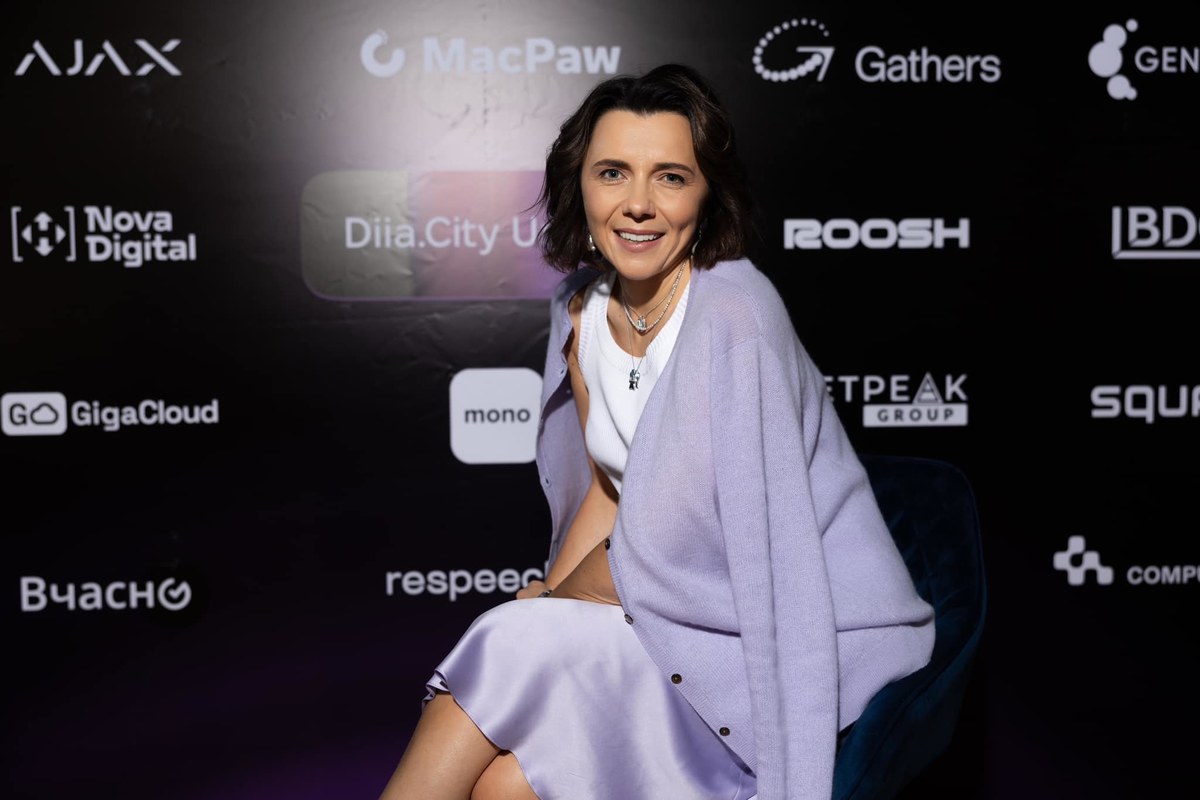
“We don’t say: ‘Oh, we have a problem. Do something, because the industry will die!’ We come up with options to solve the problem.” CEO Diia.City United Natalia Mykolska on interaction with the authorities and decision-making within the union itself
On February 6, 2024, the Diia.City United alliance was presented, which was created by six founding companies: Ajax Systems, Genesis, MacPaw, monobank, Netpeak Group, and Roosh. At the same time, Natalia Mykolska, an expert in strategic transformations and business globalization and former trade representative — Deputy Minister of Economic Development and Trade (2015-2019), was announced as the executive director of the alliance.
However, the association’s activities began significantly earlier than its presentation — in late summer 2023, when it was officially created. During this period, top managers of the founding companies identified priorities and began looking for a candidate for the role of head of the association. Their choice fell on Natalia Mykolska.
On February 6, 2024, the Diia.City United alliance was presented, which was created by six founding companies: Ajax Systems, Genesis, MacPaw, monobank, Netpeak Group, and Roosh. At the same time, Natalia Mykolska, an expert in strategic transformations and business globalization and former trade representative — Deputy Minister of Economic Development and Trade (2015-2019), was announced as the executive director of the alliance.
However, the association’s activities began significantly earlier than its presentation — in late summer 2023, when it was officially created. During this period, top managers of the founding companies identified priorities and began looking for a candidate for the role of head of the association. Their choice fell on Natalia Mykolska.
In an interview with dev.ua, Ms. Natalia told how decisions are made in the union and on what principle its financing is carried out; how companies are checked for the presence of a «Russian trace» when included in the union; which government institutions the association cooperates with most actively; what has already been achieved and what has not during her tenure, and also named her wishlist for the IT business for 2025.
Can you give us a little behind-the-scenes look at your appointment? How exactly did the process go?
The idea of creating the Diia.City United union appeared even before the launch of the Diia.City mode. But since the launch took place in February 2022 and the subsequent full-scale invasion of the enemy, it is understandable that the time from the idea to implementation was somewhat delayed. Back then, there were completely different priorities.
From the moment the union was legally established, the founders of the union (who are founders and top managers of successful technology businesses) followed the usual path — they involved recruiters. Their goal was to find a worthy candidate for this person to lead the union. And it was a fairly detailed selection. So I can say that the conversation with me began in October-November 2023, and in fact I was appointed in December.
No one questions your extensive background in law, economics, and public administration. But why do you think the founders of the companies that founded Diia.City United decided to choose a candidate not directly from the IT sector?
I think you need to take a closer look at my resume. For 15 years, I worked at two top law firms — Vasil Kisil & Partners and Sayenko Kharenko — which served not only top Ukrainian companies, but also the largest investment deals. Among other things, I worked on deals related to investments in the technology business. Accordingly, by that time I already understood its specifics quite well.
After the Revolution of Dignity, I was appointed to the «government of technocrats» as Deputy Minister of Economy and Trade Representative. And in this position, I also devoted a very large part of my activities to working with the technology sector. For example, in 2019, we organized the first trade mission of our IT and technology sector to Canada, within the framework of which I worked with all the top market players. We had a large number of investment conferences and trade missions and participation in exhibitions, where technology companies were always involved. For example, in one of our trade missions to Kenya and Tanzania, we worked with Genesis, because they have a large successful business in African countries.
Let me also remind you that in the Export Strategy of Ukraine, which we developed for the first time in the history of Ukraine, the IT and technology sector were identified as a priority for the state precisely from the point of view of export. And this export strategy was written not by itself, but together with the involvement of participants in the technological ecosystem and with the participation of almost all players, unions, large and medium-sized companies operating in the sector.
Even when I was a researcher at Stanford in 2019 and worked on a study on the connection between the innovation economy and democracy, we organized the first Ukrainian conference there, where two panels were dedicated to our technology business. A large number of Ukrainian companies that were already expanding in the States at that time were involved.
In addition, after returning from Stanford, I had my own consulting business, where I advised technology companies on globalization and fundraising and investment issues.
Therefore, in my opinion, it was quite logical when several members of the Diia.City United strategic council approached me to head this union. After all, they were looking for someone who would have experience not only in business, but also in government.
After all, one of the union’s tasks is to establish productive interaction between the state and business — so that the voice of technology business can be heard and listened to.
«We don’t evaluate whether someone has a name and someone has no name. It’s just important to us that this company actually works and is engaged in a technology business.»
Bolt recently joined the union. Congratulations on the expansion, but in this context I would like to understand how the possible selection or negotiations with potential participants take place? Does the company have to meet any specific criteria? How is it determined — «ok, we’ll take you» or «no, we’ll not take you»?
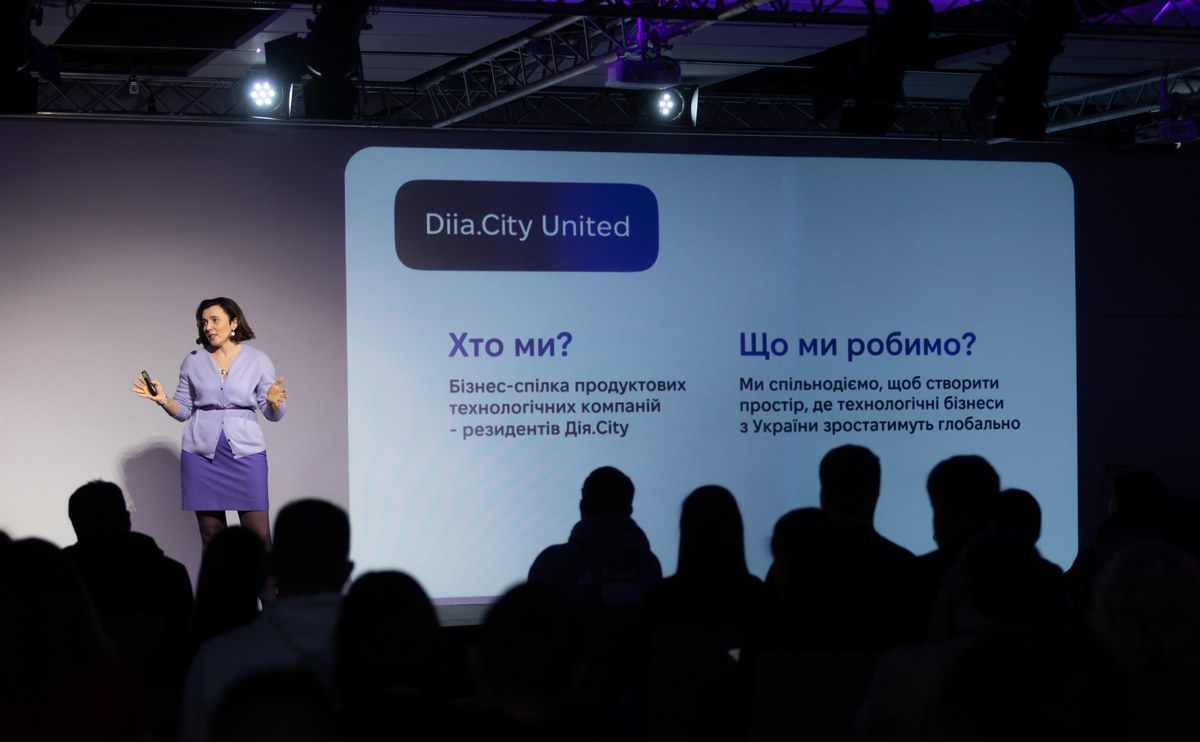
We have several focuses. First, we focus on product technology companies — this is the main thing for us. After all, our founders are also product companies.
It is clear that, secondly, we also focus on the resident companies of «Diya.City». In any case, our association believes that «Diya.City» is a kind of «place of light and strength» in our regulatory environment and a place through which our technology companies can grow globally.
Diia.City United is an association that strengthens each of its members through collaboration and exchange of experience and resources, charitable and social initiatives.
How does the story unfold when someone wants to join us? Our participants include not only large or medium-sized Ukrainian food companies, but also medium-sized companies and startups that were founded very recently.
And for them, participation in a union is sometimes much more valuable than for large companies.
Small startups don’t have the ability to maintain a solid team of lawyers. They don’t have the ability to constantly monitor changes in legislation. They also don’t have a staff of analysts to track all domestic or global trends. So for them, this is where we have value.
If a company wants to join the union, it must first of all share our values. And the second important criterion for us is that the company must not have ties to an aggressor state or other unfriendly states. We check this.
We also do not accept companies from certain «sensitive» sectors. Our strategic board has decided that we do not accept gambling companies.
So there is a fairly transparent and clear procedure. The company submits documents to us, and we do not evaluate it based on whether someone has a name in the business and someone is no name. For us, it is simply important that this company actually works and is engaged in the technology business.
Another important point: we are also joined by innovation or technology divisions of large companies and corporations. For example, there is Kernel, there are technology divisions of banks, there is Nova Digital, which work both on corporate technology innovations and offer a separate product to the market.
We are also joined by some outsourcing companies that either already have a product stream or are looking towards the product. They are very interested in being in this product community and communicating with participants who «live» the product.
And how difficult is it to verify ties with an aggressor state, how does it happen? We understand that this is not the same as simply «googleing», because chains of companies and their owners can be built quite complicatedly and not all information is publicly available.
This is an important issue for us. We have a procedure for involving certain external resources, since we cannot and do not do everything ourselves. We cannot rely only on open information, you are right. At the same time, we also receive personal confirmations (confirmations) from our participants.
At the same time, if we talk about the current residents of «Diya.City», then this is easier, because the connections with the Russian Federation are already checked by competent structures. And for other companies we really carry out this work, because it is important for us.
Given the rather complex corporate relationships that sometimes occur in companies, we understand that certain risks may remain. But for such a case, the Diia.City United strategic council, even when the Union was created, provided for a procedure for exclusion from the membership. If such relationships are discovered post-factum, this procedure will be included. In our union, such decisions are made by the strategic council.
The basis of your union is made up of quite powerful product companies, but outsourcing is somehow represented in minimal volumes. There is another union «Diya City. Association of Residents», which represents large outsourcing IT companies. Please tell me, do you interact with it in any way? For example, when it comes to global IT market issues?
First of all, we cooperate with IT Ukraine, since this association already has a serious reputation and long-term successful experience. I cooperated with them when I was a Sales Representative.
We interact with them quite actively on key issues for the industry, in particular, regulatory issues, booking issues, taxes, etc.
When it comes to business issues, we are jointly involved in many processes together with unions that deal with general business issues — primarily the Union of Ukrainian Entrepreneurs, the Federation of Employers, AmCham, and others. For example, we worked together on the issue of BEB, there was also the issue of CFCs (controlled foreign companies — ed.).
But I emphasize once again — our members are not only large product companies, because they are also medium-sized companies and startups. It’s just that since their brands are less well-known, they are paid less attention. If we look at the composition of our union now, we have 110 member companies, and among them a fairly large proportion are startups. And we defend the common interests of all members of the union for the development of the tech sector.
And what is the principle of financing the union? Is it membership fees or are the expenses covered by some individual large companies?
We need to start from an important point. The union was created by the founding companies, but Diia.City United is independent of the state and the influence of one business, one founder or member of the strategic council or group and represents the interests of the entire industry. We have a strategic council, which currently unites 15 top technology entrepreneurs. There are plans to expand its membership.
It is the funds of these technology entrepreneurs that are the main source of funding for the union in the initial period of time. In addition to being our «think tank», they are also our «financial center».
The Strategic Council is those people who actually payback the entire technological ecosystem by creating this Union, driving its development, and taking on its financing. But the very paradigm of the union is built on independence from any specific representative. That is why it was decided that the strategic council should be large enough so that the union does not depend on anyone in the context of making its decisions and there is no risk of «financial control.»
The second source of income is the contributions of our members, which they pay once a year. However, they are not yet the main part of financing the union’s activities.
In addition, we also have partners and grantors. But, again, the paradigm of the association is that grantors' funds cannot be the main part of our funding. The association must first and foremost work in the interests of the technology industry and its participants. We cooperate with grantors and donor organizations when our interests and goals coincide, and we can do joint projects that will be of value to our participants.
And is the position of union chairman a hired manager? Or is there perhaps some procedure for it in the union’s documentation, like elections?
Yes, the executive director is a hired manager, who is approved for this position by the strategic council. What is very important, I report to all members of the union about the activities that I carry out. And they can also provide their suggestions on what the union should do.
As a hired manager, I have goals set by the strategic council, which I must fulfill with the team. We do not work like a typical public organization, because our work has a completely business-oriented approach. This is not surprising, because the members of our strategic council are very experienced managers, investors and founders of many businesses. So the requirements are appropriate.
«Our task is to go to the government and systematically voice the problems of the technology business to them. Business should do business — make money and generate a product.»
Ms. Natalia, when you took office, the first steps were to announce reservations, foreign business trips for IT business representatives, and tax issues. Where did you manage to make progress, and where not — and why? The issue of taxation during 2024 was definitely the most acute and conflicting.
When we launched the alliance, we talked about several priorities. After all, we conducted a representative study and identified pain points for the technology sector.
The first issue is the ambiguous interpretation of the State Tax Service (DST) of the norms of the law on Diya.City. For example, as it turned out, its provisions are interpreted quite differently by different tax administrations. Moreover, it comes to the point that, conditionally, in the Holosiivskyi district of Kyiv they can be interpreted in one way, and, for example, in Svyatoshynskyi district in a completely different way.
We worked on this, and the State Tax Service issued several letters clarifying the norms. Law No. 9319 was also adopted on amendments to the Law on «Diya.City» (full title — On Amendments to the Tax Code of Ukraine and Some Other Legislative Acts on Stimulating the Development of the Digital Economy in Ukraine — ed.), in the development and promotion of which norms we were very actively involved.
We were also actively involved in the stages of developing e-booking and booking criteria, because these issues are important for the entire industry.
There is a myth that all IT professionals are booked. This is a myth that exists outside the IT community. In fact, the number of booked people in the IT industry is very small.
It is difficult for us to provide exact figures, because the information is not open. We made expert calculations with other unions in October 2024 before the suspension of bookings and its subsequent resumption. According to these calculations, from 14,000 to 18,000 IT workers were booked at that time out of about 300,000 specialists (an approximate figure according to expert estimates).
There are many such myths about the technology business among Ukrainians, and even among government representatives.
And we are working to ensure that Ukrainians understand how the technology business works. Because for many people it seems that it is very easy to create technology products sitting at a computer, and millions of dollars literally flow like a river into the founders' wallets or accounts.
As one of the MPs said: «you drink matcha on coconut milk every day and get a lot of money, we will raise taxes — well, you will drink less matcha.» That is, our task is to show the value of the technological business and IT business for the economy, for the state and for every Ukrainian. And also the importance of developing a culture of entrepreneurship and its values. Because not everyone has this awareness. As a person who has also been in the government, I understand that constant systematic work is needed here and it should not always be conducted in the language of the technological sector, but in a simpler language.
For example, regarding the same business trips, a technology business cannot work without them. If you work in foreign markets or attract foreign investments, you cannot do it without leaving Ukraine. And this is not a business trip for one person, this is a business trip and not just one team. Because if you are fundraising, you need a team of a certain composition to travel and communicate with investors, and then interact with these investors when you have already attracted funding (for example, report and work on business development).
We had an important moment that we worked on this year. We worked to clearly identify the problems and issues, beyond the top-level ones, that exist in the industry.
Now we have a «magic table» where we collected from our participants a large number of questions about their work and problems with facts and legal analysis, and ranked them into systemic, individual, urgent, etc. This table, a «living document,» is constantly updated — issues that are being resolved are carried over into the solution, and new ones are added. This really helps a lot in the dialogue with the authorities and in the work to ensure that the state hears, understands, and takes into account the needs of business.
In this dialogue with the authorities, the most pressing issue for the IT sector was the guaranteed tax regime of «Diya.City». Because there were clear guarantees for business for 25 years, but they were quickly violated by the state. How can we now explain to investors that «everything is OK» and the «Diya.City» regime will work as intended?
The tech sector is not living in a bubble and understands that the country is currently in a full-scale war. Everyone understands that the state needs additional revenue for the state budget.
One of the tasks of the union is to offer the authorities solutions that are beneficial for business and economic development. As well as tools or ways to achieve such solutions. Therefore, we came to the state and said: «Dear state, please look at how you can reduce other expenses and find other sources of funding.» We even cited sources from which these funds could potentially be obtained in order not to raise the military levy.
We had a lot of appeals and conversations, and we explained that in IT and the technology sector, salaries are quite high and these salaries are «white». And if you calculate the tax revenues that the residents of «Diya.City» had from these salaries, they are also quite large, if you compare them with those industries where salaries are lower. It was important for us to convey this to the state.
There is indeed another very difficult aspect here — relations with investors. After all, it is already very difficult to attract investments to Ukraine, since we have a country risk — this is war.
In addition to all this, we also have a rather unstable regulatory environment. That is, we are adding tax increases to the country’s risk. This is what is very difficult to communicate to investors. But the state made the decision it made.
At the same time, it is very important to note that the «Diya.City» regime continues to operate, it was precisely the military levy that was raised from 1,5% to 5%. Of course, for many people who came to «Diya.City», the military levy increase shook their level of trust in what the state is doing. I think this, among other things, was reflected in the survey results on how AIT members feel about «Diya.City». Because, in my opinion, this is actually a question of trust. You are promised one thing, and then something else happens.
So we are now actively working with the authorities — legislators, the tax and economic committees of the Verkhovna Rada, and the government, so that the state not only understands, but also communicates and states in its documents that its promises must be kept, and the implemented increase in military levy is a temporary measure for the duration of martial law and the transitional period (as provided for by law). This must be canceled in order for «Diya.City» to return to its original regime.
A little more about working with the authorities. With whom does the union interact most systematically and what does this interaction look like?
The main task of the union is to be the voice of the industry, that is, to take the burden off business in its interaction with the authorities. This is our direct task — to go to the authorities and systematically voice the problems and issues that the technological business has and offer them solutions. Business should do business — make money and generate a product.
In fact, the tech industry is very lucky — I can say this as someone who has been in both government and business — because he has a great relationship with Deputy Prime Minister Mikhail Fedorov, the Ministry of Digital Transformation, and the Diya.City office, and they are partners for the tech industry. So that’s a big plus right away.
A good example is the interaction regarding draft law No. 9319. We submitted our proposals regarding the draft law to the Ministry of Digital Affairs, then jointly voiced and worked them out in the tax committee, confirming this with cases from our companies.
We also actively and systematically interact with the First Deputy Prime Minister Yulia Svirydenko and the Ministry of Economy. We interact with them on issues of economic policy formation, on reservations, on issues related to the Ukraine Facility Plan. After all, these are funds that the European Union allocates to Ukraine, and this is not just 50 billion euros of financing, because among these funds there are more than 6 billion euros of investment financing! And it is very important that part of these investment funds go to the technology sector.
We interact with both of these ministries on the development and promotion of Ukrainian software products and software services. We are not talking about subsidies or allocation of funds from the state budget. It is very important for us that the funds allocated by donors are distributed to Ukrainian software products and services. Also, that these products and services are included in support programs. For example, the possibility of purchasing Ukrainian software with funds from state support programs. It is necessary for Ukrainians to buy their own, and not use, conditionally, hostile software products like 1 °C.
We also cooperate on the digitalization of public services. We believe that everything that can be digitalized in the public sector should be digitalized immediately. That is why our cooperation is as broad as possible.
We cooperate with the Office of the Deputy Prime Minister for European Integration, because many of the issues related to European integration relate specifically to the technology sector.
We interact with the Ministry of Education because this is a large block that concerns education for technology businesses.
We work and interact with the Ministry of Defense, because this is work on our victory and Defense Tech. We also work with the Ministry of Strategic Industry and the Ministry of Education, because this is a large block that concerns education for technological businesses. As for fintech issues, we need to interact with the National Bank and the Ministry of Finance. We also interact with the Ministry of Finance on tax issues and high-level fiscal policy.
How does this happen? This usually happens on our initiative, when we initiate a dialogue with one or another ministry. But we don’t just say: «Oh, we have a problem here, solve everything, otherwise the industry will die!». We always come up with several options for how to solve this problem. These can be proposals, a legislative act, a letter, a consultation, worked-out changes to a government resolution, etc. Sometimes a closed meeting is needed so that the industry can honestly and openly talk about its problems. Because there are a number of issues that companies are not ready to voice publicly.
We also have a format where we hold meetings of our union members with representatives of a particular ministry or with people’s deputies on a specific topic or brainstorm sessions.
It also happens the other way around — when the authorities or representatives of a ministry or people’s deputies come to us with a problem for which they need a technological solution or there is a certain issue that requires the involvement of industry.
We not only criticize the government, but also are grateful to state bodies when they do something truly useful. We must remember that we must not only demand, but also honestly talk about the good things that are being done for business, establish productive interaction between the state and business. This is a two-way street.
«I wish young people would want to become technology entrepreneurs. For this to be part of the national idea!»
Your association holds quite a few different kinds of events. Which of the events held in 2024 are you truly proud of? Perhaps for their impact on the IT community.
Events are only a small part of our union’s activities, but they are the most visible from the outside. What we do for our members, our stream meetings, our digests, our consultations, our internal connection of members with potential investors, is the invisible part. And events are the visible part of the iceberg. And during our work, 170 offline events and over 500 online events have been held.
At the same time, events are also our way of giving back to the ecosystem. We make a large number of events open not only to our participants. That is, anyone who is interested can come there.
We have several event formats and plan to add new formats in 2025. One of our most famous formats is meetups. We hold a quarterly event dedicated to one or another topic: it is not taken from the head, but is formed at the request of our participants or based on our research and surveys. I am very proud of our last meetup, as it had great practical value. This event on December 10 was about fundraising and investment, where we practically, by stages of attracting funding, went through what startups need to do. We also had an opportunity for startups to meet with potential investors and grantmakers. In addition, there were incredible speakers from all over the world, from the USA, Asia, and the EU.
Another very interesting format of open events is our Q&A with the participants of the Strata Council. At such a forum, you can hear how the founders of large companies share insights about their development as a technology entrepreneur or top manager. Or we take a specific topic — for example, with Oleksandr Konotopsky, the main topic will be entering and working in foreign markets. And with Roman Prokofiev — the biggest mistakes that he made as a founder in the process of growing his company. With Artem Borodatyuk, we talked about the algorithm for creating a business and operational efficiency in business. After such events, participants still have the opportunity to informally communicate with our Strata Council. During such informal conversations, potential investments, cooperation, and partnership opportunities are very often «shot up». We are proud that these events do not end with some ordinary feedback form.
What are your expectations and wishes for the IT sector in 2025?
If I had a Wishlist for the 25th year, we would really like to see the technology business unite more and more. It’s not just about our union. It could be general business associations, or technology associations, or certain clusters. When companies are united, their voice is stronger, and there is an opportunity to speak louder and more persistently about certain issues.
The second important wish for me is for Ukrainians to understand the value of the technology business for the economy and the future of the state. Because the technology business is now one of the most resistant to war, which even at this time attracts foreign investments. And it is important to realize this.
The third thing on my Wishlist is for technology businesses to really continue to attract investment. To do this, we have also started active work on helping Ukrainian startups. We connect them with venture funds, angel investors, and provide information on how to attract grants. We work together to ensure that technology businesses are created, developed, and attract investment and invest in Ukraine.
It is also important to me that a sense of mutual trust between the technology business and the government is restored. I would like there to be as few ill-considered steps as possible.
And finally, fifthly, I would like Ukrainians to know more about successful cases of technology business, and for young people to want to become technology entrepreneurs and founders of companies, create a cool product, have global ambitions, and build a cool local or global company. So that this would be part of the national idea.
That’s why I want us to talk more about the success stories of our technology entrepreneurs who already make top-notch products, whose products are bought in 100 foreign markets, or who have millions of subscribers. I want us to talk about the stories of small startups, when people decided to invest their money, took a risk, but still achieved success.
I know that tech entrepreneurs are already changing and will change our country. I believe that they will make Ukraine not only a space (or jurisdiction) from which businesses successfully grow globally, but also a place where our children and grandchildren, and their children and grandchildren, will grow, live, and build businesses.