National Bank considers abandoning the dollar: hryvnia may be oriented towards the euro
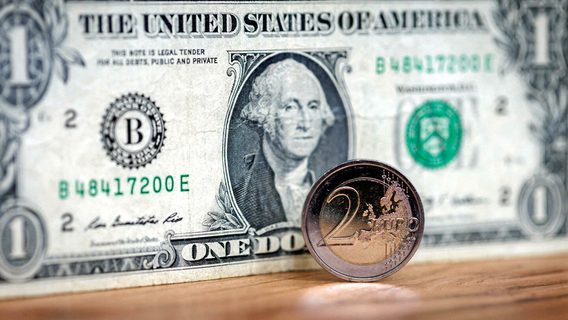
The National Bank of Ukraine has for the first time openly announced the start of an analysis of abandoning the US dollar as a reference point for the hryvnia in favor of the euro. This decision is due to internal and external macro factors.
The National Bank of Ukraine has for the first time openly announced the start of an analysis of abandoning the US dollar as a reference point for the hryvnia in favor of the euro. This decision is due to internal and external macro factors.
National Bank Chairman Andriy Pyshny confirmed in a letter to Reuters that the regulator has launched a comprehensive review of whether to replace the hryvnia peg from the US dollar to the euro. Key drivers include:
Ukraine's potential membership in the EU, deepening defense cooperation with Brussels
increasing turbulence in markets and the threat of fragmentation of world trade.
"This work is complex and requires high-quality, comprehensive training," Pyshny emphasized.
What was Ukraine's currency policy?
Since 1996, when the hryvnia was first introduced, Ukraine has been oriented towards the dollar. After a full-scale invasion in February 2022, the NBU applied a tight currency corridor and capital restrictions, fixing the exchange rate at around 29 UAH/USD. Later, due to the accumulation of fiscal imbalances, devaluation took place, and in October 2023, the transition to a managed floating exchange rate again established the dollar as the reference for interventions. The NBU is currently assessing the technical and legal aspects of the transition to the euro, analyzing macro-aggregates, foreign exchange reserves, and budgets.
Current challenges for the dollar and the rise of the euro
Geopolitics plays a significant role in the dollar’s role. Since Trump’s return to the White House, the United States has imposed the highest tariffs in a century, sparking trade disputes and sending the dollar index (.DXY) down more than 9%. At the same time, Washington has temporarily cut military aid to Ukraine. Some analysts caution against simply equating the currency’s strength with reserve status, but historically, dollar reserves have been linked to security alliances and military ties with Washington. In contrast, in a number of categories — from energy to trade — the share of transactions in euros is “moderate but growing,” Pyshny said.
Prospects for European integration and macro-forecasts
Strengthening ties with the EU opens up new opportunities: Ukraine has concluded an agreement that gives the US priority access to new mineral contracts and finances reconstruction. EU membership negotiations have been ongoing for almost a year, and European Commission President Ursula von der Leyen has called 2030 a possible date for accession, subject to reforms. The NBU expects closer European ties to support GDP growth to 3.7–3.9% in 2025–2026. At the same time, the regulator is counting on external financing: $55 billion this year, and about $17 billion and $15 billion in 2026–2027. Given these facts, the final decision on the European benchmark will depend on the progress of reforms and security guarantees.
As a reminder, recently, the Finance Committee of the Verkhovna Rada of Ukraine unanimously supported the revised draft law on the regulation and taxation of cryptocurrency.
Restoring historical justice: The National Bank initiates the change of the name of the coins from "kopeck" to "step", which was used back in the 16th century.