Хочете будувати кар’єру в Data Science та AI? Vodafone Big Data Lab відкриває новий набір —>
Олег ОнопрієнкоHot News
19 May 2025, 08:02
2025-05-19
New Chinese technology increases drone flight efficiency by 88%
Scientists from the China Aerodynamic Research and Development Center have found that installing a plasma generator on drones can prevent airflow separation and improve aerodynamic performance.
Scientists from the China Aerodynamic Research and Development Center have found that installing a plasma generator on drones can prevent airflow separation and improve aerodynamic performance.
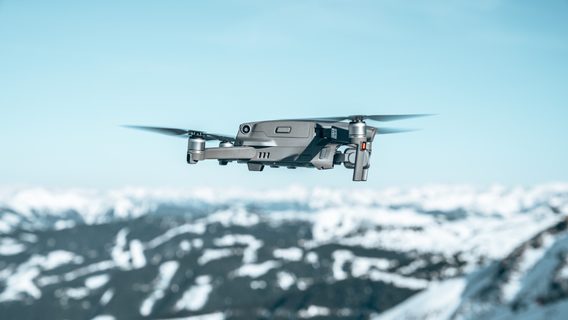
Chinese military scientists have discovered a way to make high-altitude drones more efficient using plasma excitation technology. This technology manipulates airflow using electrically charged particles (plasma) generated on the wings of the aircraft. The technology can improve aerodynamic characteristics, which will allow drones to fly longer. This is reported by the Interesting Engineering website.
High-altitude drones can fly at altitudes of 10,000 meters and remain airborne for up to 40 hours. However, at these extreme altitudes, the atmosphere becomes much thinner. This reduction in air density dramatically reduces overall aerodynamic performance, particularly the lift that counteracts gravity and keeps the drone in the air.
Researchers have observed that when a drone’s speed drops from 15 meters per second to 8 meters per second (30 km/h), the lift-to-drag ratio drops by more than 60%. A research team from the China Aerodynamics Research and Development Center (CARDC) tested a plasma generator mounted on the drone’s wings in a wind tunnel. The generator itself can output 16,000 volts to ionize the air 8,000 times per second, thus creating plasma bursts, which are essentially charged particles in the air.
The plasma interacts with the airflow around the wing, preventing it from separating, which improves the lift-to-drag ratio by 88%. This allows drones to maintain lift even at very low speeds.
“This technology has the potential to increase the endurance of high-altitude, long-range drones,” said a Chinese research group at CARDC.
However, plasma excitation technology has a significant drawback. The charged air particles created by plasma flashes also create plasma vortices. These can cause flight instability during climbs or sharp turns.
To address this problem, the team is currently working on a closed-loop control system that will regulate the plasma output in real time based on the drone's behavior, similar to an autopilot system specifically designed for plasma.
If the new plasma technology can be improved, drones will be able to fly much longer, improving reconnaissance, disaster response, and military surveillance.
Earlier, Chinese engineers announced that they had created the world's first fully autonomous AI agent, Manus, which can independently perform complex tasks without human guidance.
The GUR announced the "Magura era" and for the first time publicly presented new versions of Magura naval drones, which can operate in a swarm and shoot down Russian aircraft









Дрони Autel вражають, але я ніколи не чув про таку співпрацю.