Марія БровінськаAgroTech
17 September 2026, 10:00
2026-09-17
NFC cards instead of paper tickets. How the automated Kernel elevator works without scales, unnecessary movements and piles of waste paper
Ten years ago, the process of loading and unloading grain elevators (granary) "Kernel" by grain trucks worked according to a linear analog algorithm. The guard at the checkpoint registered the car, the driver received a registration ticket and went to the weigher, the laboratory manually recorded the quality of the grain, the driver got out of the car several times and "walked in circles", and at the exit from the elevator the guard checked whether anything "superfluous" was being taken out. Everything was accompanied by paper tickets, queues and the risk of errors. Now the process has changed dramatically: the driver does not leave the cab at all, documents are signed with an electronic signature, and the human factor in the process of cargo clearance is minimized.
Ten years ago, the process of loading and unloading grain elevators (granary) "Kernel" by grain trucks worked according to a linear analog algorithm. The guard at the checkpoint registered the car, the driver received a registration ticket and went to the weigher, the laboratory manually recorded the quality of the grain, the driver got out of the car several times and "walked in circles", and at the exit from the elevator the guard checked whether anything "superfluous" was being taken out. Everything was accompanied by paper tickets, queues and the risk of errors. Now the process has changed dramatically: the driver does not leave the cab at all, documents are signed with an electronic signature, and the human factor in the process of cargo clearance is minimized.
To optimize and automate operations, Kernel implemented several innovative solutions and rethought every step inside the elevator.
How "Kernel" removed every pain point
The changes came in stages — without stopping work and without overnight revolutions.
NFC cards first appeared back in the 2010s. They contain information about the trip: the driver, the car, the crop being transported. You put it to the reader and the system creates a record automatically. The first wave of papers disappeared, and with it something that had never existed before appeared: a complete history of each logistics operation and the ability to track work efficiency in real time. Why NFC cards? At that time, it was impossible to transfer information from the field via mobile Internet, so the choice fell on this format. Now both QR or barcodes and cards are used.
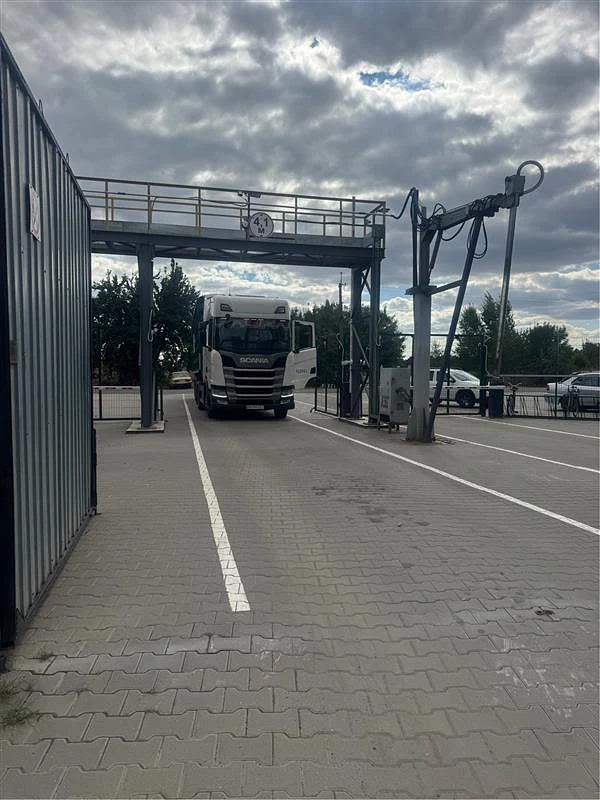
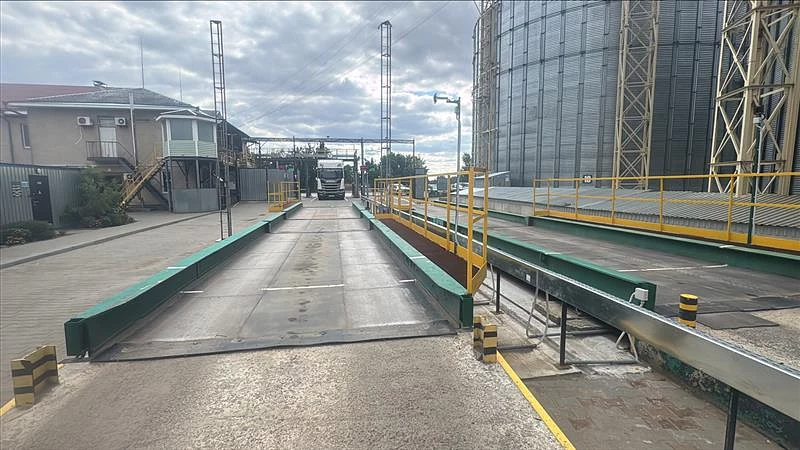
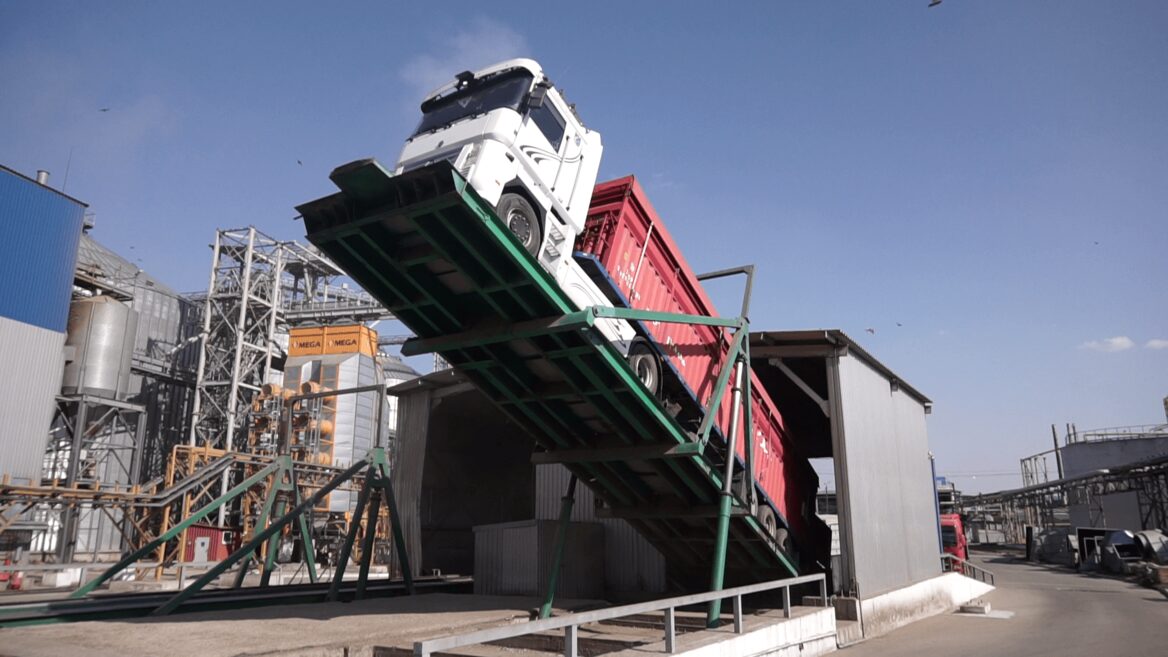
Then, cameras, scales, and displays eliminated the rest of the manual operations along the route. Cameras recognize license plates at the entrance and exit. Automatic scales weigh the truck and immediately synchronize the data with Kernel’s internal accounting systems—without a weigher and without the risk of error or manipulation of the readings. Digital displays on the dump pits—the sunken platforms where grain is unloaded—show the driver instructions.
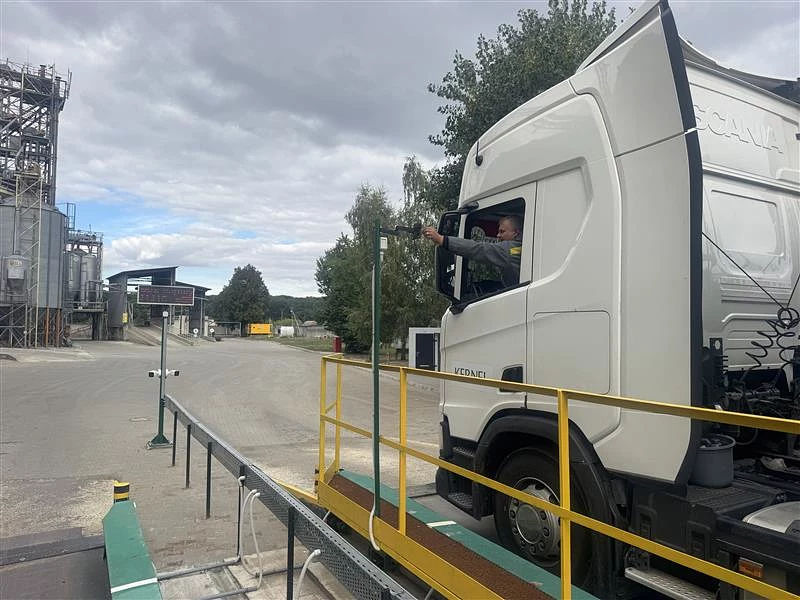
The next step was operator-free scales. This is the most revealing detail of the entire process. Previously, the driver would get out of the car, go to the weighbridge with paper documents, and a lab technician would go out to each car, manually take a grain sample and carry it to the laboratory, which created queues and reduced the throughput of the weighing complex. Now this process is fully automated: a mechanical arm enters the body, takes the sample and transfers it to the laboratory — without any contact with a person. Grain quality analysis is fully automated and automatically synchronized with Kernel’s internal accounting systems.
The electronic queue solved the main problem — congestion of cars. The driver registers in advance, the system assigns a time of arrival and distributes the transport according to priorities. Each truck arrives at its slot — and does not wait. All participants in the process see the status of the flight in real time.
The system collects analytics on the load of elevators — it is already a planning tool, not just queue management. In wartime, there is another dimension: the congestion of transport becomes a potential target, the electronic queue removes this congestion.
eTTN with electronic signature is the final step, which was introduced last year. The consignment note is digitally signed, and the entire cycle from entry to exit takes place without a single paper document.
What did it give?
With the introduction of automated accounting in Kernel, downtime was reduced — the main limitation was only the throughput of the bulk pit. In general, the combination of an electronic queue, operator-free scales and NFC/codes turned the elevator into a full-fledged digital hub. The business received faster transport turnover, a minimum of manual operations, a transparent route from the field to the elevator and lower risks of fraud. The driver — convenience, all processes take place without leaving the car. The security service — a full history of the trip and the ability to track suspicious actions in real time. Each stage is controlled and transparent, and the entire process is automated.
Experienced drivers were initially suspicious of the changes. But after a few trips, the questions disappeared by themselves. "Previously, they would stand at the checkpoint for hours. Now they wait in a coffee shop outside the settlement, drive in and go through the entire process without queues. They realized that it was faster and easier," Kernel says.
What does it cost?
One automated platform — weighing plus registration system — costs about $10,000. Installation and setup are performed by internal teams. Kernel operates about 30 elevators with a total storage capacity of 2.2 million tons — this is the largest network in Ukraine. At this scale, automation of each facility pays for itself quickly.