Хочете будувати кар’єру в Data Science та AI? Vodafone Big Data Lab відкриває новий набір —>
Наталя ХандусенкоAI Eng
22 October 2025, 12:23
2025-10-22
Latvians are building an AI data center that will heat homes. dev.ua visited the most modern "green" data center in the Baltics for 30 million euros: report
Latvian company Tet is building one of the most modern and energy-efficient data centers in Northern Europe, costing over 30 million euros. The DC7 data center is completely «green»: the heat from the servers will be used to heat the neighboring city of Salaspils. In addition, the data center will be equipped with innovative technologies, including a liquid cooling system for racks for the use of artificial intelligence with a capacity of 30 kW to approximately 100 kW with NVIDIA graphics cards.
dev.ua visited the construction of the new DC7 data center, which will be ready to receive the first customers, including from Ukraine, in September 2026.
Latvian company Tet is building one of the most modern and energy-efficient data centers in Northern Europe, costing over 30 million euros. The DC7 data center is completely «green»: the heat from the servers will be used to heat the neighboring city of Salaspils. In addition, the data center will be equipped with innovative technologies, including a liquid cooling system for racks for the use of artificial intelligence with a capacity of 30 kW to approximately 100 kW with NVIDIA graphics cards.
dev.ua visited the construction of the new DC7 data center, which will be ready to receive the first customers, including from Ukraine, in September 2026.
Tet is a Latvian company that has been providing cloud services to Ukrainian businesses for over 10 years.
Latvian company Tet was founded in 1992 as Lattelekom, before its BigTech competitors such as Amazon Web Services, Windows Azure and Google Cloud existed. It is a state-owned company: 51% of its shares are owned by the government and 41% by the Scandinavian company Telia.
Over the past 20 years, the company has transformed from a communications company (initially, about 98% of its revenue came from fixed voice communications) into a multi-industry technology brand with over 1,400 employees.
The company provides a wide range of services, which includes Internet, television, electricity, 4G and 5G mobile communications, devices, cybersecurity, IT solutions, Voice and Media Tech technology. It also deals with artificial intelligence and quantum technologies. However, one of Tet’s core and most perspective businesses is cloud services and data centers. The latter account for 65% of the company’s total exports, the largest part of which falls on the Ukrainian market.
Tet entered the Ukrainian market in 2012 and currently has over 100 Ukrainian business clients, including retail stores and e-commerce, factories and logistics companies, as well as agricultural holdings. Some of them have revenues 25 times higher than Tet’s own.
Tet has 6 data centers (DPCs) in Latvia, one of which is TIER III certified. In 2023, the company launched 2 DPCs in Frankfurt, Germany, and the following year, one of these centers deployed the infrastructure of its Tet Cloud platform.
In addition to Frankfurt, Tet-owned and operated facilities are also located in Copenhagen, Stockholm, Helsinki, Tallinn, Vilnius, Kaunas and Kyiv.
Construction of the most modern data center in the Baltics
Construction of the new DC7 data center begins
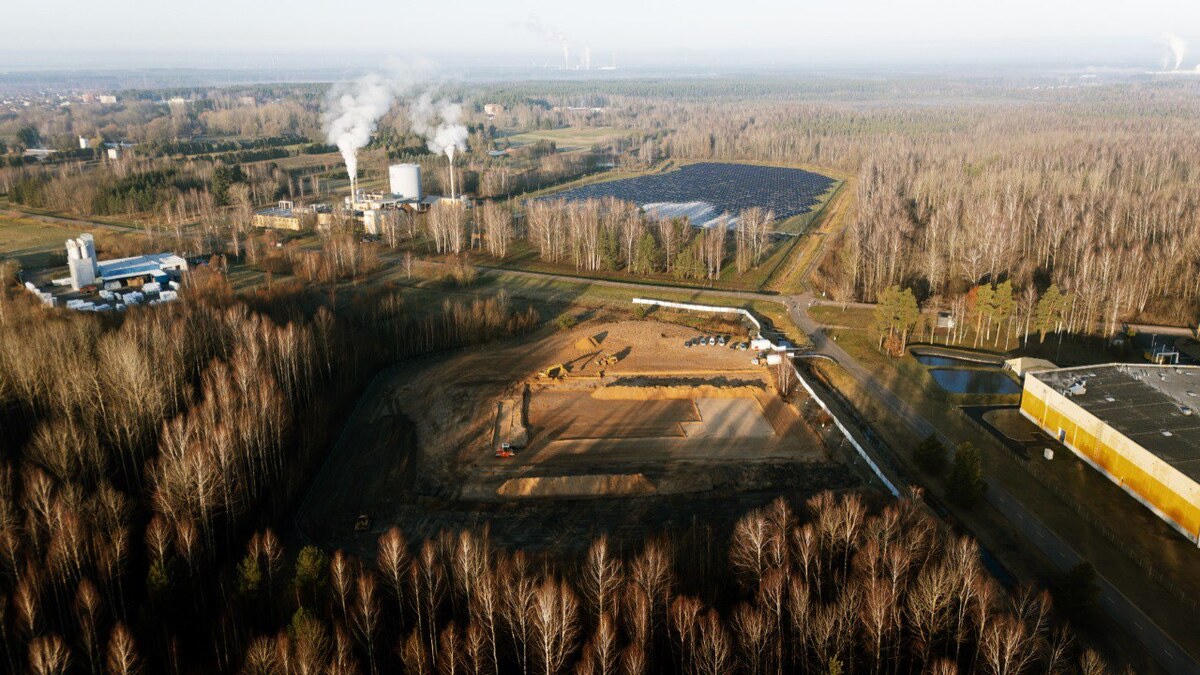
In May 2025, Tet began construction of a new DC7 data center in Salaspils, a small town located 18 km from Riga.
The location for the new data center was chosen for several reasons. First, the availability of high-quality high-voltage power supply and the ability to connect to large capacities, which is a key factor in ensuring the uninterrupted operation of the data center. Secondly, optical communication. Optical trunks are already coming here from two different directions: one to Germany, the other to Scandinavia. In addition, the Rail Baltica Regional Line will be built nearby (literally a couple of kilometers away). This will provide additional access to large trunk lines. Thus, the company will only need to complete a few kilometers of infrastructure to connect to these main trunk lines.
DC7 became the company’s second data center certified according to the American TIER III standard, which provides the ability to perform maintenance or replace equipment without stopping the operation of the data center itself.
The investment amount reaches $30 million euros. The construction of the premises is the smallest cost of the project, the majority of the funds will go to the purchase of the technical part.
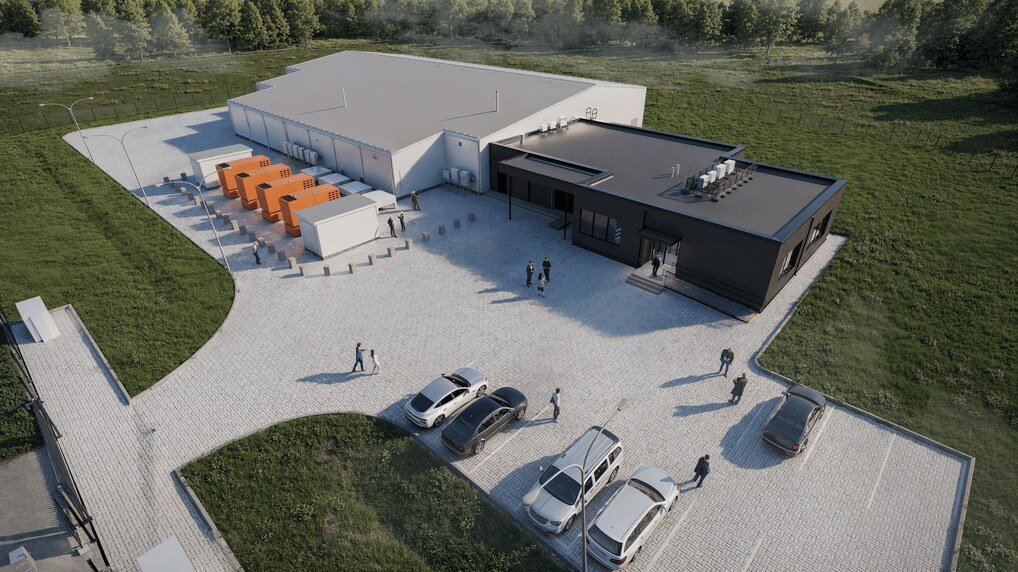
Mockup of the finished DC7. Source: Citrus Solutions
The data center will welcome its first customers in September 2026. Currently, about 200 kW of power supply has been reserved for customers, including Ukrainians. However, the project is planned to be fully completed by the end of 2028.
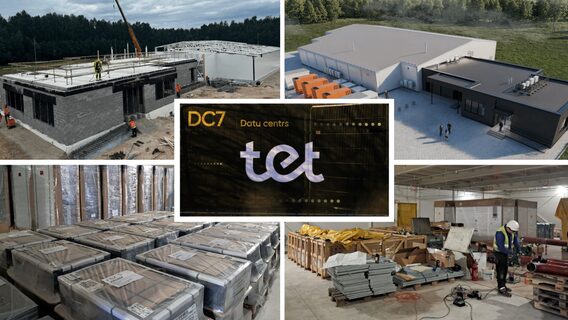
Currently, the exterior of the building and server rooms are under construction. The photo above shows what DC7 will look like when completed.
Building-in-a-building design in DC7
The data center is designed according to the «building within a building» concept, thanks to which passive cooling will be used instead of using powerful air conditioning systems. In addition, it has a double floor for communications.
AI-ready data center
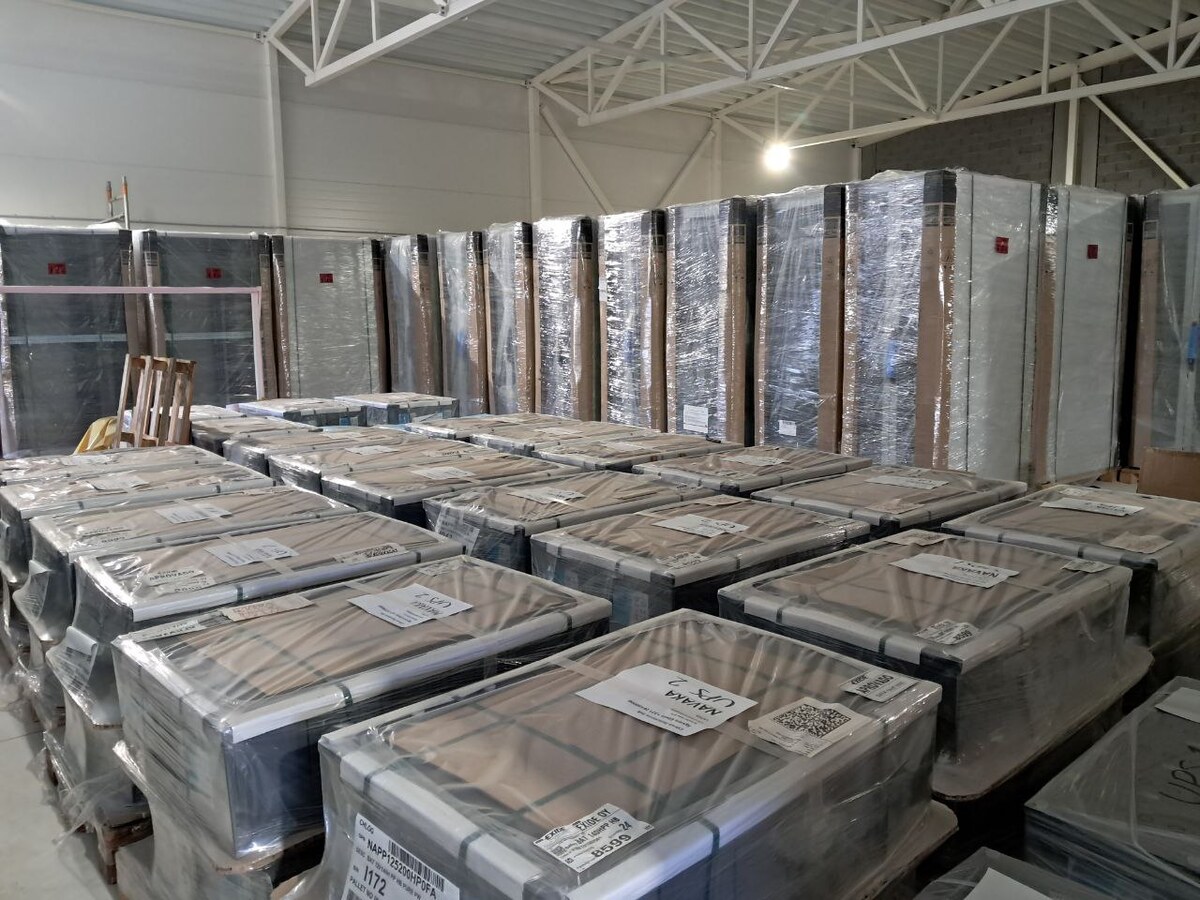
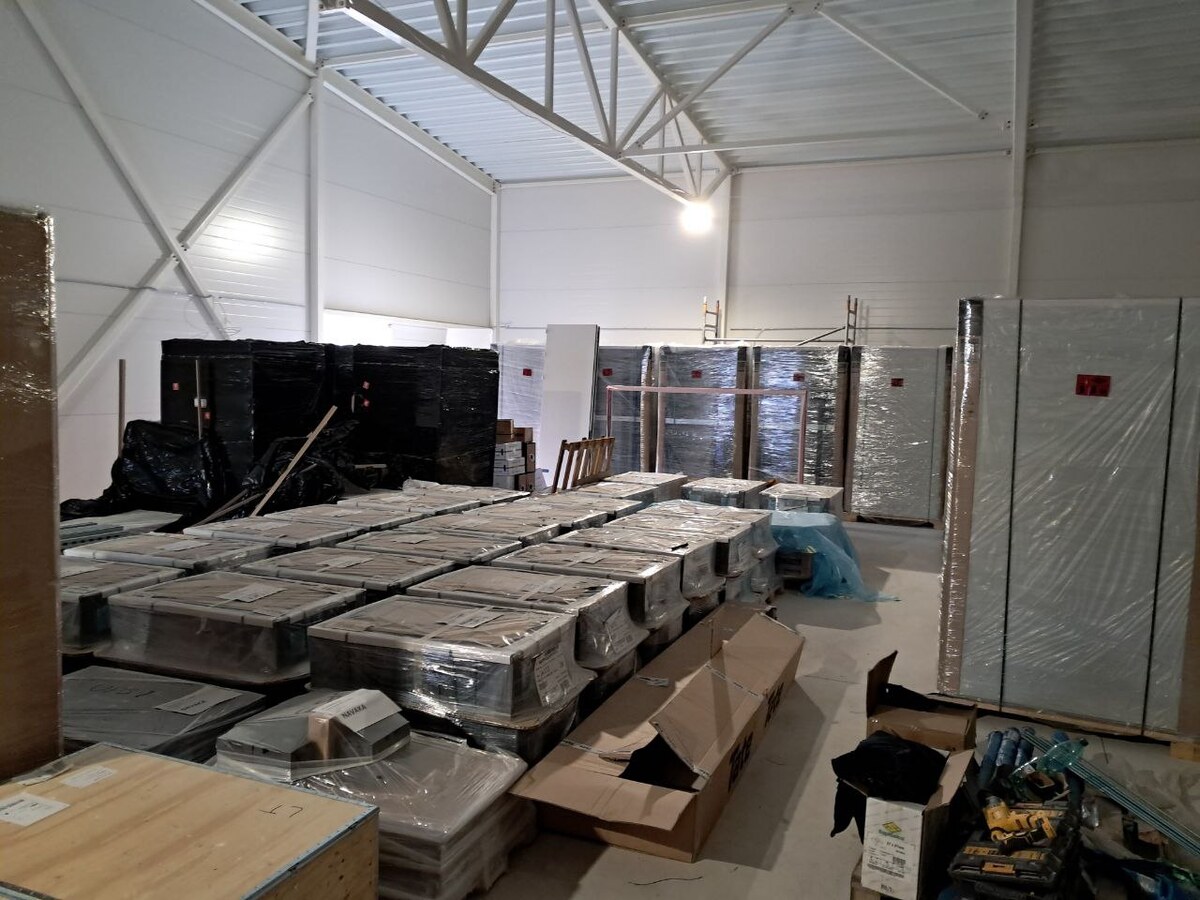
DC7 has two server rooms, each designed for 110 racks, 50% of which the company has already delivered.
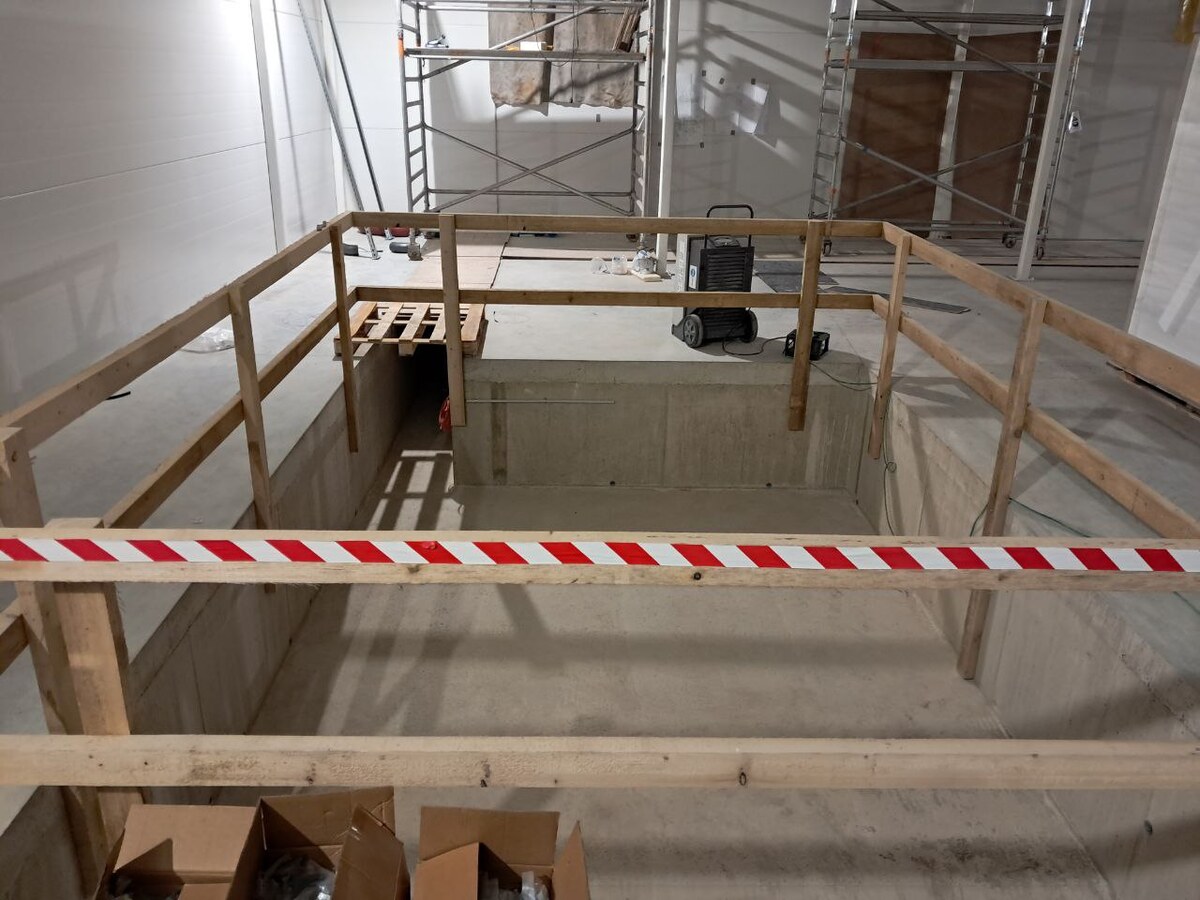
Each server room has special pools for cooling racks for AI use: one is designed for 10, the second larger one for almost 20.
These racks will only have NVIDIA graphics cards with a capacity of up to 100 kW. For comparison, data centers usually have racks with 7 kW-10 kW. A server with eight NVIDIA units costs about $250,000. One rack can accommodate 47 such units.
Pool for racks with AI capabilities
The pools will be filled with a special cooling liquid (Liquid Cooling) and hermetically sealed.
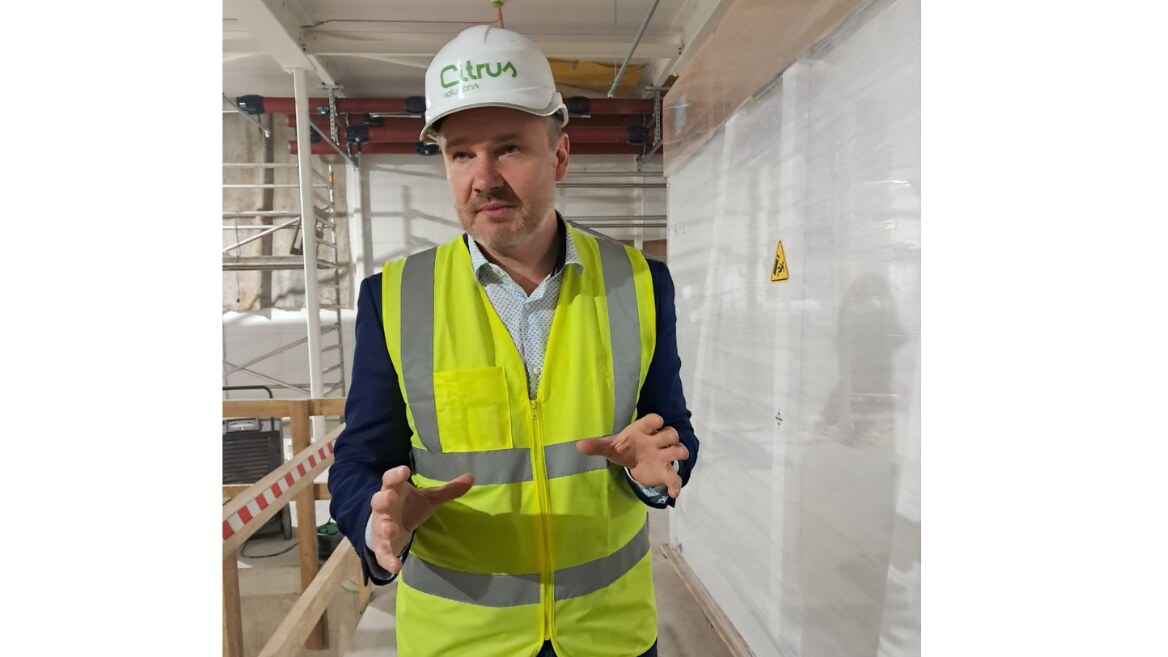
Maris Sperga, Director of B2B Solutions Department at Tet
«There will be private, stable clouds, which are very popular among Ukrainian businesses.They do not require liquid cooling. However, we understand that tasks related to artificial intelligence require special resources. And what is very important: not every customer needs these powerful cards all the time. It is for such cases that we integrate this infrastructure into our Tet Cloud. If a client, for example, needs to process certain processes or train a model, he can safely connect to these resources. Payment is made hourly: he takes resources, performs his tasks (whether during the day, week or month) — and that’s it. It works as a full-fledged service. That is why services such as „as-a-Service“ are in great demand, especially in the field of artificial intelligence,» explains Maris Sperga, Director of the B2B Solutions Department at Tet.
Energy supply
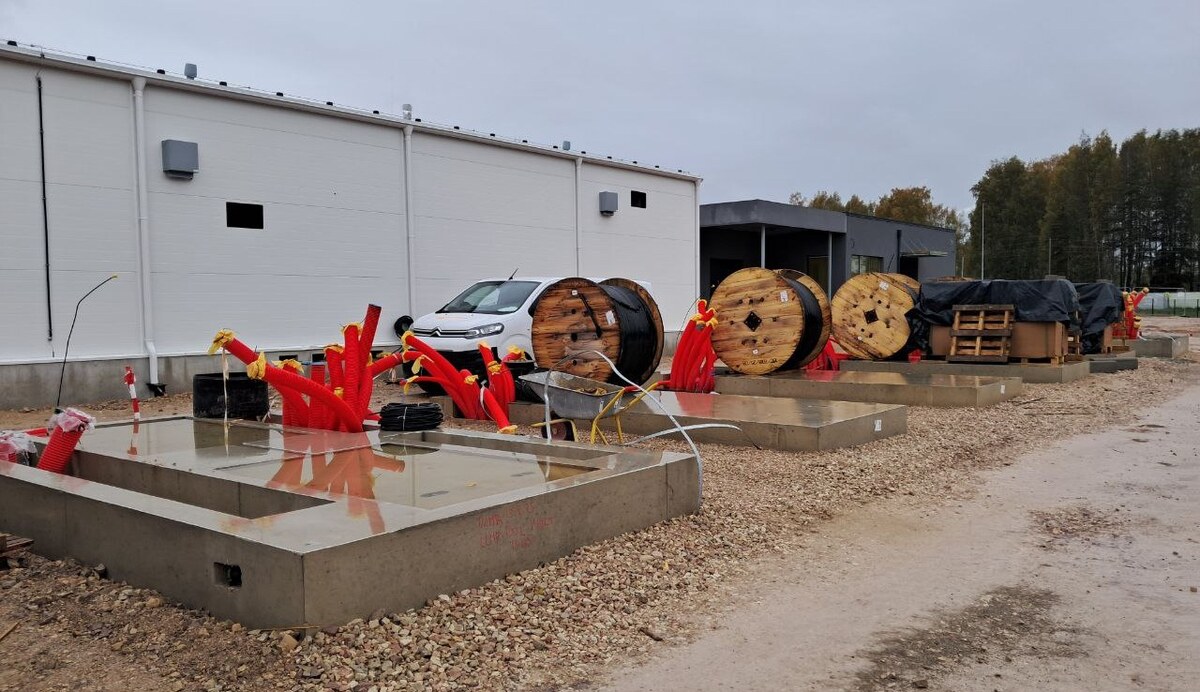
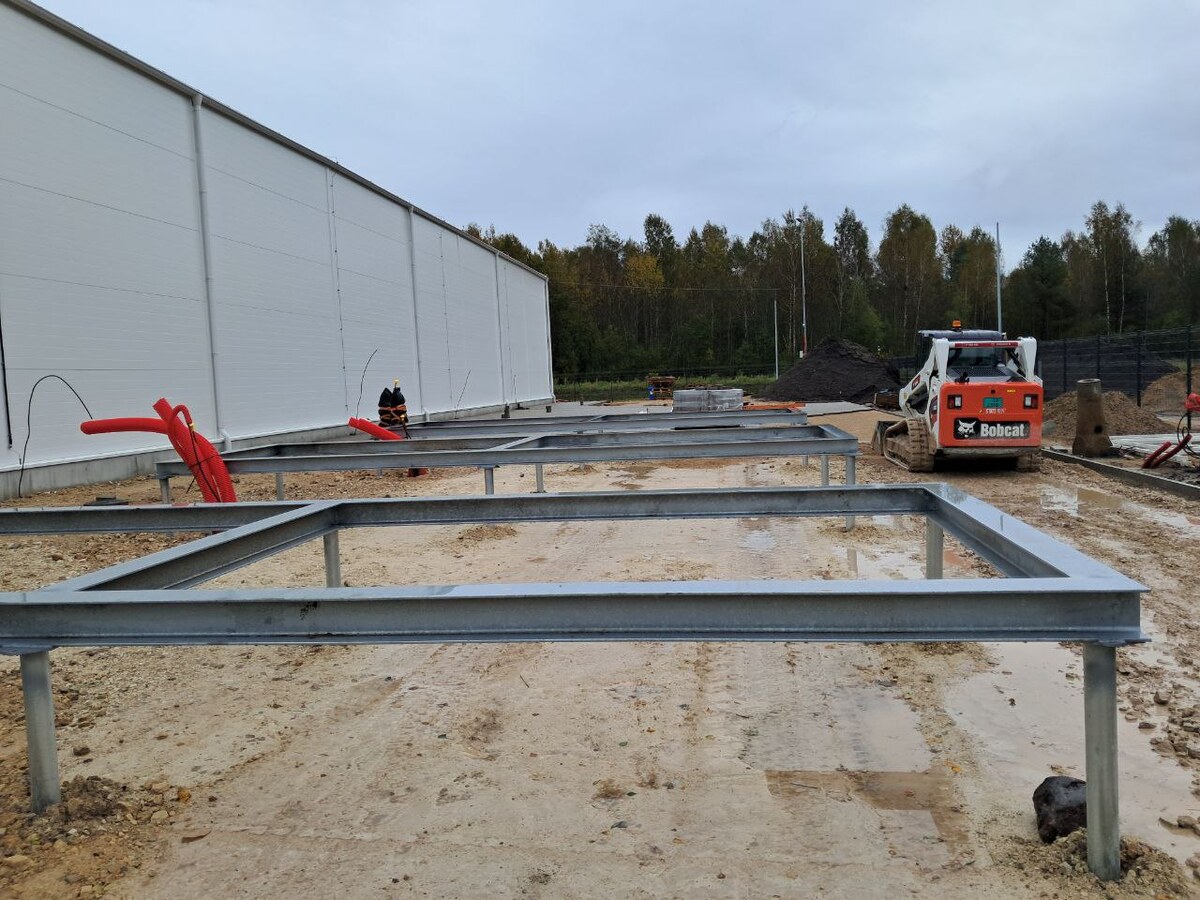
Diesel generators and two electrical substations will be located outside. One substation will supply electricity from the city, and the other will be a backup.
Four diesel generators will be installed in the middle in special containers. Their total fuel capacity will be 25 tons. But only two will be used: one main one, and the second one — in case something happens to the main one.
Location of generators and substations
All equipment — air conditioning and servers — is powered by UPS (uninterruptible power supply systems). If the city power supply fails, the load is instantly switched to batteries, which can support operation for up to one hour, and at full load — 15–20 minutes. The generators can operate autonomously (without connection to the city) for 24 hours. In addition, the company is obliged to refuel within 4 hours after starting the generators.
An important point: Tet does not fill classic diesel, but synthetic fuel Neste My. This is diesel, which is produced through the distillation process; it is not biodiesel, but the so-called synthetic fuel.
Its advantage is that regular diesel turns into paraffin over time, which makes it impossible to start a generator. Synthetic fuel has a completely different process and does not wax. It can be stored for up to 10 years and does not need to be constantly mixed or replaced. The company only needs to top up the fuel when it is used, for example, for testing.
Heat from server cooling for heating residential buildings
The European Union will introduce restrictions on CO2 emissions from 2030. This means that all data centers must be climate neutral: not only emit heat, but also recycle it. Therefore, when building DC7, the company took this factor into account in advance.
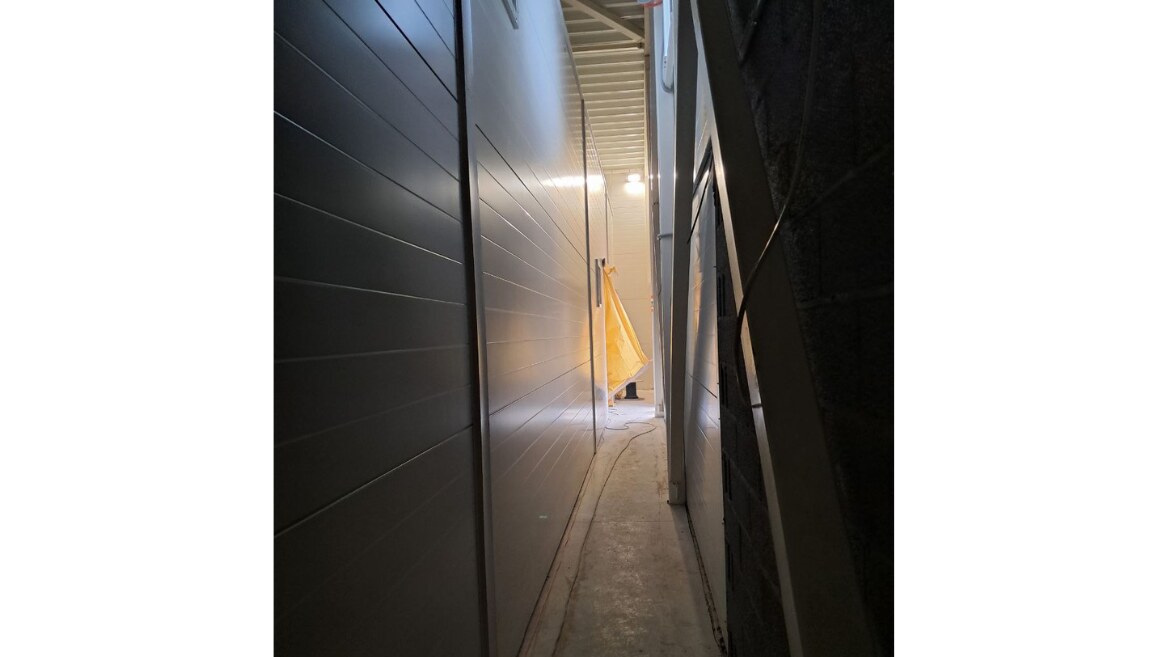
The new data center has three large chillers that will transfer excess heat to the Salaspils city utilities. For this purpose, the company has built an additional section where its pipes and heat pumps from the Salaspils Siltums utility company will be connected.
Location of coolers
The system will work as follows: the data center receives liquid from the city at a temperature of 11 °C, which cools the data center through heat exchangers. After cooling, the liquid returns to Salaspils Siltums at a temperature of approximately 28-30 °C. The utility company then heats it and supplies it for heating the city. The volume should be enough for approximately 700 households.
Advantages of DC7 over hyperscalers like AWS, Azure, and Google Cloud
Our biggest advantage, compared to large cloud hyperscalers (such as Microsoft or AWS), is that we adapt to the needs of our customers as much as possible.
«If you need a certain amount of resources, we provide it. If you need an atypical amount of cloud services, we provide it. If you have special requirements for cybersecurity, we implement a solution according to your requests. This is our main task: we ensure that a large client has a direct connection with the office. In our business, there are no situations when you send a request by mail and have to wait a long time for it to be processed,» said Maris Sperga.
According to him, Tet does not seek to compete in large volumes of capacity (for example, 10, 30 or 50 MW), as this is a different business.
«Such competitors can usually be found in Finland, where there is subsidization. We do not operate in the mass market; instead, we are focused on service and quality of services. It is this focus that ensures our growth, especially in such promising areas as artificial intelligence (our next step) and quantum networks (our next stage). And although sometimes we are asked: „You are a Telco operator here. What are quanta? What is artificial intelligence? What do you even do?“, we are confidently moving forward,» concluded the director of the B2B solutions department of Tet.