Хочете будувати кар’єру в Data Science та AI? Vodafone Big Data Lab відкриває новий набір —>
Марія Бровінська
17 July 2026, 09:11
2026-07-17
“He’s done more than most people do in ten years.” DefenceTech industry reacts to Mikhail Fedorov’s resignation: what manufacturers are afraid of losing
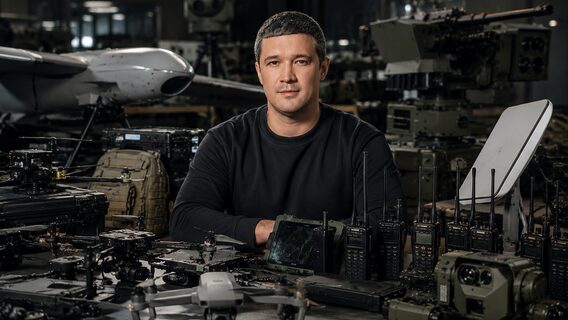
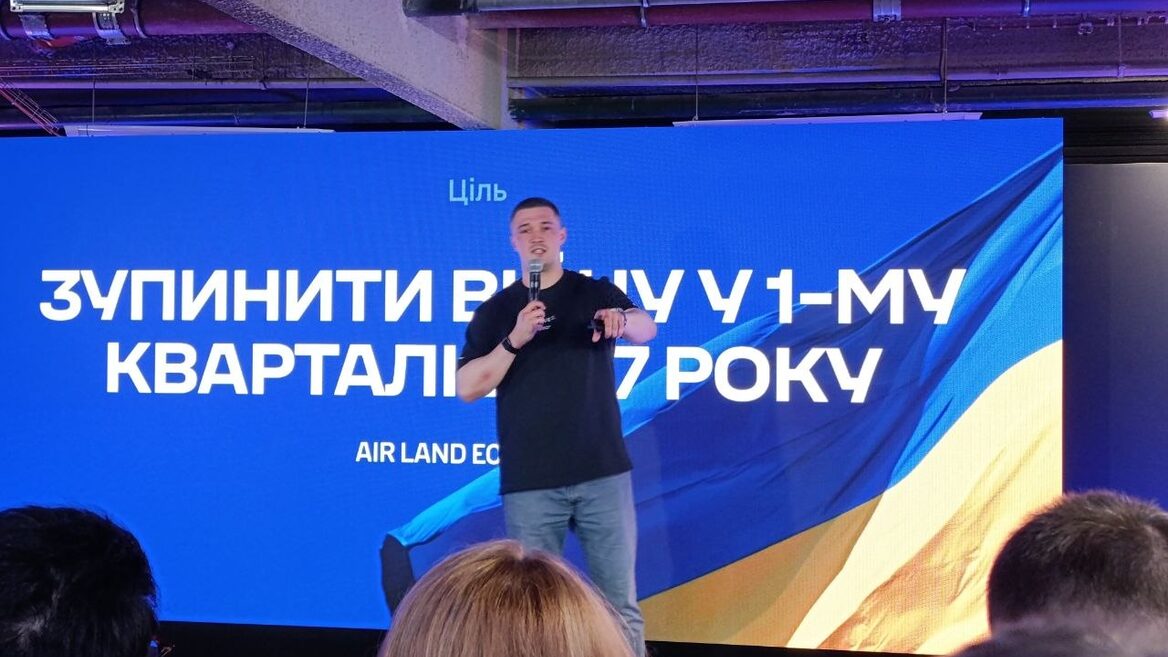
The resignation of Mykhailo Fedorov as Minister of Defense and, ultimately, his absence from the new government became one of the most discussed topics in the Ukrainian DefenceTech community — so much so that it eventually led to rallies in several cities.
The industry’s reaction has been mixed: most entrepreneurs and investors express concern about the loss of momentum in reforms, while a smaller portion calls for not personalizing the problem and trusting institutions rather than individuals.
The resignation of Mykhailo Fedorov as Minister of Defense and, ultimately, his absence from the new government became one of the most discussed topics in the Ukrainian DefenceTech community — so much so that it eventually led to rallies in several cities.
The industry’s reaction has been mixed: most entrepreneurs and investors express concern about the loss of momentum in reforms, while a smaller portion calls for not personalizing the problem and trusting institutions rather than individuals.
A legacy the industry fears losing
The central argument of Fedorov’s supporters is not so much personal sympathy as satisfaction with the specific work model he has built. TAF Industries founder Oleksandr Yakovenko described it as a system based on one principle: effective products are contracted without the need for acquaintances or cabinet agreements. According to him, over the thirty years of independence, contracts in the Ukrainian defense industry have usually been distributed according to a different logic — whoever is closer to the cabinet gets more — and it is this logic, in his opinion, that Fedorov has broken.
During the five years of the war, Yakovenko says, he met the minister in person only three times — and he called it the best complement to his work, because it was the lack of need for personal connections that allowed his company to build a billion-dollar business on government contracts.
The system that Fedorov built, notes Yakovenko, is based on one simple principle: if your products are effective, they will be contracted. Period. Not through acquaintances, not through offices, not through dinners.
«Anyone who has worked in the defense sector before knows how revolutionary this is. Over the thirty years of independence in Ukraine, defense contracts were distributed according to different rules. Whoever is closer gets more. Fedorov broke this logic. I am grateful to him as an entrepreneur and as a citizen for the fact that I could not know the minister personally for a year and a half and at the same time build a billion-dollar company on state contracts. He managed to do more than most people do in ten years,» says Yakovenko.
Yakovenko separately distinguishes two stages of Fedorov’s work. First, as the Minister of Digital Transformation, who built «Diya», led Ukraine on a new technological trajectory and created the Brave1 architecture, which became the operational core of Ukrainian defense-tech; the main achievement of this period, he calls the establishment of the «Army of Drones». Then, as the Minister of Defense, which Fedorov took over only six months before his resignation: the Drone Deal, the Starlink shutdown for Russians in the occupied territories, the ballistic program with a successful test on the very day of his release, as well as system procurements that brought Ukraine to first place in the world in the production of unmanned systems. Saying goodbye to the minister publicly, Yakovenko wrote that people who change the system do not disappear from the system, but return in a different role — and expressed confidence that their paths will cross again.
Among the specific results that Forbes Ukraine’s interlocutors most often mention are the transfer of an increasing share of procurement to competitive tenders, the e-Points system (which gives more efficient units more modern weapons), and the growth of purchases of ground robotic complexes. One of the top managers of a large drone manufacturer described the general mood of the industry briefly in a comment to Forbes Ukraine: there are many achievements, and the industry is in shock from the decision. According to another market participant, Fedorov’s team acted like a startup that tried to «disrupt» existing processes in the ministry — although even supporters admit: not all the planned reforms were completed, in particular, the program to allocate 20% of the Ministry of Defense budget to innovative developments and their combat testing never worked.
A broader institutional argument was formulated in a comment to Defender Media by Roman Sulzhyk, the founder of the Resist.UA investment fund: two models still coexist in the Ukrainian defense procurement system — the old one, with opaque schemes that have been formed for decades, and the new track, where decisions are made based on objective data. Fedorov, according to his observation, promoted the second approach as much as possible, which is why he faced pressure from supporters of the old system. «At the moment, it looks like his opponents have won. But their tactical victory could become Ukraine’s strategic defeat,» the investor warns.
The price of any change, regardless of personality
Part of the industry emphasizes not so much the figure of the minister himself as the structural problem of frequent personnel rotations. Anastasia Mishkina, Managing Director of the Association of Arms Manufacturers «Technological Forces of Ukraine», believes that it is unrealistic to expect systemic progress if the heads of key departments change every six months: systems produce results, and they cannot be built in conditions of constant restructuring, no matter how brilliant a particular leader may be.
The practical dimension of this problem is described by the founder of Unwave, Yuriy Shelmuk: any change of minister means a pause in the work of the department, because the new team is forced to re-form processes. According to him, the approval and confirmation of the criticality of enterprises by September, the current projects on mid-strike drones and «small» air defense, as well as the process of controlled exports are immediately in question — «one action — and immediately a large list of unknowns, and we have to plan production.» The CEO of the Ukrainian Council of Arms Manufacturers, Ihor Fedirko, adds that the new minister will almost certainly start changing deputies and heads of departments and reviewing already made decisions, which requires a lot of time.
Co-founder of Himera and Promin Aerospace Misha Rudominsky formulates his position as a matter of civic duty, not business interest: in his opinion, Ukrainians are obliged to react when the authorities make a decision that will directly affect the number of deaths among the country’s citizens, and everyone’s personal business interests in this conversation should take a back seat. During his tenure as Minister of Defense, Fedorov, in his assessment, made a significant contribution to the development of the Ukrainian defense technological ecosystem — it was with his participation that technologies became one of the key elements of the development of the Defense Forces, and the interaction of the state with defense companies reached a new level. For Rudominsky, the main thing now is to maintain this course: modern war, according to him, is a war of technologies, and it is they that largely determine effectiveness on the battlefield and help save the lives of military personnel.
«The main thing now is not to lose the pace of development and continue to work on strengthening Ukraine’s defense capabilities. Today, all our efforts should be focused on the main thing — countering Russian aggression and providing the Defense Forces with modern technological solutions,» he notes.
COO Kara Dag Technologies Andriy Poberezhnyuk explains the public reaction, including rallies, through the same logic: many associate deftech’s recent successes and the scaling of drone production with Fedorov’s team, so the question «why change what works» seems quite natural. At the same time, Poberezhnyuk remains an institutionalist — in his opinion, the state system should be stronger than individual people, and the only fair measure of the correctness of the personnel decision will be whether the new management will be able to maintain or accelerate the pace of development of the industry.
And Tencore CEO Maksym Vasylchenko formulates the claim more harshly: the replacement would be understandable in the absence of results, but the results are there, and the industry sees them, and he calls the minister’s main advantage speed — work on goals often began after a handshake. Motor-G CEO Oleksiy Hrebin adds that it was under Fedorov that the ministry had a vision and mission, around which key indicators and goals were built — and without these rules and their author, the system, in his opinion, will not survive for long and will return to its previous settings.
Not everyone agrees with the general enthusiasm
However, the industry is not unanimous. One of the top managers of a defense company directly says that he does not share the general sentiment regarding Fedorov’s «super-efficiency»: as an example, he cites statements about a radical change in the procurement system, while the procedures carried out by the Defense Procurement Agency, according to his observations, do not differ in any way from those that were in effect last year. At the same time, even he admits: the team gave the impression of being young and correct, and Ukraine needs innovation in war. An anonymous representative of a deftech company also adds a more cautious, almost methodological caveat: it is possible to objectively assess the minister’s work only after he has worked for at least one full budget year.
Another representative of a large manufacturer goes further and sees no risks in the near future, since the AOZ and the army continue to work, and the main processes are moving, so all technological progress will not stop at once without one person. But even he recognizes the negative psychological effect of resignation on the market and the army: many are demotivated by the very attitude towards a progressive and bright manager, regardless of how justified the decision was in essence.
What’s next?
Despite the difference in tone — from emotional gratitude to dry institutional skepticism — almost all market participants agree on one thing: the main risk is not in the person of a specific minister, but in the possible loss of the pace of technological change that has managed to form in the Ministry of Defense in recent years.
The question that remains open for the industry is whether the new team will be able to pick up this pace, or whether the system will gradually return to its more familiar, slower settings, as predicted by several interlocutors.
«Doing things with a bunch of restrictions that give you the opportunity to start defeating the enemy? Well, then you’re out of the position of minister.» What do entrepreneurs, volunteers, and public figures think about Fedorov’s dismissal from the Ministry of Defense