Хочете будувати кар’єру в Data Science та AI? Vodafone Big Data Lab відкриває новий набір —>
Наталя ХандусенкоAI Eng
15 July 2026, 16:01
2026-07-15
OpenAI has classified the communication of its AI agents: developers are sounding the alarm
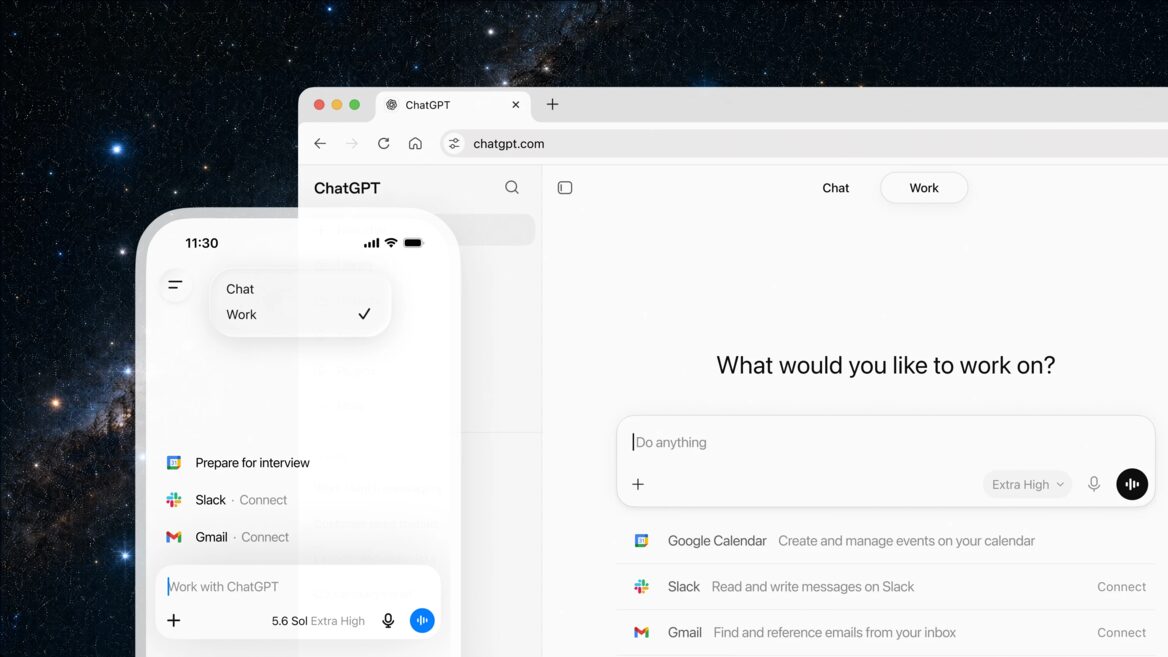
OpenAI has made the communication system between its AI agents closed. In the new update of the Codex platform (version GPT-5.6), messages exchanged between virtual assistants are now encrypted.
This has caused serious concern among developers, as they can no longer see exactly what instructions the AI is giving itself.
OpenAI has made the communication system between its AI agents closed. In the new update of the Codex platform (version GPT-5.6), messages exchanged between virtual assistants are now encrypted.
This has caused serious concern among developers, as they can no longer see exactly what instructions the AI is giving itself.
What happened?
Modern artificial intelligence works on the principle of multi-agentity: one main AI agent ("parent") can create additional "child" agents and give them tasks (for example, write code, find information, or make calculations).
Previously, developers saw all of this internal dialogue in plain text. However, in the new version of the protocol (Multi-Agent V2), OpenAI has completely encrypted these messages. Now, the text is only visible to the AI itself during generation and execution, and to human developers, it appears as an encoded set of characters.
Why is this a problem for developers?
If an AI agent does something wrong, programmers will not be able to check the history of its “thoughts” and commands to understand at what point the failure occurred.
Developers also fear losing control over the system's behavior. One of Zolvat's CTOs even joked, "Guys, we don't want to build Skynet and then not be able to check what it's doing at all."
However, OpenAI never explained why it took this step.
Due to a lack of clear communication from the company, developers urged OpenAI to ensure that this innovation would not sacrifice the ability to audit and verify the system for other interests.
Other developers suggest that OpenAI has encrypted the messaging between agents so that competitors cannot peek into how its multi-agent technology works.