Хочете будувати кар’єру в Data Science та AI? Vodafone Big Data Lab відкриває новий набір —>
Олег ОнопрієнкоWeapon
8 September 2026, 12:09
2026-09-08
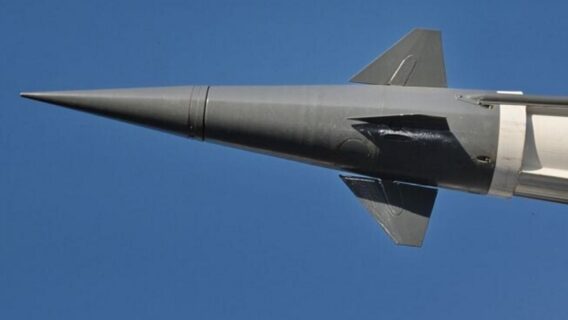
"Our own analogues did not give results." Russia again installs American processors in Kinzhal missiles
The aggressor state is forced to return to using foreign electronic components in its most complex weapons systems. Russia's attempts to replace Western microcircuits with domestically produced parts in its Kinzhal hypersonic missiles have been unsuccessful.
The aggressor state is forced to return to using foreign electronic components in its most complex weapons systems. Russia's attempts to replace Western microcircuits with domestically produced parts in its Kinzhal hypersonic missiles have been unsuccessful.
The failure of Russian import substitution in the microelectronics sector was reported by the Ukrainian President's Commissioner for Sanctions Policy, Vladyslav Vlasyuk, in a comment to the Interfax-Ukraine agency.
According to the official, back in 2023, the Russian military-industrial complex tried to massively replace American processors from Texas Instruments with chips of its own production. However, a study of newer weapons samples showed that the aggressor abandoned this idea. In particular, processors from the United States were again found in the Zorya-61 block of the missile that Ukrainian air defense shot down in May of this year.
“The results of the study directly indicate that Russian analogues did not produce the necessary results,” Vlasyuk explained, adding that the Russian Federation continues to receive foreign electronics for the production of missiles and drones through shadow supply chains.
Experts have found components of completely different ages in Russian weapons. For example, one of the examined boards contained a Texas Instruments processor marked 1986 and AMD chips from 1996.
At the same time, the enemy also has access to the latest electronics. In the Geran-4 drone shot down over the Kyiv region on August 12, experts identified 96 foreign parts (from manufacturers Amphenol, Diodes Incorporated, Kyocera AVX, Kemet, ON Semiconductor, and Vishay Intertechnology), seven of which were manufactured in 2026. A similar situation is observed with ballistics: in the Iskander-M missile found in July, 147 components manufactured in the USA, Switzerland, Germany, China, and Japan were found.
Vlasyuk noted that although the rocket contained several dozen Russian and Belarusian parts, this is critically low for complex systems. Therefore, Russia is doomed to combine bases and look for Western chips in different markets, using old stocks where they are still suitable for operation, and in parallel purchasing new ones.
"I could not even imagine that I, a simple programmer, would master the Patriot air defense system and shoot down the first "Dagger" in the world." The Defense Forces said that a Ukrainian IT worker was the first in the world to hit a hyperballistic missile