Panasonic has created a digital clone of the company's founder. He will give advice to managers
Japan's Panasonic has created an AI version of its long-dead founder, Konosuke Matsushita, often referred to as the "god of management."

Japan's Panasonic has created an AI version of its long-dead founder, Konosuke Matsushita, often referred to as the "god of management."
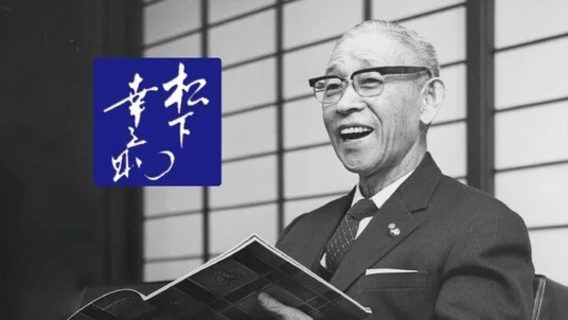
Japan's Panasonic has created an AI version of its long-dead founder, Konosuke Matsushita, often referred to as the "god of management."
Konosuke Matsushita founded Panasonic in 1918, when the company was called Matsushita Electric Housewares Manufacturing Works.
Matsushita was able to turn the business from selling lamps into a global company. That is why he is called the "god of management". Matsushita is also revered for his leadership philosophy.
He is the author of more than 40 books, some of which remain popular despite their age. One of his works, "The Way" from 1968, is on the must-read lists of many Japanese professionals and deals with individual success and self-improvement, while "Not by Bread Alone" focuses on the social role of business.
Konosuke Matsushita died in 1989.
"We believe it is important that our employees properly understand the management philosophy of our founder, Konosuke Matsushita, on which our core management policies are based, and pass it down through the ages," the company said, according to The Register.
The AI was trained on 3,000 recordings of Matsushita, as well as his writings, lectures and interviews, which were digitized by Panasonic's Institute for Peace and Happiness through Prosperity (PHP), a think tank and educational organization founded by Matsushita.
In addition, the company collaborated with the Matsuo Institute at the University of Tokyo to develop an AI character that mimics Matsushita's thinking and speaking style.
"The development of generative AI technology provides a new approach to testing traditional research questions, and we hope that this will allow us to undertake previously impossible interdisciplinary research using innovative methods," explained Panasonic.
The project also expands Panasonic's experience and capabilities in the field of artificial intelligence. Recently, the company has focused on batteries for electric vehicles, hydrogen energy, digitalization of workplaces and software for supply chains.
Like most tech giants, the company invests in projects related to artificial intelligence. This summer, Panasonic released a generative AI model called ContextFlow++, which it says shows promise in roles such as image classification, predictive maintenance and unsupervised anomaly detection.