Хочете будувати кар’єру в Data Science та AI? Vodafone Big Data Lab відкриває новий набір —>
Олександр КузьменкоGadgets
3 June 2025, 09:46
2025-06-03
Startup Paradromics first implanted its brain implant in a patient. It was removed after just 10 minutes
Neuralink’s competitor, Paradromics, a company developing neurocomputer interfaces (NCIs), reported that surgeons successfully installed its brain implant in a patient and safely removed it about 10 minutes later.
Neuralink’s competitor, Paradromics, a company developing neurocomputer interfaces (NCIs), reported that surgeons successfully installed its brain implant in a patient and safely removed it about 10 minutes later.
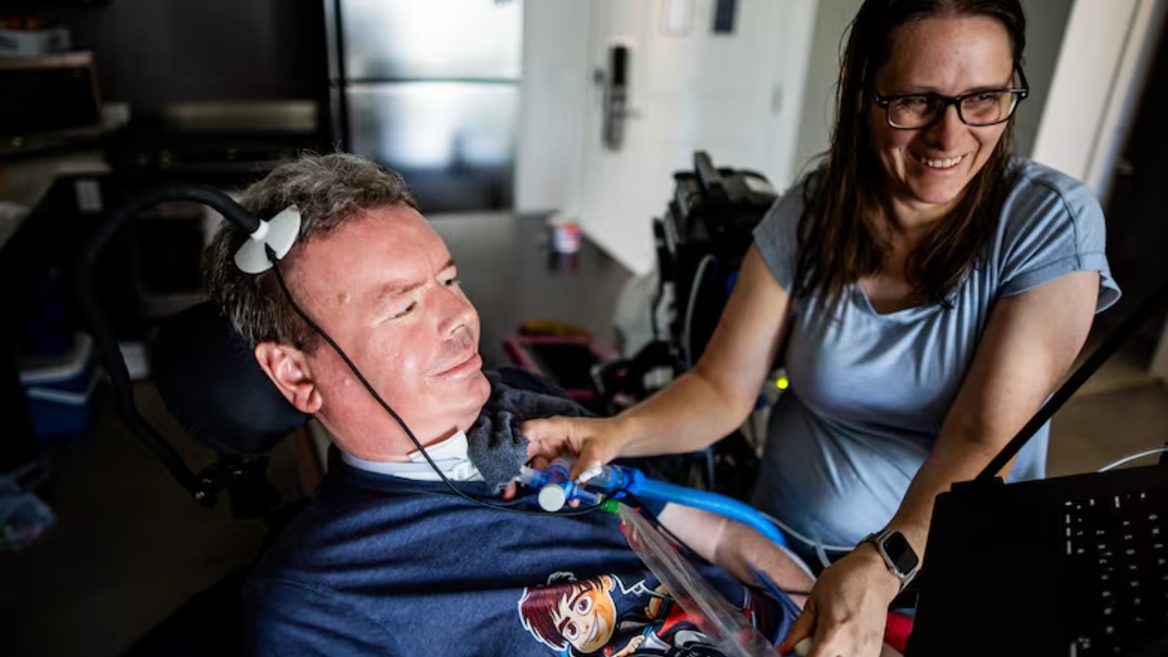
As Wired reports, this was part of a long-term trial of the Connexus chip, which Paradromics hopes will restore speech and communication to people with spinal cord injuries, strokes, or amyotrophic lateral sclerosis. The device is designed to convert neural signals into synthesized speech, text, and cursor control.
Founded in 2015, Paradromics has been testing its implant on sheep for the past few years. This is the first time the device has been used on a human.
The procedure took place on May 14 at the University of Michigan and was performed on a man undergoing brain surgery to treat epilepsy. The patient consented to have the Connexus device temporarily implanted in the temporal lobe of the brain, which processes auditory information and encodes memory. To implant the device, surgeons used an EpiPen-like instrument developed by Paradromics. The researchers were able to verify that the device was able to record electrical signals from the patient’s brain.
«This is a very unique opportunity when someone is undergoing a major neurosurgical procedure. Their skull is going to be opened up, and there will be a piece of brain that will inevitably be removed. Under these circumstances, the marginal risk of testing a brain implant is actually very low», — said Matt Engle, CEO of Paradromics.
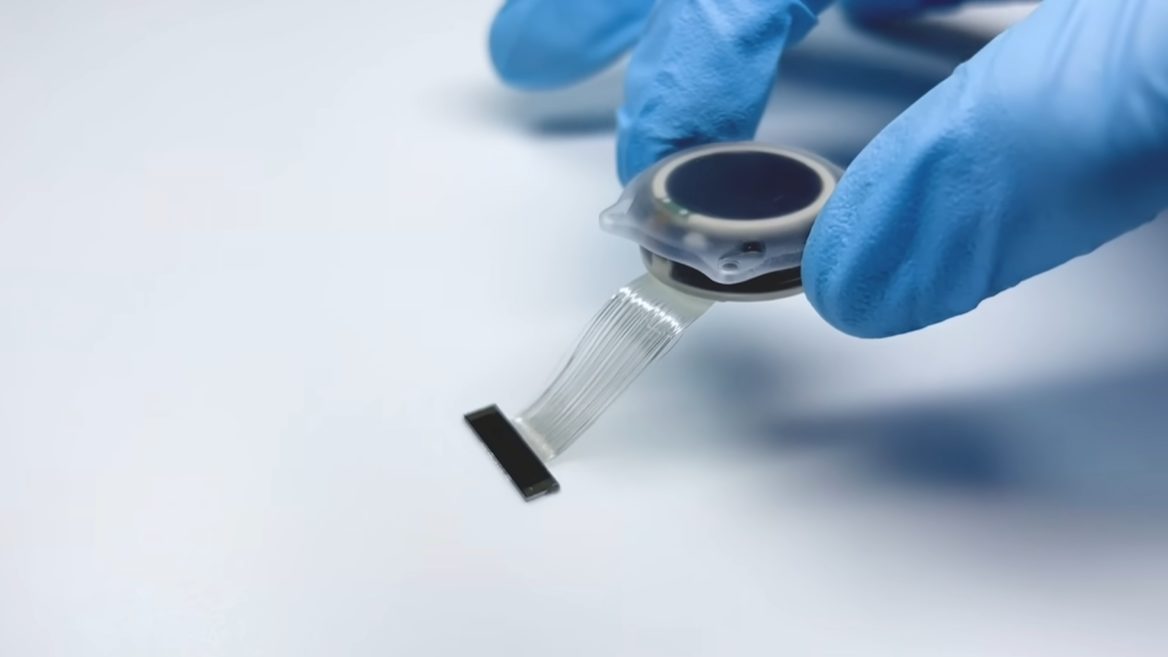
The Connexus is smaller than a coin and has 420 tiny needles that are pushed into brain tissue. These needles are electrodes that record information from individual neurons. By comparison, the Neuralink implant, which is also placed in brain tissue, has more than 1,000 electrodes spread across 64 thin, flexible threads.
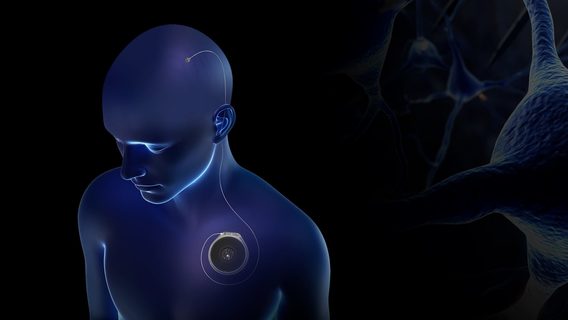
Other companies in the neurocomputer interface space are taking less invasive approaches. Precision Neuroscience, for example, is testing an implant that sits on the surface of the brain, and Synchron has developed a device that goes into a blood vessel and is delivered to the brain. Both of these devices collect signals from groups of neurons, rather than individual neurons.
«By getting close to individual neurons, you can get the highest quality signal,» says Engle. Getting a high-resolution signal from the brain is essential for accurately decoding human speech.
NCIs do not «read» a person’s thoughts directly. Instead, they work by interpreting neural signals associated with the intention of a movement. An implant like the one being developed by Paradromics can decode facial movements associated with speech. A paralyzed person who cannot move their mouth can still attempt to make that movement, which generates unique neural signals in the brain. These signals are then decoded into speech.
According to PitchBook, Paradromics had raised nearly $100 million as of February. In February, the company announced a strategic partnership with Saudi company Neom, but declined to disclose the amount of investment. According to the head of Paradromics, the startup is now approaching clinical trials.
It was previously reported that Valve CEO Gabe Newell’s mysterious brain implant startup is set to release its first brain implant, Starfish, this year. It is expected to be significantly smaller than Neuralink’s device.
Valve boss Gabe Newell, who is developing a brain implant startup, will release his first neurochip, Starfish, this year. They promise that it will be better than Elon Musk’s Neuralink