Наталя ХандусенкоAround IT
21 February 2025, 16:02
2025-02-21
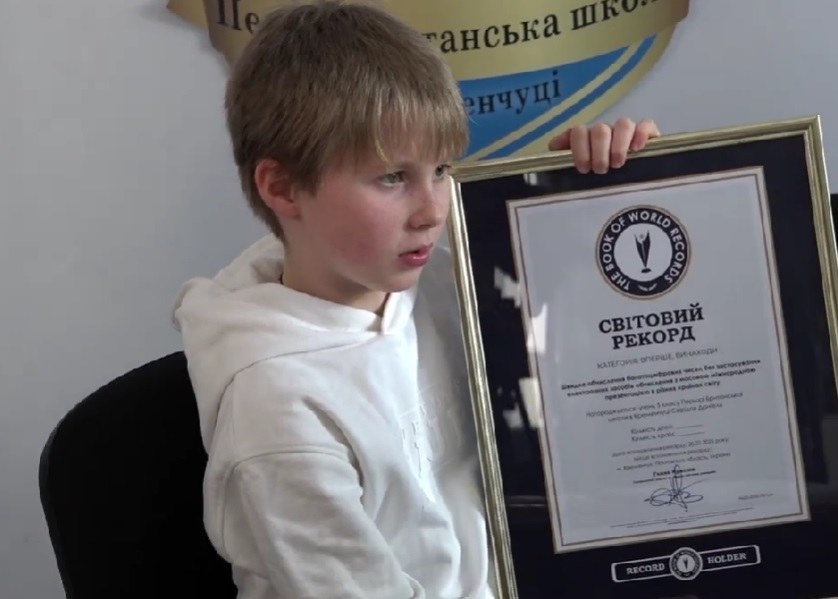
A fifth-grader from Poltava developed his own method of rapid calculations and set a world record
10-year-old Daniel Sviridov from Kremenchug discovered a new approach to calculating multi-digit numbers, thanks to which he got into the Book of World Records.
10-year-old Daniel Sviridov from Kremenchug discovered a new approach to calculating multi-digit numbers, thanks to which he got into the Book of World Records.
Daniel set a world record in the category "Inventions: fast calculation of multi-digit numbers without using electronic computing devices." The online presentation of the record was attended by 180 children from 10 countries around the world, as well as the representative of the Book of World Records Hanna Krysiuk, writes Kremenchugskaya Gazeta.
During the record-setting, the student was given random numbers that he had to quickly multiply using his own method. The organizers recorded the execution time at this time. Participants could also calculate independently online to compare results. The guy coped with the extremely complex equation in 2 minutes and 30 seconds.
How the school system works
The technique, which Daniel originally invented specifically for his brother to help him with the equation, helps to quickly multiply large numbers if the second factor consists of the same digits.
The main principles of the method are: the allocation of the coefficient — the number that repeats in the second factor is defined as its equivalent (coefficient) and the recording of the factor structure — the number of digits in the second factor is recorded in brackets as units, which helps to structure the calculations.
The point is that the repeating digit of the second factor is called the coefficient. Next, the number of its digits is calculated, which shows how to group the numbers in the first factor.
They start with the last digit of the first factor, gradually taking a few digits (how many digits are in the second factor), adding them together, and then multiplying by the coefficient. This is repeated until the entire number is worked out. The results obtained are recorded, dividing them into individual digits.
If you learn to do this quickly, you can get the answer almost immediately without unnecessary notes and calculators.