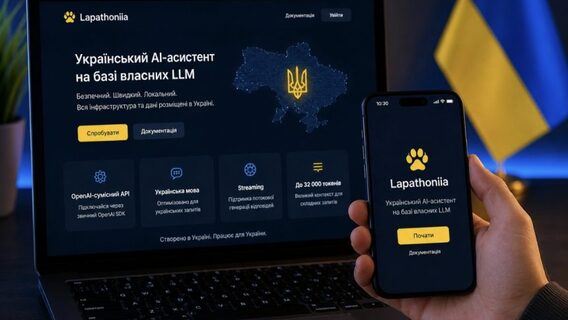
The new Ukrainian platform for hosting and integration of LLM Lapathoniia has successfully passed beta testing under conditions of an influx of users.
This was reported on its blog by the company De Novo, which has deployed a service in the cloud that allows you to work with domestic language models.
The system is reportedly operating reliably and without significant failures, as confirmed by users. The beta testing also demonstrated the high stability of the server infrastructure.
However, there were problems with some tools integrated into the chat — for example, web search quickly hit limits on the number of queries.
«Despite their „demonstration“ status, the national LLMs (LapaLLM and MamayLM) received a huge influx of requests right after the chat was launched. However, the models worked stably even with loads of millions of tokens per day, and at peak times this figure reached 61 million — the cloud infrastructure withstood this blow without any problems. In some places, card utilization reached almost 80% — that’s over 11,000 requests. The infrastructure fully coped with all the load surges,» the De Novo blog notes.
During testing, experts also carefully checked the quality of LapaLLM and MamayLM’s work on specialized public benchmarks. The assessment included understanding of Ukrainian text, two-way translation (Ukrainian/English), concise generalization of texts, following instructions, as well as school tasks and tasks in the format of external examinations. They also checked how the models coped with complex formulations and terms in Ukrainian.
«It is too early to claim that the models are fully robust to all complex cases, but the testing process was designed specifically to identify potential problems,» the blog states.
At the same time, for Lapa, these issues are partially solved thanks to an adapted Ukrainian tokenizer, which allows generating whole words more often, which, in turn, reduces the probability of errors in widely used terms. In addition, both models underwent a pre-training stage on a large corpus of the Ukrainian language, which significantly improves their ability to generate complex formulations compared to the basic Gemma 3 from Google, which underlies both Ukrainian LLMs.
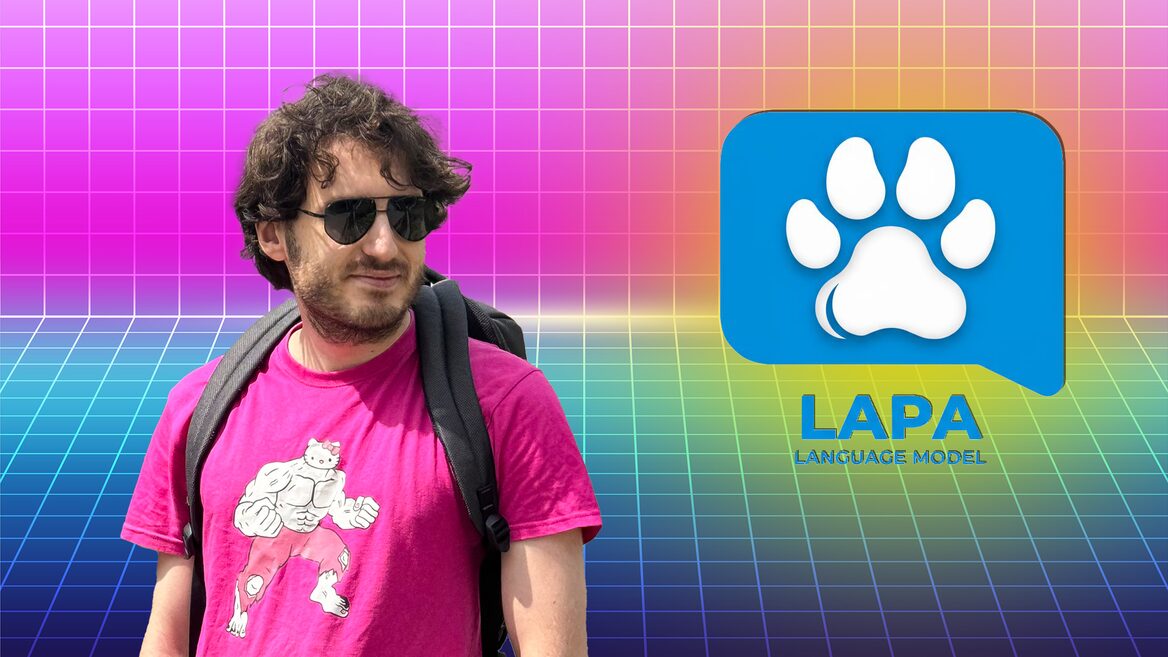
One and a half times faster than Gemma 3. Interview with the leader of the Lapa LLM project — the most efficient large language model for the Ukrainian language