Хочете будувати кар’єру в Data Science та AI? Vodafone Big Data Lab відкриває новий набір —>
Наталя ХандусенкоHot News
5 November 2025, 09:00
2025-11-05
The NSDC and KAI are working to protect user data from quantum threats. What is post-quantum cryptography and when will the QARC project, initiated by EU countries, start?
Quantum computing is becoming a reality and will soon be able to solve problems that far exceed the capabilities of today’s fastest supercomputers. However, in the hands of cybercriminals, quantum computers will also create a new level of challenges for cybersecurity professionals. To protect data, governments and businesses need to start the transition to post-quantum cryptography in advance, without waiting for the emergence of affordable powerful quantum computers. The European Union has already started to act in this direction — in early 2026, the EU-supported Quantum-Resistant Cryptography in Practice project will start with the participation of 11 countries.
Quantum computing is becoming a reality and will soon be able to solve problems that far exceed the capabilities of today’s fastest supercomputers. However, in the hands of cybercriminals, quantum computers will also create a new level of challenges for cybersecurity professionals. To protect data, governments and businesses need to start the transition to post-quantum cryptography in advance, without waiting for the emergence of affordable powerful quantum computers. The European Union has already started to act in this direction — in early 2026, the EU-supported Quantum-Resistant Cryptography in Practice project will start with the participation of 11 countries.
Quantum computers as challenges for cybersecurity
When powerful quantum computers will become available is a matter of time, but we need to prepare for their arrival in advance. The main threat from them is the speed of data decryption: a quantum computer will do in minutes what a traditional PC would take hundreds of years to do.
Cybercriminals are also preparing for such a «super opportunity» by already collecting stolen encrypted data into an archive. This is called «harvest now, decrypt later» (HNDL). Thus, nothing encrypted with modern methods will remain a secret in the future with the use of a cryptographically relevant quantum computer (CRQC), which, according to researchers, could appear as early as 2030.
To avoid quantum cyber threats, governments and businesses need to act proactively. To this end, the EU-backed Quantum-Resistant Cryptography in Practice (QARC) project will launch next year. Ukraine is also participating in it.
EU Post-Quantum Cryptography Project — QARC
QARC is the EU’s response to the challenges posed by quantum computers, which threaten to break today’s cryptography. The project aims to implement post-quantum cryptographic (PQC) technologies in real-world applications and infrastructures.
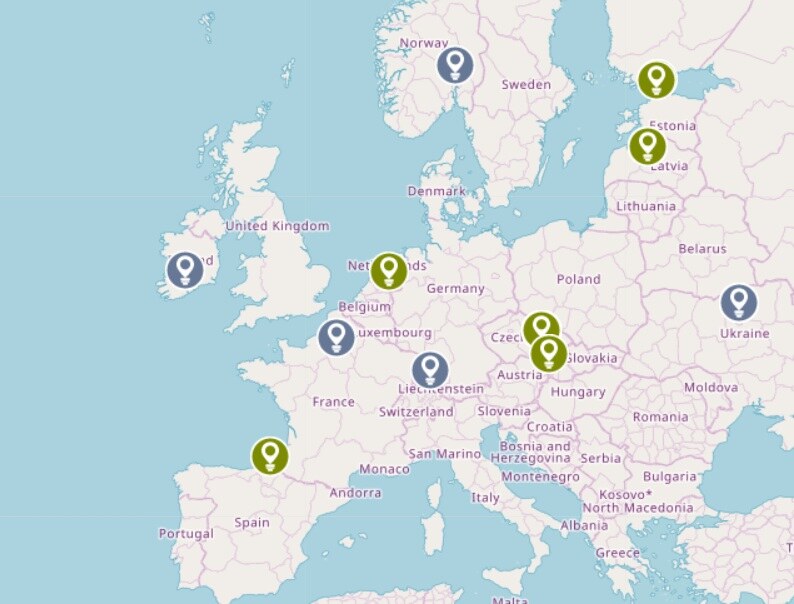
The project will start in January 2026 and will last until December 2028. It involves 14 partners from 11 countries: Ukraine, Ireland, Latvia, Czech Republic, Estonia, Spain, Norway, Netherlands, Slovakia, Switzerland, France.
The participants of QARC in Ukraine were the Kyiv Aviation Institute (formerly NAU) and the National Security and Defense Council of Ukraine (NSDC).
The project will be coordinated by the Brno University of Technology, one of the leading technical universities in the Czech Republic.
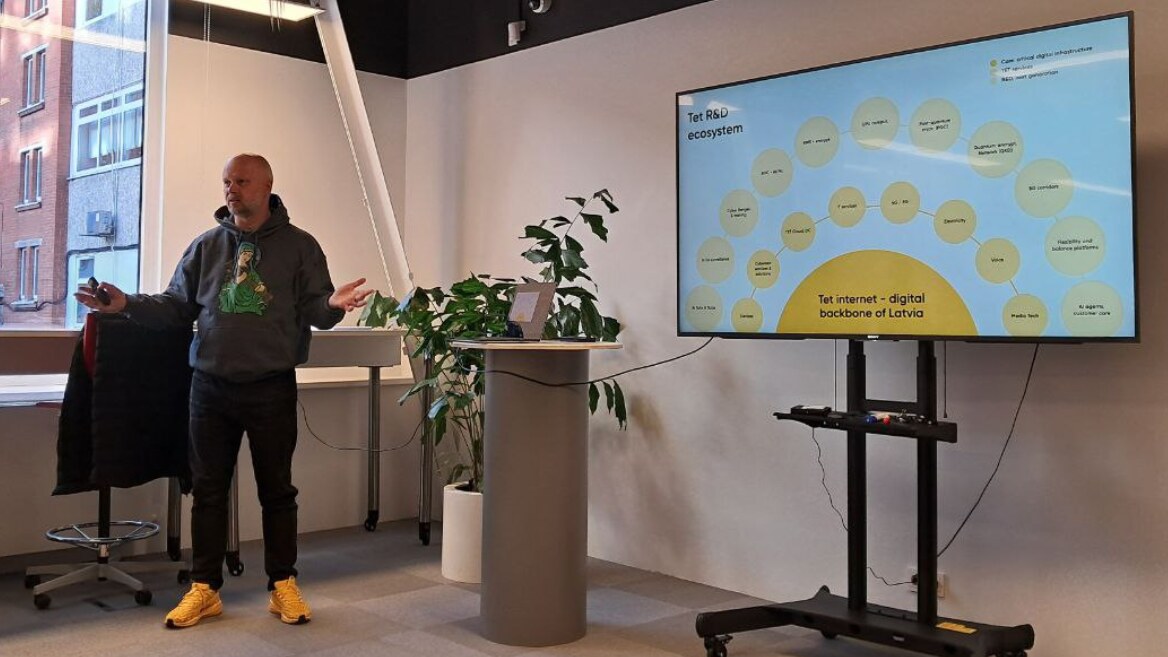
The R&D department of the Latvian company Tet is engaged in the technical part of the project’s cloud environment protection. As Guna Soloveija, the head of the research team, told dev.ua, during QARC 14 partners will receive developed PQC solutions that will help protect e-government and e-voting systems, cloud environments, and authentication services.
Guna Soloveja, Director of R&D Department of the Latvian company Tet
«Together with five other national security agencies from Latvia, Estonia, the Czech Republic, Norway, Slovakia, and the National Security and Defense Council of Ukraine, QARC will develop strategies and roadmaps for implementing PQC, adapted to the specific needs of each country. During the project, they will be tested in national environments. As the project partners emphasize, the practical experience of the National Security and Defense Council and the National Security and Defense Council in countering real cyberattacks is a significant advantage and helps create security systems capable of withstanding massive attacks across Europe. In addition, the presence of partners from Ukraine significantly contributes to the autonomy of the EU and the protection of its eastern borders,» notes Guna Soloveja, Director of the R&D Department of Tet.
Proven tools from Latvian Tet
Tet is not only a cloud provider and provides data center services, including to more than 100 Ukrainian businesses, and also has powerful cybersecurity and R&D departments.
Tet knows firsthand what large-scale cyberattacks are. According to the company’s head of cybersecurity services, Aiga Bokanova, since the beginning of the full-scale Russian invasion, the total number of incidents has increased by about 40%. 2-3 attacks are recorded on the infrastructure of Ukrainian clients every day. The emergence of technologies such as ChatGPT and AI agents has provoked an explosive growth in phishing attacks. At the beginning of the launch, the number of such incidents increased by 2000%, now this figure exceeds 4000%. Every month — about 1000 phishing attempts.
The figures mentioned by Aiga Bokanova will be just a drop in the ocean when quantum computers become widely available. And the company understands this, which is why it invested about 2 million euros in quantum technologies this year.
Uldis Tatarchuks, CEO Tet
«We are conducting real-world tests with quantum key distribution and post-quantum cryptography. Why is this important? Because when quantum computers become operational, and I am convinced that the first ones will be used by the intelligence services of the USA, China and other major countries, such as Germany, France, Spain, they will be able to break all the encryption methods that we use today in a matter of hours. It is precisely to protect data in the future that we are already investing. This is one of the most difficult decisions — to invest about 2 million euros this year. We are doing this without having complete clarity about either the final product description or the prices for our B2B customers. But we are deeply convinced: this is a critically important step if we want to protect our data tomorrow,» says Tet CEO Uldis Tatarčuks.
The development of Tet quantum security technologies involves three stages: the first is the creation of a key management system, the second is the construction of a quantum-secure backbone for key distribution, and the third is post-quantum cryptography. It is this final step that is part of the European QARC project.
A Key Management System (KMS) is designed to encrypt data throughout its entire processing cycle — from transmission to data center storage, etc.
KMS is the basic and initial building block for developing quantum-safe solutions. After all, the security of the entire encryption system depends on the security of the keys. Without their reliable management, even the strongest encryption algorithms do not protect against unauthorized access.
The National Quantum Secure Highway is a quantum key distribution zone that protects data when transferred from one data center to another. It has already been tested in the healthcare and finance sectors in Latvia. The plan is to move further across the European zone: first Lithuania, then Poland and Germany (Frankfurt), then expanding across Europe.
Post-quantum cryptography (PQC) is a set of cryptographic algorithms designed to protect information from attacks by both classical and quantum computers. This stage involves the implementation of post-quantum cryptography into a key management system.
Today’s encryption methods, such as RSA and AES, are considered secure only because breaking them requires an extremely large amount of time and computational resources, not because it is impossible in principle.
To put that into perspective, it takes a modern computer, even a supercomputer, about 1,000 years to crack RSA, a quantum computer can do this in an hour or even faster.
To counter this threat, the Tet research team is developing a set of cryptographic algorithms PQC, which will be used to protect data, in particular that of Ukrainians.
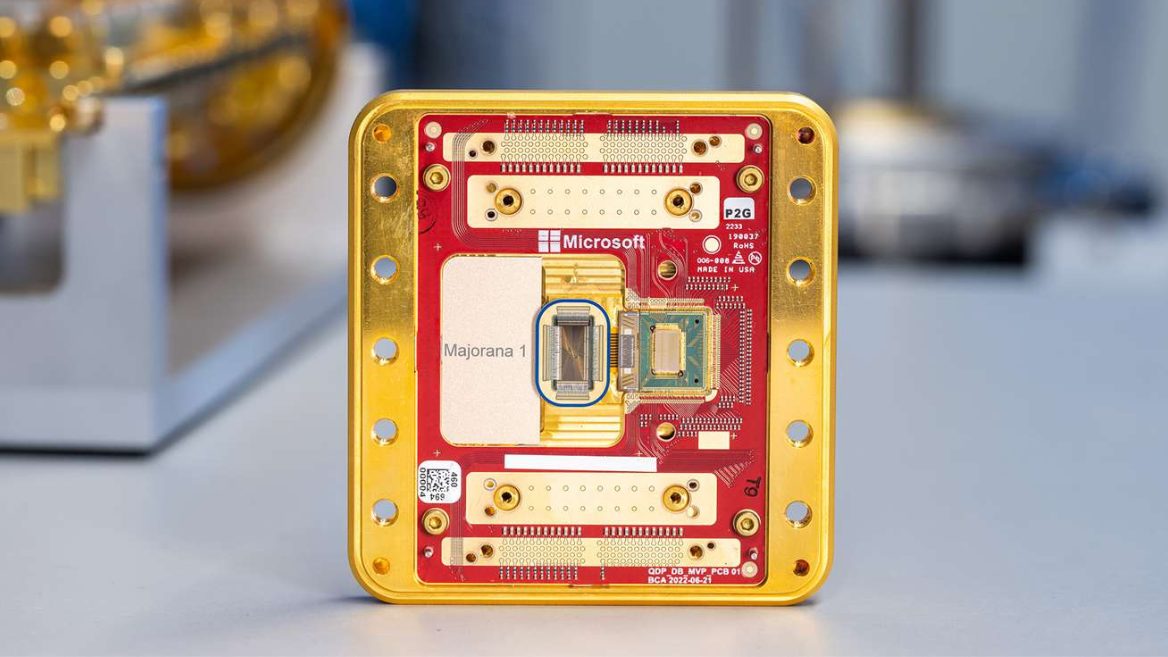
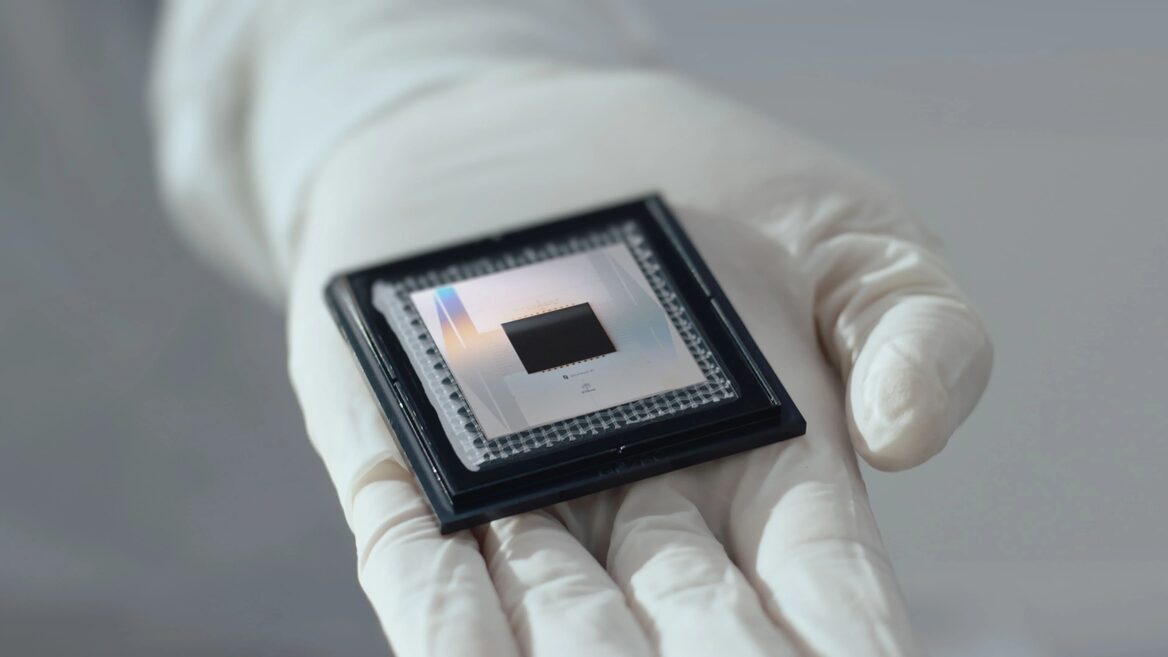
Are you ready for the quantum leap? The world is actively moving in this direction. Who is already creating quantum computers and when can we expect a technological revolution?
Особисто я не вірю в те, що якимось дивом операція, яка зараз виконується 1000 років, може бути виконана за кілька годин. Рік тому я сам написав систему шифрозв'язку (Extra Systems Cypher Net, яку, до речі, через прийняту там систему розподілу ключів взагалі неможливо зламати) і добре пам'ятаю, що коли робилися оцінки часу злому тих чи інших елементів системи (у процесі розробки та доведення), то там фігурували числа не 1000 років, а постійно зустрічалася фраза "перевищує час існування Всесвіту" (причому, здається, не просто перевищує, але на стільки-то порядків). На жаль, зараз уже призабув деталі, але скажу загалом – на мій погляд, небезпека "квантового злому" сильно перебільшена.
Та й щодо самого цього "квантового" підходу я ставлюся скептично. Можливо, це просто якась афера, спрямована на те, щоби викачати з легковірних інвесторів гроші. У моєму розумінні комп'ютер - чіткий логічний автомат, який абсолютно точно виконує дані йому інструкції. Де тут місце для якоїсь невизначеності? Особисто я такого місця не бачу.
"Водночас, це означає, що на верифікацію результатів з поточними можливостями також було б потрібно 10 у 25 степені років."
Але ж можна було б взяти ключ RSA такої довжини, що б сучасний класичний компьютер мав ламати його, скажімо, 1000 років и доручити цьому диву зламати його за стільки-то мілісекунд (я так розумію). І на перевірку точності зламу 1000 років витрачати не треба було б, бо ж параметри ключа відомі тому, хто його створив. Чому це не було зроблено?










Особисто я не вірю в те, що якимось дивом операція, яка зараз виконується 1000 років, може бути виконана за кілька годин. Рік тому я сам написав систему шифрозв'язку (Extra Systems Cypher Net, яку, до речі, через прийняту там систему розподілу ключів взагалі неможливо зламати) і добре пам'ятаю, що коли робилися оцінки часу злому тих чи інших елементів системи (у процесі розробки та доведення), то там фігурували числа не 1000 років, а постійно зустрічалася фраза "перевищує час існування Всесвіту" (причому, здається, не просто перевищує, але на стільки-то порядків). На жаль, зараз уже призабув деталі, але скажу загалом – на мій погляд, небезпека "квантового злому" сильно перебільшена.
Та й щодо самого цього "квантового" підходу я ставлюся скептично. Можливо, це просто якась афера, спрямована на те, щоби викачати з легковірних інвесторів гроші. У моєму розумінні комп'ютер - чіткий логічний автомат, який абсолютно точно виконує дані йому інструкції. Де тут місце для якоїсь невизначеності? Особисто я такого місця не бачу.
"Водночас, це означає, що на верифікацію результатів з поточними можливостями також було б потрібно 10 у 25 степені років."
Але ж можна було б взяти ключ RSA такої довжини, що б сучасний класичний компьютер мав ламати його, скажімо, 1000 років и доручити цьому диву зламати його за стільки-то мілісекунд (я так розумію). І на перевірку точності зламу 1000 років витрачати не треба було б, бо ж параметри ключа відомі тому, хто його створив. Чому це не було зроблено?