Олександр КузьменкоScience Pop
29 May 2026, 16:11
2026-05-29
$26 billion for organ bioprinting and gene therapy. How Russia is trying to realize Putin's dreams of immortality
The American publication The Wall Street Journal reports that Russia has turned dictator Vladimir Putin’s desire to delay aging into a priority state program worth $26 billion. The Kremlin is funding the development of gene therapy against cellular aging, 3D bioprinting technology of living tissues, as well as the cultivation of human organs in pigs, hoping to achieve the first results of organ replacement by 2030.
The American publication The Wall Street Journal reports that Russia has turned dictator Vladimir Putin’s desire to delay aging into a priority state program worth $26 billion. The Kremlin is funding the development of gene therapy against cellular aging, 3D bioprinting technology of living tissues, as well as the cultivation of human organs in pigs, hoping to achieve the first results of organ replacement by 2030.
This is stated in a WSJ article, which analyzed the large-scale Kremlin initiative «New Technologies for Health Preservation», which was led by Putin’s inner circle.
According to journalists, Putin’s interest in this topic is confirmed by his conversation with Xi Jinping during a parade in Beijing, where he discussed the prospect of rejuvenation through organ replacement. The program was officially launched in 2024.
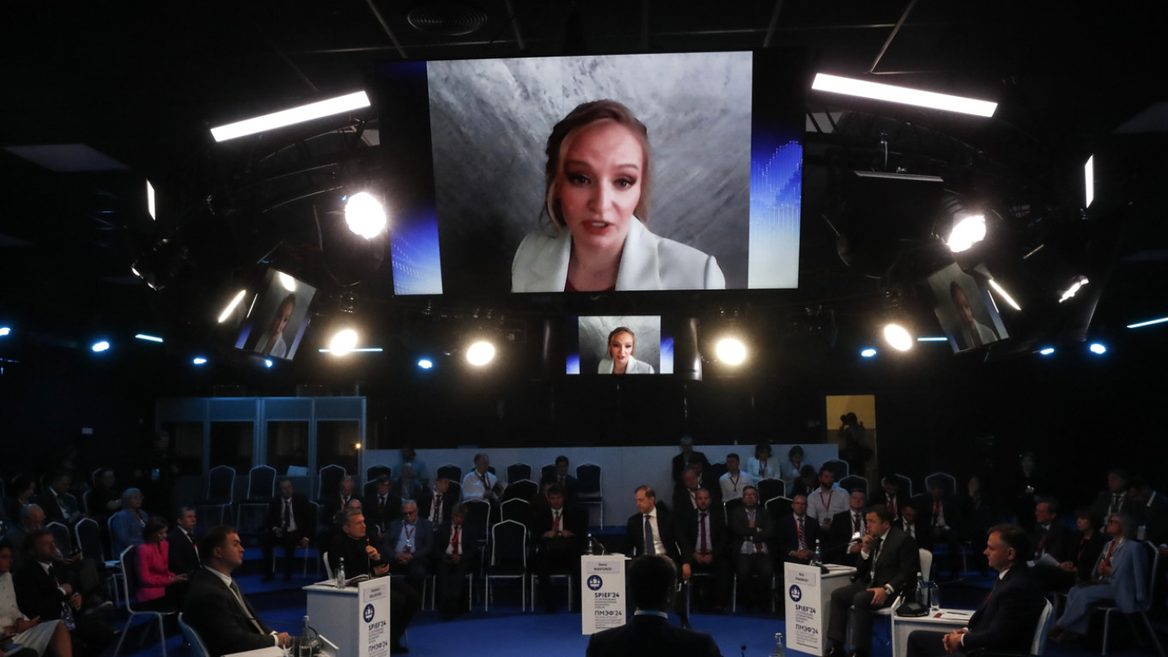
The curators of the technological project were individuals from the Russian president’s entourage: his daughter, endocrinologist Maria Vorontsova, who is responsible for the genetic direction, and the head of the Kurchatov Institute, physicist Mikhail Kovalchuk.
«It’s difficult to talk about immortality, but the possibilities of restoring the human body will undoubtedly increase,» Kovalchuk said in comments to Russian media.
The technological part of the research focuses on creating human organs in laboratories. Scientists from the Russian Federation have already announced the successful bioprinting of cartilage tissue and the thyroid gland of a mouse. In parallel, funding is being provided for the development of a gene drug to block the RAGE receptor, the activation of which leads to cell aging.
However, due to the full-scale invasion of Ukraine, Russian research centers have found themselves under severe international sanctions. Scientist Alexander Ostrovsky, the founder of the Russian bioprinting movement who emigrated after the war began, expressed skepticism about the feasibility of these developments.
«If there are no publications, then there are no real results, and their statements should probably be taken as aspirations, not to mention dreams. It is impossible to do science in isolation. They are probably telling Putin what he wants to hear in order to secure funding,» Ostrovsky noted.
Additionally, the developers are drawing on the research of the late gerontologist Vladimir Khavinson, who pioneered peptide therapy based on animal tissue. Khavinson died in 2024 at the age of 77.
Attempts to integrate such medical technologies at the state level have a historical basis in the Russian Federation. In the 1920s, Soviet scientist Alexander Bogdanov experimented with blood transfusions, but died at the age of 55 during the experiment. Another researcher, Alexander Bogomolets, who promised a life expectancy of up to 150 years, died at the age of 65.
Today, despite the funding of high-tech projects, the average life expectancy of men in Russia remains one of the lowest among developed countries and is about 68 years.
«I don’t believe Putin understands blockchain payments, but the Russians are way ahead of us here.» The President’s Commissioner for Sanctions Policy on Russia’s Cryptocurrency Loopholes and the Fight Against Them
«We will raise our unicorns.» Putin’s daughter’s foundation will open a technohub in India for Russian IT professionals to interact with international partners