Хочете будувати кар’єру в Data Science та AI? Vodafone Big Data Lab відкриває новий набір —>
Марія БровінськаWeapon
16 June 2025, 14:50
2025-06-16
Ukrainians have created an automatic electronic warfare system "Babai" with a web interface. It is already operating at the front. What can it do?
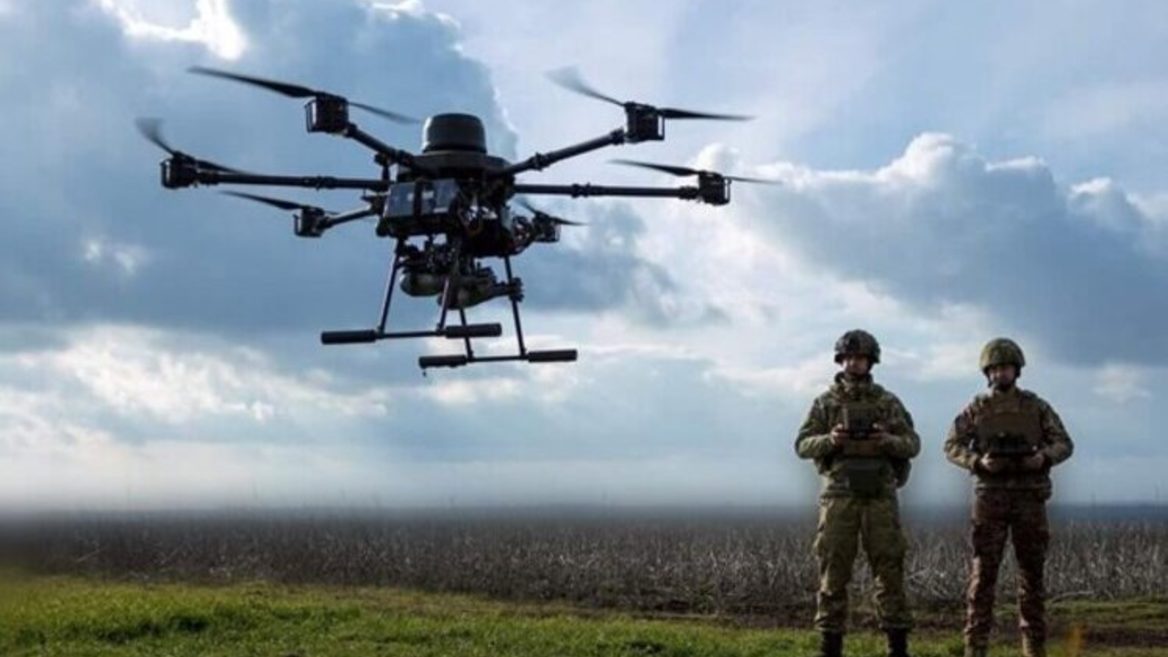
After the full-scale invasion began, a team of Ukrainian volunteer engineers faced a new challenge: the massive use of enemy drones on the battlefield. To counter this threat, in 2022, enthusiasts began developing the first anti-drone rifles on the most common frequencies (2.4 GHz, 5.8 GHz, and 900 MHz). However, over time, the enemy began to use non-standard frequencies, and to cover new ranges, modules had to be added, which made the rifles bulky and reduced their battery life. It became obvious: a qualitatively new solution with a greater range and more flexible functionality was needed.
After the full-scale invasion began, a team of Ukrainian volunteer engineers faced a new challenge: the massive use of enemy drones on the battlefield. To counter this threat, in 2022, enthusiasts began developing the first anti-drone rifles on the most common frequencies (2.4 GHz, 5.8 GHz, and 900 MHz). However, over time, the enemy began to use non-standard frequencies, and to cover new ranges, modules had to be added, which made the rifles bulky and reduced their battery life. It became obvious: a qualitatively new solution with a greater range and more flexible functionality was needed.
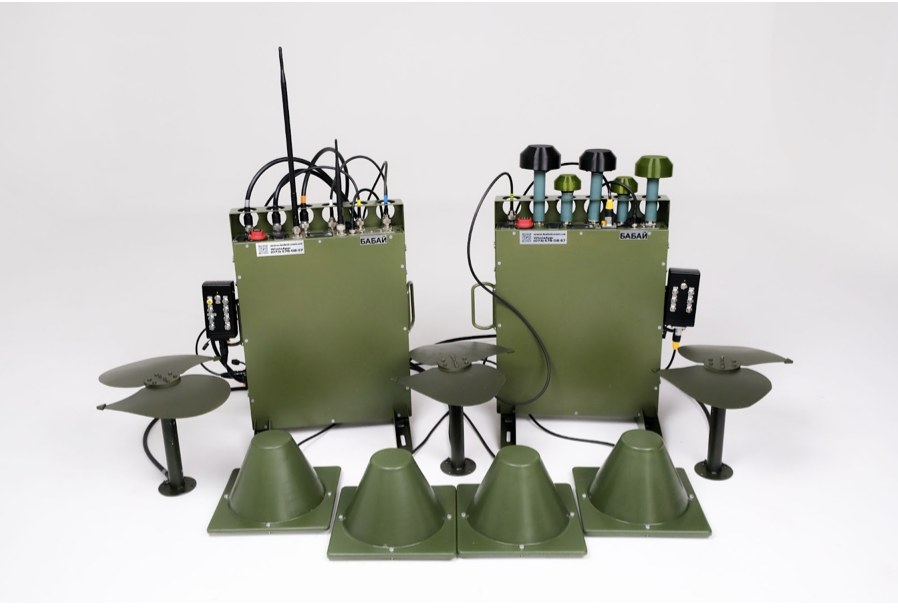
As Taras Andriyiv, project manager of the team that creates modern electronic warfare systems under the «Babai» brand, told dev.ua, this challenge motivated the volunteers to move to a system approach that could be scaled. A separate company was founded and the production of full-fledged electronic warfare systems was established, which can be installed on vehicles or deployed at stationary positions. Thus was born «Babai» — a modern electronic warfare complex, created taking into account the needs of the front.
Why «Babai»?
The name for the system was not chosen by chance — it has symbolic and emotional meaning. In Slavic folklore, «Babai» is traditionally used to scare naughty children, and in war, «Babai» now scares enemy drones. The name aptly emphasizes the purpose of the development and is easily remembered by fighters.
The key feature of «Babai» is a fully automatic mode of operation. Unlike many analogues that require constant operator control, this system independently performs the entire cycle of countering drones. The built-in radar station constantly scans the space in a wide frequency range (from 150 to 6000 MHz). As soon as the signal of an enemy UAV is recorded, «Babai» instantly activates the appropriate suppression modules — and all this without human intervention. The operator receives a voice notification through the built-in speaker, which announces the detected threat frequency and the fact of the activation of the suppression mode. Thus, even without constant supervision, the system is able to protect the crew or position.
What else can «Babai» do?
Among the key advantages of the electronic warfare system are remote access to settings and diagnostics via a web interface. The system can be controlled via a remote control up to 3 m or twisted pair up to 100 m. Automatic power-on ensures long-term autonomous operation, and the built-in active cooling system maintains a stable temperature even under high loads. In addition, we provide free warranty service until the end of martial law (except in cases of flooding, debris damage or complete destruction).
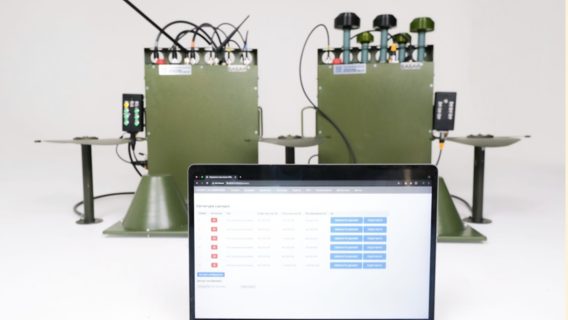
The Babaya web interface allows you to gain full control over the entire system directly through a browser — connect via Wi-Fi or Ethernet cable, enter your login and password, and have access to all the functionality. On the main page, you can see the status of the equipment, the current temperature, and you can quickly switch from automatic to manual mode if you need to intervene in the system.
In the modules section, you can control each antenna individually — turn it on or off for testing, use the spectrum analyzer to check the radio environment, and adjust operating frequencies for specific tasks. System management helps you monitor cooling, reboot the system if necessary, or shut it down properly without risking damage.
Work with signatures is separately provided — here you configure how the system recognizes different types of signals and adjust the detection sensitivity. The event log records all detected targets and technical failures, and the diagnostic module allows you to check the health of each node and remotely troubleshoot problems.
Money and users
The investment in «Babai» was a whole year of hard work — from the first idea to a well-established serial release, says Taras. The developers invested not only money, but also all their experience — they conducted numerous experiments and field tests.
The results of this path have been hundreds of systems operating on the front lines as part of combat units. According to Taras, we regularly receive positive feedback from the military, confirming that the system is truly effective in real combat conditions.
In the future, the developers will continue to improve new developments: the mini-EW «Zhuk» with two channels, which is integrated with the «PES Sirko» detector — then the system will be able to work in automatic mode, without the participation of an operator. «PES Sirko» detects drones within a radius of 2 km in a wide spectrum of 150-6000 MHz. We are also testing new antennas — we are working on sector antennas for spot coverage of front areas.
The Cabinet of Ministers allowed the acceptance of drones and electronic warfare without the participation of a state customer: now a quality certificate is enough
The missile program for 2025 has already been completed by 47%. The Ministry of Defense explained how the missile program is financed and to what extent the domestic military-industrial complex covers the needs of the army