Хочете будувати кар’єру в Data Science та AI? Vodafone Big Data Lab відкриває новий набір —>
Наталя ХандусенкоWar
5 November 2026, 11:12
2026-11-05
Russia could be practicing an attack on a satellite that provides intelligence to Ukraine — analysts
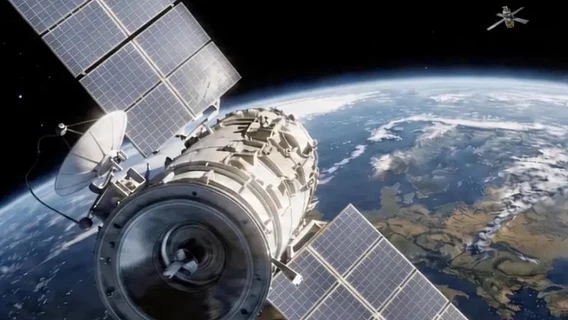
A Russian military satellite made a dangerous close encounter with a Western commercial spacecraft last month. According to military space experts, this could have been a test of a kinetic attack. The situation is particularly critical because it concerns an ICEYE satellite, whose reconnaissance images are actively used by the Government and Defense Forces of Ukraine.
A Russian military satellite made a dangerous close encounter with a Western commercial spacecraft last month. According to military space experts, this could have been a test of a kinetic attack. The situation is particularly critical because it concerns an ICEYE satellite, whose reconnaissance images are actively used by the Government and Defense Forces of Ukraine.
The incident was reported by US Deputy Secretary of State Thomas DiNanno, Reuters reports . According to him, the Russian military satellite "Kosmos 2612" in mid-October "deliberately maneuvered at a dangerously close distance to a commercial vehicle," which is consistent with behavior during operations using orbital weapons.
The maneuver targeted the X36 satellite of the Finnish company ICEYE, which provides detailed radar imagery (SAR). Analysts call it one of the most aggressive and closest approaches of Russian military vehicles to commercial satellites in low Earth orbit.
“This looks like a rehearsal for an attack. This is the most aggressive stance I’ve seen from Russia in terms of threatening other countries’ satellites,” said Greg Gillinger, a senior space analyst at Integrity ISR, which trains the U.S. Space Force.
The Russian Defense Ministry did not comment on the incident, although Moscow has previously repeatedly threatened that commercial Western satellites that help Ukraine could become legitimate targets for strikes.
Chronology of maneuvers and new threats
Kosmos 2612 is one of six military satellites launched by Russia in April. In May, the Russian Federation had already placed four of these satellites next to the commercial X36 satellite, forcing ICEYE to urgently change the orbit of its satellite.
The dangerous activity continued: in early October, Kosmos 2612 took up a position several hundred kilometers behind X36, and in the middle of the month it rapidly reduced the distance, approaching the target at a distance of several hundred meters to 1 kilometer.
Currently, Kosmos 2612 has moved away, but two other related Russian satellites are already drifting towards another ICEYE device, X37.
According to experts, such an approach is not necessary for intelligence gathering or electronic warfare, which indicates that it is a matter of practicing kinetic interception or physical destruction.
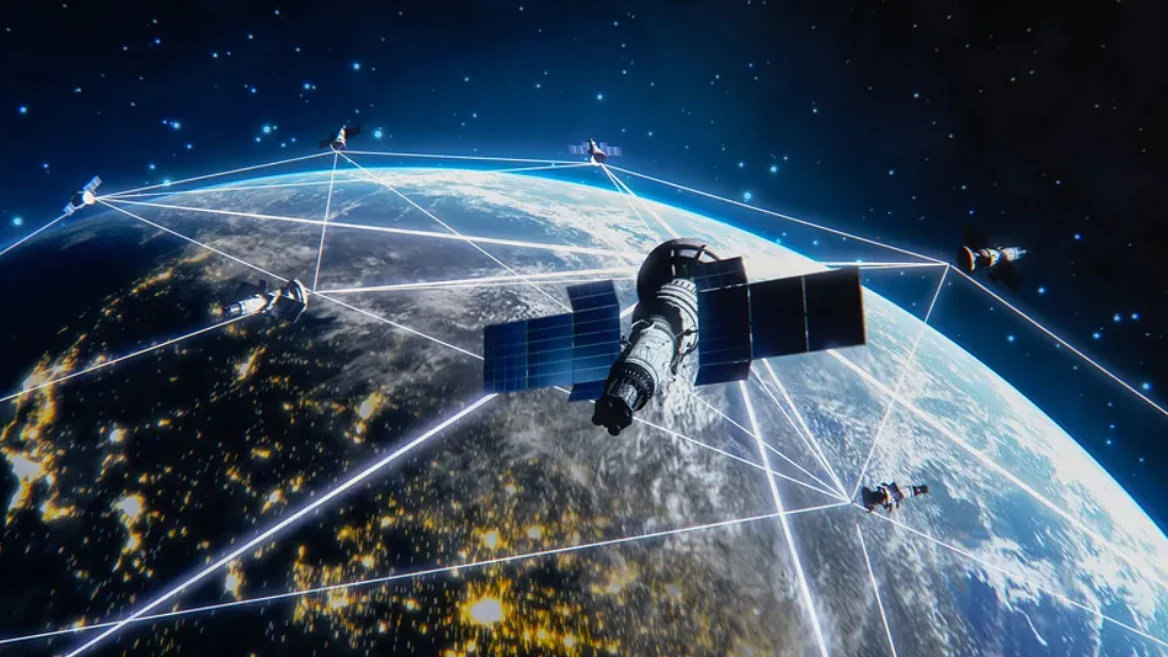
The head of the American division of ICEYE, Anne Stevens, assured that the X36 satellite continues to perform its tasks, and the entire orbital group of the company's radar devices remains resistant to possible failures and external interference. However, experts warn that transferring the confrontation into space creates direct risks for civilian satellite networks, on which the security of Ukraine and NATO countries depends.
"The Foundation for an Independent Communications Network in Ukraine." Ukrainian HIMERA and Danish GomSpace Launch OBRIA NANO Test Satellite into Orbit