Хочете будувати кар’єру в Data Science та AI? Vodafone Big Data Lab відкриває новий набір —>
Марія БровінськаWeapon
1 October 2026, 09:01
2026-10-01
The Russians are hiding the Gerani-5 engine in the fuselage. This is how they are trying to accelerate the drone to 700–800 km/h
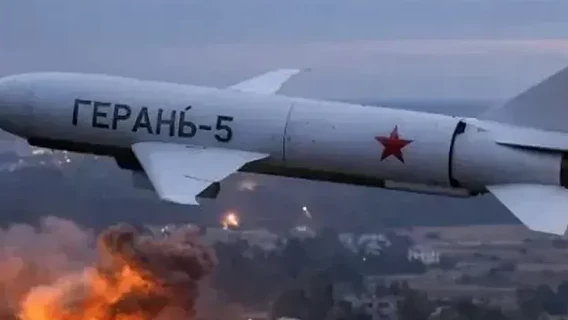
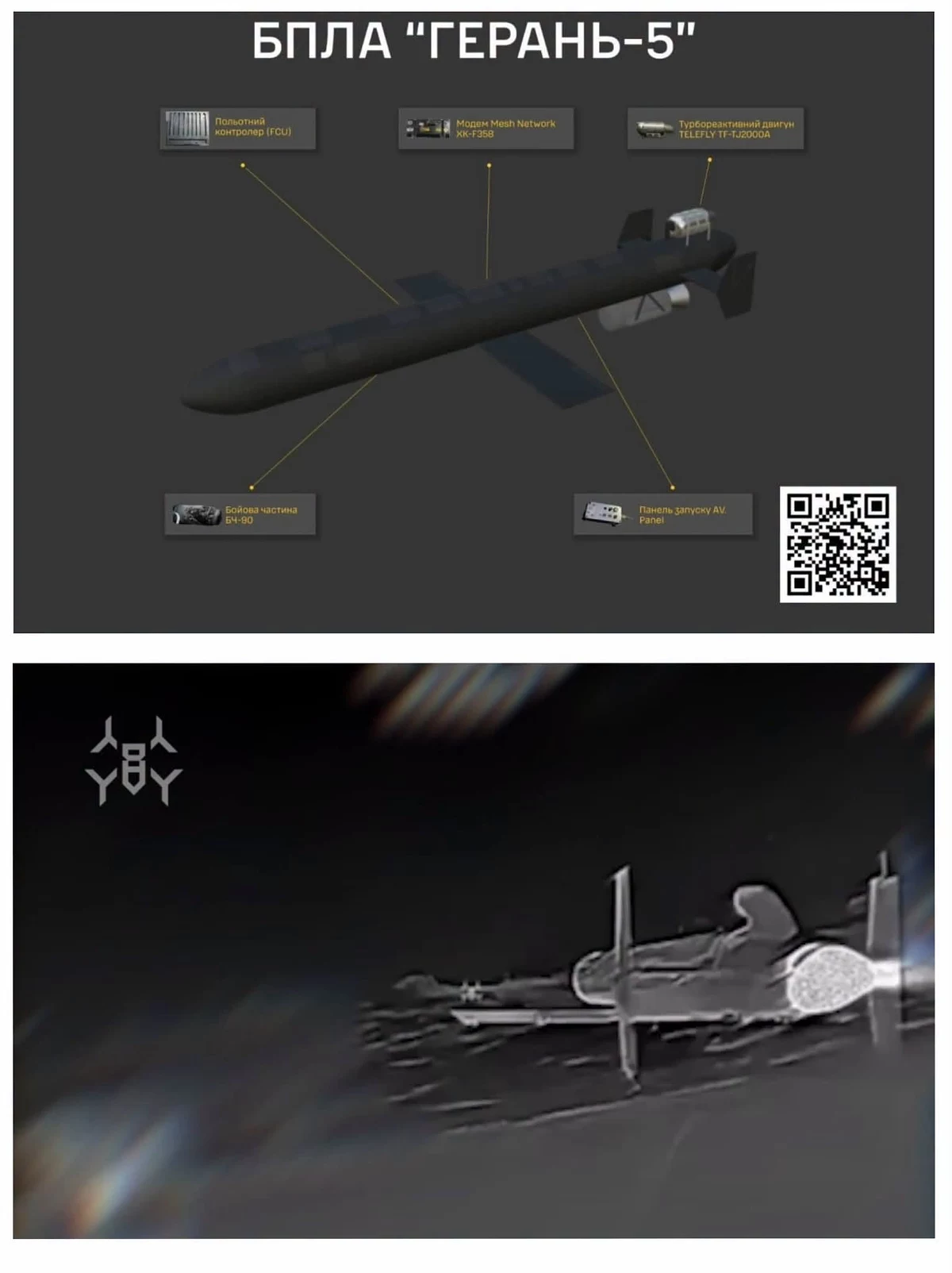
The latest photos and footage of the damaged Geranium-5 show a noticeable change in layout: the jet engine, which in earlier versions was openly mounted on a pylon above the fuselage, has been moved inside the aft section. Aviation expert Anatoly Khrapchinsky believes that in this way the Russians are trying to accelerate the drone to 600–700 km/h and higher — and take it out of the range of cheap interceptor drones.
The latest photos and footage of the damaged Geranium-5 show a noticeable change in layout: the jet engine, which in earlier versions was openly mounted on a pylon above the fuselage, has been moved inside the aft section. Aviation expert Anatoly Khrapchinsky believes that in this way the Russians are trying to accelerate the drone to 600–700 km/h and higher — and take it out of the range of cheap interceptor drones.
In early versions of the Gerani-5, a small Chinese Telefly turbojet engine, according to Khrapchinsky, was simply mounted on top of the pylon. For speeds in the region of 350–400 km/h, such a scheme could work, but an attempt to significantly accelerate the device creates a number of aerodynamic problems.
The first of these is additional drag. The engine, placed above the hull, together with the pylon, creates additional drag. At high speeds, it increases, and this becomes especially critical for a vehicle with relatively low thrust.
There is also a problem with the position of the thrust line. It passes high above the center of mass of the device, which creates a moment that constantly has to be compensated for by the controls.
“The autopilot has to constantly counter this by pushing the elevators up,” explains Khrapchinsky. As a result, additional balancing resistance appears: the aircraft spends part of the engine energy simply to maintain the desired position.
Moving the engine inside the fuselage allows this scheme to be changed. The power plant is better integrated into the contour of the aircraft, the pylon is removed, and the thrust line can be brought closer to the longitudinal axis.
But you have to pay for the extra speed with other features.
The engine takes up space for fuel
As Khrapchinsky notes, the internal placement of the turbofan requires a separate engine compartment, air ducts, and thermal protection. All of this takes up space inside the fuselage that, in the previous configuration, could have been used for fuel.
Another problem for a jet engine is high temperature. The exhaust of a turbofan engine can heat up to hundreds of degrees, so placing the power plant inside a composite body requires additional protection.
These include metal screens, thermal insulation, and cooling of the structure. This increases the number of components, complicates production, and potentially increases the cost of the device.
That is, trying to get more speed can come at the cost of less fuel, a more complex design, and reduced range.
Why do Russians need to increase speed?
According to Khrapchynsky, one of the reasons for the rush is the development of Ukrainian interceptor drones.
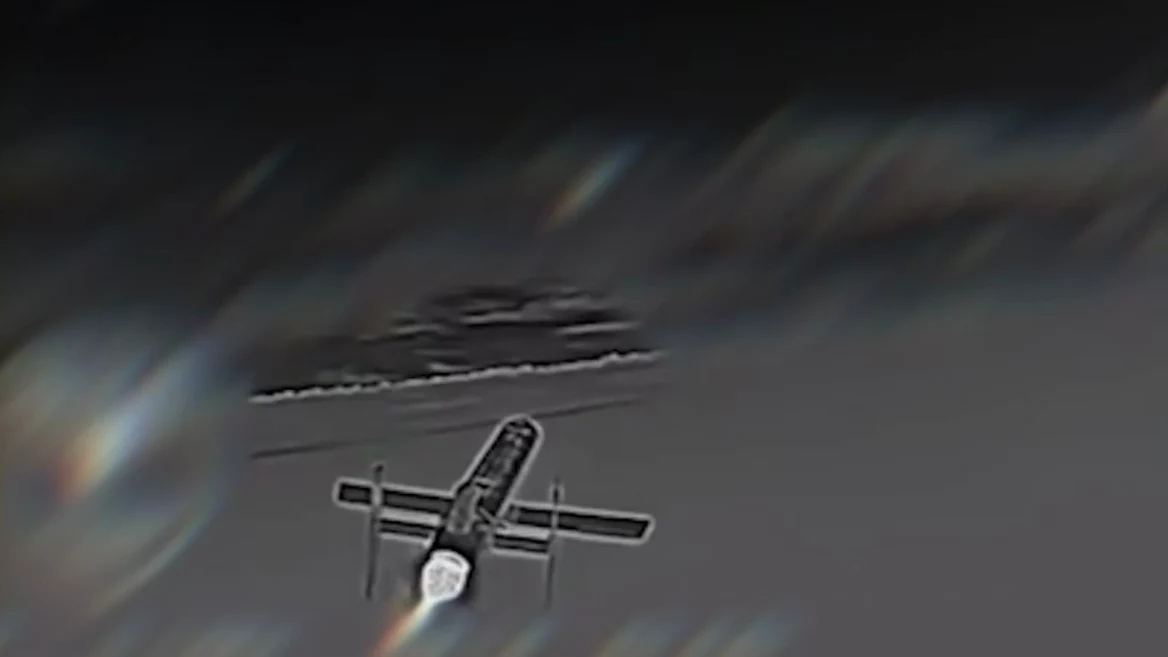
The released footage shows a high-speed quadcopter-type interceptor drone from the Wild Hornets company attacking a jet target in pursuit. Such devices are being developed, in particular, to destroy Russian jet drones.
The first successful applications, according to the expert, showed that targets at speeds of approximately 400–450 km/h can be reached in the rear hemisphere even by interceptors of this class.
So far, such interceptions have not become a mass and systematic phenomenon, but the trend is developing. And, according to Khrapchinsky, the Russians are trying to respond to this threat in advance.
This is precisely what he explains by his desire to bring the Geran-5 into the speed niche of 700–800 km/h.
For an interceptor that attacks a target in pursuit, this is a completely different task. To catch up with a plane flying at a speed of 700–800 km/h, the interceptor needs a much greater speed margin. According to Khrapchinsky, we are talking about indicators at the level of 900+ km/h.
This in turn requires different aerodynamics, a more powerful powerplant, and guidance systems capable of operating at much higher speeds.
Thus, a kind of race may form: the strike drone tries to become faster than the cheap interceptor, and the interceptor developers must respond by increasing its speed and guidance capabilities.
The Russians' goal, according to Khrapchinsky, is to remove the Geran-5 from the range of cheap interceptor drones and once again force Ukraine to use more expensive air defense systems to combat such targets.
At the same time, this race has a downside: the more complex the design becomes, the harder it is to maintain the main advantage of mass-produced strike UAVs — simplicity and low cost of production.