Хочете будувати кар’єру в Data Science та AI? Vodafone Big Data Lab відкриває новий набір —>
Валентин ШнайдерWeapon
5 January 2026, 08:10
2026-01-05
The russians have taught the Shahed to navigate using ground-based radio beacons instead of GPS.
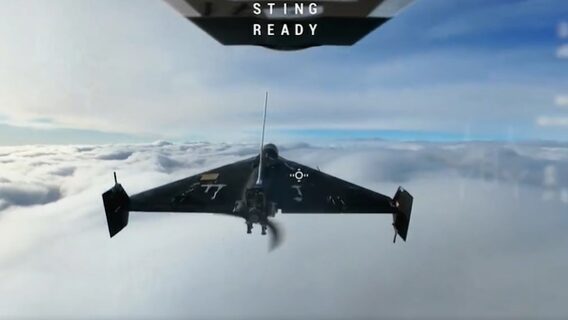
In Ukraine, a «Shahed» was spotted with an unusual antenna that can help the drone stay on course even when satellite navigation is jammed by electronic warfare. It involves receiving signals from a network of aviation radio beacons: in fact, these are «radio waymarks» for the aircraft, and now they can be adapted for attack UAVs.
In Ukraine, a «Shahed» was spotted with an unusual antenna that can help the drone stay on course even when satellite navigation is jammed by electronic warfare. It involves receiving signals from a network of aviation radio beacons: in fact, these are «radio waymarks» for the aircraft, and now they can be adapted for attack UAVs.
According to «Military», which refers to specialized Telegram channels about UAVs, the «objective control» footage for December 31 shows an antenna in the 108–117.975 MHz range. These are the operating frequencies of VOR beacons, which in aviation indicate the direction to a ground station. If a DME is operating nearby, the onboard equipment can also estimate the distance to the beacon. The authors of the post suggest that the enemy could have used combined beacons from the territory of Belarus. In the published video, the antenna looks like a thin «whisker» on the body.
A modernized Shahed shot down by defenders of the 1020th Anti-Aircraft Missile and Artillery Regiment.
Take a close look at the antenna. The enemy is constantly upgrading its UAVs to ensure they reach their targets. But thanks to one of the best interceptor crews, that plan… pic.twitter.com/BLpirdRrkR
The practical meaning for Shahed is simple: when GPS/GLONASS is «killed», the drone gets another reference point and is less dependent on satellites. At the same time, such navigation is not a «magic button»: the VOR/DME signal propagates within direct visibility, so at low altitudes the range drops significantly, and to work at a long distance the device will have to climb higher.
A little more about VOR/DME
This is ground-based radio navigation, which has been widely used in civil aviation since the mid-20th century. It requires a beacon infrastructure and has gradually given way to satellite systems, but in a war where electronic warfare regularly «cuts» GNSS signals, old technologies are becoming relevant again. Similar approaches have already been mentioned for Russian reconnaissance UAVs, in particular Zala, for flights in the area of suppressed satellite navigation.
Earlier, dev.ua wrote about how a new element was recorded on enemy Shahed strike UAVs, which could be a countermeasure against Ukrainian interceptors. Military expert Serhiy Flesh said that this is the first time he has seen such a layout on a Shahed.