Марія БровінськаAI Eng
15 May 2025, 09:00
2025-05-15
Who is on the watch for the implementation of artificial intelligence in Ukrainian IT? List of AI directors who are implementing the technologies of the future already today
A new Amazon study says that most companies around the world plan to introduce the position of Chief AI Officer (CAIO) as generative AI becomes a business priority.
The study surveyed 3,739 IT executives from nine countries, including Germany, the US and Japan. The results are somewhat unexpected: 45% of respondents plan to make generative AI a priority by 2025. At the same time, only 30% named the development of traditional security tools as a priority.
Meanwhile, Ukrainian companies are looking for AI directors. Prostor, Nova («New Post»), and MHP have opened relevant vacancies and are looking for people. Some companies have already separated this role, and some businesses are entrusting the development of AI solutions to service centers and other specialists.
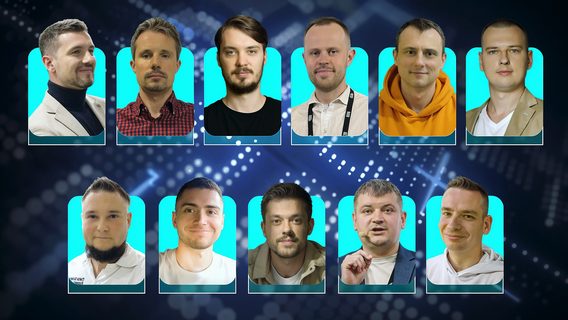
dev.ua has compiled a list of Ukrainian market specialists who are engaged in AI development in local IT companies. This list is not yet complete — its participants can be added by filling out this questionnaire .
A new Amazon study says that most companies around the world plan to introduce the position of Chief AI Officer (CAIO) as generative AI becomes a business priority.
The study surveyed 3,739 IT executives from nine countries, including Germany, the US and Japan. The results are somewhat unexpected: 45% of respondents plan to make generative AI a priority by 2025. At the same time, only 30% named the development of traditional security tools as a priority.
Meanwhile, Ukrainian companies are looking for AI directors. Prostor, Nova («New Post»), and MHP have opened relevant vacancies and are looking for people. Some companies have already separated this role, and some businesses are entrusting the development of AI solutions to service centers and other specialists.
dev.ua has compiled a list of Ukrainian market specialists who are engaged in AI development in local IT companies. This list is not yet complete — its participants can be added by filling out this questionnaire .
Yevgeny has been leading the company’s artificial intelligence division for about a year. Separating this division into a separate structural unit was a strategic decision related to the growing role of AI from a tool for solving individual tasks to a driver of business change.
«Consolidating our competencies within the AI Center of Excellence allows us to comprehensively support clients in the implementation and development of AI solutions, from consulting to the creation of customized products,» he says.
The team consists of over 50 data and machine learning engineers, who are mainly involved in customer projects. Five specialists work specifically on AI implementation within the company, and from time to time, specialists from commercial projects also join to strengthen the team.
«The issue of ethics in the implementation of AI is fundamental for us. When we consider a particular use case, we always take into account the ethical component. When it comes to using AI in creating solutions for customers, we always agree on this with customers,» the specialist says.
Read more
The company has been actively working with machine learning since 2013, when it began regularly creating ML solutions for clients. Yes, the commercial direction has existed for over 10 years. Since 2018, AI has also been systematically implemented to optimize its own business processes and develop internal solutions.
The company’s strategy involves integrating artificial intelligence into all business processes and functions in the near future. SigmaSoftware has a roadmap with a plan for implementing and testing various use cases. Within this roadmap, both its own tools are created and those available on the market are tested.
Language models are the company’s main priority. «We write code, and code is text. Therefore, we are interested in using language models for code generation, code review, etc. We also use language models in other operational processes. However, this does not exclude the use of other technologies, such as computer vision,» says Yevgeny.
In general, there are two main areas in which the company’s specialists work:
Transformation of core business functions, primarily software development.
Optimization of company support functions, such as HR, office management, finance, etc.
To date, Sigma Software has successfully implemented several important internal projects:
A tool for automating writing unit tests.
A tool for automatically assessing the impact of code changes on testing.
Sima corporate chatbot, which has been effectively supporting the company’s specialists for over five years, significantly reducing the burden on the HR team.
AI Assistant, an internal analogue of GPT chat, which ensures the confidentiality of corporate data.
In addition, projects to automate the processing of requests from potential customers and solutions for employee onboarding are in the development or PoC stage.
At the company level, a new necessary skill has been introduced for employees — the ability to effectively apply AI technologies in their work.
«We are confident that every specialist in the company should be able to use language models, as well as know how to apply them in their work, understanding what works and what doesn’t,» says Yevgeny.
We see the greatest potential for the coming years in the further development of language models, given the specifics of our business (software development). At the same time, we are closely monitoring the development of everything related to AI.
Yevgeny sees the greatest potential for the coming years in the further development of language models, given the specifics of the business (software creation).
Vadym Vlasenko, AI Director EPAM Ukraine
Vadim has been working in the artificial intelligence direction at the company since 2023, and in the position of AI Director since 2024. The most important thing for him is a harmonious balance between the speed of implementation, achieving real results, and adhering to ethical principles when working with AI. «Ethics is the foundation of trust, the result is our value to customers, and speed is our competitive advantage,» the specialist is convinced.
Read more
The company’s global AI team brings together a large group of specialists who work entirely in-house. «We don’t outsource work, which allows us to maximize the use of our internal resources and expertise,» says Vadim.
At EPAM, Vadym’s team has implemented several important AI solutions that significantly impact the company’s efficiency and productivity:
EPAM AI/Run™: a proprietary ecosystem for developing and integrating AI solutions that includes specialized AI agents for various business needs and software development lifecycle (SDLC) processes.
Intelligent data management system: helps to quickly process and analyze arrays of corporate information.
Automated HR processes: include initial screening of candidates and assessment of employees' English language level.
Knowledge management systems: intelligent search engines and knowledge bases with automatic categorization and contextual recommendations.
Training and assessment solutions: help in conducting training programs and assessing employee knowledge and skills.
Financial and administrative processes: automation of reporting, cost analysis and budgeting.
In addition to internal initiatives, many different AI solutions have been implemented for clients from a wide variety of domains: Finance, Healthcare, E-Commerce, Retail, Logistics, Telecom, etc. This allows us to scale expertise and quickly adapt best practices to solve complex tasks in different industries.
Among the key business challenges that AI solves:
Global transformation of the software development process: SDLC automation and optimization.
Improving the efficiency of business processes: automation and optimization of workflows.
Improving customer service quality: integrating AI solutions into contact centers and marketing.
Talent management optimization: partial automation of recruitment and employee assessment processes. This allows you to reduce time spent on routine operations, while maintaining human interaction and an individual approach where they are most valuable — in personal communication, understanding the needs of candidates and employees.
Reducing costs and increasing productivity: implementing AI solutions for financial analysis and budgeting.
For EPAM, the most promising are LLM, multi-agent architecture, as well as technologies that allow moving towards the creation of autonomous solutions. At the same time, nen is actively developing the areas of NLP, computer vision, and AutoML, because a comprehensive approach and combination of these technologies opens up the greatest opportunities for business transformation.
Igor Kozlov, Data & ML Engineer at Levi9
Igor has been in charge of AI issues in the company for three years. Seven people work directly under his leadership in the Ukrainian part of Levi9 — developers, managers, testers. «But we also organized an AI community, which currently includes more than 50 people. In it, we share various cases of using AI, its impact on work processes. This helps other employees who are not currently involved in the development of AI applications, keep their finger on the pulse of AI development and understand its possible application in their projects,» Igor notes.
The most important thing for him in working with AI is the safety of use, ethics of application and implementation of artificial intelligence. «We should not implement generative AI simply because it is popular now. Our solution should have a significant positive effect on our clients' business,» the specialist believes.
Read more
One of the key tasks of artificial intelligence, according to the expert, is the creation of fast prototypes. With the advent of code assistants, applications that can turn a prompt into a working application, companies offer clients not just an idea, but small demos of AI applications, personalized specifically for their business. This helps the development team better demonstrate the idea and leads to better engagement with the customer.
Currently, the most common manifestations of AI in the work of Igor and his team are Generative AI — it is quite difficult to keep up with its rapid development. Agentic AI is also promising, especially in the field of communication between agents.
Currently, among the AI solutions implemented in Levi9 is a chatbot integrated into MS Teams that helps employees with their professional development. It focuses specifically on the Levi9 profile and information about the employee, providing them with more personalized recommendations. The chatbot also recommends resources available directly from Levi9, such as books from the library, courses, and videos from employees.
We also deployed our private Code Assistant — Levin, which is hosted directly on the Levi9 server and does not transmit our clients’ information to the outside world. «These are various open-source models that our employees can use to write code without worrying about the security of clients’ data. Of course, the use of any AI applications is additionally agreed with the client and is used only with their written consent,» says Igor.
He predicts that generative AI will be relevant and most promising in the coming years. «Developers should already learn to work with code assistants. In my opinion, the ability to use AI tools efficiently will be mandatory for developers in the future. Also, new, „lighter“ models of generative AI open up many opportunities for small businesses that cannot use giant models,» he says.
Bohdan Pogasiy, Head of Modern Development at Ciklum
For about six months, Bogdan has been leading the company’s AI department. During this time, a number of initiatives have been launched aimed at integrating AI into the company’s business processes and projects for clients.
Currently, Ciklum has a centralized CoE with Data Science, as well as an AI Guild — a community of specialists from different teams who have undergone internal training and AI Developer/Specialist certification. These are representatives of different technical and product areas who have acquired new AI competencies and apply them in projects. The core of the guild is also responsible for researching new technologies and their use within the company. This approach allows you to quickly scale AI initiatives without losing flexibility.
Ethics, efficiency, and speed are important to Bohdan when implementing AI. «Ethics is the foundation. Efficiency and speed are key metrics for effectiveness,» he says.
Read more
AI has become one of the key technologies at Ciklum. It is actively integrated into internal operational processes, delivery, and the development of solutions for clients. Among the areas are: document processing automation, text and code base generation, analytical panels, forecasting models, etc.
One example is the HR department. They create:
Resume screening model — assesses candidate relevance, recommends alternative vacancies, and highlights critical inaccuracies.
The staff turnover forecasting model analyzes data from HR systems to predict the possible dismissal of a specialist in the medium term.
«These solutions help manage talent more effectively, reduce time spent on routine tasks, and support the accuracy of management decisions,» says Bohdan.
He adds that the company uses AI at all stages of the development lifecycle: from idea to production — for code generation, test cases, architecture optimization and CI/CD processes. «This speeds up the time to market and increases its quality — so the customer gets more value faster,» the specialist says.
For internal use, LLM and Generative AI are most often used. For clients, the full spectrum: NLP, computer vision, AutoML, ML Ops.
According to Bohdan, generative AI (GenAI), personalized NLP, multimodal models and predictive analytics — especially in HR, FinTech and HealthTech, as well as AI agents in business processes will gain popularity in the coming years.
Volodymyr Hetmansky, Head of Data Science Office at ELEKS
Volodymyr has been in charge of AI development in the company for six years. The in-house AI team consists of approximately 25 specialists. Additionally, more than 80 specialists from other teams have joined.
The most important thing in implementing AI solutions for a specialist is ethics and results.
Read more
Artificial intelligence at ELEKS, according to Volodymyr, helps to improve the quality of internal services. «It’s not always about classic optimization. After all, although AI can consider a problem and suggest a solution, it also requires additional verification,» he says.
If we talk about specific business tasks that are solved with the help of AI, these are:
communication — from automating response to requests to content generation;
document processing — analysis, classification, obtaining the necessary information from them and generating samples;
information transformation — converting data into convenient, usable formats, consolidating information and performing various checks;
IT operations — supporting teams in daily tasks.
The most active uses of Agentic AI in ELEKS are security issues and input-output verification, meta prompting and automated prompt revision, fin ops and evaluation.
Among the AI solutions implemented in the company, there is a whole list of useful developments:
Sensitive adapter for LLM-based agents
Candidates resume transformation and filtering module
Request for information classification, decomposition and response generation agent (semi-automated)
Goal-based agent for requirements classification and decomposition
Several domains specific agents for typical IT ops (QA, etc.) 6. AI advisor on the website (for potential clients)
SQL optimization tool for non-technical specialists
Code migration agents (several code migration agents, especially for outdated tech stacks)
Advanced feedback analysis with LLMs (Google Play and App Store)
Synthetic AI-generated voiceovers (information development purpose).
In the near future, says Volodymyr, the popularity of Complicated model-based agents and self-learning agents will grow.
Dmitry Baikov, Technical Director, AI/ML at DataArt
Dmytro has been responsible for the artificial intelligence direction in the company since 2023. More than 150 specialists work in the DataArt AI department.
«Business value is the most important thing for us and our clients. If we can compare „before“ and „after“, measure speed and return on investment, these are the cases that get the most attention and are implemented the fastest. Ethics and governance are very important at the level of large companies, and we integrate appropriate tools at different levels in all projects with artificial intelligence,» Dmytro describes the most important aspects in the implementation of artificial intelligence.
Read more
DataArt, as a service company, is primarily focused on customer solutions. Over the past few years, the team has implemented over 80 Generative AI projects for customers, created over 25 accelerators to accelerate customer project implementation, and over 20 internal projects. Generative AI, LLMs, AI Agents, and Copilots/Assistants are most commonly used to implement solutions.
Among the most notable of them:
DataArt AI Platform is an internal platform used in the company as an interface to LLMs with support for governance, monitoring, and AI scaling;
DataArt Global Helpdesk is an AI-based internal help system that automatically processes up to 40% of routine requests;
Pre-sales Hub is a platform for finding relevant marketing materials for the sales department.
In general, AI solutions are used in companies to automate business processes, speed up and improve access to information, and increase employee productivity.
Among the most promising AI technologies, according to Dmytro, are AI agents.
Volodymyr Kubitsky, Head of AI at MacPaw
Volodymyr has been leading the AI department at product company MacPaw for 10 months. Before that, he worked on the same track at LUN.
According to him, there is fierce competition in the segment of advanced AI products and technologies, and the USA, China and other countries have a larger scale of professional education, a number of talented engineers, and most importantly, large BigTech players who invest heavily in the development of fundamental AI.
Read more
Kubitsky is convinced that the state policy to increase the number of AI specialists and startups creates the right vector of development, but everything depends primarily on the general investment climate: protection of property rights, business security, and transparency.
According to the expert, in the segment of deep development of advanced AI technologies, it will be difficult for Ukraine to catch up with the leaders in five years. However, according to him, it is possible to find its niche if it focuses on integrating existing solutions.
At the same time, Kubitsky believes that if Ukraine repeats the European model of AI regulation with all its limitations, there is a risk of losing any opportunity to compete globally with advanced players.
Dmytro Fedorenko, Director of AI/ML Business Development at De Novo
The De Novo team currently employs three AI specialists. External specialists are also involved as needed. The most important thing for Dmytro when implementing AI is the result.
Read more
With the help of artificial intelligence, says Dmytro, companies are implementing intelligent search, documentation analysis, and corporate knowledge management.
The company currently has ML Cloud, a ready-made platform for AI/ML in the cloud, as well as RAG. De Novo uses LLMs, Speech To Text, CV.
According to Dmytro, in the coming years, multimodal generative models, personalized generative systems, predictive analytics, and contextual understanding of natural language will be most needed.
Bohdan Sergienko, Chief Technology Officer Master of Code Global
Bohdan is responsible for the entire technical component of delivery, and AI is not a separate area in the company — it is an integral part of the work. Bohdan’s work with artificial intelligence can be traced back to 2016, when the company’s specialists began working with systems containing ML. Ethics and reliability are of primary importance to him when implementing AI. «We focus on thoroughness, testing, and thoughtful implementations that provide long-term results and user trust,» the specialist notes.
Read more
The company has eight specialists working on AI solutions. All of them work in-house, distributed between our offices in Ukraine, Canada, and the US. When necessary, we also involve external experts or narrowly focused teams on a project basis — this allows us to remain flexible and scalable.
MoCG specialists create world-class custom digital products — from web and mobile to conversational chat and voice solutions based on AI. But as an AI-driven company, we innovate not only for customers — but also within the team, automating processes to work faster, more efficiently and without unnecessary routine (based on various solutions, including custom ones). The main «building blocks», in addition to the LLM API, are n8n, agents and tools like NotebookLM. Time savings are achieved through a combination of team awareness and effective use of available solutions.
It combines technical expertise with a deep understanding of what a quality user experience should look like. And it is artificial intelligence that helps specialists make this a reality.
With Conversational AI, the team’s core competency, the company creates chat and voice bots with the integration of large language models (LLMs) that automate support, personalize user interactions, and significantly reduce response times. This directly impacts customer engagement and service levels.
They also focus here on developing AI competencies among the company’s specialists: they hold Knowledge Sharing sessions where specialists share useful AI tools. By the way, in early 2023, when the world was experiencing a real wave of interest in generative AI, Master of Code Global launched an internal initiative «30 Days of ChatGPT» — a series of panel discussions on the application of AI in everyday work processes.
«We are constantly researching and implementing those AI technologies that provide real business value — both for clients and internal teams,» says Bohdan. One of the key ones for the company’s specialists is LLM (Large Language Models) — we integrate them into chat and voice bots, internal knowledge navigation tools, and content generation systems. «Of course, NLP (Natural Language Processing) remains the foundation for many of our solutions related to language interaction (where a deep understanding of the context and user intentions is important),» notes Sergienko.
Bohdan calls Generative AI the most promising direction of work with AI in the coming years — even greater demand is expected for flexible, adaptive AI systems that can create answers, scenarios, visuals, and structured information with minimal effort from the user.
The role of NLP in the context of the growth of Conversational AI and multilingual platforms will only increase, he believes. «This is closing some aspects where LLMs are not needed or are redundant,» the specialist explains.
A separate focus, according to him, is predictive analytics. «We see it as a powerful tool for creating proactive systems: from predicting user behavior to optimizing operations and risk management,» says the Chief Technology Officer.
Yevheniy Grabovsky, Head of AI at GENESIS; CEO OnlyGPT
He has been heading the AI department at the company for a year. Currently, his team consists of 10 people. The most important thing for him in working with AI is results and speed, as Yevgeny is responsible for creating new products in a short time.
Read more
As CTO/Head of AI, Yevgeny assembled a team that created an AI Dating service from scratch and launched it on the international market. As CEO of OnlyGPT, Yevgeny assembled a team from scratch again and in two months created and launched AI Interrior design (interr.io) on the international market. «We use the latest LLM and GenAI models (finetuned), Segmentation & Computer vision models,» he says.
The AI basis of the product created by Yevgeny’s team is image generation, image analysis, segmentation, ML agents.
Among the technologies used in the team: LLM, NLP, computer vision, GenAI, segmentation, ML Agents.
He considers LLM and GenAI to be the most promising technologies in the next few years.
Oleksandr Dragin, Head of IT at Sense Bank, is in charge of AI initiatives
AI development at the bank has been ongoing for several years within separate IT departments. In March 2025, a decision was made to centralize all initiatives, and Oleksandr Dragin led this direction, uniting the efforts of teams developing AI in their areas of responsibility.
We do not have a separate fixed AI team at the bank — we adhere to a flexible matrix model. Depending on the task, a full-cycle cross-functional team of IT specialists is formed. This approach allows us to effectively attract expertise from different areas and quickly adapt resources to specific business goals and technological challenges.
«We view ethics and performance as interrelated key priorities. Ethical use of AI is the basis of trust between customers and partners, and achieving sustainable business results is an indicator of implementation effectiveness. Speed is important, but it should never outweigh security, transparency, and quality of solutions,» comments Oleksandr.
One of the key areas is fraud protection. The bank has implemented a number of machine learning models, including those based on random forest and boosting algorithms, which identify signs of suspicious transactions in real time. Biometric solutions have also been implemented: the models analyze client selfies for risks and use FaceMatching to verify identity.
The second strategic direction is to improve customer service. The Contact Center employs AI agents based on large language models (LLMs), which provide fast and accurate answers to customers. These technologies are also integrated into the internal Knowledge Base, which increases the efficiency of employees. AI models are also actively used in operational activities, automating routine processes, increasing the accuracy and speed of decision-making.
Artificial intelligence at Sense Bank performs strategic functions aimed at improving security, service quality, and business efficiency. Customer financial security is priority No. 1. Thanks to AI solutions, the bank proactively prevents fraud by detecting risky transactions in real time.
Service optimization — using document recognition, intelligent search in Knowledge Bases and LLM solutions, the bank provides a high level of customer service for both external clients and internal teams.
Supporting the credit business — AI models automate the processes of assessing solvency, predict the probability of default, and generate personalized financial offers. In total, about 50 models are used in this area.
The bank is constantly developing its AI direction through R&D and collaboration with technology partners, focusing on solutions that bring measurable value to customers and businesses.
«We see the greatest potential in large language models (LLMs), computer vision, and NLP solutions, which are already demonstrating high efficiency in practical scenarios,» says Dragin.
To run LLM, the Ollama engine with open-webui and litellm interfaces is used here. The Gemma3 model shows the best results, in particular due to its better understanding of the Ukrainian language, which is critically important for high-quality customer service, notes Oleksandr.
In the field of computer vision, models are actively used to analyze client photos during onboarding, including background assessment, location recognition, and other parameters to identify risks. NLP technologies are used in chatbots and internal digital assistants, which are already significantly increasing the speed and accuracy of customer service.
«In general, we focus on technologies that bring real benefits — increase security, automate processes, improve user experience, and scale according to business needs,» explains Oleksandr.
According to him, the priority now remains large language models (LLM), predictive analytics and natural language processing (NLP) — both in client services and in the automation of internal processes. «We approach the implementation of technologies pragmatically. For each business task, we analyze existing solutions and choose the most effective in terms of quality, speed and benefit for clients. Flexibility in the choice of tools allows us to quickly scale innovations within the bank,» the IT specialist notes.
Serhiy Sauta, Chief Artificial Intelligence Officer at Netpeak Group
Serhiy has held his position at the company since May 2024. The position is called CAIO. «We are changing the focus to AI first in our approaches, which is why the role has changed,» Serhiy previously described his new role.
Read more
Currently, AI at Netpeak Group is figuring out whether a company’s soft skills are a good fit, how to motivate them more effectively, and how to set the right tasks, Sauta says. This helps the manager focus on checking the candidate’s hard skills, background, and experience, he adds.
The developed LITI algorithm analyzes the text version of a 5–20-minute video of a candidate’s conversation. According to the 77-page instruction, the artificial intelligence evaluates the specialist’s skills on 110 scales, which are summed up and converted into percentages. Among them are the structuredness of the language, detail, fullness of facts, lexicon, and content of the language, says Sauta.
«If the score is below 65%, the recruiter is advised not to continue communication,» says Sauta. Candidates who score 65–80% are good employees or managers. A score higher than 80% is rare, the specialist adds.
In February 2024, LITI helped the company reject 52% of all candidates who came for the first interview. The model was used in 75% of vacancies that were closed since February 1. It works best with vacancies for project manager, CEO and SMM manager. The positions of designer, event organizer, assistant and business development specialist perform worse, says Sauta.
If Serhiy were limited to just the number 2, here are the most important pieces of advice he would give to any knowledge worker (from intern to CEO) in the context of using AI:
Before any task that will take up your day’s work, do a deep research (DeepResearch) with the help of AI. Already available in GPT (Deep Research), Claude (Research), Grok (DeepSearch and DeeperSearch), Gemini (Deep Research 2.5. Pro), DeepSeek (DeepThink), Perplexity (Research), Manus AI. This will save a lot of time and prevent you from wasting effort and money in the wrong direction. The time for a self-launched task is from 5 to 45 minutes, it runs in the background (the launch itself takes up to 1 minute).
Next to it, or separately, before any task, make a prototype of it (interface, appearance of the final result, even a report). Look at it, click, rotate it. It is already available in GPT (Canvas), Claude (artifact), Grok (Studio), Gemini (Canvas). The time for a self-launched task is from 1 to 3 minutes. There will be two other important tips in a month, these features are currently being improved to be of good quality.