Хочете будувати кар’єру в Data Science та AI? Vodafone Big Data Lab відкриває новий набір —>
Марія БровінськаAI Eng
23 April 2026, 15:06
2026-04-23
Experience is more important than age: the most active users of AI are not juniors, but thirty-year-old specialists with experience and high salaries
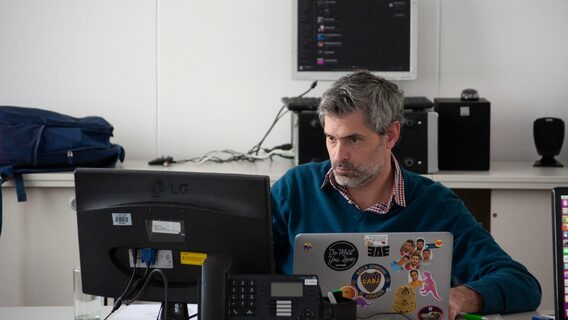
Artificial intelligence at work is most often used not by young professionals, but by people in their 30s with long experience. That’s one of the surprising findings of a new study by the Financial Times and Focaldata, which surveyed 4,000 workers in the US and UK.
Artificial intelligence at work is most often used not by young professionals, but by people in their 30s with long experience. That’s one of the surprising findings of a new study by the Financial Times and Focaldata, which surveyed 4,000 workers in the US and UK.
The main idea: AI complements existing expertise, not replaces it. This is confirmed by OpenAI’s chief economist Ronny Chatterjee — the company observes the same thing in its own data: the tool is most effective in the hands of those who already understand their industry well.
At the same time, the study records a disturbing gap between different categories of workers. More than 60% of the highest-paid use AI daily, compared to only 16% of those earning the least. The difference is not within a single profession, but between industries: lawyers, accountants and developers use AI much more than people in lower-paid positions in the same companies.
There is a distinct gender gap, with men more likely to use AI at work across sectors from tech to retail. However, Google data shows that the gap can be narrowed: targeted training sessions have tripled daily usage among women over 55. Corporate training, by the way, has been a major driver of AI adoption at work overall.
One of the key risks the study identifies is the erosion of the bottom of the career pyramid. Work previously done by juniors is increasingly being taken over by AI at the request of experienced professionals. This deprives newcomers of the opportunity to acquire skills through practice. Nobel laureate in economics Daron Acemoglu assesses the consequences sharply: «AI will increase the inequality between labor and capital. That is almost certain.»
«A productivity tool, not a judge»: what AI really does in Ukrainian IT recruitment. We asked recruiters from SoftServe, EPAM, N-iX, Ciklum, Railsware, Levi9, PlantIn and others










Comment hidden for violating commenting rules.
Comment hidden for violating commenting rules.