The uprising of machines. In Ukraine, there are already more than 4 million SIM cards used by “robots”. And the number of human SIM cards has decreased by a million in a year. What is happening
The report of the National Electronic Communications Commission (NCEC) for 2025 talks about the growth of the M2M (Machine-to-Machine, SIM cards used in different devices) and Internet of Things (IoT) services segment.
The report of the National Electronic Communications Commission (NCEC) for 2025 talks about the growth of the M2M (Machine-to-Machine, SIM cards used in different devices) and Internet of Things (IoT) services segment.
According to the report, in 2025, the number of dedicated M2M cards reached 4.11 million units, accounting for about 8.7 percent of the entire active subscriber base in the country.
This reflects an interesting trend: demand is gradually shifting towards the use of mobile communications not by people, but by various devices and automated systems. In particular, such cards are actively used in the areas of logistics, energy and security systems.
This is a much more stable demand, because machines and sensors, unlike ordinary subscribers, are almost independent of demographic changes or population migration abroad.
And there are fewer people
The report also discusses the gradual decrease in the total number of active SIM cards in Ukraine in recent years and the reasons for this trend. According to the data provided, in 2023 there were 50.3 million active cards. In 2024, this figure fell by 3 percent to 48.8 million, and in 2025 it decreased by another 2.7 percent to 47.4 million units.
The text explains that such negative dynamics are due to several key factors. First, demographic and migration processes are influencing, in particular, the departure of a significant part of the population abroad. Second, the temporary occupation of certain Ukrainian territories is making its mark, where access to national mobile networks is accordingly lost. Third, subscribers themselves are changing their habits and are increasingly using several SIM cards simultaneously, although this was previously a common practice.
All on 4G
Ukrainian subscribers are massively switching to high-speed 4G mobile internet. According to the report, the number of SIM cards using 4G is steadily growing: from 29.8 million in 2023 to 30.5 million in 2024, and in 2025 this figure has already reached 31.6 million.
At the same time, the total number of cards from which people simply access the Internet has almost not changed. This indicates that subscribers are actively migrating from outdated 2G and 3G technologies to the modern fourth generation of communication. As a result, as of 2025, more than 87 percent of all SIM cards with access to the network will operate on the basis of 4G.
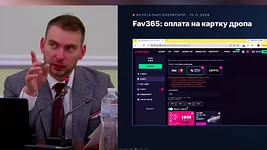
Most of the illegal online casinos blocked by Playcity continue to operate without hindrance and accept payments from Ukrainians. This is evidenced by the results of the inspection, which were presented at a meeting of the temporary investigative commission of the Verkhovna Rada
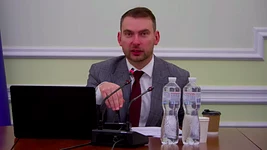
Deputy Zheleznyak found violations worth UAH 5.2 million in Telegram casino advertising during the meeting. Playcity: they knew, but they didn't fine it. We're figuring out how.
On November 19, 2026, a meeting of the temporary investigative commission (TSK) of the Verkhovna Rada was held. It was chaired by MP Yaroslav Zheleznyak. Also present at the meeting were the chairman of the VRU “tax” committee Danylo Getmantsev, the acting chairman of Playcity Oleksiy Tomashuk, representatives of the casino industry, law enforcement agencies, the National Bank, etc.
The switch from UAnet is in the hands of the authorities. How can we not get to this point (or are we already there)?
I’ve wanted to write about this for a long time. I spent several months compiling a summary for this topic, studying various government regulations and delving into relatively recent initiatives.
As we all know, during war, the Ukrainian Internet is regulated differently. And this is primarily related to our security. But the new regulation sets new rules for the future. And some of them can be quite dangerous. In the wrong hands.