Хочете будувати кар’єру в Data Science та AI? Vodafone Big Data Lab відкриває новий набір —>
Олег ОнопрієнкоІсторії
25 April 2025, 09:00
2025-04-25
Soviet Atomgrad: How Pripyat Became a Showcase of a Utopia of Technological Progress. History of the City on the Anniversary of the Chornobyl Tragedy
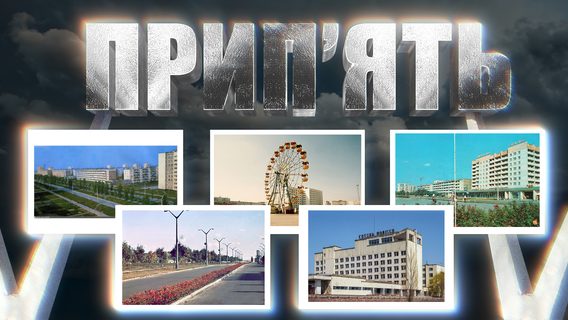
This year, the city of Pripyat turns 55. Built as the most modern city of its time, it has transformed from a symbol of a progressive socialist future into a notorious ghost town worldwide. While stalkers from all over the world now want to visit the city to experience the apocalyptic atmosphere, before the Chernobyl disaster, Pripyat was a magnet for Soviet scientists and youth — as a center of nuclear energy, providing access to the best conditions a Soviet citizen could only dream of. dev.ua tells the story of how the exemplary Soviet city of the future lived before the tragedy of April 26, 1986.
This year, the city of Pripyat turns 55. Built as the most modern city of its time, it has transformed from a symbol of a progressive socialist future into a notorious ghost town worldwide. While stalkers from all over the world now want to visit the city to experience the apocalyptic atmosphere, before the Chernobyl disaster, Pripyat was a magnet for Soviet scientists and youth — as a center of nuclear energy, providing access to the best conditions a Soviet citizen could only dream of. dev.ua tells the story of how the exemplary Soviet city of the future lived before the tragedy of April 26, 1986.
Pripyat is considered an atomgrad - a new type of city in the Soviet Union, in which the entire population was focused on one specific goal - servicing a nuclear power plant. Atomgrads were initially called small closed industrial cities where the Soviet empire was engaged in the creation of nuclear weapons. Later, this concept was expanded to include satellite cities of nuclear power plants.
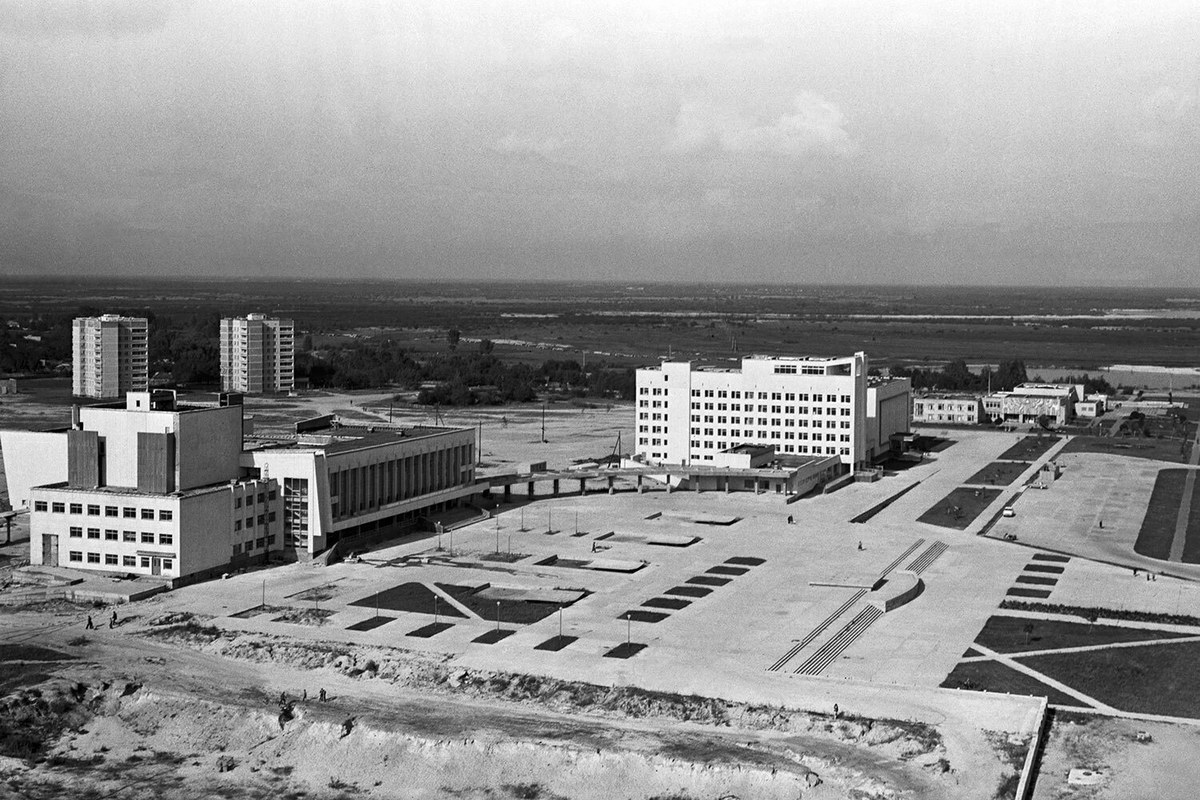
Typically, such cities were built to provide housing for nuclear power plant workers, and Pripyat was no exception. However, Pripyat was different from other Soviet cities near nuclear power plants. The party sought to build an exemplary proletarian city from scratch, so the existing city of Chernobyl was not considered as a basis, since, in the opinion of the communists, Chernobyl personified an archaic, agricultural past.
Choosing the optimal location
The need for the development of nuclear power in the territory of the Ukrainian SSR was first expressed by the former vice-president of the Academy of Sciences of the Ukrainian SSR and one of the first nuclear power enthusiasts, Oleksandr Shcherban. He advocated the construction of three nuclear power plants in Ukraine, and this idea was supported by the head of the government, Oleksandr Shcherbytsky, who in 1966 signed an order to begin research work for the construction of a facility that was then called the "Central Ukrainian Nuclear Power Plant", which later became known as the "Chernobyl Nuclear Power Plant". The site for the construction of the NPP was chosen by a specially established commission, which chose the area near the village of Kopachi as the best place to build a NPP.
Kopachi was a fairly large village with a population of more than 1,000 people, located in a sparsely populated area. The chosen site was not swampy, and was located near the Pripyat River, which was necessary for the operation of the nuclear power plant. Another, no less important factor, was the proximity of the facility to the Yaniv railway station.
It was between Yanov and the Chernobyl NPP that the construction of a satellite city began, named after the river of the same name, along which the settlement was being built on the site of the small village of Semikhody. Viktor Bryukhanov, who was also the head of the construction of the Chernobyl NPP, was responsible for the development of the city; after the station was put into operation, he was promoted to the director of the Chernobyl NPP, and the plan of Pripyat was developed by Moscow architects. The official date of foundation is considered to be February 4, 1970, and Pripyat gained city status nine years later.
A progressive city of a socialist future
Pripyat was supposed to be the embodiment of socialism, where there would be no place for private houses. In practice, some leaders, for example, the head of the Chernobyl NPP construction department, Vasyl Kyzyma, sold off the personal estate where he lived with his family.
"The construction of Pripyat and the Chernobyl NPP were declared Komsomol constructions, that is, information leaflets were sent to the regional committees of the party and Komsomol in various regions of the USSR, indicating the necessary specialists for the construction of the city, and information work was carried out at enterprises," Stanislav Shekstelo, a former employee of the Chernobyl NPP and now a tour guide at the Local Lore Museum of the city of Slavutych and the Chernobyl NPP, told dev.ua.
It was the status of the All-Union Komsomol Shock Construction that attracted young people from all over the Soviet Union to work in construction, as the city's housing stock was growing at a rapid pace. Young people saw this as a chance to stay in the new and modern city after the work was completed.
Working in the nuclear sector was very prestigious, many citizens of the USSR aspired to “enter the nuclear industry”. Therefore, it is not surprising that everyone wanted to climb into any position with the prospect of further employment at the nuclear power plant. Most of the scientific elite of that time relocated to Pripyat from Moscow and other regions of Russia, despite the fact that logistics were poorly developed at that time, and scientists had to travel via Kyiv. Later, one additional car was attached to the trains on the routes “Khmelnytskyi — Moscow” and “Zhytomyr — Moscow”, which was reserved specifically for residents of the nuclear city.
The designers predicted that by 1975 the new city would be home to about 12,000 plant workers and construction workers, and after the commissioning of reactors 3 and 4 of the Chernobyl NPP, the population would grow to a maximum of 18,000 and then decline. However, the pace of development of Pripyat significantly deviated from the initial figures, so they decided to add new microdistricts to the three planned ones, and in microdistrict No. 3, nine-story buildings were built instead of the planned five-story buildings. And even these changes did not keep up with the development of Pripyat. By 1986, the city's population was almost 50,000 people, and the construction of new microdistricts was added to the master plan. According to updated estimates, the city's population could reach 85,000 people.
The average age of Pripyat residents in 1986 was 26 years. 18 dormitories were built in the city for people without families, although most of the apartments were planned specifically for young families. Young people, comfortable conditions, high salaries, and crazy prospects - all this led to a baby boom. Approximately a thousand newborns were registered in Pripyat every year. In one of the chronicles of 1982, the chief physician of the Pripyat city hospital, Vitaly Leonenko, said that he was most concerned not with the problem of morbidity, but with the problem of birth rate. In the five elementary schools of Atomgrad, there were 15 parallel classes with more than 30 students in each.
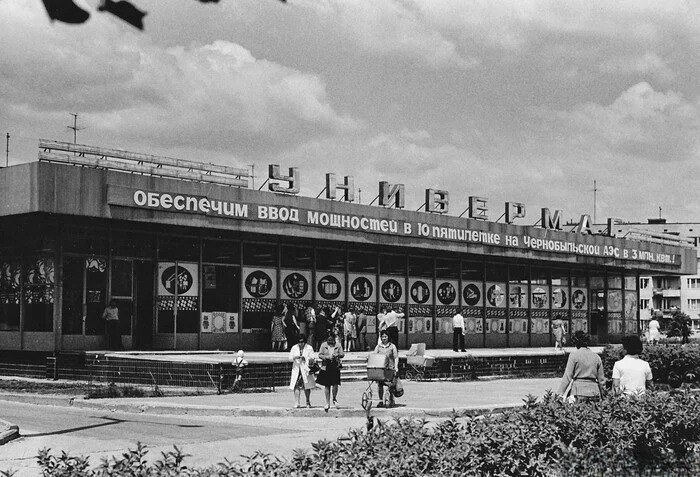
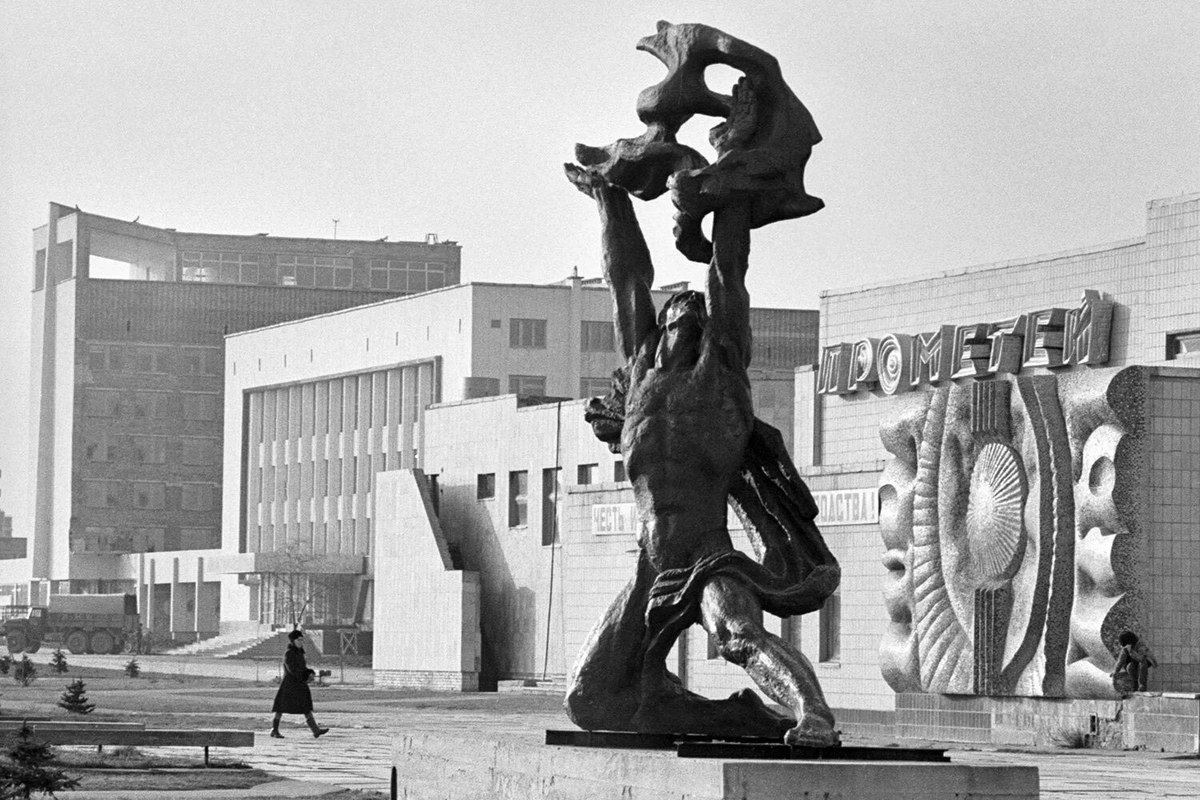
The quality of life in Pripyat was quite high, in local stores you could buy cheese and sausage, despite the all-Union deficit. And the Pripyat department store was one of the first in the territory of the Ukrainian SSR. Local officials, feeling the incredible benefit that the construction of the nuclear power plant provided, set about developing party funds with the capacity of all power units combined. Thus, at their request, two swimming pools appeared in the city, one of which could host international competitions, and later a skating rink was built. "So there are no such facilities in all of Ukraine yet, but I should build a winter sports palace in my small town?" Bryukhanov complained in a conversation with local elites who suggested this idea to him. The rare wood floor in the Energetik Palace of Culture, with its 800-seat auditorium, was laid by teams restoring the imperial-era palace in Kyiv, while the walls and infrastructure of the building were made of marble and aluminum, which were in dire shortage.
Viktor Bryukhanov had the authority to redirect funds from the construction of the nuclear power plant to facilities in the city, which local bureaucrats took advantage of. Interestingly, Bryukhanov himself had to go to Kyiv and ask the party secretary for permission to move to another apartment in the city.
In Pripyat, there was a river station, to which futuristic rocket boats moored. Such a boat was the fastest way to get to Kyiv in just two hours. Even now it looks quite futuristic, let alone those times. During the evacuation of the city, these boats were used to transport the station's most valuable employees and researchers.
When most of the Chernobyl facilities were built, the station became the most powerful in the Soviet Union, and in the world it was second only to the French Bugey NPP and the Japanese Fukushima. Many residents of the city expressed a desire to retrain from construction workers to station maintenance personnel. In Pripyat there was only a vocational school that trained specialists for the working level, but on the basis of this vocational school they wanted to create a branch of the Kuibyshev Polytechnic Institute. The city authorities also negotiated with the Kyiv Polytechnic Institute about opening a branch of the KPI.
Not a single atom
Traditionally, for superpowers, nuclear energy was very closely intertwined with military-industrial production. In Pripyat, there was a plant called Jupiter, which was one of the branches of the Kiev plant Mayak and, according to documents, was engaged in the production of ordinary tape recorders and other household appliances for civilian use. In fact, secret products, as well as semiconductor technologies, were designed and developed at Jupiter. Of course, experienced gamers immediately thought of a Gauss gun or two-meter flasks with mutants, but in reality the “product” was a huge cabinet-shaped computer built for the needs of the Soviet army. Secret laboratories were located in the basements of Jupiter, where scientists tested new materials to improve the properties of semiconductors.
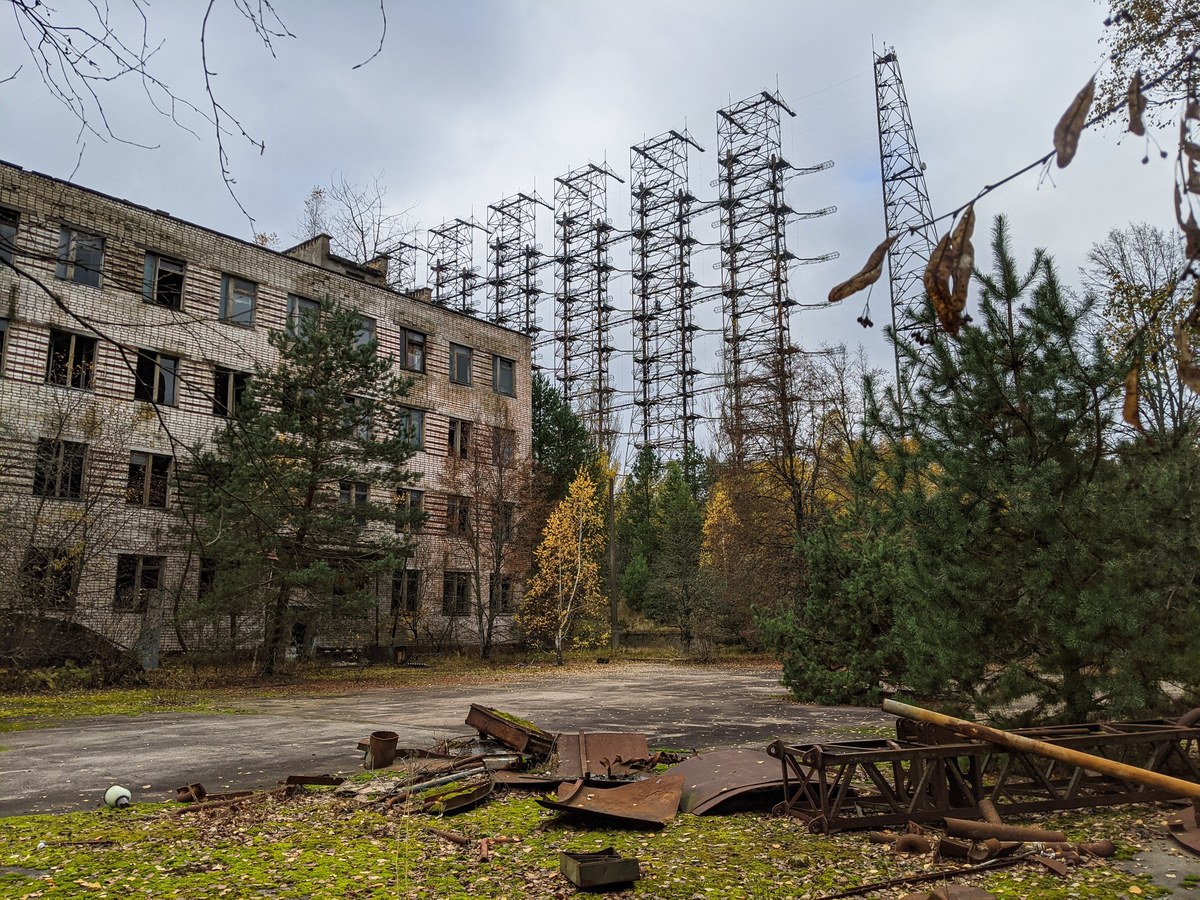
Since most of the equipment and documents were evacuated after the accident in 1986, it is not known for certain what products — and most importantly, for what purpose — were manufactured at the plant. According to some reports, in addition to electronic computers, the Jupiter workshops produced flight recorders for aircraft and ships. Experienced "stalkers" and tourists still find punch cards with information about the flight of ballistic missiles in the factory's offices. Most likely, the information was transmitted to the secret military city near Pripyat "Chernobyl-2", on the territory of which an over-the-horizon radar station was placed to detect the launch of ballistic missiles "Duga".
In general, working with punched cards, which were the information carriers in early automated data processing systems, required a certain level of technical skill, which indicates the presence of a strong staff of Soviet IT specialists at Jupiter. In total, the enterprise employed over 3,000 highly skilled workers.
After the Chernobyl accident, the scientific base of the design and engineering bureau of the Spesatom State Enterprise was deployed at Jupiter. This enterprise was engaged in the development of robotics for working with radioactive waste and dosimetric devices. The plant operated until 1996.
Pripyat after the tragedy
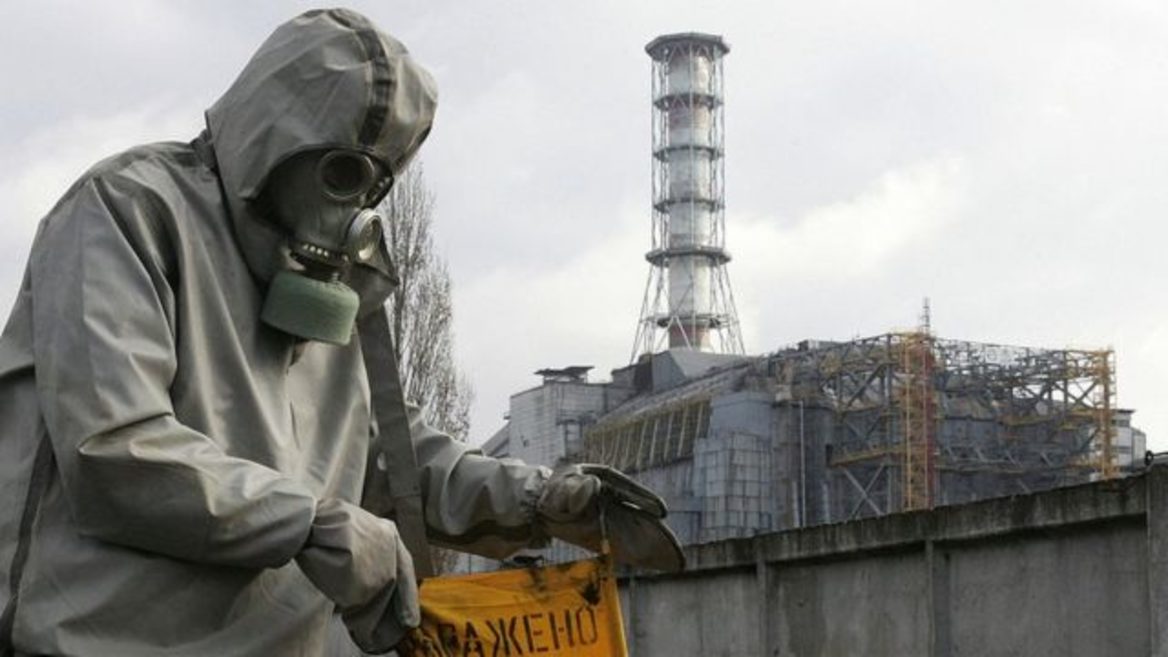
On April 26, 1986, at 01:23, an explosion occurred at the 4th power unit of the Chernobyl nuclear power plant, as a result of which the life of the country was divided into “before” and “after”. Despite the fact that the Soviet authorities tried to hide the consequences of the accident, in the end all the inhabitants of Pripyat had to be evacuated. Although extraordinary efforts were made to deactivate the radionuclides, it was in vain - Pripyat became uninhabitable.
During the independence period, Pripyat, which had been preserved in time, received a new purpose - a tourism boom set in. This played a cruel joke with the city's identity, as "artifacts" appeared on the routes of the most popular tourist sites, deliberately scattered to further mystify history.
The city is now completely closed to visitors due to a full-scale Russian invasion, and the area is now dangerous not only because of radiation but also because of hostilities. The territory of the Chernobyl Exclusion Zone is heavily mined, as evidenced by the case of a Red Book Przewalski’s horse that was blown up by a mine. However, the Ukrainian government is already thinking about the green future of the “zone”. Ukraine and France are considering launching renewable energy projects in the Chernobyl Exclusion Zone, and last week they opened the first solar power plant together with the Spanish ambassador.
Despite future decisions, little will change for Pripyat. Time and nature have long taken their toll, and the city is slowly but surely collapsing.
Today is the Day of Remembrance of the Chernobyl disaster. It almost happened again in 2022 due to the negligence of the occupiers. Let's remember these events