Олександр КузьменкоAI Eng
29 June 2026, 10:38
2026-06-29
Heat and tornadoes threaten artificial intelligence. Extreme weather ruins data center developers' plans
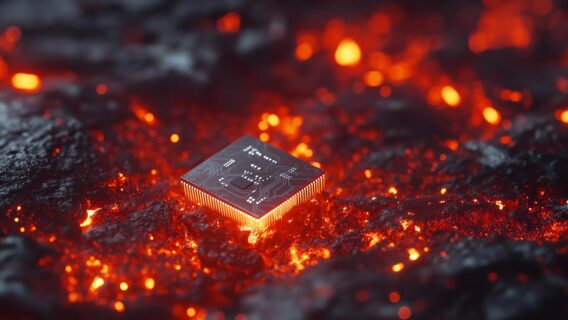
The world’s tech giants are facing a new threat to the development of artificial intelligence: extreme weather conditions. As the planet is engulfed in record-breaking heat waves, data center operators are forced to fight to keep the powerful chips in their servers running and not overheating.
The world’s tech giants are facing a new threat to the development of artificial intelligence: extreme weather conditions. As the planet is engulfed in record-breaking heat waves, data center operators are forced to fight to keep the powerful chips in their servers running and not overheating.
As CNBC reports, extreme weather has gone from being just a background risk to becoming a key driver of financial losses for infrastructure companies. Over the past three years, climate-related disasters have been the leading cause of losses during data center construction in the United States, accounting for a third of all insured losses in the sector.
In an effort to save on land, companies are increasingly building in suburban areas without proper climate history. According to estimates by insurance company Zurich, more than $3 billion in assets are now in high-risk areas.
A study by First Street confirms that almost 79% of the world’s data center capacity is at risk from floods, hurricanes and wildfires, leading to downtime and rising insurance costs. About 64% of new data centers are being built this year in the US «border markets» (Ohio, Wisconsin, Texas), where tornadoes and strong winds easily damage rooftop cooling systems and solar panels. Similar risks are recorded in the hot Iberian Peninsula in Europe and in Brazil.
Extreme temperatures hit infrastructure twice: they require more energy to cool servers and at the same time overload the city’s air conditioning networks. Under normal conditions, about 40% of a data center’s electricity is used to cool systems, and in the heat, this figure increases rapidly. As Michal Tadani, CEO of the Rhizome platform, notes, during a heat wave of 38 degrees Celsius in Turin, Italy, underground cables were subjected to thermal stress, which caused a series of emergency shutdowns. This is critical for modern facilities, each of which consumes as much electricity as 100,000 households.
To combat the crisis, Microsoft is implementing redundant power systems and real-time monitoring. Nvidia is adapting the hardware: its new AI servers can operate with coolant temperatures of up to 45 degrees Celsius. Raising this threshold by just one degree reduces cooling costs by about 4%. In addition, European customers have already started to officially add a «climate change factor» to the technical requirements of projects to anticipate future warming.
Як нейромережі бачать вільну та незалежну Україну? Тест dev.ua
Нейронні мережі для генерації зображень бачать світ по-своєму, їхню логіку зрозуміти часом зовсім неможливо. Але таки хочеться. На честь Дня Незалежності України редакція dev.ua вирішила провести невеликий експеримент.
Ми задали чотирьом різним нейронним мережам п’ять однакових запитів: «прапор України», «День Незалежності України», «український Крим», «перемога України» та «українці». Отриманими результатами ми ділимося з вами нижче.
У TikTok тепер можна генерувати фон за допомогою нейромережі. Ми протестували її та ділимося результатами
У TikTok з’явилася нова функція «Розумний фон». З її допомогою як фон для тіктоків можна підставляти згенеровані нейромережею зображення. Редакція dev.ua протестувала цю технологію і ділиться своїми враженнями.