Хочете будувати кар’єру в Data Science та AI? Vodafone Big Data Lab відкриває новий набір —>
Олександр КузьменкоRobots
28 October 2026, 16:47
2026-10-28
The Ukrainian company "Robotized Complexes" is developing a special module "CASEEVAK" for the evacuation UGV "Murakha"
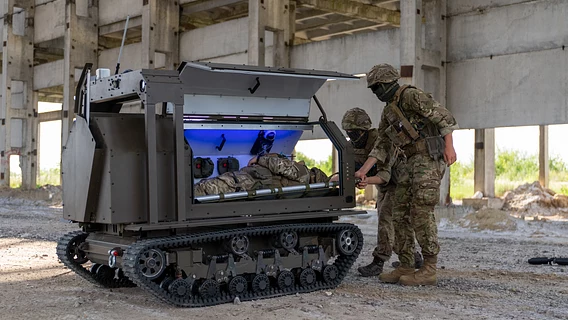
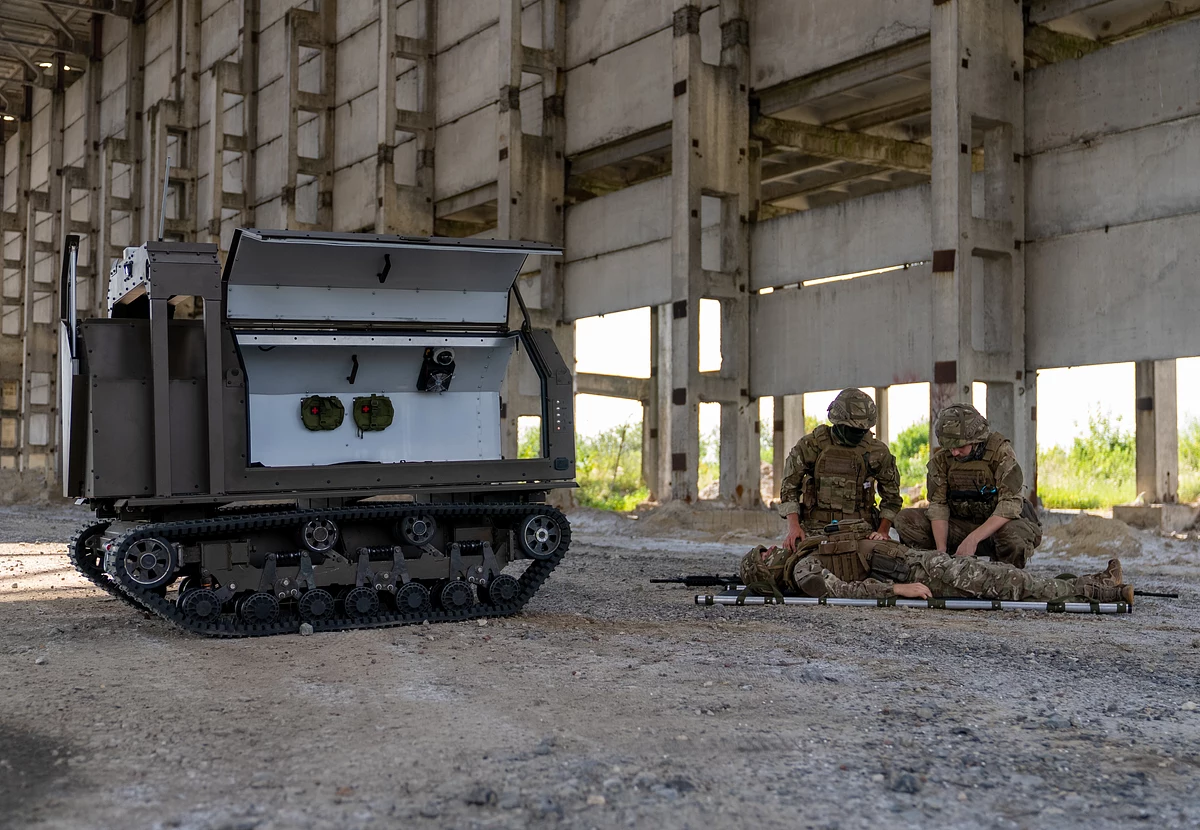
Ukrainian manufacturer Robotic Complexes is developing a specialized module called CASEEVAK for the tracked ground robotic complex "Murakha". Unlike standard cargo platforms, it is focused on the protection and comfort of the wounded during transportation.
Ukrainian manufacturer Robotic Complexes is developing a specialized module called CASEEVAK for the tracked ground robotic complex "Murakha". Unlike standard cargo platforms, it is focused on the protection and comfort of the wounded during transportation.
The development was announced by the manufacturing company. The need for special modules arose due to increased risks on the front line, where evacuation routes are under constant control of FPV drones, artillery, and mortars.
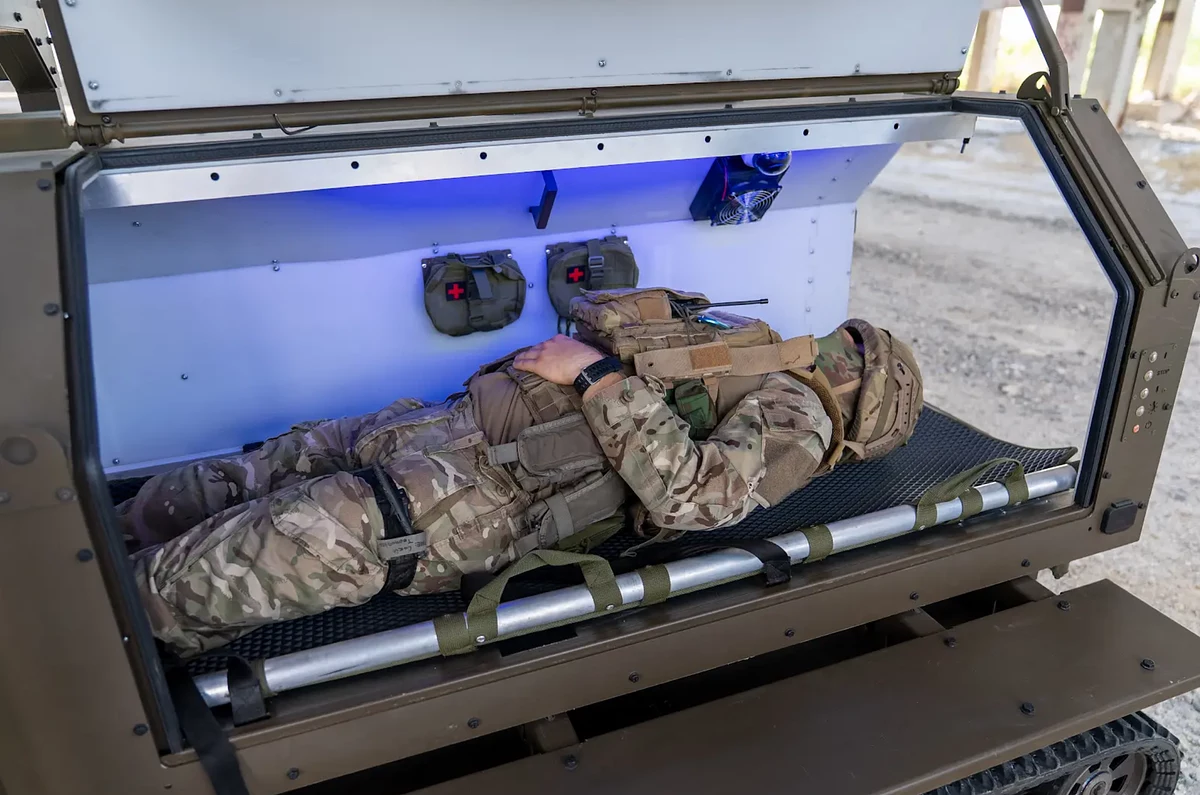
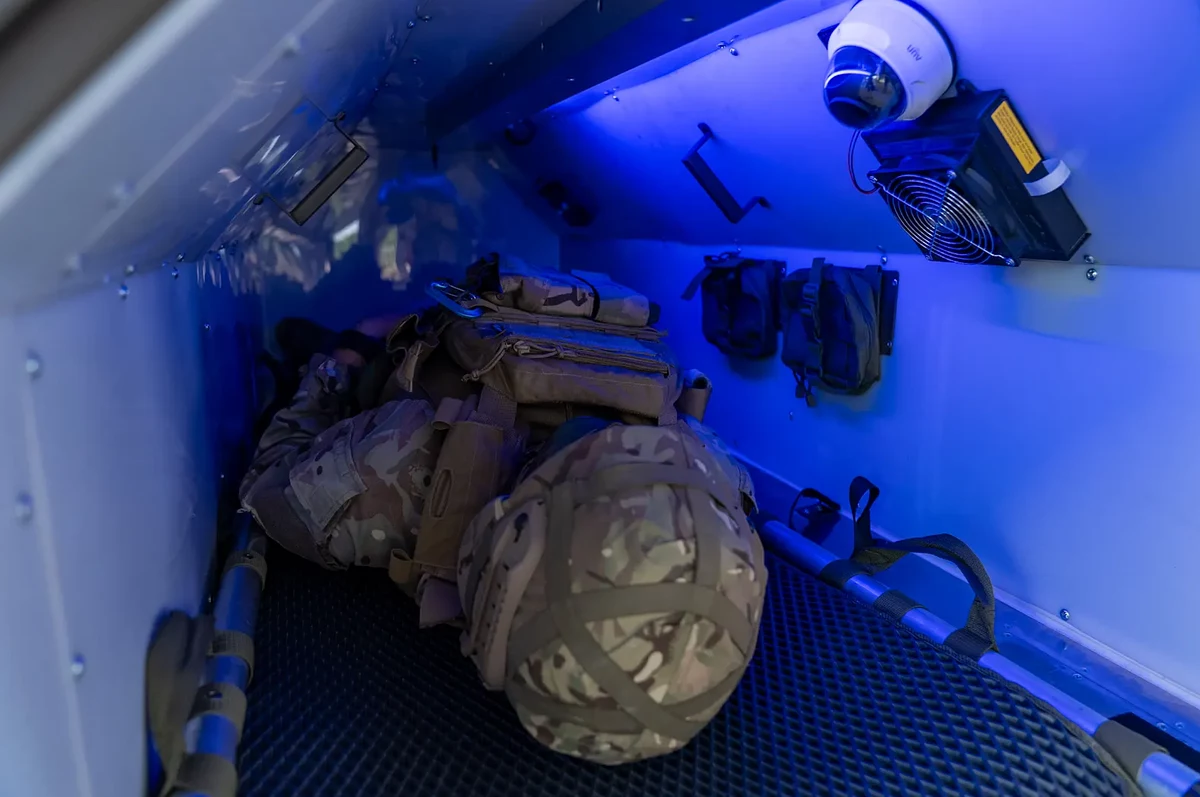
The basis of the "CASEEVAK Ant" is a closed armored capsule made of 3.5 mm Armox 500T steel with an inner lining of HDPE 1000. It protects the wounded from debris and weather conditions. Inside the module there is ventilation, floor heating, lighting, a first aid kit, as well as video surveillance cameras (with day and night modes) and two-way audio communication to maintain contact between the operator and the soldier.
"We need to ask ourselves the question: what happens to the wounded person after he is loaded onto the platform? Does he have protection from debris? Can he be provided with comfortable conditions during transportation? Is communication with him maintained? We believe that an evacuation drone should be a specialized solution designed primarily around the needs of the wounded person," explained Igor Chaykivsky, founder and CEO of Robotic Complexes.
The complex is controlled via multiple channels: ELRS, LTE, Starlink, and fiber. The module maintains communication via Starlink and LTE even when disconnected from the platform.
The NRK's electric powertrain consists of two 8 kW motors (total torque 1600 N m) and a 35 kWh LiFePO₄ battery with immersion cooling. The range reaches 80 km.
The company has already conducted ballistic tests of armored steel at a distance of 50 meters and is currently working on integrating additional passive and active protection against FPV drones (lattices, mesh targets, and electronic warfare systems).