Researchers turned old smartphones into a budget data center
This solution will potentially kill two birds with one stone — reducing the amount of electronic waste and reducing the demand for data center components.


This solution will potentially kill two birds with one stone — reducing the amount of electronic waste and reducing the demand for data center components.
This solution will potentially kill two birds with one stone — reducing the amount of electronic waste and reducing the demand for data center components.
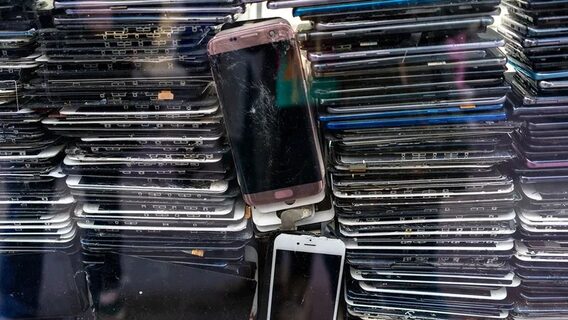
Researchers from the University of California, San Diego (UCSD) and Google have given old Pixel smartphones a second life, turning them into a low-cost data center. According to Google Research, the discarded smartphones are part of the so-called "embodied carbon" associated with the manufacturing process and its carbon footprint, Tom's Hardware reports .
The study found that smartphones that are just three years old still deliver better single-core performance than servers like the Asus RS720A-E11, which are often found in the most powerful data centers and can be equipped with Nvidia H200 or Nvidia RTX Pro 6000 GPUs and two AMD EPYC server processors. While the latter provide overall power that a mobile device can’t even dream of, the fact that smartphones still scored higher on the SPEC benchmark per core means that with some creativity, researchers can still use them for computing tasks.
First of all, they cleaned these gadgets of all unnecessary components: displays, batteries, cameras, speakers, cases, etc. Only the motherboard remained, since it is on it that the system on a chip (SoC) necessary for performing calculations is placed.
The Android operating system was then replaced with a general-purpose Linux distribution used in data centers. This allowed for the removal of unnecessary “junk” software that was on the original consumer device and the deployment of orchestration software such as Kubernetes. Performance tests showed that 25 to 50 old phones were equivalent in computing power to a single server-side dual-processor CPU.
UCSD estimates that a cluster of 20 phones can support a single application required for a course with over 75 students. So instead of deploying it in the cloud, which would incur additional costs and use of resources on the side of commercial data centers, these applications can be run locally — on the basis of used smartphones.
The research team plans to use 2,000 phones to create a local data center that can serve “a hundred of these courses simultaneously.” In addition to the advantages of running the programs locally and owning the necessary hardware, the team also notes that it costs “only a fraction of the usual cost” (meaning building a local server from new components). This is especially relevant today, against the backdrop of rising prices for RAM and flash memory chips.
The research group says it plans to launch a full system by the end of this year, and is looking to see how consumer components will handle continuous load in a data center environment.