Олександр КузьменкоScience Pop
7 January 2026, 08:37
2026-01-07
Scientists were able to create a wireless internet system based on LEDs that works in bright light conditions
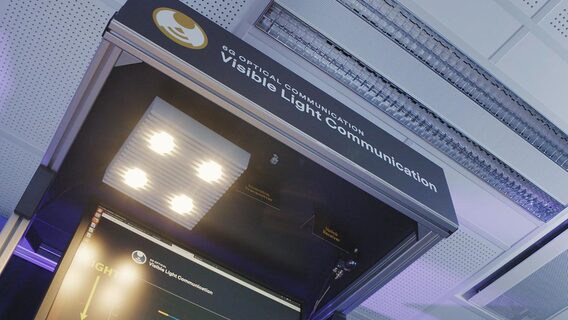
Japanese scientists have developed a low-cost visible light communication (VLC) system using commercially available equipment that provides stable data transmission even in strong ambient light.
Japanese scientists have developed a low-cost visible light communication (VLC) system using commercially available equipment that provides stable data transmission even in strong ambient light.
The team achieved reliable VLC operation outdoors with data rates of up to 3.48 Mbps over a distance of several meters. The scientists implemented a new 8B13B encoding scheme on an FPGA and connected it to a Raspberry Pi, reports Interesting Engineering.
Their work addresses the main problems of VLC technology—pulse distortion and interference from sunlight—and also offers a practical path to application in intelligent transportation systems (ITS).
Visible Light Communication (VLC) is gaining increasing attention as an alternative wireless technology that uses light emitted by LEDs. Because VLC is independent of radio frequencies, it offers potential advantages in environments where radio communications suffer from congestion, interference, or regulatory restrictions.
In particular, VLC is considered promising for intelligent transportation systems (ITS), where traffic lights and streetlights can serve as communication infrastructure. However, practical implementation has been impossible due to sensitivity to ambient light and waveform distortion in LEDs.
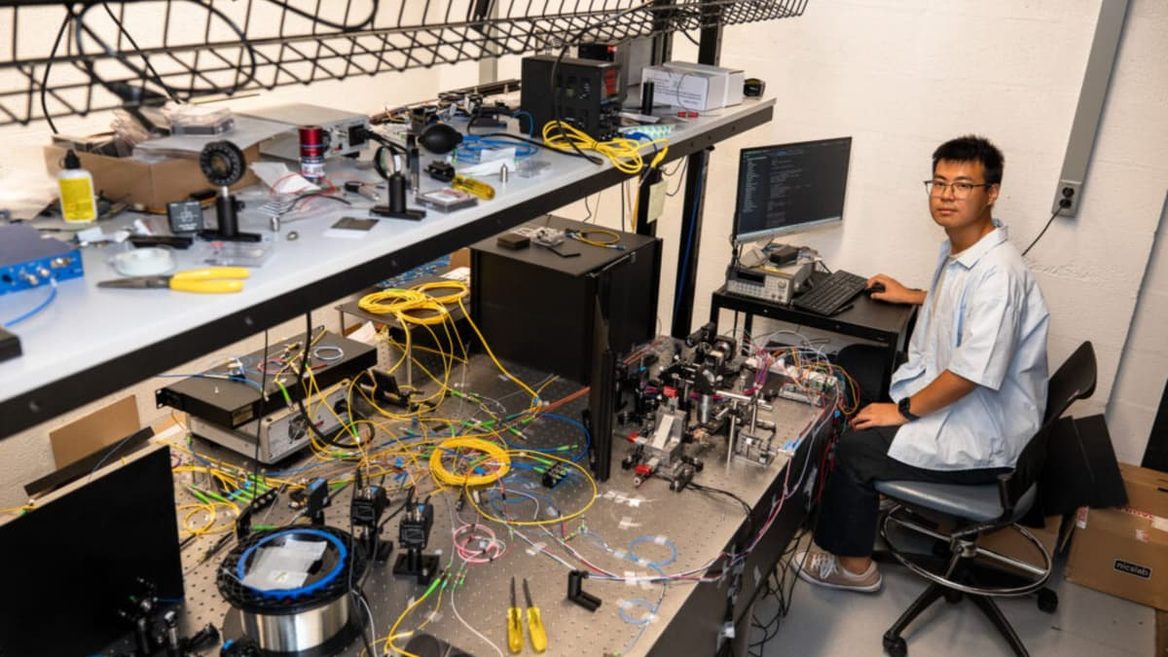
A research team at Tokyo Polytechnic University has demonstrated a simple and affordable VLC system that overcomes several of these obstacles. The researchers developed a new 8B13B linear encoding scheme adapted for VLC and implemented the SerDes logic using Verilog HDL on a field-programmable gate array (FPGA). The FPGA is connected to the Raspberry Pi via a standard serial peripheral interface (SPI), allowing data transfer using only widely available components.
The scientists noted that experimental evaluations showed that the system achieved a maximum data rate of 3.48 Mbps and maintained stable communication at a distance of approximately 3 meters under strong ambient light conditions, including direct sunlight exceeding 90,000 lux.