Iran demands payment for undersea internet cables under the Strait of Hormuz and threatens to cut them. Google, Microsoft, Meta and Amazon under threat
Tehran has announced plans to charge technology companies licensing fees for using undersea internet cables laid through the strategic strait, with state media affiliated with the regime hinting at physical damage to infrastructure if they refuse to pay.
Tehran has announced plans to charge technology companies licensing fees for using undersea internet cables laid through the strategic strait, with state media affiliated with the regime hinting at physical damage to infrastructure if they refuse to pay.
Iran’s military spokesman, Ebrahim Zolfaghari, wrote in X last week: «We will introduce fees for internet cables.» Media outlets affiliated with the Islamic Revolutionary Guard Corps have clarified the details: companies like Google, Microsoft, Meta, and Amazon must comply with Iranian law, cable operators must pay for the passage of cables, and maintenance rights must be transferred exclusively to Iranian entities.
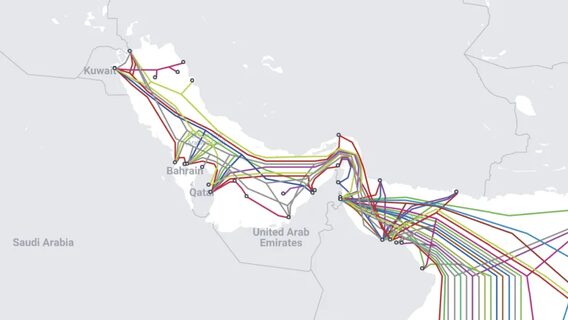
Several major intercontinental submarine cables run through the Strait of Hormuz, connecting Europe, Asia, and the Persian Gulf. Most of them were deliberately laid along the Omani coast because of long-standing concerns about Iran. However, TeleGeography researcher Alan Mauldin notes that two cables — the Falcon and Gulf Bridge International — do pass through Iranian territorial waters.
«Digital catastrophe» for several continents
If Iran does succeed in sabotage, the consequences go far beyond slowing down the internet. Banking systems, military communications, cloud infrastructure for AI, India’s outsourcing industry are all affected. Gulf countries could lose connectivity, which would have a critical impact on oil and gas operations. Parts of East Africa risk being left without internet access altogether.
However, there is an important caveat: according to TeleGeography, cables through the Strait of Hormuz provide less than 1% of global international bandwidth as of 2025. For individual regions, the impact will be noticeable — for the entire Internet at once, most likely, not.
Repairs are a separate problem. During active hostilities, cable ships are forced to stand still for long periods of time to repair damage, which makes them vulnerable. Of the five technical vessels that usually operate in the region, only one remains inside the Persian Gulf.
The Suez Canal as an argument — and why it doesn’t work
Iranian media justify their claims with international law and cite Egypt’s precedent: Cairo has been earning hundreds of millions of dollars for years from the transit of cables through the Suez Canal. But international lawyers point out a fundamental difference: Suez is an artificial canal on Egyptian territory, while the Strait of Hormuz is a natural passage with a completely different legal regime.
It is also physically difficult for tech giants to comply with the demands: US sanctions explicitly prohibit any payments to Iran. Therefore, some analysts consider Tehran’s statements more a show of force than real policy.
«Iran seeks to impose such costs on the global economy that no one will dare to attack it again,» explains Dina Esfandiari, head of the Middle East at Bloomberg Economics.