Why are communication prices rising, and is that normal?
I am always surprised when our people start complaining that mobile communication is expensive in our country and that prices continue to rise. Therefore, today I propose to compare how much communication costs in Poland, where many Ukrainians also live now, and how much it costs here.
I am always surprised when our people start complaining that mobile communication is expensive in our country and that prices continue to rise. Therefore, today I propose to compare how much communication costs in Poland, where many Ukrainians also live now, and how much it costs here.
How much do we pay, and how much do Poles (and Ukrainians living there) pay?
In the first half of 2025, the average revenue of Ukrainian mobile operators from one active SIM card (this indicator is called ARPU) amounted to 135.6 UAH ($3.2), which is 26,7% more than a year ago.
Now let’s compare our ARPU with a neighboring country. Well, in Poland this figure is 2 times higher and is about $7. And this is the nominal ARPU, on average for the country. I talked to a friend who lives in the capital (Warsaw). He says that people have to spend from 8 to 25 Euros per month on mobile communications. This is from 400 to 1200 UAH!
How income affects data transfer speeds
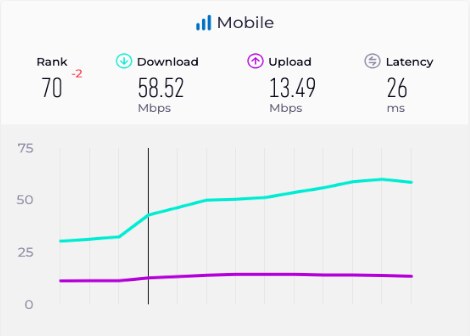
The less mobile operators earn, the less they will invest money in the network. And the faster we will fall in the global Internet speed rankings. For example, according to the Speedtest Global index for October 2025, we lost two positions in the global index and now occupy 70th place with a download rate of 58.52 Mbps.
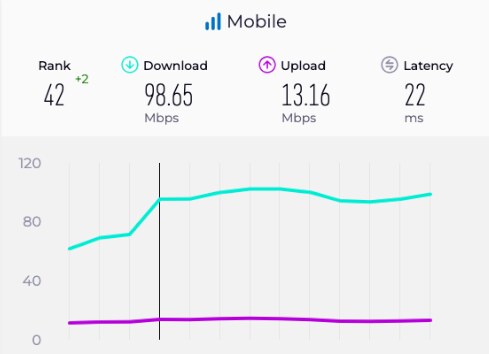
Neighboring Poland has almost twice as good a score and its speed results are constantly improving. It is 42nd in the ranking for October with a score of 98.65 Mbps.
Unfortunately, mobile phone prices in Ukraine cannot help but increase. There are good reasons for this.
Here are the top 5 significant factors that are constantly pushing telecom operators' costs up.
Electricity: When electricity becomes more expensive, so does communication
The first thing to understand: telecom networks are huge consumers of electricity. Base stations, servers, data centers — all of this works around the clock. And when electricity prices soar, telecom operators are among the first to feel it. Because in the telecoms expense item, electricity is one of the main expense items.
Most operators do not disclose in their reports data on the clear distribution of costs. But, for example, Vodafone Ukraine, according to the results of the three quarters of 2025, gives a figure — electricity had a significant contribution to the overall operating profitability. Its expenses increased by 333 million UAH (compared to the same period in 2024).
If we look at the overall figures, in 2025 the cost of electricity for businesses in Ukraine increased significantly, and during peak evening hours — by as much as 60%. And these are not abstract figures. It is in the evening, when we all return home, turn on TV series, scroll through social networks and call our relatives, that the network operates at its maximum. And this means maximum electricity consumption at the most expensive time.
Generators: When there is no light, there must be communication
But the biggest challenge is blackouts. When the lights go out, telecom operators can’t just stop working. People need to stay connected — it’s not a matter of comfort, it’s a matter of safety.
That is why companies are massively installing generators and batteries. Let’s look at Kyivstar’s figures: if in August 2025 they were consuming 100 thousand liters of fuel per month, then in November it was 733 thousand liters. This is an increase of more than 7.5 times in three months! And this is just one operator.
Fuel prices have risen by 6,7% in a year. Multiply that by hundreds of thousands of liters every month and you’ll understand why operators are having a hard time maintaining their old tariffs, even without thinking about 5G.
It should be added here that neighboring Polish operators have almost no costs such as fuel for generators. And the prices for services are twice as high as in Ukraine.
Infrastructure: new batteries, the transition to 4G and destruction during war
To keep the grid running even without power, we need more than just generators. We need powerful batteries, backup power systems, and equipment upgrades.
The same Kyivstar invested over 3.5 billion hryvnias in an energy sustainability program. They installed 241 thousand batteries (and 3.6 thousand generators) across the country.
In addition, in wartime, networks have to be constantly restored in frontline areas and in shelling zones (shaheeds damage the infrastructure almost every night).
Let’s not forget about the gradual transition of mobile operators from 3G to 4G (in some cities, the old network has already begun to be disconnected). Ultimately, 4G, according to the license terms, should appear on the country’s key highways.
And this is a big additional cost. Take the Kyiv-Lviv highway. The same Kyivstar fourth-generation communication on this section will work almost continuously. And this is the result of 2024-2025.
Building one telecom site with base stations in a village or along roads costs over UAH 3.5 million. Building such a site in a city costs over UAH 2 million.
For example, Kyivstar told me that the company built over 3,000 new base stations, as well as over 1,000 new sites, from January to November 2025.
All this together led to a rapid increase in capital investments of telecom companies in 2025. Statistics from the National Commission for the Economy and Energy of Ukraine show that in the first half of the year alone they amounted to UAH 13.3 billion (compared to UAH 8.7 billion for the same period in 2024).
Now think about what other industry is currently investing that much money in infrastructure development during a war? You won’t find many similar examples.
Inflation: when everything becomes more expensive
And finally, the general economic situation. Annual inflation is over 11%. This means that absolutely everything is becoming more expensive: equipment, spare parts, salaries of technical specialists, transportation, network maintenance.
Telecom operators do not exist in a vacuum. When prices for everything around them rise, they too are forced to adapt to new realities.
Salaries
Work.ua data for December shows that over the year the average salary in Ukraine increased by 20% to UAH 27.1. And some specialties, such as call center operator, increased by 38%.
Telecom operators were also not spared by this trend. Thus, in the first 9 months of 2025, Vodafone Ukraine’s payroll increased by UAH 415 million.
There is a catastrophic shortage of people in the country. People are a shortage. That’s why they are already expensive and will be more expensive in 2026.
Bottom line: it’s not about greed, it’s about reality
The increase in tariffs is not a decision by one operator or an attempt to earn more. It is the industry’s response to economic challenges: expensive electricity, expensive fuel, inflation, rising wages, and the constant need to invest in the energy sustainability of networks.
The main thing is to understand: telecoms are infrastructure companies. And almost 100% of our telecommunications market is privately owned. Therefore, here you can’t do, for example, with roads: you put a certain number of billions in the state budget for a large-scale construction and then build yourself a new Kyiv-Odesa highway.
With telecoms, everything is both simpler and more complicated at the same time. It’s simpler because all the projects are not populist, they are based on market calculations. It’s more complicated because if the population has no money and pays $3 per month (on average), then there’s no need to dream about 5G in 2026.