Хочете будувати кар’єру в Data Science та AI? Vodafone Big Data Lab відкриває новий набір —>
Редакція dev.uaCrypto
27 February 2026, 11:31
2026-02-27
AI Tokens: Real Value or Just a New Hype Label
Remember the textbook story of 2017? Then, the unremarkable beverage company Long Island Iced Tea suddenly changed its name to Long Blockchain Corp. Their shares instantly soared 200%, although the business model remained the same — selling sweet water. The market was not buying the product, the market was buying the «hype word.»
Remember the textbook story of 2017? Then, the unremarkable beverage company Long Island Iced Tea suddenly changed its name to Long Blockchain Corp. Their shares instantly soared 200%, although the business model remained the same — selling sweet water. The market was not buying the product, the market was buying the «hype word.»
Today, in 2026, we are witnessing the reincarnation of this absurdity. Only now the magic spell has changed: instead of «Blockchain,» everyone is plastering the facade with the sign «AI.»
As soon as an unknown token adds the prefix «GPT», «Neural» or simply «AI» to its ticker, its capitalization begins to defy the laws of gravity (and common sense). Investors, frightened by the success of NVIDIA and OpenAI, are afraid to miss the next big trend and are pouring money into anything that even remotely resembles a neural network.
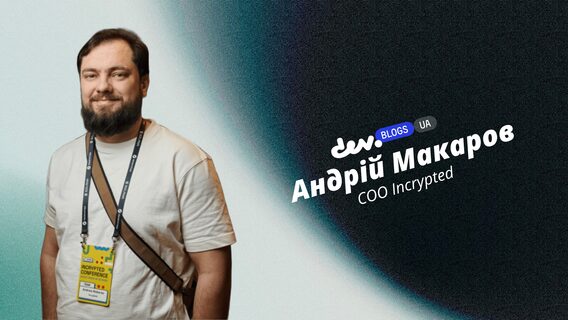
As COO of the specialized media outlet Incrypted, which processes dozens of press releases and pitch decks every day, Andriy Makarov sees the flip side of this rally. Artificial intelligence is certainly a technological revolution comparable to the invention of the Internet. But 90% of so-called «AI tokens» have the same relationship to this revolution as the RGB backlight on an old office laptop has to its performance.
In this column, he suggests putting aside the emotions of FOMO (fear of missing out) and figuring out where in the AI-Crypto sector is the real infrastructure on which the economy of the future will be built, and where is it just a nice wrapper for selling air.
«AI-Wrappers», or Marketing Dust
If we look «under the hood» of most projects that are flooding the market today, we will see not revolutionary technology, but banal arbitrage.
The scheme looks painfully simple: the development team takes an API from OpenAI (ChatGPT) or Anthropic (Claude), «wraps» it into a convenient interface (for example, a Telegram bot or a web application), adds a picture generation function and… issues its own token. In Pitch Deck, it is called «Next-Generation Decentralized AI Assistant.» In reality, it is a resale of someone else’s product with a markup.
Here the main question arises that kills 99% of such startups: «Why blockchain?»
If your product is a chatbot, why should a user buy a volatile token, pay network fees, and deal with a wallet when they can simply pay for the subscription with a bank card for $20? The answer is cynical but honest: the token here is not for the product. The token here is a casino ticket.
It doesn’t solve any technological problem. It exists only so that founders can raise capital on the wave of hype, and early investors can cash in on retail users. Such projects are caliphs for an hour. Their business model lives exactly until the moment when OpenAI releases another update that makes their «unique functionality» a free basic feature.
DePIN and «Iron» — where the real money is hidden
If we strip away all the marketing noise, we see the one area where blockchain is vital to AI today. It’s not images or chatbots. It’s resources.
Training modern neural networks requires enormous computing power. The world is experiencing a chip shortage: queues for NVIDIA H100 graphics cards are drawn a year in advance, and cloud giants like AWS or Google Cloud are raising prices sky-high. Startups simply have nowhere to train their models.
This is where DePIN (Decentralized Physical Infrastructure Networks) comes in. It’s essentially the «Airbnb for graphics cards.»
Imagine millions of gaming PCs around the world sitting idle for 20 hours a day. Or data centers with empty slots. Crypto projects (such as Render, io.net, Akash, and others) are pooling these disparate capacities into a single network and renting them out to AI developers.
What’s the magic here?
Cheaper: It costs many times less than Amazon because it uses existing hardware.
More accessible: No corporate censorship (no one will shut you down for training the «wrong» model).
Token Economy: Here, the token is not a casino ticket, but a real means of payment. The developer buys the token to pay for the GPU rental. The owner of the graphics card receives the token as payment for the work.
This is a classic, understandable business model: there is demand (AI companies), there is supply (GPU owners), and there is blockchain as an ideal mechanism for settlements between them. It is here, at the junction of hardware and code, that real unicorns are born, not one-day memes.
The Black Box Problem: When Eyes Lie, Blockchain Tells the Truth
As the COO of a media resource, I face a problem every day that seemed like a dystopian plot just yesterday. We live in a world where a video message from the president about surrender can be generated in 10 minutes, and the voice of the CEO of a major stock exchange can be faked so that even your own mother can’t tell the difference.
Artificial intelligence has created a paradox: content has become infinitely abundant, but trust in it has fallen to zero. In this reality, «Don’t Trust, Verify» ceases to be just a slogan of cypherpunks. It becomes the only way for the information space to survive.
And here cryptography is a natural antidote to AI. Blockchain could become a global notary for the internet. Imagine a technology of «digital watermarks» that cannot be erased or forged.
When a journalist publishes a story, it is signed with their cryptographic key on the blockchain. When a neural network generates an image, this fact is recorded in metadata recorded on the chain.
This is not about tokens or «native». This is about Provenance (data origin). We are moving towards browsers and social networks automatically labeling content:
Green check mark: «Signed Encrypted. Original.»
Red flag: «Source unknown. Probably AI generated.»
Projects that build the infrastructure for such content verification are the third pillar of real value. They sell not hype, but truth. And truth in the era of deepfakes will cost a lot.
Conclusion: How not to buy «air» instead of technology
Artificial intelligence is the new electricity. Blockchain is the new rails for its accounting and transmission. Their intersection will inevitably give rise to new technological giants on the scale of Google or Amazon.
But as we move towards this bright future, we will have to wade through the swamp of hype. In order not to drown your investments in yet another «AI memecoin», I offer a simple filter that I use myself when looking at new projects.
Checklist: 3 questions for an AI project
Visa/Mastercard Test: Does this project need its own token to function? If a service (e.g. image generation) can be easily paid for with a regular bank card, and the token is attached to the side as a «loyalty program,» that’s a red flag. In real Web3 projects, the token is the «fuel» (Gas) for the network, without which it will stop.
The Wrapper Test: Does the team have its own technology? Ask directly: «What does your AI model run on?» If the answer is vague or boils down to «we use the APIs of market leaders,» you’re not dealing with a technology startup, but an intermediary. Intermediaries don’t last long in IT.
Money Test: Where does the project plan to make money? If the business model is based on selling tokens to retail investors, rather than selling services to B2B clients, it’s a pyramid scheme with AI elements. Look for those who make money from fees for computing, hardware rental, or data verification.
Don’t let the pretty acronyms blind you. The market will clear. The «wrappers» will disappear as quickly as thousands of ICO projects disappeared in 2018. Only those who build the roads (infrastructure) will remain, not those who just stand on the side of the road with a bright «AI» poster.