Хочете будувати кар’єру в Data Science та AI? Vodafone Big Data Lab відкриває новий набір —>
Ігор Вишневський That's Life
15 December 2025, 09:00
2025-12-15
Even taxi drivers are talking about a 10-fold increase in fixed internet prices. We analyze why this is 100% fake and where it came from
«Do you know how much the Internet will cost now? 3000 UAH! What kind of salary should I have to pay for all this!» This weekend, a taxi driver gave me this during a trip, traditionally complaining about the authorities. In response, I said a few phrases about how this was not true and just hype out of thin air, but it seems that the taxi driver didn’t really believe me.
I hope this article will provide more arguments. Returning to the background of this fake, which has greatly stirred up the Internet space, let us recall that recently a significant part of the media unanimously reprinted the material that the cost of fixed Internet for Ukrainians could skyrocket and instantly increase by almost 10 times. The original source of this horror story was an article on the website of the Ministry of Finance, where this frightening figure was attributed to the arguments of market participants and experts, although in fact it simply became an element of a hype headline.
«Do you know how much the Internet will cost now? 3000 UAH! What kind of salary should I have to pay for all this!» This weekend, a taxi driver gave me this during a trip, traditionally complaining about the authorities. In response, I said a few phrases about how this was not true and just hype out of thin air, but it seems that the taxi driver didn’t really believe me.
I hope this article will provide more arguments. Returning to the background of this fake, which has greatly stirred up the Internet space, let us recall that recently a significant part of the media unanimously reprinted the material that the cost of fixed Internet for Ukrainians could skyrocket and instantly increase by almost 10 times. The original source of this horror story was an article on the website of the Ministry of Finance, where this frightening figure was attributed to the arguments of market participants and experts, although in fact it simply became an element of a hype headline.
The primary source material cited the requirements of the recently adopted and signed by the President Law No. 4670-IX «On Amendments to Certain Laws of Ukraine Regarding the Regulation of Certain Issues in the Sphere of Electronic Communications» as the reason for such a potential price increase. The logic of the authors of the material and the speakers quoted in it boiled down to the fact that if the law requires providers to significantly improve the quality of services and ensure the proper speed of the Internet connection, then the providers will have to look for additional funds for this, and therefore, the end consumer will have to pay for everything, as is often the case in our country. And pay a lot — like in Europe. Or maybe even more.
If attentive readers had read the multi-book version and drawn their own conclusions, rather than simply quoting a manipulative headline that began to circulate on news feeds, they probably wouldn’t have believed in the possibility of such a crazy increase in prices for fixed internet, because the original source of arguments for this is, in fact, minimal. But this, of course, did not happen, so in order to debunk the fake, we asked representatives of the Ministry of Digital Affairs, market participants, and experts to comment on the issue.
What false information formed the basis of the fake?
Deputy Minister of Digital Transformation for Digital Infrastructure Development Stanislav Prybytko assured in a comment to dev.ua that Law No. 4670 will not affect tariffs, and this is the main thing that Ukrainians should know.
«The document does not contain any requirements that would force providers to spend billions and pass these costs on to subscribers,» he noted.
According to Stanislav Prybytek, there has been a lot of misinformation surrounding recent legislative changes, so he cited several facts that simplify it. We quote:
There is no requirement for «100 hours without power for all fixed networks.» No one is obliging us to build networks with 4-day autonomy;
The law does not set an internet speed of 100 Mbps. Quality indicators are set by a separate order and are the subject of dialogue with the market, not a rigid legislative framework.
According to the Deputy Minister of Digital Transformation for Digital Infrastructure Development, the aforementioned law systematizes the requirements for communication quality and provides the state with effective tools for coordinating the operation of networks in crisis situations.
«So there is no reason for panic or for the Internet to become more expensive,» he is convinced.
dev.ua also asked Kyivstar, the largest fixed internet operator by subscriber base, to comment on the situation with a potential price increase. They also claim that the Law of Ukraine No. 4670-IX, signed by the President on November 24, 2025, does not contain norms that oblige operators to introduce 100 hours of autonomous network operation or other technical conditions that could lead to a tenfold increase in the price of the Internet.
The company noted that a number of incorrect interpretations of this law have indeed appeared in the public space, but emphasized the following:
the Law does not contain any regulations on mandatory Internet speed «up to 100 Mbps»;
The Law does not require 100 hours of autonomy for mobile operators or providers;
The law does not introduce scheduled inspections and does not lift the moratorium on fulfilling the terms of licenses issued before the start of the war;
Crowdsourcing as a mechanism existed before and was only enshrined at the level of law;
National roaming does not become mandatory in peacetime — the law only regulated the powers for the period of emergency.
The telecom operator Vega (the company responsible for the fixed-line segment of Vodafone Ukraine) notes that Vodafone Gigabit Net has long met the requirements for quality, guaranteed speed, and energy independence stipulated in the law.
According to the commercial director of the telecom operator Vega, Bohdan Loznytsia, despite investments of over UAH 1 billion in network modernization, they have not made any additional markups — neither for autonomy nor for speed, and they do not intend to do so.
«Due to the fact that strategic investments were made in advance, today’s changes in the legislation do not create a need for us to review tariffs,» says Bohdan Loznytsia.
The fact that there will be no rapid, sudden, and even more so, tenfold increase in prices for fixed Internet is also said by a market expert, the chairman of the board of the Internet Association of Ukraine (InAU), Oleksandr Savchuk.
«Increasing prices for fixed Internet is, of course, possible, but, I think, in conditions of absolute competition, no more than the level of inflation,» Savchuk assured.
Telecom expert Oleksandr Hlushchenko, in turn, spoke quite sharply on social media about the «masterpiece of Ukrainian journalism,» which sowed panic.
Glushchenko even appealed to the Media Detector and the Institute of Mass Information to more actively monitor the white media lists so that publications such as the Ministry of Finance do not end up there.
In a comment to dev.ua, Oleksandr Glushchenko expressed regret that society is currently discussing this media «injection.» As for the norms of the law, the expert emphasizes that the mechanics of laws never contain indicators that are difficult to change in the future or that become morally or technologically obsolete.
«Laws are rules. And all „changeable“ indicators are contained in by-laws or orders of ministries. Currently, there are no figures for the mandatory guaranteed 100 Megabits/sec for each subscriber or guaranteed 100 hours of battery life during blackouts, regardless of technology. All these indicators will be discussed separately with the industry. They simply do not exist at the moment,» he assured.
As for the guaranteed Internet speed, according to Oleksandr Glushchenko, many nuances need to be taken into account in this aspect.
«Regarding guaranteed speeds, a rhetorical question arises: where will we measure? From Kyiv to Chile or from Zhmerynka to Australia? Or to the provider’s server? Or maybe to a game server in a data center in Europe? As a rule, the speed is measured in two cases with the conditional speedtest/nPerf: everything is very good, everything is very bad. Therefore, all these indicators are very mediocre and have no relation to real figures that can affect pricing or the quality of communication channels,» the market expert notes.
Oleksandr Glushchenko reminded that Internet networks are built in such a way that traffic from a subscriber to a specific server passes through intermediary nodes, and also, depending on various factors, routing can change.
«That is why providers set speeds in tariffs with the wording „to“. And this „to“ should be perceived as the speed from the subscriber’s port to the provider’s port. And then, if the subscriber wants a guaranteed speed to a specific node in the network with guaranteed SLA indicators, then a completely different economy is calculated and for an additional fee they will build a guaranteed channel from point A to point B for anyone,» Glushchenko explained.
Returning to the article that caused the hype around this issue, Glushchenko emphasized that the author of the «throwback» clearly does not know the rules and calculation methodology, named after the Danish mathematician and engineer Agner Krarup Erlang.
«Previously, each provider on average laid out 1 Megabit of external channels per subscriber. Currently, depending on the size of the provider and the number of cache servers of traffic-generating services on its platforms, this figure is on average 5 Megabits per subscriber in the industry. It’s just that all subscribers do not load their channels into the shelf at the same time. Therefore, if the provider sells a service to a subscriber with a 100 Megabit tariff plan, he does not build a network architecture with laying out external channels of 100 Megabits per subscriber. This is not justified either economically or technologically,» Glushchenko explains the technological nuances.
As for the tariffs for fixed Internet, based on the situation in the country, according to Hlushchenko, the formation of tariffs and their growth can be influenced by:
the level of inflation;
changes in the tax burden;
an increase in the cost of the service, which increases with the number of hours of autonomous operation of the networks.
«The worse the situation in the energy sector, the faster service providers will be forced to raise tariffs in order to be able to provide services in the format «no worse than before,» he summarized.
How users should submit data regarding internet speed is currently unknown.
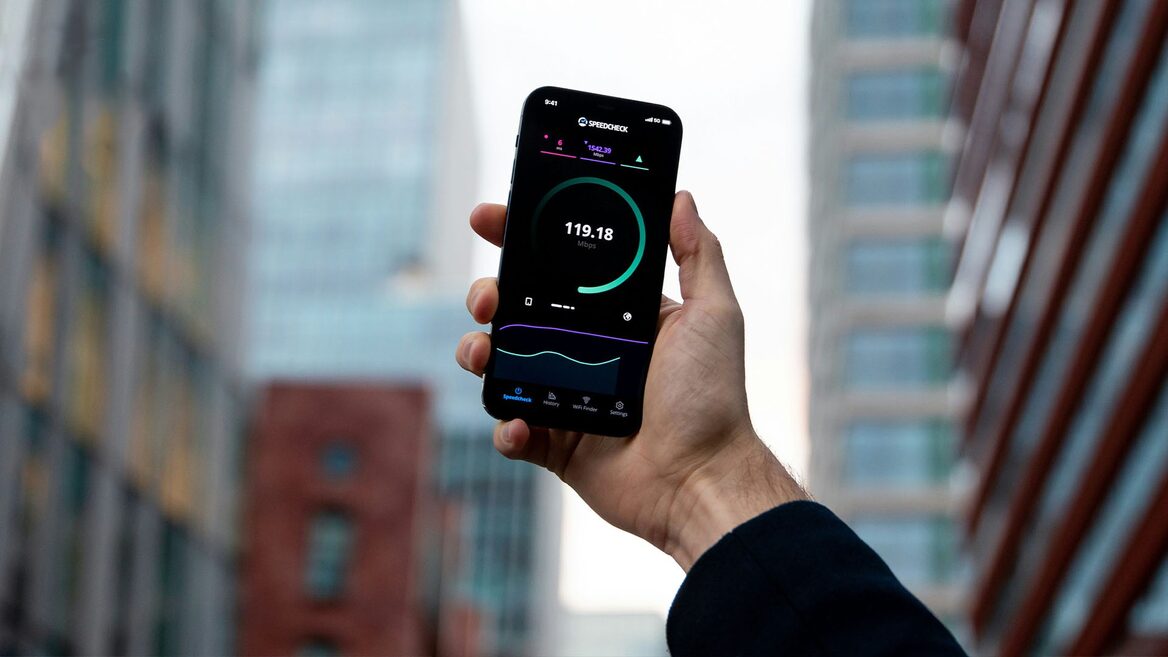
Taking this opportunity, we also asked to comment on another provision of Law No. 4670-IX, which stipulates that consumers themselves will be able to transmit data on the speed of their Internet connection to the regulator.
Deputy Minister of Digital Transformation for the Development of Digital Infrastructure Stanislav Prybytko confirmed that a new norm has appeared in Law No. 4670-IX — the state is introducing monitoring of the quality of the Internet and mobile communications, which will be done by consumers themselves through a tool determined by the state (in essence, it is a kind of official speed test).
«This is not a replacement for inspections, but an additional way to collect real data „from the fields“. When people do speed tests, the results will be transmitted to the NKEK. The regulator will analyze this data and can use it as one of the signals for making a decision on an unscheduled inspection of the operator in a specific location if low communication quality is recorded there,» he explained.
In turn, the Chairman of the Board of the Internet Association of Ukraine, Oleksandr Savchuk, stated that there is still no understanding of how exactly this will be done, and the answers to these questions should be provided by separate by-laws that need to be developed.
«The very idea of collecting information from consumers has the right to life, but it will be indicative in nature, not a measurement. That is, it will indicate where exactly the state needs to pay attention and conduct official measurement,» the expert explained.
In turn, telecom expert Oleksandr Glushchenko reminded that the website of the regulator NKEK lists the methodology for measuring the quality of electronic communication services.
«In this case, the state is interested in understanding the situation with the technical capabilities of both fixed and mobile operators. The Ukrainian State Radiocommunication Center is responsible for the measurement results. There is a methodology. There are certified devices. There are rules for ordering services and measurements,» he says.
If we talk about measurements from consumers, then, in his opinion, most likely, providers/operators should have specialized telemetry probes installed that measure exclusively the specified parameters.
«Let’s call this protection of operators and the regulator from ineffective measurements, for example, from the radio shadow zone, or through an outdated Wi-Fi router through 4 walls,» Glushchenko noted.