Редакція dev.uaHot News
23 December 2025, 12:00
2025-12-23
Digital solutions in action — how Ukraine is creating cities of the future
In 1941, Great Britain began mass-producing penicillin, in 1943, the United States first used a disposable syringe and created a prototype of an electronic computer. These are just a few of the solutions that humanity invented during World War II. Until then, such inventions were considered impossible, but today they have become an integral part of our lives.
Challenges push us to change. Threats force us to look for new solutions.
In 1941, Great Britain began mass-producing penicillin, in 1943, the United States first used a disposable syringe and created a prototype of an electronic computer. These are just a few of the solutions that humanity invented during World War II. Until then, such inventions were considered impossible, but today they have become an integral part of our lives.
Challenges push us to change. Threats force us to look for new solutions.
From his experience, the founder of MISTO, Oleg Polovinko, says that many Smart City pilot projects in the world never progress to the level of full-fledged system solutions. Studies prove this. Only about 30% of initiatives are integrated into the structures of city government. This is a consequence of the «technology for technology’s sake» approach, when developers create a product without a deep understanding of its practical benefits.
Polovinko personally engaged in the digitalization of Kyiv and Odessa. In the capital — as the director of information and communication technologies, in Odessa — implementing the MISTO platform. Working on these cases, it became clear that the real success of a Smart City is determined not by the number of digital solutions, but by how well they are integrated into real city management processes and understood by residents.
While most cities around the world can afford to spend years refining concepts, in Ukraine there is an urgent need to act today. A full-scale war has made digital solutions not a matter of convenience, but a condition for survival, coordination, and trust between government and community.
The real need for change
Unfortunately, one of the bitter lessons Ukrainians have had to learn during the full-scale invasion is the ability to distinguish danger by sound. It seems that even children today can unerringly determine what is flying and where the threat is coming from: approaching cruise missiles, aerial bombs, or those pesky «mopeds» — drones, hundreds of which the enemy uses to attack Ukrainian cities every night.
However, over four years of full-scale aggression, these sounds have become triggers for finding a safe place, gathering valuables, and taking cover. But the source of such sounds could easily be loud motorcycles or cars.
This irritation prompted Kyiv residents to take action — they registered a petition on the Kyiv City State Administration website, and the authorities responded. Vehicles with loud exhaust systems without mufflers, or with «direct current,» are now officially banned. Because that was the need of the residents.
In total, over 2,000 Kyiv residents sign various city petitions every day. Since 2015, almost 9,000 of them have been registered, as the community has become convinced that this is a real tool for change. Initiatives, requests, and surveys are not just attributes of democracy, but a real opportunity for residents to draw the attention of the authorities to inconvenient issues and achieve their resolution.
When the government listens to residents, it can be a powerful driver for positive change. You just need to find the right communication channel for it.
Global trend towards digitalization
The UK capital is investing in open data — over 1,500 city datasets are available online, allowing the public to track economic and social developments in the city. Amsterdam has developed a «City Data Platform» that brings together data on energy, transport, housing and available subsidies. Reykjavik uses a digital platform “ Better Reykjavik» where residents propose and vote on ideas for the city’s development — over 70% of the initiatives have been implemented.
Large cities are already shaping a data-driven economy — forecasting risks and profits, setting costs together with residents, and controlling budgets. This trend is gradually being picked up by medium and small communities around the world. The market is developing towards integrated city management, when data, services, and solutions are combined in a common environment.
Ukraine can become an example for countries that are just preparing to make digital transformation their norm.
Decentralization and urban autonomy
In our work, we have clearly understood that all processes in the city depend on residents. Just as the comfort of residents depends on the current tools that can be used in the city.
During a full-scale invasion, the digital infrastructure for finding comfort has become a basis for quick decisions — from direct communication with authorities to real-time coordination of services. Up-to-date information on threats, maps of shelters, contacts of rescuers — everything that the lives of Ukrainians depend on today.
There was a need for a single tool that would combine these services into one system — convenient, reliable, and understandable for every resident. This experience led to the emergence of the MISTO platform — a city system in the City-as-a-Service format, a practical solution that has already shown its effectiveness for the stable operation of Ukrainian cities in conditions of uncertainty.
«We view the community as a living system that needs simple and understandable digital tools. Through the MISTO application, we give citizens the opportunity to act: initiate changes, submit requests, take surveys, and create petitions. This makes participation in community life a natural part of everyday life, just like using a «smart home,» says Oleg Polovinko, founder of MISTO.
Progress without a system
Transparency International Ukraine recently assessed the state of electronic services at the local level. The study selected 11 Ukrainian cities — from frontline Kharkiv and Zaporizhia to Kyiv, Dnipro, Odessa, Lviv, Lutsk, Chernihiv, Poltava, Khmelnytskyi, and Kropyvnytskyi.
This cross-section allows us to see both individual successful cases and the overall picture — how mature, convenient, and systematic the digital infrastructure of services for citizens and businesses works.
And if you think that everything is going well with digitalization in Ukraine everywhere, you are only imagining it. In our work, we constantly encounter fragmented development and controlled chaos, where individual solutions work, but a holistic system is still lacking.
Moreover, local governments in most cases do not advertise the possibility of using electronic services. At the city level, only Odesa has done so, where information about the MISTO application is published on the city council website.
The results obtained indicate the uneven development of digitalization. On the one hand, convenient tools have already appeared in Ukrainian cities that have become a part of everyday life — from tracking transport traffic and paying for utility services to participating in administrative processes. On the other hand, these services lack systematic popularization among residents and, no less importantly, clear prioritization.
Only 4 out of 11 cities surveyed have comprehensive city mobile applications. In the rest, residents are offered separate specialized solutions that often duplicate each other’s functionality. For example, Lutsk has four different city applications at once — and the question arises whether residents really understand how and why to use each of them.
Ukraine’s crisis experience
Cities that build digital infrastructure based on the actual needs of their residents become examples of effective governance. Importantly, this approach creates a culture of shared decision-making, when digital services become a tool for interaction.
From the experience of the MISTO platform, three main principles can be clearly identified on which urban systems should be built:
1. Interoperability
All services and tools within municipalities must effectively interact with each other, forming a single city system that is convenient to use. Therefore, MISTO is built for rapid development and increasing the level of digitalization of systems. It is based on the principle of decentralization, where each participant owns its own data, and all tools interact with each other without losing autonomy.
The system combines modules for analytics, security, resource management, and communication into a coherent structure that works as a single mechanism.
2. Reactivity
It is especially important today to minimize the time it takes to transmit important information. If there is a suspicion of a new threat, residents should learn about it within seconds and receive timely instructions on what to do.
When city residents have a request for help, they need a fast channel of communication with emergency services. The result of the decisions made directly depends on the speed of the response. This not only increases the efficiency of city management. Reactivity is becoming a real necessity for effective services in modern conditions.
3. Trust
Residents will start to actually use the service only when they see that the system works and provides benefits. This is how trust is created. Every citizen should know that something really depends on their decision, and the MISTO platform can clearly show this through open dashboards with budget distribution or e-democracy tools, where the general well-being of the community depends on everyone’s decision.
On the other hand, the platform increases the level of communication between the authorities and the citizens. To contact the administration, citizens still have to stand in long queues, or seek contact by phone or email. The single city platform allows you to conduct surveys, launch e-petitions and directly communicate with the authorities regarding urgent changes in the city. We put a tool for control and initiative in the hands of city residents.
How does it work in Odessa?
Odesa feels the full brunt of a full-scale invasion almost every day. Constant threats and the need for quick solutions have pushed the city to implement an integrated digital management system. That’s how the MISTO platform came to life in the million-dollar city by the sea.
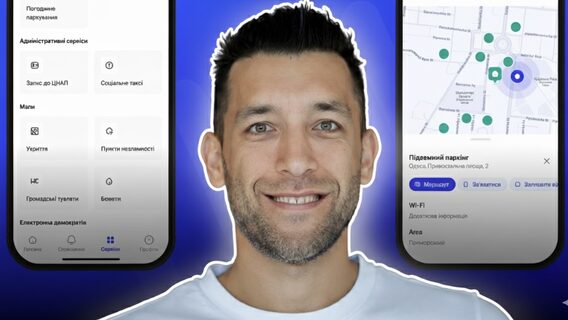
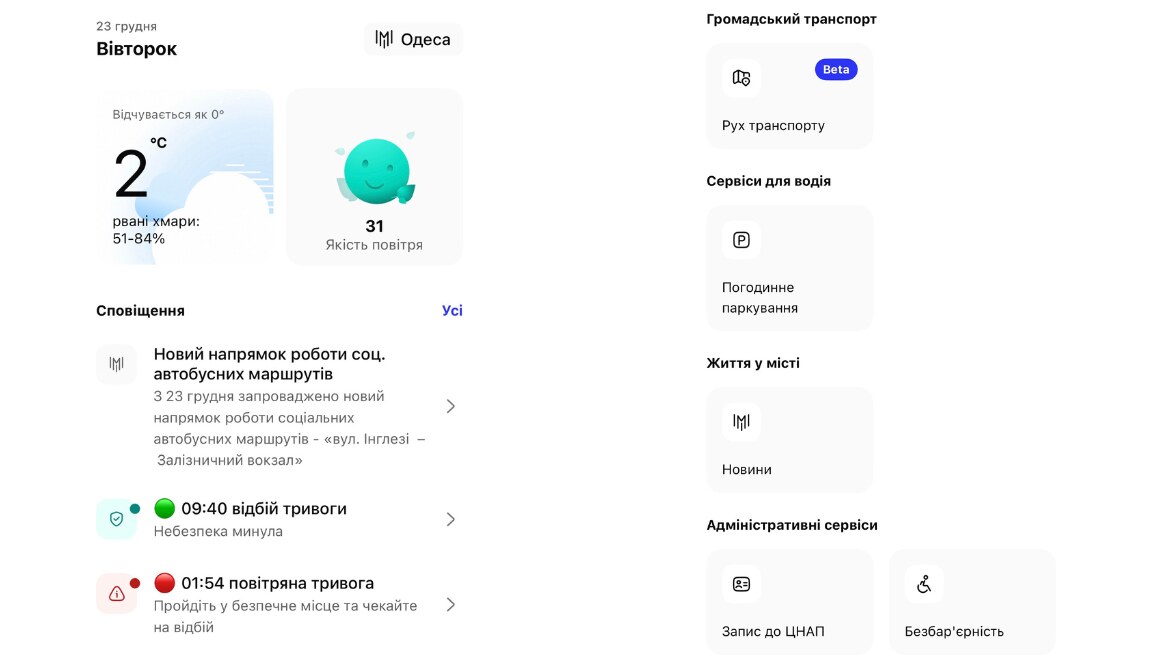
«When we talk about the city of the future, we mean not just a set of separate services, but an integrated system — a mobile application, a platform, personalization, transparency. In MISTO, we have combined the functionality for registering with the ASN, paying for parking, interactive maps, and crisis notifications, because we believe that a city should be convenient and safe. In such a system, a resident receives much more than just a „service“ — he receives personalized services,» says Polovinko.
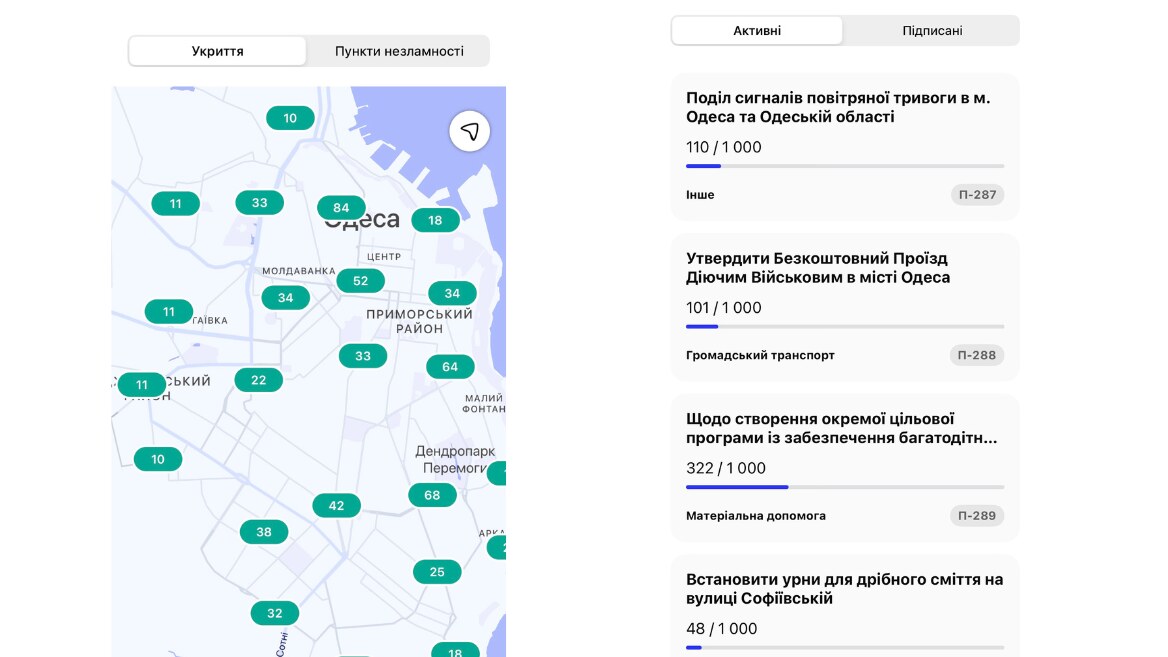
The service has become a universal communication channel for residents, authorities, and tourists. Platform users receive up-to-date information about threats, maps of the nearest shelters, and points of invulnerability. At the same time, one of the main functions remains direct interaction between residents and authorities.
For example, on the eve of September 1, a survey was conducted among users regarding the preferred form of education for children in Odessa schools — a joint decision made by the community, taking into account the security situation from the city authorities and the position of parents. In addition, the platform is currently collecting signatures for ten relevant petitions from citizens.
The number of MISTO users is growing every day, and with it the geography of its implementation. One of the key advantages of the platform is scalability: it can be integrated into the systems of both large regional centers and smaller communities, for example, Bucha, with a population of 40,000 in the Kyiv region. I am sure that the city will soon appear in the digitalization rankings.
Each municipality receives its own set of features, tailored to the needs of its residents. The package of modules is constantly updated and supplemented to improve the comfort and quality of life of a particular community.
A new standard of sustainability
The experience of the Ukrainian MISTO platform is also valuable for international partners. After all, it serves as a proven example of operational resilience — manageability in crisis circumstances, when technology not only automates processes, but also ensures the sustainability of the city’s functioning even in the most difficult situations.
» We are convinced that technologies by themselves do not change anything if they are not used qualitatively and consciously. Therefore, we do not explain to the resident why something is «difficult to change» — we change it. We collect data on appeals and behavior, see patterns, weaknesses and on this basis work with cities to make processes predictable and intuitive. Thanks to MISTO, communities are able to work proactively, not wait for a problem to appear, but to prevent it,» says Oleg Polovinko.
The Ukrainian experience proves that true digitalization is not just a demonstration of innovation or convenient technologies. In our case, it is building systems of trust and stability that help communities act quickly, coherently, and transparently — as a single mechanism even in the most difficult conditions.
It is this flexibility and practicality that has provided MISTO with international recognition and interest from foreign partners, who see the platform not as a pilot experiment, but as a scalable solution for modern city management.