Хочете будувати кар’єру в Data Science та AI? Vodafone Big Data Lab відкриває новий набір —>
Ігор Вишневський Історії
4 March 2026, 09:00
2026-03-04
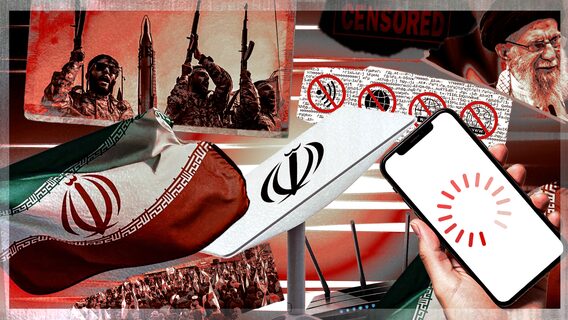
Digital Sharia. How Iran blocks the Internet, why Starlink doesn't solve the problem, and why Iranians themselves don't want to use their own social networks. An Iranian human rights activist answers
In the last week, the world’s attention has once again been focused on Iran and the Middle East in general. After another wave of mass protests and their bloody suppression in January, the situation in the country began to develop even more rapidly and unpredictably in late February. On the last day of winter, after a series of military strikes by the United States and Israel, the death of Ayatollah Ali Khamenei, who had ruled the country for almost 40 years — since 1989 — was officially confirmed. The day before, it was reported that his son Mojtaba had taken over power.
In the last week, the world’s attention has once again been focused on Iran and the Middle East in general. After another wave of mass protests and their bloody suppression in January, the situation in the country began to develop even more rapidly and unpredictably in late February. On the last day of winter, after a series of military strikes by the United States and Israel, the death of Ayatollah Ali Khamenei, who had ruled the country for almost 40 years — since 1989 — was officially confirmed. The day before, it was reported that his son Mojtaba had taken over power.
Instead, Iran responded by attacking Israel, the United Arab Emirates, Bahrain, Qatar, Kuwait, Saudi Arabia, Iraq, Jordan, and even Cyprus, while the United States has already lost its first soldiers in the war with Iran. How exactly events will develop further and whether the Islamist regime will finally fall is, of course, known to experts on the Middle East, who are already competing to express their opinions on social networks. We do not undertake to make predictions for sure.
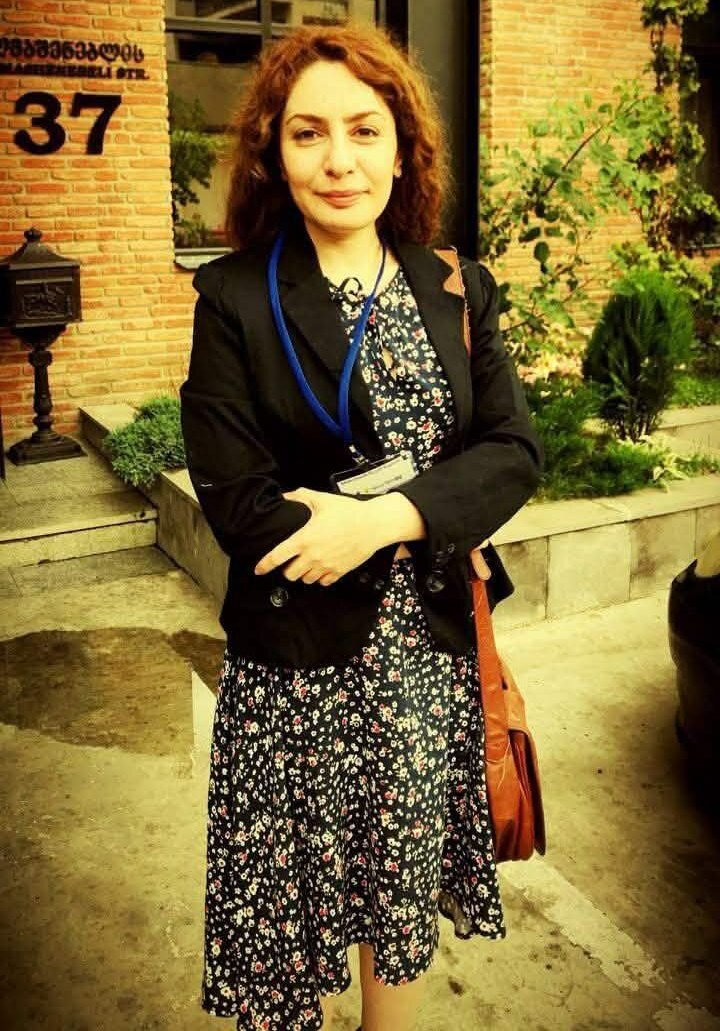
But dev.ua instead decided to ask Iranian human rights activist Mernoush Najafi Ragheb a few more narrow questions — primarily, regarding the work of telecommunications and social networks in Iran, the availability of the Internet, and the strict digital control by the authorities. We were interested in how protesters are staying connected amid new Internet shutdowns across the country, whether Iranians can rely on Starlink at least a little, and whether they use their own social networks. Here’s what she said.
Was internet access restored after the January protests and is it available now?
Mernush Najafi Ragheb says that after the massacre on January 7 and 8, internet access was completely cut off for two weeks. After two weeks, internet and telephone connections were restored, but the internet connection remained extremely weak and was subject to strict filtering by the regime.
«Access to social networks and many news websites was only possible through the use of VPN services,» says the human rights activist.
Meanwhile, just a few hours after the attacks on February 28, phone lines and internet access were again down.
«Currently, there is no way to communicate with people inside Iran via telephone and the Internet,» the human rights activist claims.
As for mobile Internet, in Iran, mobile operators have been providing this service for many years, but during uprisings, protests, or military operations, as Mernoush says, this is no help, because the regime turns off not only fixed but also mobile Internet.
Starlink is not worth relying on
According to Mernush Najafi Ragheb, with the beginning of the US and Israeli attacks on Iran, satellite telecommunications also experienced serious disruptions, but for some time people received information about the most important events through satellite TV channels.
At the same time, despite all the news and statements about the use of Starlink in Iran, the human rights activist claims that this issue is not resolved globally, because the absolute majority of ordinary Iranians did not have and do not have access to Starlink. Recall that in February, the WSJ wrote that the US had allegedly secretly sent «thousands» of Starlink terminals to Iran, and Elon Musk announced during the January protests that his satellite Internet would be free for Iranians.
«Starlink internet is banned in Iran and is extremely expensive. The number of people who have access to Starlink is very limited. Therefore, even if it were offered for free, it would not significantly solve the problem. Due to the ban, most people do not have access to the necessary equipment to purchase and use it,» the human rights activist explains to Realiya.
VPN is a must have for Iranians
As Mernoush says in a comment to dev.ua, for many years, internet use in Iran has been subject to significant restrictions, and many websites and social media platforms are filtered, so people must purchase VPN services to bypass censorship and gain access.
«Nevertheless, Iranians, like people in other countries around the world, continue to use social media, albeit with greater difficulty and at a higher cost,» she argues.
According to the human rights activist, expressing opinions on political issues or making statements against Islam can lead to very serious consequences, and this is monitored online no less than offline.
«As is well known, since 1979, extremist Islamists have been in power in Iran. Therefore, criticism of Islam can also lead to severe punishments. Many public associations and organizations are banned from operating. Numerous public activists have been arrested or forced to leave the country,» states Mernoush Najafi Ragheb.
«Big brother is watching over you.» Which bodies perform this function in Iran?
Since any criticism of the regime is strictly controlled — both online and in real life — in Iran, according to the human rights activist, there are several parallel security agencies that deal with the regime’s opponents. Among them are the Ministry of Intelligence of the Islamic Republic of Iran, as well as intelligence units associated with the Islamic Revolutionary Guard Corps (IRGC), and the judiciary, which, of course, operates exclusively as part of the repressive bodies, and not as a separate independent branch of government.
«Today, there is a very large presence of security and intelligence agencies in Iran, whose work is aimed at controlling people’s lives, thoughts, and lifestyles. Any criticism of the regime can lead to accusations of espionage and lead to the harshest punishments. Criticism of Islam can lead to even harsher punishments, including long prison terms or even the death penalty,» the human rights activist explains.
Since the beginning of January this year, according to various reports, the regime in Iran has executed over 500 people, according to Mernoush Najafi Ragheb.
«Many of those arrested and executed were denied the right to a fair trial and access to legal aid. Trials lack transparency. Lawyers are often not allowed to review case files, and in some cases trials were conducted in an expedited and summary manner without due process,» she described the realities.
At the same time, the country’s telecommunications and internet providers are under the complete control of the Islamist government and do not demonstrate even a hint of independence.
«The government exercises complete control over the Internet and Internet service providers in Iran. The main provider of telecommunications services is the Telecommunications Company, along with its subsidiaries, which are all affiliated with the Islamic Revolutionary Guard Corps. In practice, it can be said that the IRGC effectively manages and controls Iran’s communications and Internet services,» the human rights activist emphasizes.
Iranian social networks VS global ones
Marnoush Najafi Ragheb also said that Iran is trying to attract its citizens to its own social media platforms and to curb their desire to use global online platforms. This is very similar to the situation in Russia, which artificially drives users to its own MAX messenger, after having previously carried out «serious work» to make most of the world’s social networks unusable in the country 404.
«In recent years, the government has created domestic social media platforms to counter global networks such as Instagram, X, and others. However, these platforms are not popular with the public, and many people avoid using them due to security concerns and lack of trust,» the human rights activist claims.
One way or another, in conditions of total blocking of access to the Internet, Iranian citizens usually cannot use either their own social networks «approved» by the authorities or banned Western ones.
However, in the end, the country’s experience proves that in today’s globalized world, even such strict technological isolation, which the regime has been trying to introduce in Iran for years, cannot be absolute. We continue to monitor the situation with the hope that Iran will finally drop out of the global «axis of evil» and its citizens will receive basic freedoms, including digital ones.
Product Designer задонатив ЗСУ особистий Starlink. Як він це зробив
Арсеній Фещенко працює на позиції Product Designer платформи по оренді квартир у Києві та Лондоні bird. Нещодавно хлопець задонатив на потреби ЗСУ особистий Starlink. Розповідаємо, як це вдалося зробити.
Британець створив інструмент для злому Starlink з деталями на $25. Чи виведе він термінал з ладу? WIRED
Британський дослідник безпеки Леннерт Воутерс створив modchip — спеціальний інструмент злому, який можна приєднати до антени Starlink. Готові деталі для нього коштують $25.
10 серпня на конференції з безпеки Black Hat у Лас-Вегасі дослідник розкрив подробиці збоїв у терміналах Starlink та розповів про те, як серія апаратних недоліків дозволяє зловмисникам отримати доступ до системи і запустити власний код на пристроях. Про це написав WIRED.
Бойова гігієна. Чим небезпечний WiFi на передовій, та чому інколи прилітає по Starlink: пояснює айтішник
Володимир Степанець, Senior Systems Architect в EPAM Poland написав великий пост-пояснення про те, чим небезпечний інтернет на передовій та чому роздавати його не варто як з терміналів Starlink, так і зі смартфону.
Публікуємо його аргументи, правила та поради.
Have important news to share? Message our Telegram bot
Key events and useful links in our Telegram channel