Редакція dev.uaHot News
30 October 2026, 13:46
2026-10-30
How Ukrainian business adapts and builds financial models for 2027: the XXIV Ukrainian CFO Forum took place in Kyiv
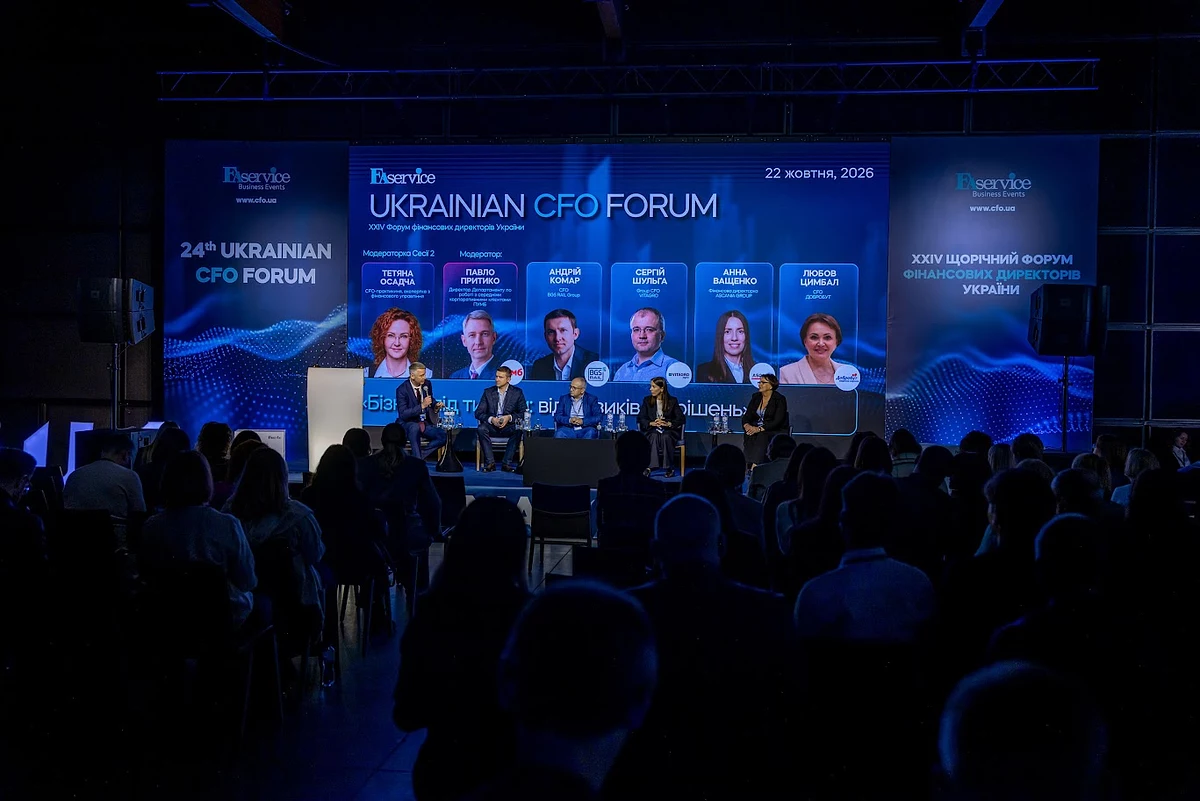
The XXIV Ukrainian CFO Forum , a leading business event for C-level executives, organized by the FAService team for 24 years, took place in Kyiv on October 22–23. Over two days, over 50 speakers discussed approaches to strategic planning for 2027 in the absence of the usual forecasted benchmarks in six sessions, covering 22 panel discussions, interviews, and case studies.
The XXIV Ukrainian CFO Forum , a leading business event for C-level executives, organized by the FAService team for 24 years, took place in Kyiv on October 22–23. Over two days, over 50 speakers discussed approaches to strategic planning for 2027 in the absence of the usual forecasted benchmarks in six sessions, covering 22 panel discussions, interviews, and case studies.
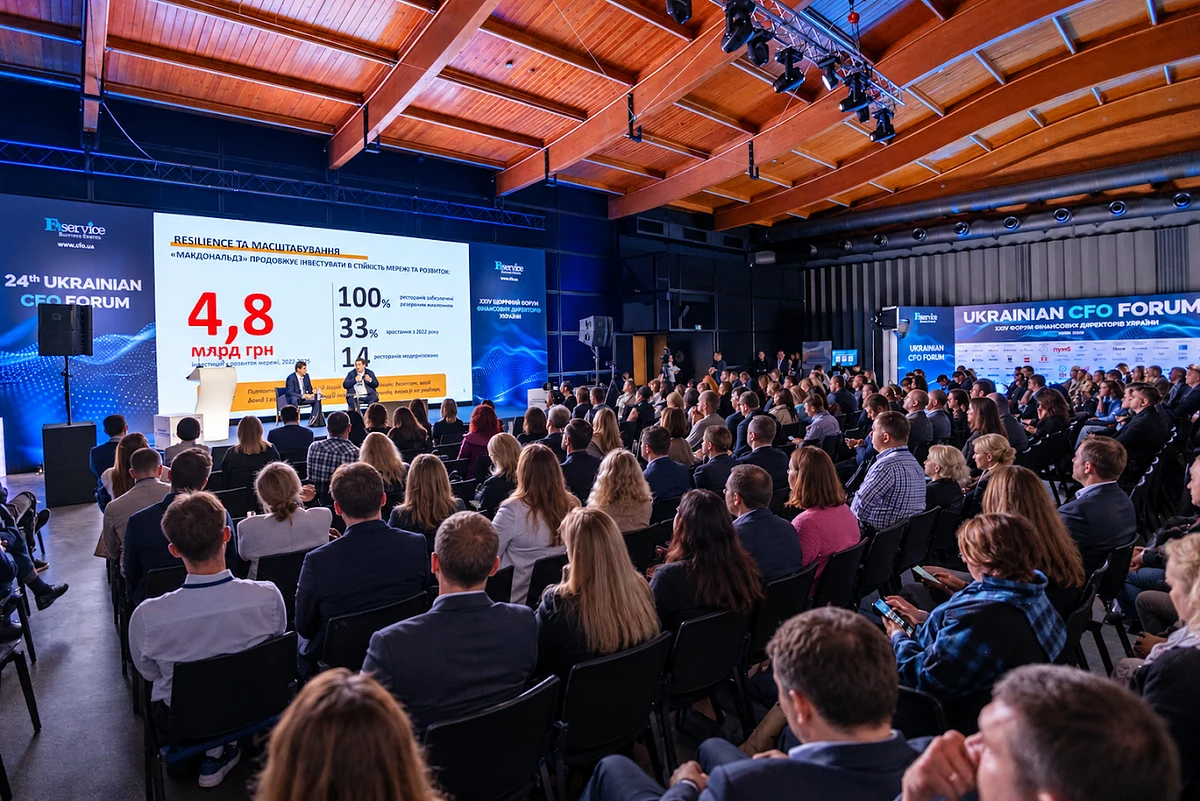
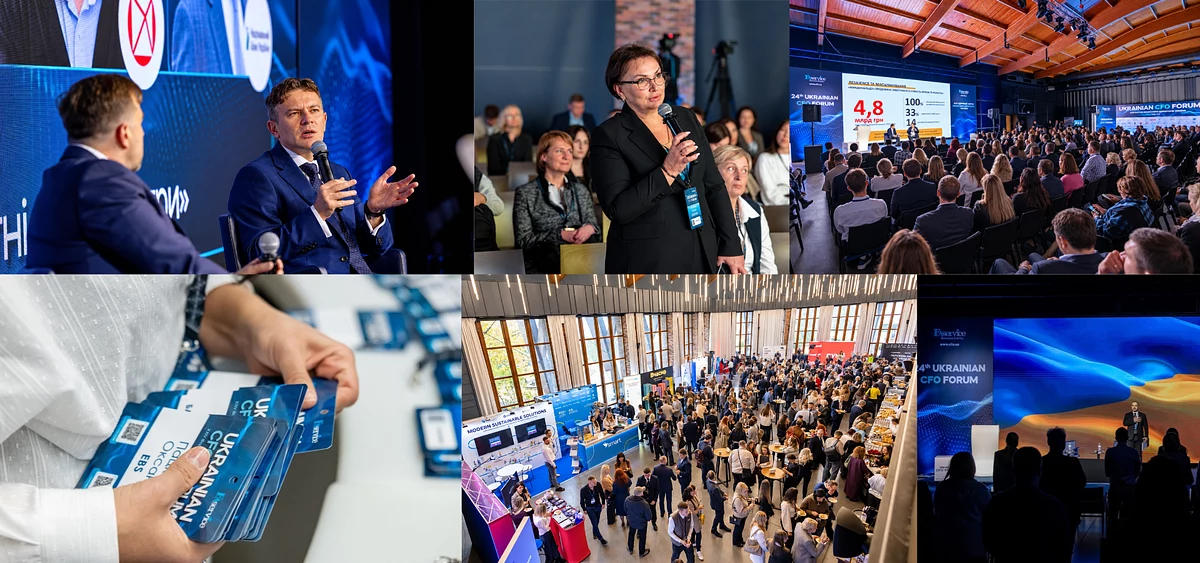
The conference brought together over 700 CFOs, top managers, and representatives of Ukrainian and international businesses from various industries: from finance, IT, and energy to agribusiness, retail, pharmaceuticals, media, construction, and the public sector. The focus of the discussions was on practical cases and specific management solutions that have proven their effectiveness.
The leitmotif of the forum was a new vision of business management: military realities require, above all, speed and flexibility in decision-making. And it is the CFO today who acts as the main driver of such decisions. The evolution of the finance function has transformed the CFO into an architect of sustainability, combining strategy, technology and the real economics of operational decisions.
Despite all the risks, Ukrainian business does not stop: companies continue to invest, rebuild models and look for growth points. How to plan for the future when assets and infrastructure are under attack, capital remains expensive, and the introductions change daily? How to protect liquidity, where to attract financing and what guidelines to build into financial models? These are the questions that experts paid the most attention to during the discussions.
Igor Solovykh, CEO of FAService: "I have been organizing this forum for many years, and the most valuable thing for me is to see people who make decisions and continue to develop Ukrainian business. It is clear that there is almost no certainty, but decisions need to be made today. So we focused on preparing for 2027, talking about strategies, efficiency, technologies and, most importantly, about tools that really work."
The practical focus was maintained throughout all conference sessions: moderators and speakers shared real-world experience of business adaptation and measurable results of changes.
"Today it is important to talk not just about risks, but also about solutions, because often it is from risks that the best opportunities arise. The worst thing we can do now is not make decisions," emphasized Pavlo Prytyko, Director of the Department for Work with Medium-Sized Corporate Clients of FUIB, moderator of the discussion "Business under Pressure."
Key conclusions of the forum
Despite the difference in industries and business scale, the speakers' discussion boiled down to several common findings:
Decisions are more valuable than plans. Planning has finally transformed from the creation of a single document to the constant modeling of options. The speed of decision-making itself has become the main competitive advantage of business.
Business should strive for growth even now. Any operational risk ultimately rests on liquidity. At the same time, company leaders emphasized: a complete freeze on investments and a halt to development are more dangerous than war risks.
Towards sustainability through decentralization. Companies are moving to smaller and more dispersed structures: from a decentralized warehouse network to delegation of authority “on the ground.” The reconstruction of lost assets is carried out in the minimum necessary steps due to the risk of repeated destruction.
Investments in energy independence are more of a calculation than a forced expense. Investments in sustainability (from generators to own energy projects) are assessed through scenario modeling and clear payback periods.
The main resource and key to resilience is people. As the participants in the discussions noted, processes designed for stable times have not stood the test, while teams have. That is why businesses are investing in the safety and mental health of employees - from the arrangement of autonomous shelters and flexible remote work formats to systemic programs to support veterans.
At the same time, the speakers were unanimous: there is no single universal system for everyone, and each company is forced to seek its own balance of investment and operational decisions.
Finmodel-2027: zero growth and flexibility
First Deputy Chairman of the NBU Serhiy Nikolaychuk reported that the regulator's new macro forecast, which is being prepared for publication, will be worse than the July one: instead of the expected 1.7% this year and 3% in 2027, economic growth will be close to zero. According to him, inflation has accelerated to 10% due to the rise in energy prices and attacks on production and energy facilities and warehouses, which is why the key rate has been raised to 16%. Business advice: have a baseline scenario, but be ready to quickly change plans and priorities.
Andriy Dligach, founder of Advanter Group, estimates growth in 2027 at 0.5%. According to Advanter, current business losses reach $7.7 billion, and the war continues in 69.5% of companies' forecasts for 2027. He emphasized the lack of financial resources and the need for long-term cheap lending and insurance of war risks. In response, the NBU cited data: business lending in the national currency is growing by more than 30% per year, the share of non-performing loans is 11.5% (the lowest since 2014), and debt under the "5-7-9%" program has exceeded UAH 200 billion. The regulator also allowed banks to consider property rights to future revenue as collateral.
Planning as a decision-making process
Experts agreed that a modern financial plan does not exist for strict adherence, but for understanding possible scenarios of action. At the same time, each company builds its own horizon of landmarks. For example, British American Tobacco Ukraine completely abandoned annual planning in favor of two-week and monthly cycles with a focus on liquidity and product availability. Preparing alternative scenarios has proven its effectiveness in practice: after a missile strike on the BAT factory, it switched from production to imports within a month thanks to a pre-prepared plan (contracts signed, stocks secured at alternative factories, etc.). Danone uses a monthly rolling forecast for 18 months, calling the speed of response its main advantage. FOXTROT maintains a three-year vision, but revises models if sales deviate by more than 10%, and Metinvest Group fixes one basic scenario with reserves, where the trigger for restructuring is critical external changes, such as the closure of ports. Despite the difference in approaches, financial leaders agree on the main thing: making decisions on time, having 80% of the information, is much more effective than being late waiting for the full picture.
Capital and Investment: Payback vs. Risk
Approaches to investing in wartime require strict prioritization and proactivity in working with liquidity. Thus, the VITAGRO holding divides projects by payback periods (operational - two to three years, new - from five years), invests in processing (which has already reduced the share of crop production in revenue from 80% to 50%) and effective energy independence - from creating its own fuel direction to the first export of biomethane in Ukraine. BGS Rail demonstrated a case of early restructuring: having identified the risk of a cash gap for the next year, the company initiated a dialogue with creditors in advance, providing clear calculations and a plan. McDonald's in Ukraine, despite the risks, has opened 43 new establishments over the past four years. The company's example proved: generation is three times more expensive than the network, but idle facilities with the preservation of salaries and rent are much more expensive. YASNO estimates the payback of energy sustainability projects at 2.5–3.5 years, calling for them to be considered as full-fledged business solutions. The Dobrobut chain has doubled its revenue and capitalization in five years, without stopping financing the strategy for a single day. The essence of this approach to capital was aptly described by Agromat CEO Stepan Slinchuk, emphasizing that a complete refusal to invest and a halt to development today creates much greater risks for the company than the investment decisions themselves.
Antifragility of business: from reconstruction to insurance realities
As the moderator of the discussion, Iryna Levkivska, Group CFO of Rozetka-EVO, emphasized, the antifragility of business during war is determined by the ability to work with atypical challenges that require new ideas and unique solutions from financial leaders. The response to the challenges and the experienced blows was the new rules of operational resilience, which the companies shared:
Minimalism in restoration and decentralization. Nova Poshta assesses each loss as a separate investment project and rebuilds facilities only in a specific, minimally necessary volume. Despite this, in the first 9 months of this year the company opened more than 6.5 thousand post offices and 2.2 thousand branches, delivering 371 million items and paying 25% more taxes than last year. The division of warehouses was also chosen by VARUS - this increases operating costs, but significantly reduces military risks.
Acceleration of transformations. The media company Starlight Media demonstrates a case of forced accelerated evolution: strategic changes in the business model, planned for 7–10 years, were implemented in 2–3 years, which allowed to triple the share of digital revenues.
Limited insurance instruments. The focus of the discussion remains the insufficient level of compensation. For example, Biosphere Corporation recorded real compensation of UAH 10 million for losses of $10 million. Existing state instruments cover buildings and equipment (up to UAH 30 million per company), but for now leave commodity residues outside the protection zone.
Reserves first, CAPEX later: the hidden resource within the business
When a significant portion of capital investments are directed towards reconstruction and energy sustainability, the key task of the CFO is to find internal efficiency. The speakers’ experience has proven that before purchasing new equipment or expanding staff, a business must fully exhaust the potential of its existing resources. In particular, Kansai Helios Ukraine has made this an unshakable principle. Based on in-depth data analysis, the company identified and eliminated downtime, waiting times, and chaotic changes in production schedules, which allowed it to reduce lead time from 7.7 to 2.6 days, increase service levels to 93%, and save over $100,000 in CAPEX. The Association of Companies “TAS” applied a similar approach to the financial function: by digitizing and revising the tax process map, the company eliminated double data entry. This allowed it to optimize operating expenses and provided a direct effect on cash flow — a total of UAH 35 million in savings over two years.
Financial monitoring: prepare in advance
Volodymyr Havlytskyi, Deputy Chairman of the Board of Pivdenny Bank, urged businesses to perceive financial monitoring as medical diagnostics, not as a law enforcement system. According to him, banks are increasingly analyzing transactions before they are carried out. So if documents and explanations are prepared in advance, the payment goes through without delay. Among the most common mistakes: unclear purpose of payment, formal responses to requests, and silence. Correct purpose of payment allows you to remove 30–40% of requests, and early warning about significant changes, from a new direction of activity to a large contract, allows the bank not to perceive them as abnormal. “Preparation for banking procedures begins not when a request is received, but when you structure the transactions,” Volodymyr summarized.
The evolution of the CFO role
The participants in the discussions formulated new expectations from the CFO in wartime. First of all, it is about a strategic partnership position and the "voice of common sense": for example, it was the professional financial discussion that became the basis for a key initiative at Agromat this year. Businesses are involving financiers in decisions at earlier stages, even before the first figures and calculations appear (YASNO), and CFOs themselves are advised to boldly go beyond the purely financial function (BAT). At the same time, the new reality is expanding the area of responsibility of the financial leader to human capital: Viktor Piddubny (Danone) suggested monitoring the team's stress level as an important management KPI. Many speakers noted that maintaining mental health and focusing on people became the main difference in preparing businesses for this winter compared to previous years.
Reference
Partners of the XXIV Ukrainian CFO Forum
Digital Innovation Partner — Business Evolution
Official importer financing partner — Done
ERP and digital transformation partner — Innoware
Growth financing partner — Pivdenny Bank
Partner with AI-driven IT ecosystem — SMART business
Financial partner — FUIB
Partner for financial process optimization — EBS
Innovation and digital transformation partner — IT Enterprise
Security partner — SHERIFF
White Collar Crime partner is ARZINGER
Strategic partner in wealth management — Advance Finance Alliance
Strategic partner — ODGERS
Digital solutions partner for business — Vchazno
IT systems implementation partner — ABM Cloud
With the participation of ERP.UA
Coffee partner — Lavazza
Travel partner — SILPO VOYAGE
Partner of the CFO Cocktail Party is Hennessy
Educational partner — ACCA
Kaizen partner — Kaizen Institute
Water partner — Morshynska
Global payment partner — Payoneer
CEO Leadership partner — CEO Club Ukraine
Main media partner — Starlight Media
Professional partner — CFO Club Ukraine
Business Networking Partner — Board
Official logistics partner — Bolt
Education-partner — Institute of Entrepreneurship Psychology
FMCG partner — ASCANIA FMCG
Partner from the IT industry — IT Ukraine Association
FAService is a leading organizer of business events in Ukraine. For over 20 years, the company has been creating professional platforms for top managers and business owners, facilitating the exchange of practical experience, analysis of market trends, and development of sound strategic decisions.