Ігор Вишневський Weapon
7 November 2025, 16:13
2025-11-07
In Latvia, a private foundation financed the creation of a startup that manufactures fiber-optic drones for the Armed Forces of Ukraine and beyond.
In Latvia, thanks to funding from a private foundation, the Ardlat startup appeared, which manufactures fiber-optic controlled drones, which are used, in particular, by the Armed Forces of Ukraine.
In Latvia, thanks to funding from a private foundation, the Ardlat startup appeared, which manufactures fiber-optic controlled drones, which are used, in particular, by the Armed Forces of Ukraine.
According to Mind, the company is developing its own coils, communication modules, and platforms of various classes.
The idea to create the Ardlat startup arose against the backdrop of Russia’s full-scale invasion of Ukraine: founder and CEO Miks Ulmanis recalls that the sharp escalation of the war forced him to look for new solutions for drones.
«We saw fiber-optic drones as a powerful way to solve the typical problems of radio-controlled drones — signal jamming and other radio communication vulnerabilities,» explains Ulmanis.
The Ardlat company was officially registered in Riga in 2024, and the creation of the business was supported by the private investment fund Ardelta (the so-called family office), owned by the Ulmanis family.
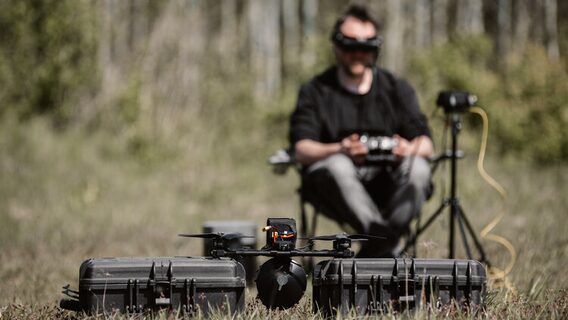
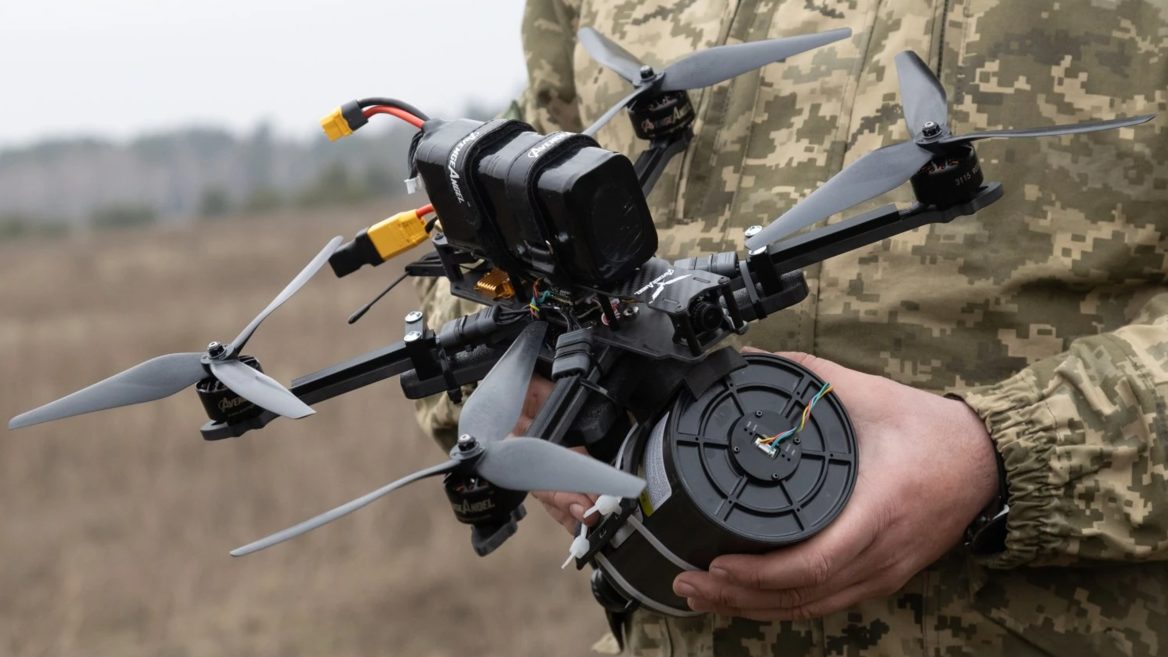
Ardlat’s main product is fiber-optic controlled FPV drones, complete with their own cable reels and optical communication modules.
If the cable breaks, the Ardlat system has emergency return algorithms: the drone automatically goes into signal search mode and lands nearby. According to the results of tests, after a fiber break, the drone is usually found intact — it simply lands and waits for evacuation.
The company has developed several options for coils of different capacities — for 5, 10, 30 km and a maximum of 45 km of fiber. Ardlat FPV drones come in several sizes: from small 5-7 inch models to large 15-22 inch ones. Smaller drones usually serve as shock (kamikaze) or reconnaissance at close ranges. While larger platforms can carry up to 3 kg of combat load and operate at distances of more than 15 km.
The team currently consists of about ten people — engineers, operators, and managers, most of whom have technical degrees. In addition to internal expertise, Ardlat collaborates with Riga Technical University in the field of unmanned technologies.
According to the company, most of the manufactured unmanned systems were sent to Ukraine. As of 2025, the total number of Ardlat drones transferred to Ukrainian units is approaching a thousand.
Among Ardlat’s key partners is the Latvian charity Ziedot.lv. This organization collects donations from citizens in support of the Ukrainian military and directs part of the funds to purchase drones.
In 2023-2024, the Latvian government launched several initiatives to support defense technology companies (Ardlat is currently awaiting investment from the Latvian Ministry of Defense).
Latvia, together with the United Kingdom, also became co-leaders of the International Drone Coalition, created in early 2024 for large-scale supply of UAVs to Ukraine. The Latvian startup was included in the coalition’s supplier companies, which, according to the company, gave impetus to the development of production and secured contracts.
At the same time, as dev.ua wrote, Ukrainian units have found an interesting solution for covering rear facilities and supply routes where enemy fiber-optic UAVs most often set up ambushes. These are simple engineering barriers made of barbed wire that cut the drone’s optical cable and disrupt the operator’s connection with the drone.