Хочете будувати кар’єру в Data Science та AI? Vodafone Big Data Lab відкриває новий набір —>
Наталя ХандусенкоGadgets
26 March 2025, 15:03
2025-03-26
Imagine not having to charge your phone. Scientists have created a battery that never needs charging
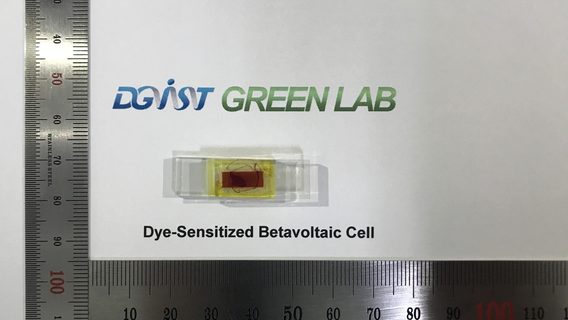
Scientists at the Daegu-Gyeongbuk Institute of Science and Technology, South Korea, have developed tiny nuclear batteries powered by radiocarbon, a safe and common byproduct of nuclear power plants.
Scientists at the Daegu-Gyeongbuk Institute of Science and Technology, South Korea, have developed tiny nuclear batteries powered by radiocarbon, a safe and common byproduct of nuclear power plants.
Unlike lithium-ion batteries, which degrade over time and harm the environment, these new developments use beta radiation to trigger an electron avalanche and generate electricity. The team's latest prototype has significantly improved efficiency, and while challenges remain, the technology could one day make nuclear power as affordable as your pocket device, writes SciTechDaily.
Nuclear batteries powered by radiocarbon could provide safe, long-lasting energy for decades without the need for recharging.
How nuclear batteries work
Nuclear batteries generate energy by using high-energy particles emitted by radioactive materials. Not all radioactive elements emit radiation that is harmful to living organisms, and some radiation can be blocked by certain materials. For example, beta particles (also known as beta rays) can be shielded by a thin sheet of aluminum, making beta voltaics a potentially safe choice for nuclear batteries.
The researchers created a prototype battery using carbon-14, an unstable and radioactive form of carbon called radiocarbon. It's a byproduct of nuclear power plants, is inexpensive, readily available, and easy to recycle. And because radiocarbon decays very slowly, a radiocarbon battery could theoretically last for millennia.
To significantly improve the energy conversion efficiency of their new design, the scientists used a semiconductor based on titanium dioxide, a material commonly used in solar cells, sensitized with a ruthenium-based dye. They strengthened the bond between the titanium dioxide and the dye by treating it with citric acid. When beta rays from radiocarbon collide with the treated ruthenium-based dye, a cascade of electron transfer reactions called an electron avalanche occurs. The avalanche then passes through the dye, and the titanium dioxide efficiently collects the electrons generated.
The new battery also contains radiocarbon in a sensitized dye at the anode and cathode. By treating both electrodes with the radioactive isotope, the researchers increased the number of beta rays generated and reduced the distance-related energy loss of beta radiation between the two structures.
However, this beta voltaic design converts only a tiny fraction of the radioactive decay into electrical energy, resulting in lower performance compared to conventional lithium-ion batteries. The scientists suggest that further efforts to optimize the shape of the beta emitter and develop more efficient beta absorbers could improve battery performance and increase electricity production.
Previously, dev.ua reported on the development of Canadian researchers - a seawater-based battery that can withstand up to 380,000 charging cycles, which is 40 times longer than the life of modern lithium-ion batteries.