"Hello, operator, where's the driver?": How Uklon drove VIP guests in a drone taxi at Boryspil Airport, and why the Kyiv City State Administration is already preparing the station for this
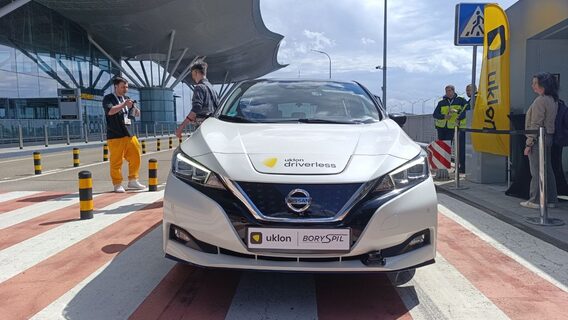
And so it is: yesterday Uklon gave a solid jazz performance in Boryspil. While we are arguing about tariffs in the rain, the guys rolled out their Autonomous car to the interchange near Terminal F.
And so it is: yesterday Uklon gave a solid jazz performance in Boryspil. While we are arguing about tariffs in the rain, the guys rolled out their Autonomous car to the interchange near Terminal F.
Journalists and VIP guests were driven in a regular Nissan Leaf, where the steering wheel turned itself, and the driver-operator sat… in the conference room. The speed was cut to a safe 50 km/h for now. It looks like the not-so-distant Ukrainian future, but let’s take a look at the shelves, how it works from the inside, and what numbers are behind this hype.
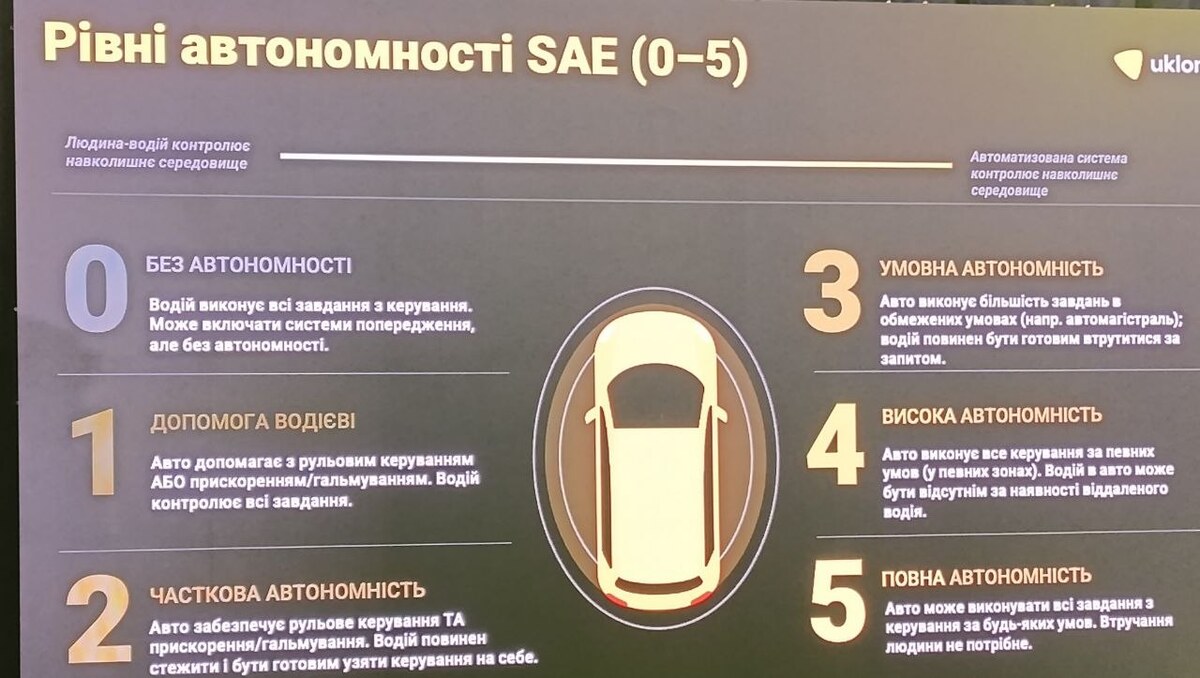
Levels of autonomy: where is Uklon?
To help you understand, the industry has a clear gradation of autopilots from Level 0 (just bare pedals and a steering wheel — everything like grandfathers) to Level 3 (limited autopilot, which only some of us have). Global giants like Waymo in the US and Baidu Apollo in China are now actively commercializing Level 4 — this is when the car drives itself, but within clear boundaries (city, good weather, geofence). The world has yet to grow and grow until it reaches absolute Level 5, which drives anywhere and in any storm.
Uklon is currently testing Autonomous Remote Driving (remote control). This is a basic bridge to a full-fledged Level 4. Why? Because even Waymo’s cool artificial intelligence (which makes 500 thousand trips a week) sometimes «goes stupid.» For example, in the US, a drone became stuck on the highway in front of a banal puddle — the AI simply could not assess the depth and presence of a hole.
This is what Remote Driving is for: a person connects to the support center, evaluates the image in real time, «guides» the car through the problem area manually, and then the AI drives itself again.
Technical stuffing and iron
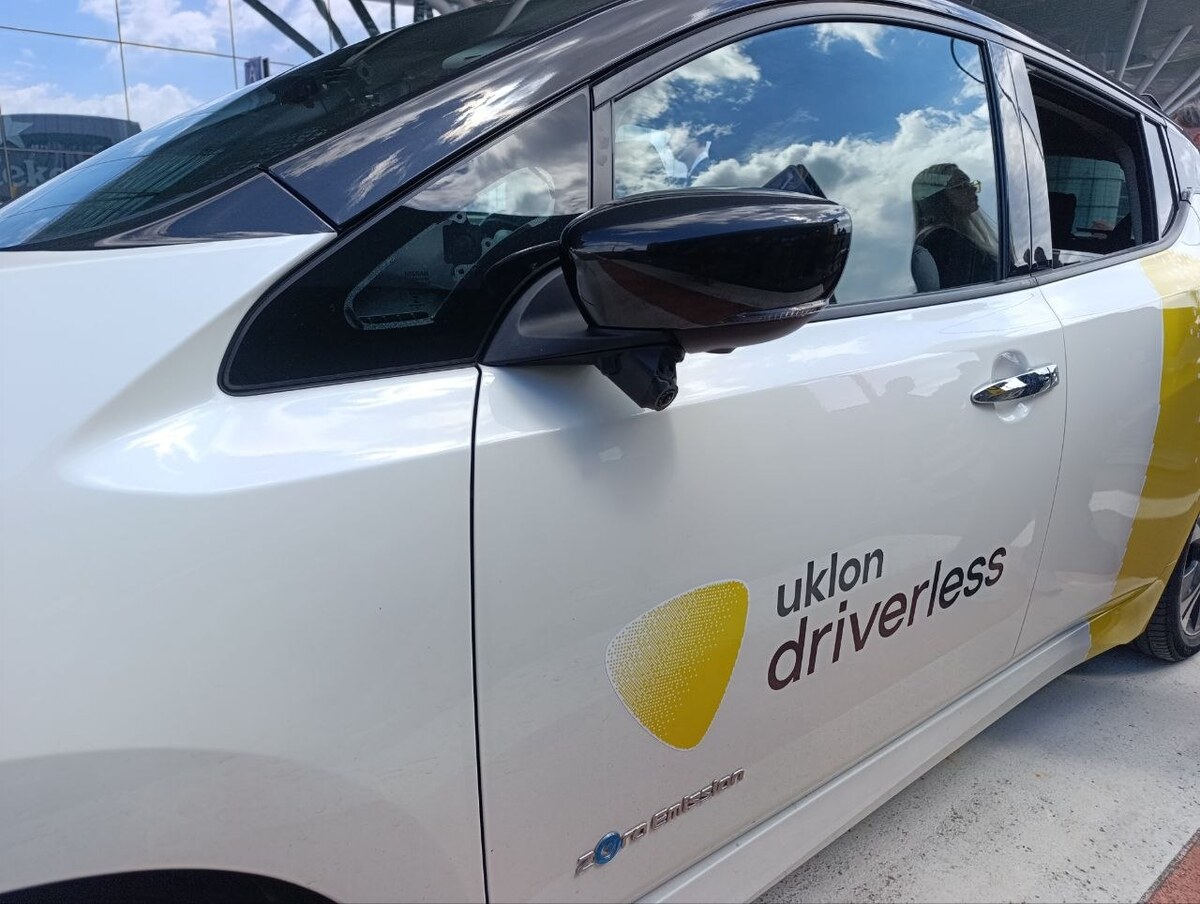
For the tests, a standard Nissan Leaf electric car was upgraded. The car was equipped with:
6 video cameras for 360 panoramic viewing;
Additional lidar and sensors for space scanning;
Communication modules and on-board computer from NVIDIA for data processing.
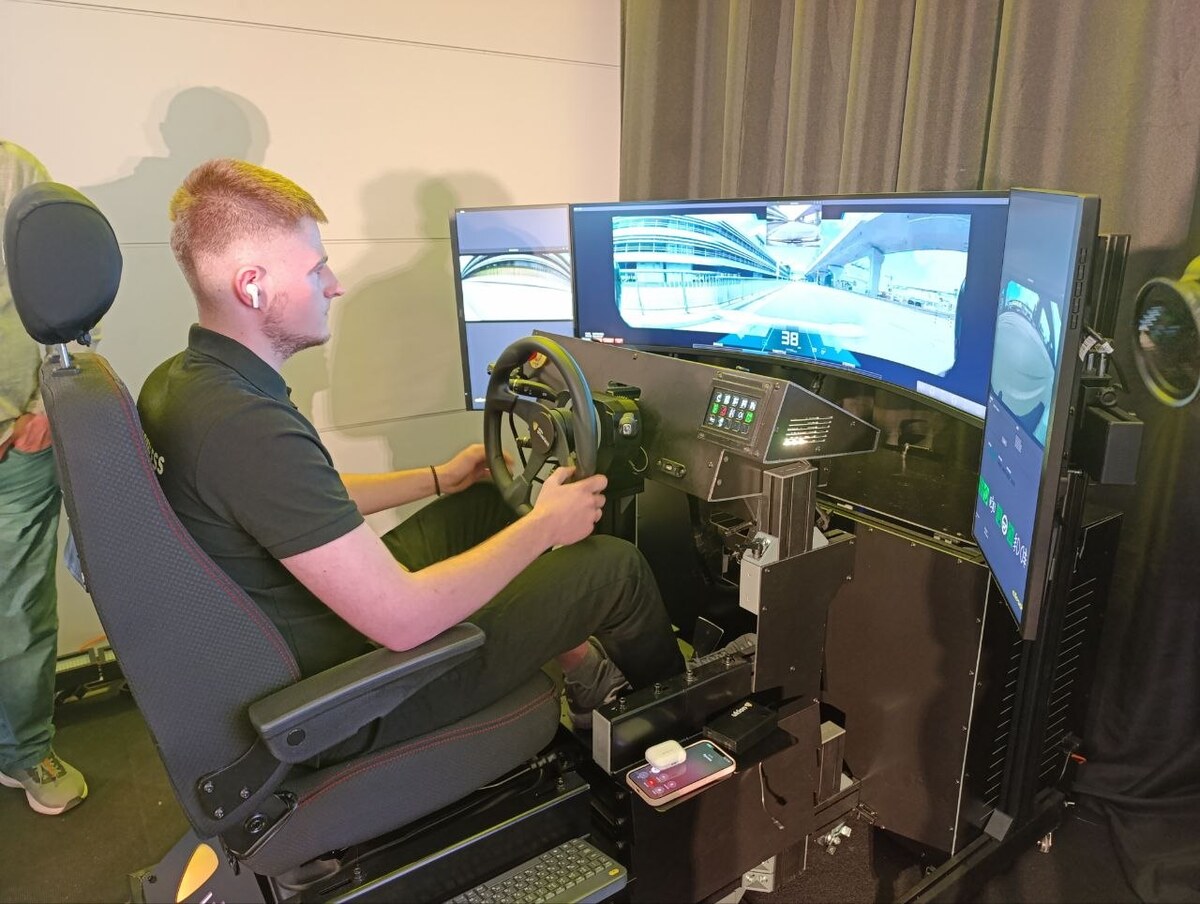
The body kit itself costs several thousand euros. But, as Uklon service station owner Oleksandr Chumak says, the most expensive part here is to equip the remote operator’s workplace (base station). This thing with three monitors costs several times more than all the hardware on the car itself!
The central screen there stitches together the image from the three front cameras into a panorama, and the side monitors act as digital mirrors with a wider viewing angle than in a real car. From their seat, the operator has full control over the steering wheel, brakes, accelerator, as well as turn signals, hazard lights, and even the wipers with washer.
Communication and reaction speed: faster than a human
To prevent the operator from crashing into a pole, a minimum ping is required. Uklon implemented channel aggregation: the cars have LTE lines from Kyivstar and Starlink satellite internet operating in parallel. If one channel goes down, the other one takes over.
The signal delay during the tests was 30–200 milliseconds. For comparison: the average biological reaction of a person to an obstacle is 400–600 milliseconds (and under stress — over a second). That is, the technical signal «flies» many times faster than our brains react.
Journalists asked about military Mesh networks, but for scaling in the city, the company is betting on stable LTE, and in the future on 5G to stream high-resolution video. And if the connection disappears completely? The car won’t go crazy — thanks to lidar, it will automatically activate the safe stop protocol and make a hard stop in front of a pedestrian or obstacle.
Military experience and the Estonian track
One of the driver-operators in the tests is Dmytro, a soldier of the Stugna unit of the GUR, who received a serious artillery wound. His army experience in remote control in the conditions of enemy electronic warfare was ideal for civilian drones. Each such operator went through a rigorous selection (experienced Uklon partners from business and comfort classes were selected), theory, simulators and over 40 hours of practice.
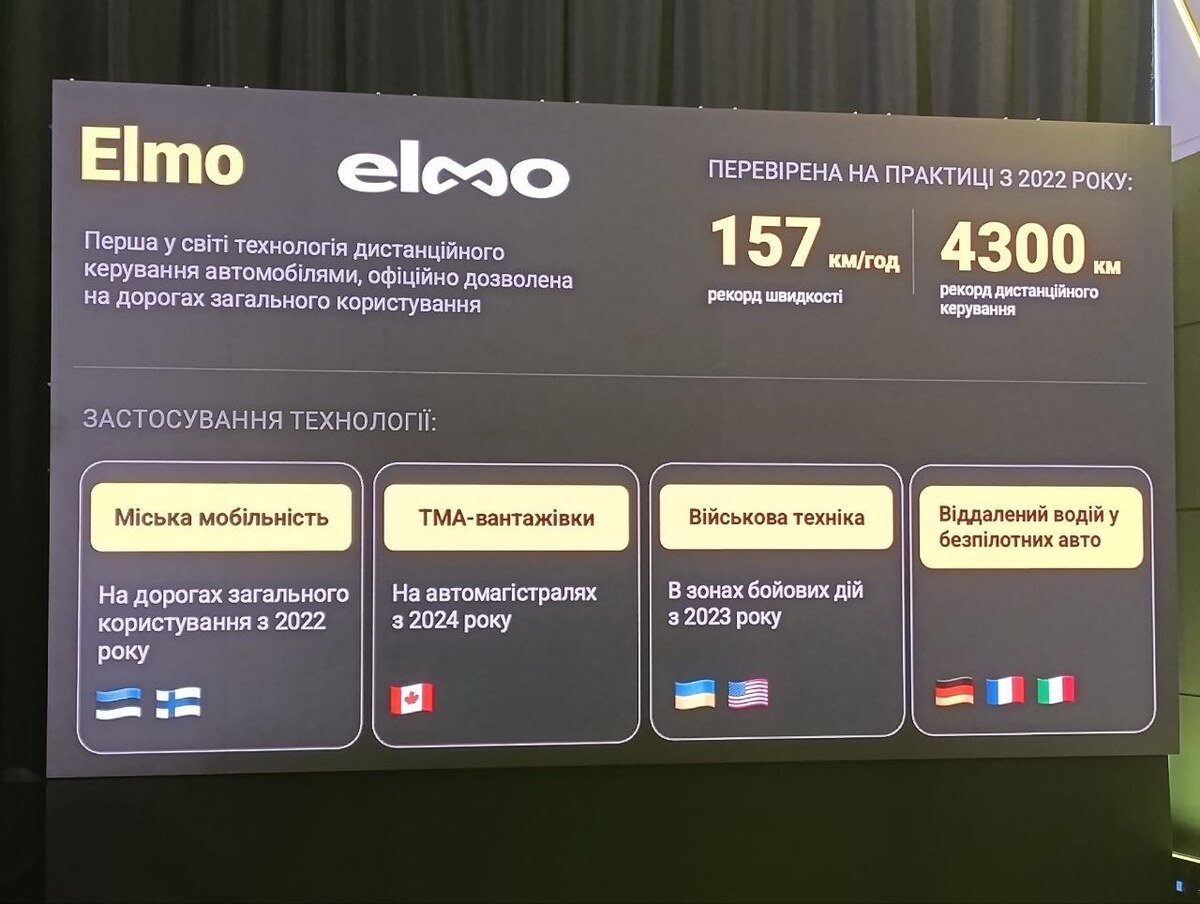
The Estonian company Elmo (Elmo Remote technology) was chosen as a technological partner. They have been on the market since 2022, their software is fully certified in Estonia, and Uklon specialists personally tested it in the center of Tallinn — there the cars drove without a safety driver in the cabin at all. By the way, Elmo even set a speed record for remote control — they accelerated a Nissan Leaf to 157 km/h on the Formula 1 track in Barcelona, and also tested driving a car in Estonia by an operator who was sitting in Qatar 4,300 km away!
Why is this Uklon and what is the economy like here?
Uklon is not going to write autopilot software or build cars from scratch. They are clearly positioning themselves as an application for demand generation and a client interface. Global giants are doing the same: Uber in 2020 rolled back its own development of driverless software and simply invested $10 billion in partnerships, of which $7.5 billion will go to the purchase of ready-made robotaxis. Similar models are being built by Lyft and Waymo. Only a few players, such as Amazon’s Zoox, are trying to do everything themselves.
Why is this good for business? An autonomous car can operate 24/7, interrupted only for washing, cleaning, and charging. Yes, the launch is capital-intensive (hardware, High Definition high-resolution mapping), but in the 10-year perspective, the cost of one mile of travel should drop by about tenfold.
There are currently only about 7,000 commercial drones in the world (of which 4,000 are owned by Waymo). In the scale of the Uklon ecosystem, where there are over 100,000 partner cars, this is a drop in the ocean. But McKinsey predicts that by 2035 the autonomous car market will reach $2 trillion, and $412–450 billion will be spent on robo-taxis. The number of unmanned vehicles in the world will grow to 0.7–3 million units.
What prevents you from traveling through Kyiv right now?
Yesterday, a company representative (safety driver) was still put in the driver’s seat of the Leaf. He simply sat and signaled the remote driver when to start and end the trip. Why is that? Because it is illegal to drive in Ukraine without a driver in the seat.
In our traffic rules, all responsibility lies solely with the driver inside the cabin. If an accident occurs with the participation of AI, there is no one legally responsible. As Uklon Vice President Denis Kazvan joked, in the Baltics, everything that is not prohibited is allowed (so launching is easier there), but in Ukraine, the opposite is true: there is no line in the law, so it is not allowed.
But the ice has melted. The tests were attended by the acting Minister of Digital Transformation Oleksandr Bornyakov, who promised to prepare a government resolution on the experiment to take the project beyond Boryspil. Deputy Head of the Kyiv City State Administration Konstantin Usov also assured that Kyiv is ready for experiments and a real test zone in the city. And then for some reason he hinted at the railway station area. It seems that even in Uklon they don’t know anything about it yet.
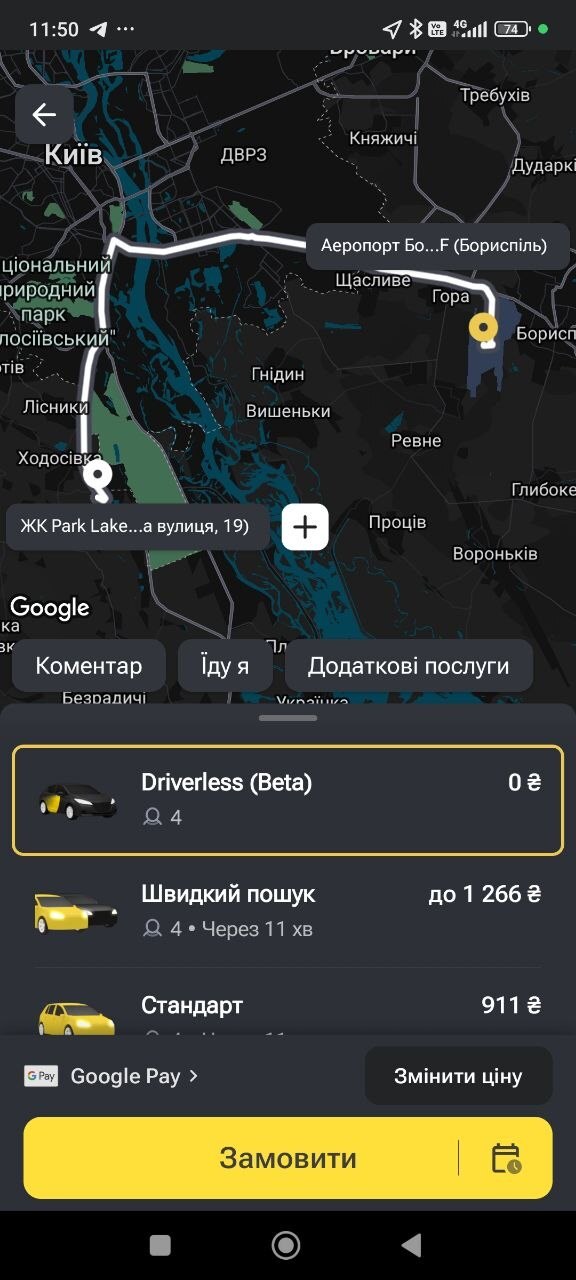
By the way, yesterday the app suddenly had an option to call a driverless car from Boryspil ;)
It is critical for Ukraine to get ahead of the curve now in order to keep its brand and retain its developers, who are currently creating such systems for London or Croatia. Moreover, the width of the lanes and markings in Kyiv are in some aspects even better suited for drones than in London (it is wider). The company has not yet named specific dates (whether it will be in 2027-2028) — the work with the Ministry of Digital Affairs is scheduled within the framework of the Win-Win strategy until 2030. But the first step has definitely been taken.