Ukraine, Poland and Estonia are developing remotely controlled minefields via Mesh network
Ukraine, Poland, and Estonia are launching a joint project to create «smart» minefields that can be controlled remotely and combined into a single network.


Ukraine, Poland, and Estonia are launching a joint project to create «smart» minefields that can be controlled remotely and combined into a single network.
Ukraine, Poland, and Estonia are launching a joint project to create «smart» minefields that can be controlled remotely and combined into a single network.
As reported by «Military», the Polish MBF Group, together with an Estonian company and with the support of Ukrainian engineering and production facilities, has formed a consortium to participate in defense programs in Poland. The cooperation was formalized in stages: first through an NDA, then through a memorandum of understanding, and then through a separate agreement on the creation of a consortium. In this structure, MBF Group is responsible for coordination, regulatory interaction and contacts with Polish defense structures, since the presence of a national entity is mandatory for participation in local procurement.
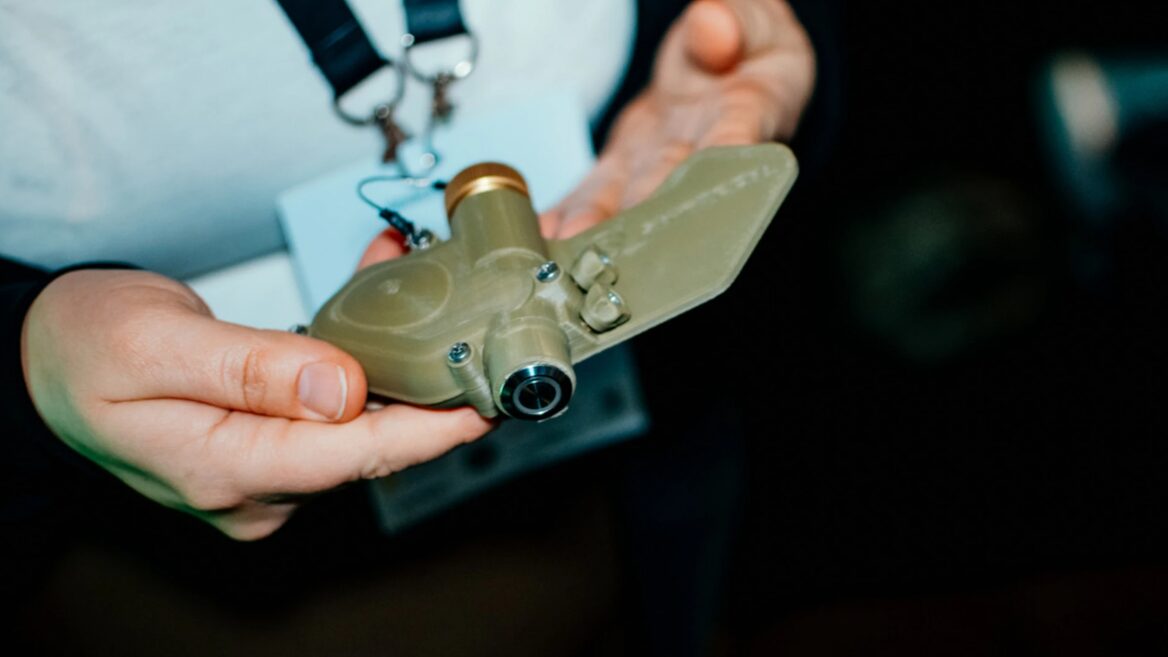
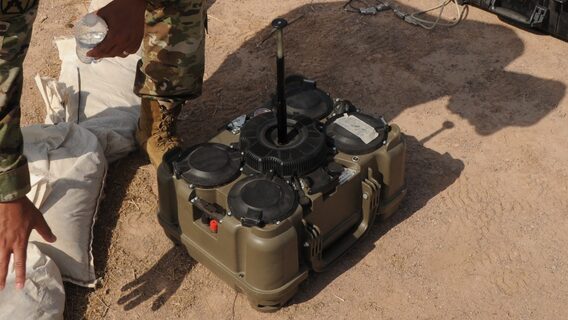
The consortium has already applied for participation in the preliminary market consultations of the Polish Armaments Agency. This is the direction of battlefield protection of the next generation, i.e. new generation battlefield protection systems. The focus of the development is not only the anti-personnel mines themselves, but also the full-fledged electronic architecture around them: seismic and acoustic detection modules, remote initiation, as well as distributed control via encrypted Mesh radio networks. This allows building not isolated minefields, but a network system where individual elements exchange data and can work as a single circuit.
The project participants claim that these solutions have already reached the TRL7 level. This means that the prototype has demonstrated its operability in real conditions, and therefore this is not an early laboratory idea, but a system that can be brought to serial deployment relatively quickly. MBF Group separately emphasizes that the focus is on technologies that are ready for scale-up production in order to reduce the implementation time compared to traditional defense development cycles.
In 2025, Ukraine, Poland and Estonia, amid the growing threat from the Russian Federation, withdrew from the Ottawa Convention, which banned the use of anti-personnel mines. At the same time, Poland announced that it wanted to deploy such devices on the borders with Belarus and Russia as part of the Eastern Shield program. According to the Polish Ministry of Defense, the potential order could range from several hundred thousand to a million mines, so the new consortium is not entering abstract R&D, but a topic with very specific demand.
Previously, dev.ua wrote about how Ukrainian defense company ZMIYAR developed a system that allows controlling up to 200 mines using a single controller.