Хочете будувати кар’єру в Data Science та AI? Vodafone Big Data Lab відкриває новий набір —>
Валентин ШнайдерWar
18 November 2025, 11:52
2025-11-18
Ukrainian military says NATO training courses lag behind the realities of drone warfare
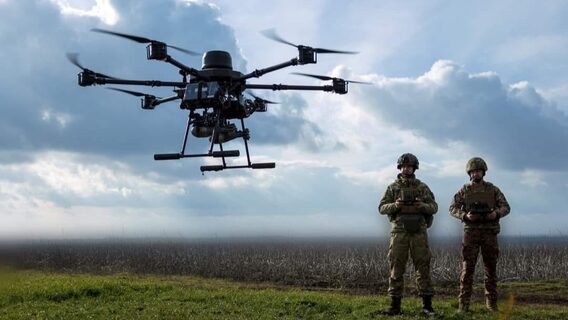
Ukrainian fighters who are training at training grounds in Poland and other NATO countries say that a significant part of the programs is still focused on the war of past decades and almost does not take into account the role of drones.
Ukrainian fighters who are training at training grounds in Poland and other NATO countries say that a significant part of the programs is still focused on the war of past decades and almost does not take into account the role of drones.
This is stated in the BBC News Ukraine material, which is based on conversations with servicemen of the Armed Forces of Ukraine, translators and comments from the General Staff and the Polish Ministry of Defense. Ukrainian marines who went through the battles in Krynki are surprised by the scenarios where the armored personnel carrier calmly crosses the bridge or swims across the river. According to their experience, under modern conditions, enemy drones simply do not allow the equipment to reach the shore alive.
A separate story concerns exercises using «mavics.» The commander of one of the assault battalions describes an exercise where Czech paratroopers were supposed to storm Ukrainian positions, while the defenders worked with FPV and reconnaissance drones. After the first attempts, Czech instructor Jakub asked to «remove the mavics,» because the Ukrainians were too quick to detect the assault groups on the approaches. The soldiers’ answer was simple: without drones, this is no longer training for a real war, but a reconstruction of battles from the times of Afghanistan.
The situation is similar with tactical medicine. Some courses still rely on the concept of the «golden hour,» when the evacuation of a wounded person to a hospital should take about 60 minutes. Ukrainian officers explain to instructors that under the constant threat of FPV and barrage ammunition, evacuation can take many hours or even days. Therefore, soldiers must be taught to live with a tourniquet, and not rely on a medevac by the standards of Iraq and Afghanistan.
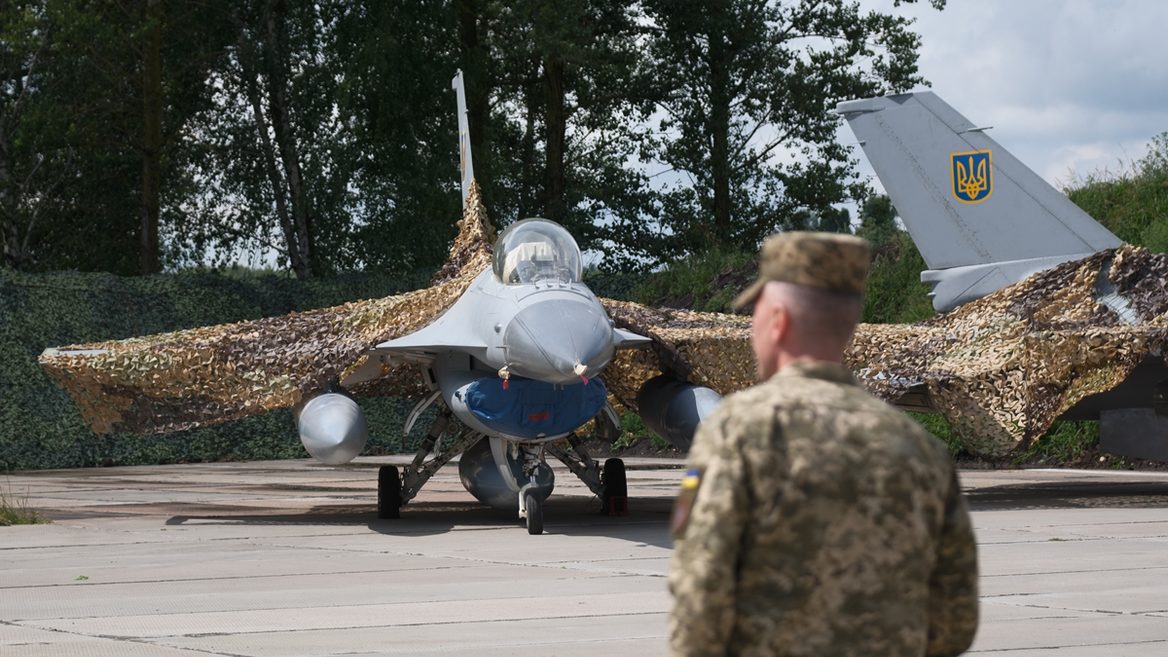
At the same time, the military admits that training abroad has important advantages. Polish training grounds provide a safe space for training, where there is no risk of flying over the training ground, and courses in the use of Western equipment remain critically needed. It is there that Ukrainians master the Bradley, Crab and other systems, without which the current war would be much more difficult.
The partners are also gradually trying to adapt to the new reality. In Poland, a separate drone range, Jomsborg, has already been created, where Ukrainian instructors help build programs, and Norwegians integrate their experience into NATO standards. However, so far, such centers are more the exception than the rule, and most courses still gravitate towards old methodologies.
BBC interlocutors emphasize that the responsibility lies on both sides. Ukraine must clearly formulate requests for training and insist on taking into account the realities of drone warfare, and NATO countries must update programs, moving away from the scenarios of past campaigns. As one of the volunteers in the ranks of the Armed Forces of Ukraine put it, the old textbooks were written by people who can write new ones, the only question is how quickly the alliance will recognize that the war on the Ukrainian front has long gone beyond traditional schemes.
Previously, dev.ua wrote about how Ukraine participated in NATO’s major unmanned systems exercises for the second time in a row, where the DELTA combat system became the main control platform for the joint «red» team and ensured the joint operation of sea, underwater, land, and air drones in real time.