Стас ЮрасовHot News
23 October 2025, 13:32
2025-10-23
Lessons from Ukraine for Europe: on the resilience of telecom networks
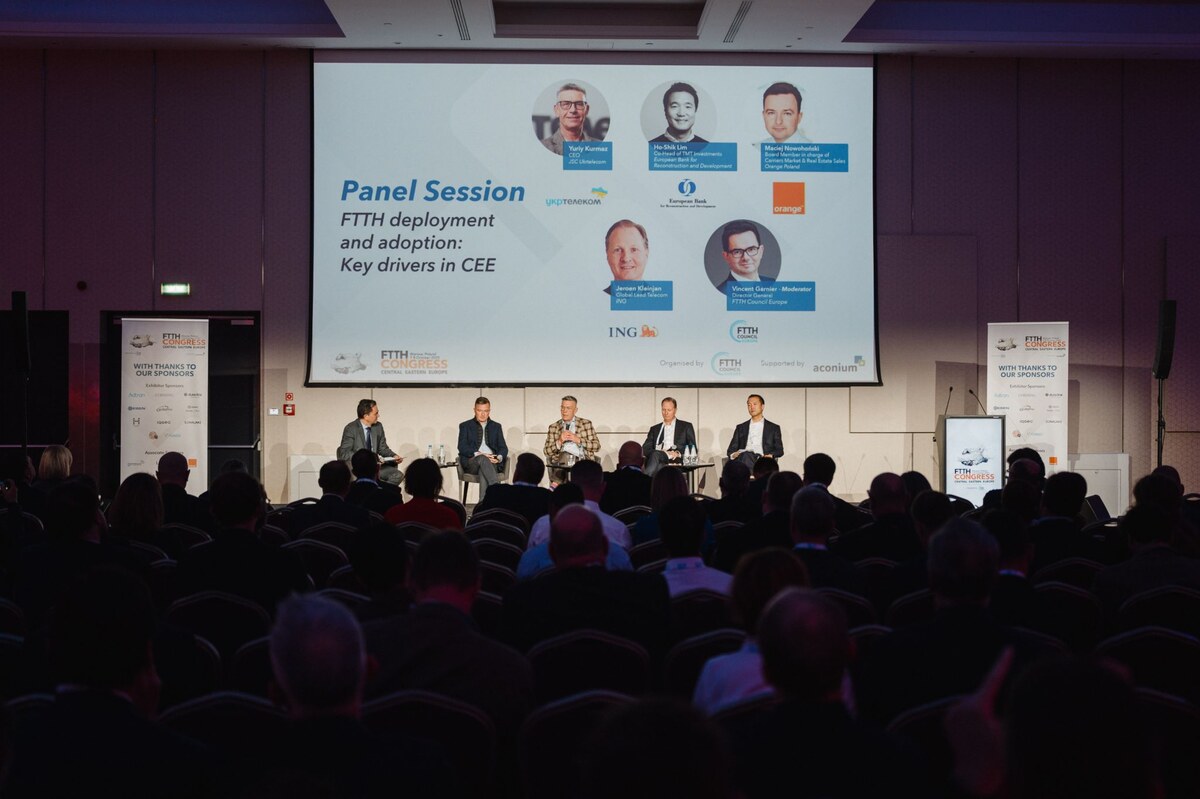
In early October, Ukrtelecom took part in the prestigious FTTH Council Europe event - the FTTH Congress CEE 2025 in Warsaw.
The congress's opening panel "FTTH Deployment and Implementation: Key Drivers in Central and Eastern Europe" brought together leading operators (Ukrtelecom, Orange Polska), as well as public and private investors (EBRD, ING), who shared their strategies, experience, and vision for the development of future optical infrastructure in the region.
In early October, Ukrtelecom took part in the prestigious FTTH Council Europe event - the FTTH Congress CEE 2025 in Warsaw.
The congress's opening panel "FTTH Deployment and Implementation: Key Drivers in Central and Eastern Europe" brought together leading operators (Ukrtelecom, Orange Polska), as well as public and private investors (EBRD, ING), who shared their strategies, experience, and vision for the development of future optical infrastructure in the region.
The discussions covered investment models, financing mechanisms, regulatory environment, challenges of deploying networks in urban and rural areas, as well as opportunities for public-private partnerships.
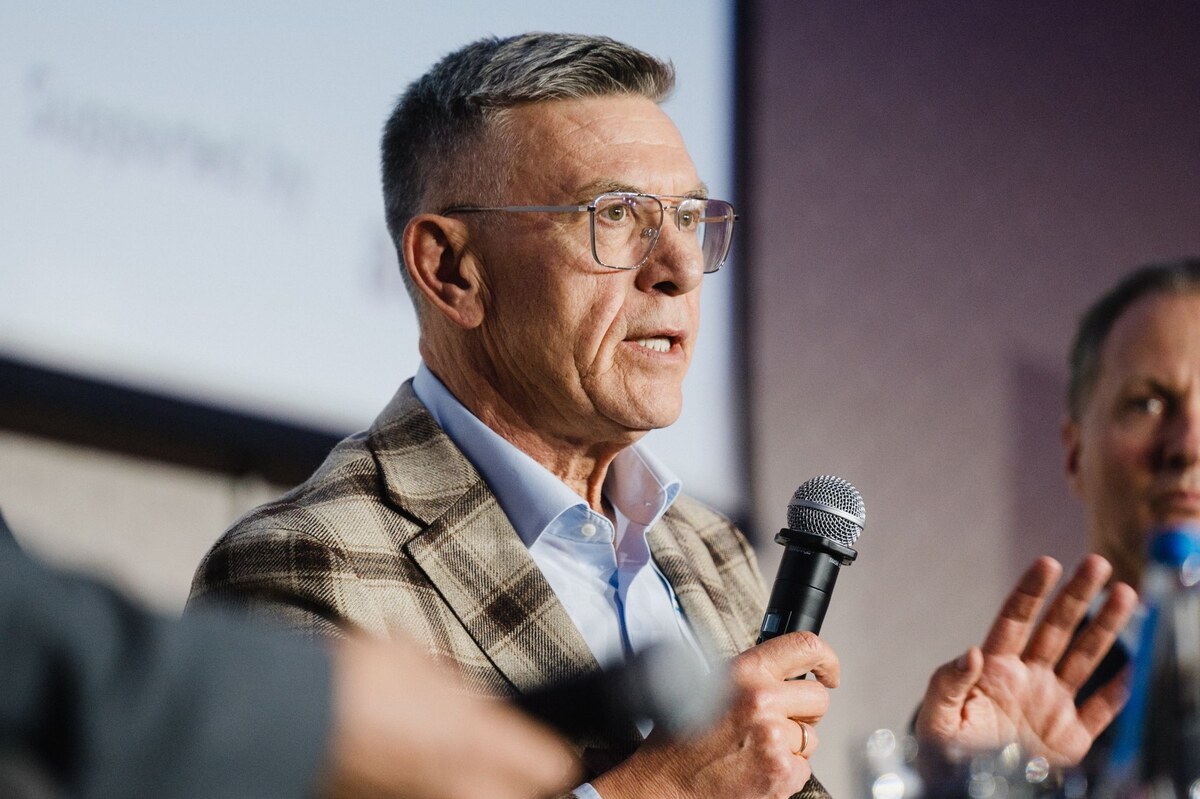
In his opening speech, Ukrtelecom CEO Yuriy Kurmaz spoke about the company's experience in continuing to build infrastructure even during a full-scale war.
The panel audience received candid answers from the participants and at the same time an understanding of how financial, regulatory and technological factors affect the implementation of FTTH in different countries of Central and Eastern Europe, as well as what is needed to create universal, future-ready fiber networks.
After returning from the congress, we talked with Yuriy Kurmaz about how the logic of managing a company and its network has changed, why resilience is becoming a new business metric, and what Europe can learn from the Ukrainian telecom sector.
— Mr. Yuriy, you spoke at the international congress FTTH Council Europe — FTTH Congress CEE 2025. How do foreign experts react to the Ukrainian experience?
I will start with the same point I made in my speech at the congress. Ukrtelecom, like all major national operators in Europe, certainly has the same Challenges: modernization of outdated fragments of telecom infrastructure, expansion of optical coverage, increase of optical penetration and number of subscribers, introduction of innovations, strengthening of network resilience and, ultimately, monetization of these efforts and attraction of external financing for further development.
But, unfortunately, in Ukraine, the normal course of any business takes place in conditions of a new, terrifying reality — constant destructive attacks by drones, missiles, and airstrikes by the Russian aggressor.
The appearance of Russian drones in the airspace of our central and Eastern European neighbors shows that such a threat can also affect the EU. Therefore, our European colleagues are closely monitoring how we work. For them, our experience is not just a story of endurance, but a real practical case of how a business can remain functional when there are constant risks around.
On the sidelines of the congress, many of our colleagues admitted that what we are experiencing is still a “catastrophe scenario” for them. But after the appearance of drones and powerful cyberattacks in the EU, they understand that Ukrainian “lessons” and our experience can become very relevant for them as well.
— What exactly are your European colleagues interested in?
First of all, how do we ensure the stability and continuity of the network during a full-scale war.
We told you how we made our network as energy-independent as possible and how we continue to work in this direction; created alternative and backup (including underground and geographically dispersed) critical nodes, sites, and optical communication lines; separated the enterprise's IT core from the telecom core to minimize cyber risks.
Our European colleagues were also very interested in how we had reorganized our business processes. During a full-scale war, we realized that we had no “reserve time” to think – we had to act quickly and decisively.
— Ukrtelecom is really actively building the network even during full-scale war. What is the scale of this process?
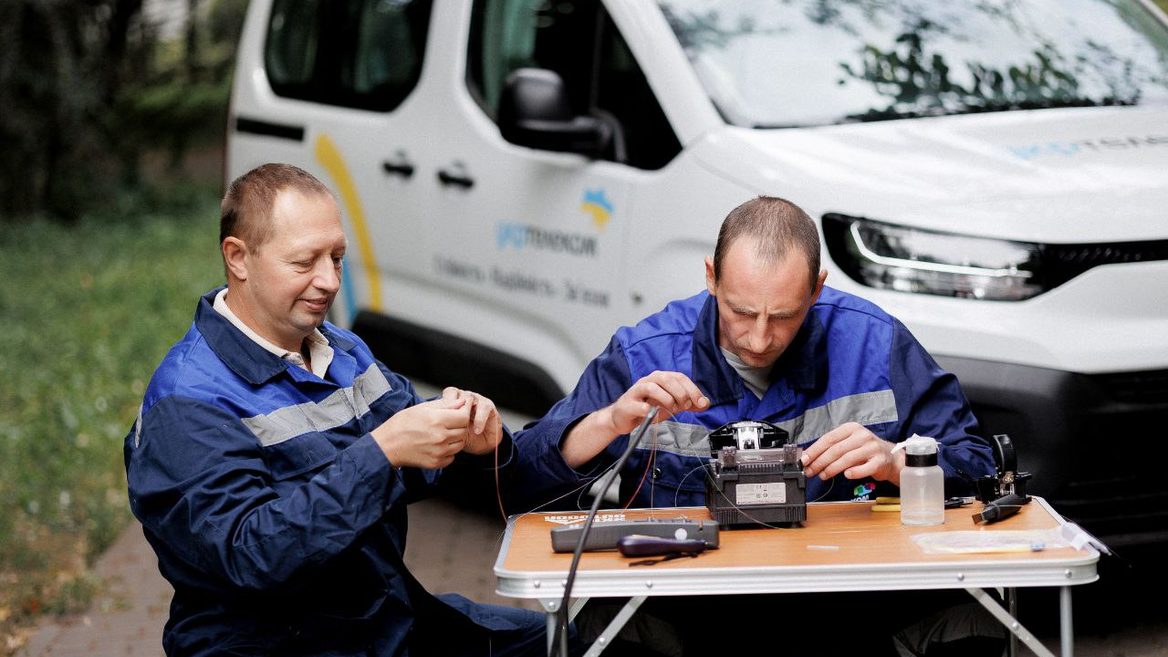
During almost four years of war, we built more than 20,000 kilometers of optics and created the possibility of connecting to optical Internet for more than 1.4 million households.
The total length of our network now exceeds 90 thousand kilometers. This is the largest fiber-optic infrastructure in Ukraine, providing modern optical Internet coverage to more than 3.2 million households. And this coverage is constantly growing.
Today, 80% of our customers use FTTH/P-internet. These are not just numbers. This is evidence that the Internet from Ukrtelecom is reliable and stable — even in a very unstable environment. Therefore, the NPS indicator, which determines customer loyalty and willingness to recommend the company's optical services, has reached 70%.
— You have emphasized several times that the approach to investing in sustainability has changed. What is the difference between wartime and peacetime?
In answering this question, I will again use the theses that I voiced during my participation in the opening panel of the FTTH Congress CEE 2025 in Warsaw.
After nearly four years of brutal, full-scale Russian military invasion, we have clearly learned that commercial telecom networks were not designed and operated to fully meet wartime needs. It is impossible to be fully prepared for all possible war scenarios.
And so we come to the question: how much should be invested in the resilience of telecom networks during war? This is a difficult question, and therein lies the dilemma: resilience versus business logic and economic feasibility.
I am absolutely convinced that investing in the resilience of telecom networks during wartime and investing in their resilience in peacetime are completely different things. During wartime, we at Ukrtelecom realized that, on the one hand, no one knows how and when we will return our investments in the resilience of our network, and on the other hand, not investing in resilience is, in the end, the most expensive choice of all.
— In Warsaw, Ukrtelecom presented another separate case. What exactly did your colleagues show in it?
Yes, my colleagues — our Commercial Director Ihor Yaremchuk and Senior Advisor Oleksiy Khakhlyuk — gave a broad presentation at a separate session specifically dedicated to Ukrtelecom — the Ukrtelecom Case Study Session. They demonstrated to a large audience how we support the company's work and ensure stable communication during a full-scale war.
It was about how we made our network as energy-independent as possible; how we created alternative backup components of our infrastructure; how we separated the IT core of the enterprise from the telecom core of the network to minimize cyber risks; how we protect ourselves from numerous cyber attacks and use cloud solutions; how we rebuilt our business processes: from planning and maintenance networks to interact with employees within the company, with our subscribers, with colleagues in the market, with critical infrastructure enterprises, government agencies and communities; how communication was restored in de-occupied regions, etc. Answering one of the audience's questions, Igor said very accurately: "Our experience is not only about technology, but first of all about people."
And it really is — resilience begins with every communications professional realizing how critically important the continuity and reliability of telecommunications is for our defenders and society as a whole — for citizens, businesses, government agencies, and critical infrastructure.
— How did the interaction between operators change during the war? You mentioned cooperation between competitors.
Yes, and this is one of the most important topics discussed at the congress.
In the first months of the war, competition took a back seat. Mobile operators agreed on national roaming, all key market players They started sharing infrastructure, helping each other restore networks in liberated regions. And it wasn't always directive. It was a conscious decision of the operators themselves at the industry level.
Today, we can confidently say that Ukrainian telecom has survived thanks to cooperation.
— How to attract funding in these conditions? Is there support from the state or partners?
For private companies, attracting external financing during wartime is extremely problematic and practically impossible. The only exception is loans under state guarantees, which are usually provided to state-owned enterprises.
Numerous panels at the congress noted that even in developed EU countries, a significant barrier to attracting private and public investment in the development of modern optical networks is the rather high fragmentation of fixed Internet markets.
Answering a similar question to yours during a discussion on my panel, I noted the following. There are almost three and a half thousand operators and providers operating in the Ukrainian fixed Internet market. On average, one provider serves about 2.5 thousand Internet access lines. This indicates an extremely high fragmentation of our fixed Internet market.
Therefore, I am convinced that it is precisely the consolidation of the fixed Internet market, facilitated by responsible and impartial regulatory intervention, that is essential and even crucial for unlocking the real possibility of external financing and obtaining loans necessary to ensure modern, innovative and sustainable communications.
— During your speech in Warsaw, the thesis was: "Resilience is not just about technology — it's about solidarity." What did you mean?
Technology is only part of the resilience of communication networks.
Resilience is, first and foremost, the people who actually keep the connection going, the engineers who restore networks day and night so that even under fire and during blackouts, we can communicate and receive much-needed information.
But more broadly, it is the interaction between business, society, and government. That's why I said: resilience is not a separate strategy in case of war. It is something that should be in business by default.
— What, in your opinion, can Europe learn from the Ukrainian experience?
First, realize that our experience is unique and not put off studying it "for later."
Secondly, to understand that our resilience also requires solidarity and certain security guarantees from European business, society, and government. And to remember that in a large-scale crisis or war, those who have not only modern technologies, but also courage and effective support from their colleagues, partners, and allies survive and win.
— And finally: what has been the main lesson of these years for you personally?
If a company operates honestly and transparently, invests in people and technology, and helps its country's Defense Forces, it is able to overcome the most difficult challenges, even in wartime.