Хочете будувати кар’єру в Data Science та AI? Vodafone Big Data Lab відкриває новий набір —>
Редакція dev.ua
3 March 2026, 12:09
2026-03-03
Vibecoding is not a toy. How I put together a working product in one day
Vibecoding is a term that Andriy Karpaty introduced in early 2025. The idea is simple: you describe what you want, AI generates the code, and you adjust the result. You don’t write the code, you manage it.
Since then, the internet has split into two camps. Some say, «This is a revolution, we don’t need coders anymore.» Others say, «This is a toy, you can’t build anything serious on it.» Both are wrong.
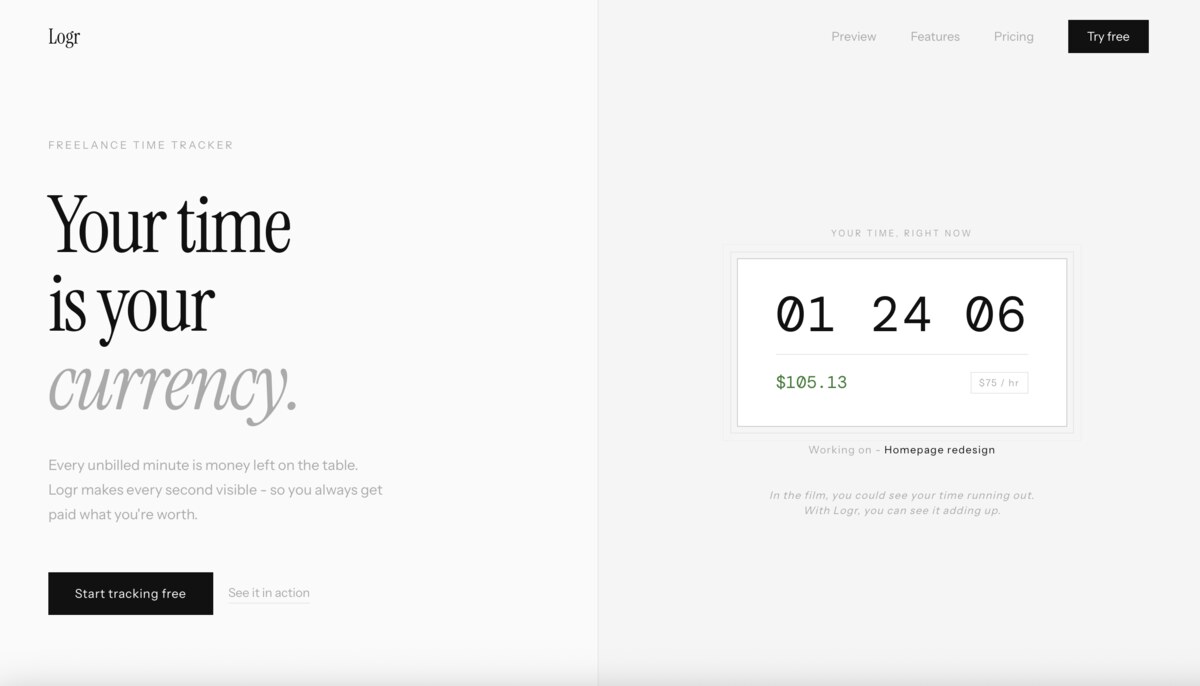
I’m a product designer with a background in UX/UI. Not a front-end developer, not a full-stack developer. But over the past year I’ve released several working projects written mostly through AI-assisted development. One of them is a time tracker for freelancers — I put together in one day. From idea to deployment. And it works.
Vibecoding is a term that Andriy Karpaty introduced in early 2025. The idea is simple: you describe what you want, AI generates the code, and you adjust the result. You don’t write the code, you manage it.
Since then, the internet has split into two camps. Some say, «This is a revolution, we don’t need coders anymore.» Others say, «This is a toy, you can’t build anything serious on it.» Both are wrong.
I’m a product designer with a background in UX/UI. Not a front-end developer, not a full-stack developer. But over the past year I’ve released several working projects written mostly through AI-assisted development. One of them is a time tracker for freelancers — I put together in one day. From idea to deployment. And it works.
Here’s what I’ve learned about vibecoding as an approach to product creation.
Vibecoding ≠ «AI writes code for you»
The main mistake is to perceive vibecoding as a replacement for programming. It is not. It is a different decision-making process.
When you classically develop a product, the path is: idea → design → specification → development → testing → deployment. Each stage is a separate person or team. Each transition is a loss of context.
In vibecoding, you are alone and you make decisions at all levels. You don’t write a TOR for the developer — you see the result right away. Don’t like it? Change it. Like it? Move on. The feedback cycle is seconds, not days.
But it only works if you understand **what** you’re building and **why**. AI doesn’t replace product thinking — it removes the technical barrier between idea and implementation.
When vibecoding works
Not for everything. Here’s where it gives a real advantage:
MVP and hypothesis testing. Instead of a week for a prototype, a day. Instead of a Figma mockup that no one will click on, a live product that can be given to real users.
Tools for yourself. You know your problem best. You don’t write documentation, you don’t agree on features, you don’t wait for a sprint. Done → checked → let’s go.
Products with simple business logic. Timer, tracker, calculator, landing page, portfolio, dashboard — anything where the logic is transparent and predictable.
Where it doesn’t work: complex business logic, security, scaling, working with sensitive data without understanding what’s going on under the hood.
Case: One Day Time Tracker
I’m a freelancer. I track my time every day. I’ve tried Toggl ($13/month), Clockify (overloaded UI), Harvest ($11/month for a timer). All of them make a simple task difficult.
I decided to put together my own. Here’s what the process looked like:
Morning — architecture. Next.js 16, React 19, Supabase for Auth and Postgres. One table with JSONB. Not normalized? Yes. For MVP — perfect. Fewer migrations, faster iterations. This is a conscious compromise, not ignorance.
Day is interface. Keyboard-first: Space is start/stop, Enter is add customer, Escape is close. No unnecessary modals. As a designer, I know: every extra click is friction. And friction is the reason why people abandon products.
Evening — auth and deploy. Google OAuth via Supabase, Vercel for hosting. From push to production — 40 seconds.
Night — PDF invoices and CSV export. What makes the tracker useful, not just a toy.
Why a designer-vibecoder is a powerful combination
Designers understand the user. We know what user flow, friction, cognitive load are. We think in scenarios, not functions.
Previously, this understanding was broken by a technical barrier: you know how it should be, but you can’t implement it yourself. You had to explain, wait, and make compromises.
Vibecoding removes this barrier. Not completely — you still have to understand the basics: how state works, what an API is, how authentication works. But you don’t have to write every line by hand. You focus on the product, not the syntax.
This doesn’t devalue developers. It broadens the pool of people who can test ideas. Designer, product, marketer—anyone who understands the problem can now put together a solution.
What’s next?
Vibecoding is not a silver bullet. It’s a tool. Just as Figma didn’t replace designers, AI code won’t replace developers. But it is radically changing who can build and how quickly.
If you’re a designer and haven’t tried it yet, give it a try. Not for the hype. For the feeling of seeing an idea that’s been in your head become a working product in a few hours. It changes the way you think about design.