Хочете будувати кар’єру в Data Science та AI? Vodafone Big Data Lab відкриває новий набір —>
Наталя ХандусенкоHot News
17 February 2025, 18:31
2025-02-17
Scientists have invented a device that attaches to a car's tailpipe and converts exhaust gases into electricity
A team of American researchers has created a device that can convert the heat of exhaust gases into electricity — using a relatively simple design that can be added to a car's exhaust pipe or even to the exhaust vents of other vehicles, such as helicopters.
A team of American researchers has created a device that can convert the heat of exhaust gases into electricity — using a relatively simple design that can be added to a car's exhaust pipe or even to the exhaust vents of other vehicles, such as helicopters.
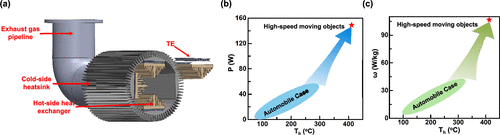
The scientists reported their invention in the journal ACS Applied Materials & Interfaces. It is a prototype thermoelectric generator that can produce a maximum power of 40 watts, enough to power a light bulb.
Thermoelectric generators work on a temperature difference. Essentially, when one of these devices is placed near or on something that produces waste heat, electrons are drawn from the hot side to the cold side, creating an electric current, writes Futurism.
In this case, the researchers say, they used a semiconductor made of bismuth telluride to facilitate this process. But the main challenge is maintaining that temperature difference. If you don't intervene, the cold part of the generator will start to heat up too, and you'll lose current.
Some solutions, the researchers note, use water cooling. However, this introduces many complications and makes the device more complex and bulky. They aimed to make the device adaptable and practical.
So instead, they used a clever but relatively simple radiator design that uses a cylinder with finned protrusions that rotates around the exhaust pipe, providing additional surface area to dissipate heat through forced convection—or, in other words, moving ambient air taking the heat away. In a fast car, this happens naturally.
Source: ACS Applied Materials & Interfaces
By simulating a high-speed environment, the researchers found that their thermoelectric system could produce up to 56 watts of energy at car speeds. For helicopters, it could produce almost three times as much: 146 watts.
“These results could potentially pave the way for the integration of TE devices into complex system designs for practical applications,” the authors concluded.