Хочете будувати кар’єру в Data Science та AI? Vodafone Big Data Lab відкриває новий набір —>
Олег ОнопрієнкоІсторії
18 April 2025, 09:00
2025-04-18
From startup to auto market hegemon. The story of Motors, constantly on the verge of failure and triumph
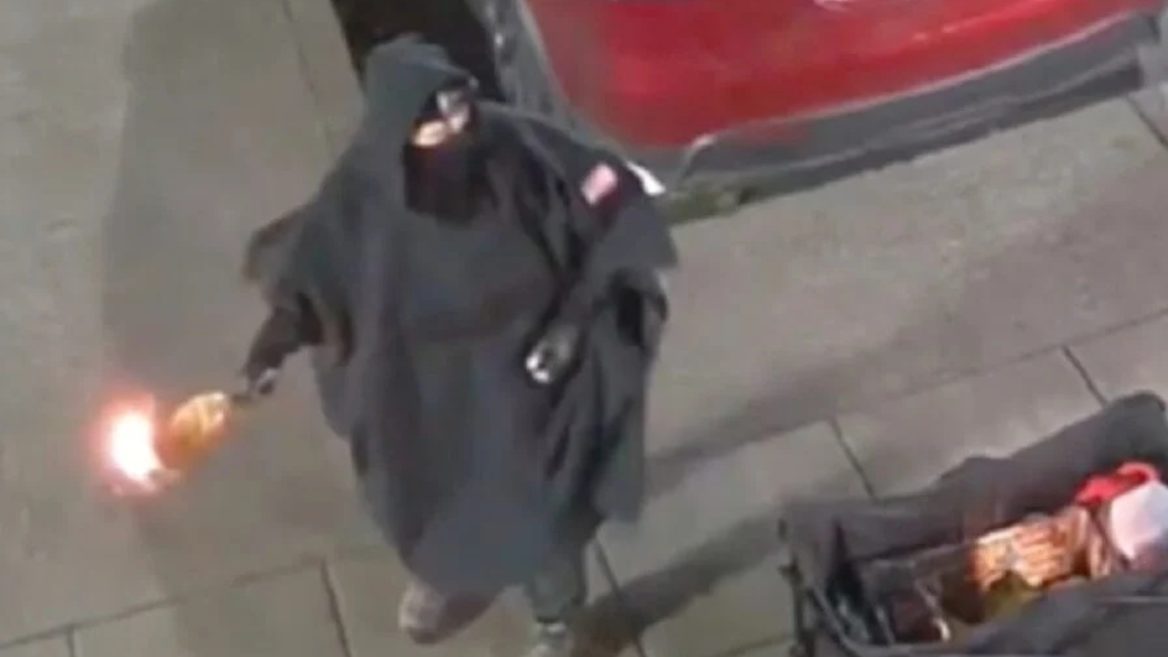
Tesla has become a laughing stock even among its loyal fans: the last car it released completely failed, both in quality and sales, and the company's main ideologist has become so unhinged in American politics that he has turned from a favorite of the public into an antagonist. dev.ua tells about the difficult path of Tesla Motors, which, contrary to forecasts, became the hegemon of the electric car market, but has descended to the arson of its own car dealerships by ordinary citizens.
Tesla has become a laughing stock even among its loyal fans: the last car it released completely failed, both in quality and sales, and the company's main ideologist has become so unhinged in American politics that he has turned from a favorite of the public into an antagonist. dev.ua tells about the difficult path of Tesla Motors, which, contrary to forecasts, became the hegemon of the electric car market, but has descended to the arson of its own car dealerships by ordinary citizens.
Just a year ago, Tesla was a hot topic as the leading company in the electric vehicle market. Its innovative approach to developing lithium-ion batteries, combined with its autopilot technology and constant software updates via the cloud, made Tesla Motors the most valuable automaker in the world with a market value of $1.27 trillion. Creative marketing and the name of Elon Musk only fueled interest among buyers who bought the company's electric cars not only because of their technological coolness, but also because of the prestige that came with it. Everyone wanted to have a Tesla, waited impatiently for new models, invested in the company's shares, which only increased its capitalization. Today, we see a completely different picture.
Founding Fathers
For many of us, Tesla is associated with the name of Elon Musk, but the main ideologists of the company were Martin Eberhard and Mark Tarpenning. Eberhard and Tarpenning embodied the ideal formula for a Silicon Valley startup - a combination of hardware and software. They created Nuvo Media, which was engaged in the development of e-books, which they later sold, which gave them the seed capital for the future Tesla Motors. Elon Musk joined the company only a year after its founding as one of its many investors.
Martin Eberhard
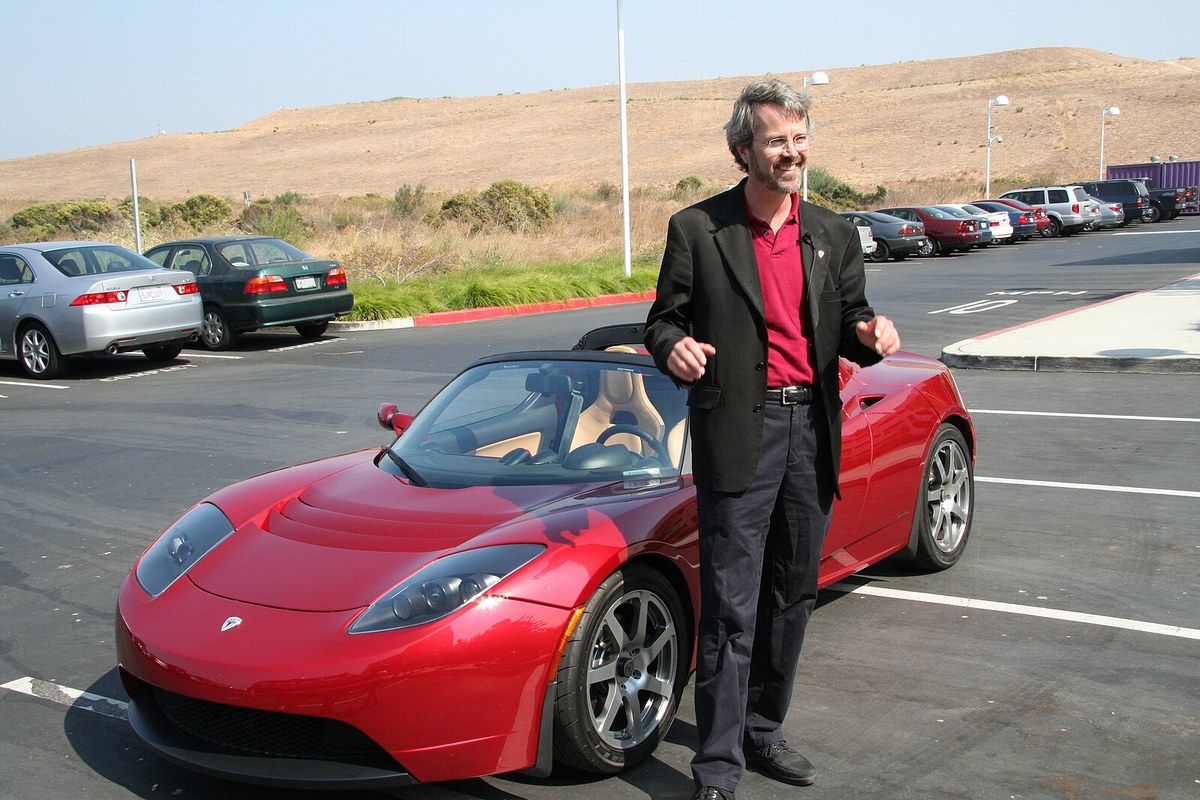
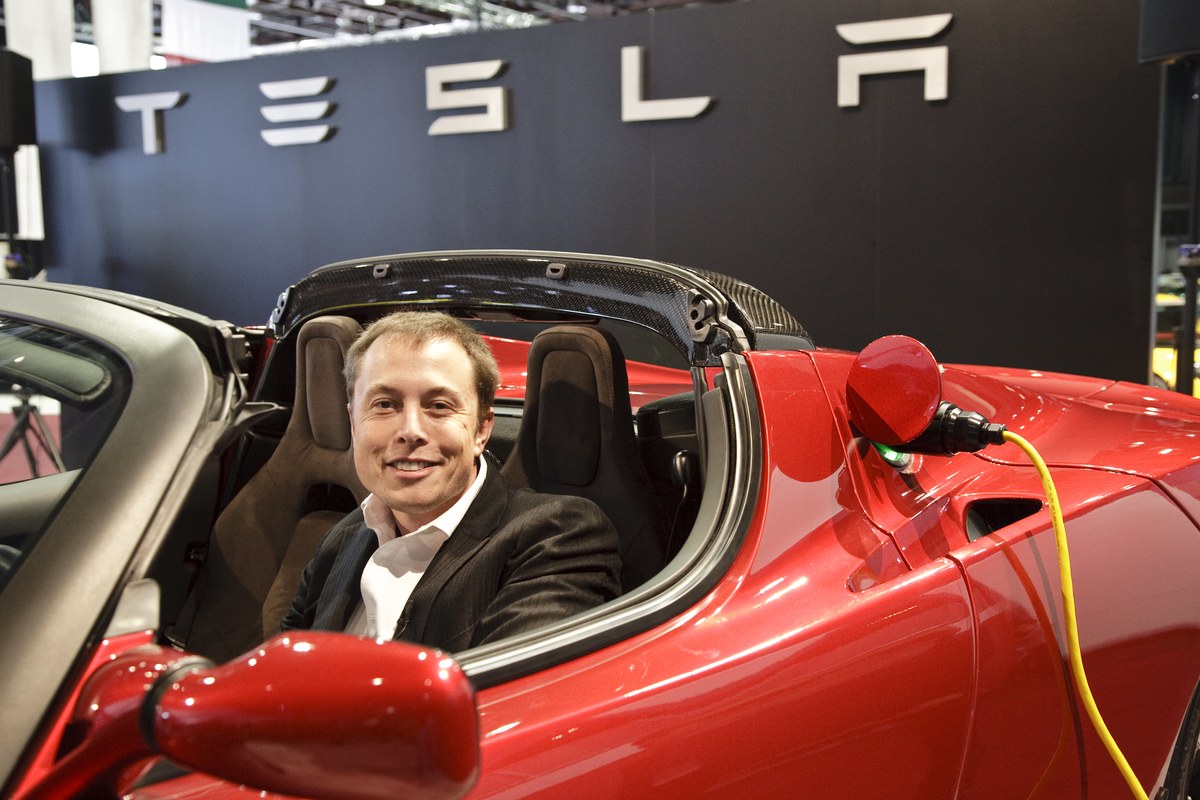
In the early 2000s, the hybrid electric car market was dominated by the Toyota Prius, but Eberhard wanted to create not just an electric car, but a sporty version of an electric car, inspired by the Californian “auto industry” AC Propulsion tzero prototype. Tesla licensed the AC Propulsion technology, which was the first to use an asynchronous AC motor, inspired by the designs of inventor Nikola Tesla. AC Propulsion had several significant advantages: speed, an efficient motor, reliability and, most importantly, it ran on lithium-ion batteries that could be charged from a regular outlet. Rather than develop a completely new chassis from scratch, which is an expensive and time-consuming process, Tesla decided to create its first car based on the Lotus Elise, a lightweight sports car that they believed could be easily adapted for an electric powertrain. The company's engineers created a special battery pack consisting of almost 7,000 lithium-ion cells, thermal management. All this combined made it possible to create the company's first electric car called the Roadster, which rolled off the assembly line in 2008. The Roadster was able to convince buyers that an electric car could be fast, reliable and travel a long distance on a single charge - almost 400 km.
Elon Musk's rise to power
Even before the launch of the Roadster, Elon Musk had been gradually increasing his influence in the company. He first became the majority shareholder, and then CEO a few months after the official launch of the original Roadster. A conflict began to brew at Tesla, because, in the opinion of Eberhard, who was then the CEO of the company, Elon Musk began to attract too much attention to himself. The board of directors supported Musk and supported Musk's idea to remove Eberhard from the post of head of the company. Subsequently, Musk fired some of the Tesla Motors employees who worked under Eberhard and began to position himself as a co-founder of the company, which greatly angered the true creator. The case went to court, Eberhard accused Musk of "rewriting the history of Tesla Motors, to which he gave 5 years of his life." Musk appealed that he was the one who handled most of the financial issues, and paid $75,000 for ownership of the company's website domain, which confirms his encroachment on the title of co-founder. Ultimately, thanks to an agreement between both parties, the court sided with Musk and allowed him to use his co-founder “title” in public. With full power, Elon Musk began to implement his plan for developing Tesla Motors — to build an expensive sports car that would make money, and then to create an affordable electric car.
The second point of Musk's plan turned out to be not very promising. The production of "roadsters" slowed down, and the first production Tesla car, known as the White Star, was never released. The world economy, as well as the company's economy, was collapsing due to the financial crisis. Tesla Motors was on the verge of bankruptcy, which forced Elon Musk to invest about $ 12 million of his own funds, actually lying about the fact that these investments were secured, which later added to his problems with the Securities and Exchange Commission, which accused Musk of fraud. To stay afloat, the price of the Roadster had to be raised by 20%. Things were getting worse, and here Musk's talent showed itself. Thanks to its contacts at the U.S. Department of Energy, the company was able to obtain a $465 million government loan, which provided it with the financial stability it needed to scale up production and development of the car that would later become known as the Model S. This period was a turning point for Tesla, allowing it to transform from a struggling startup into a viable automaker.
The best Tesla electric cars
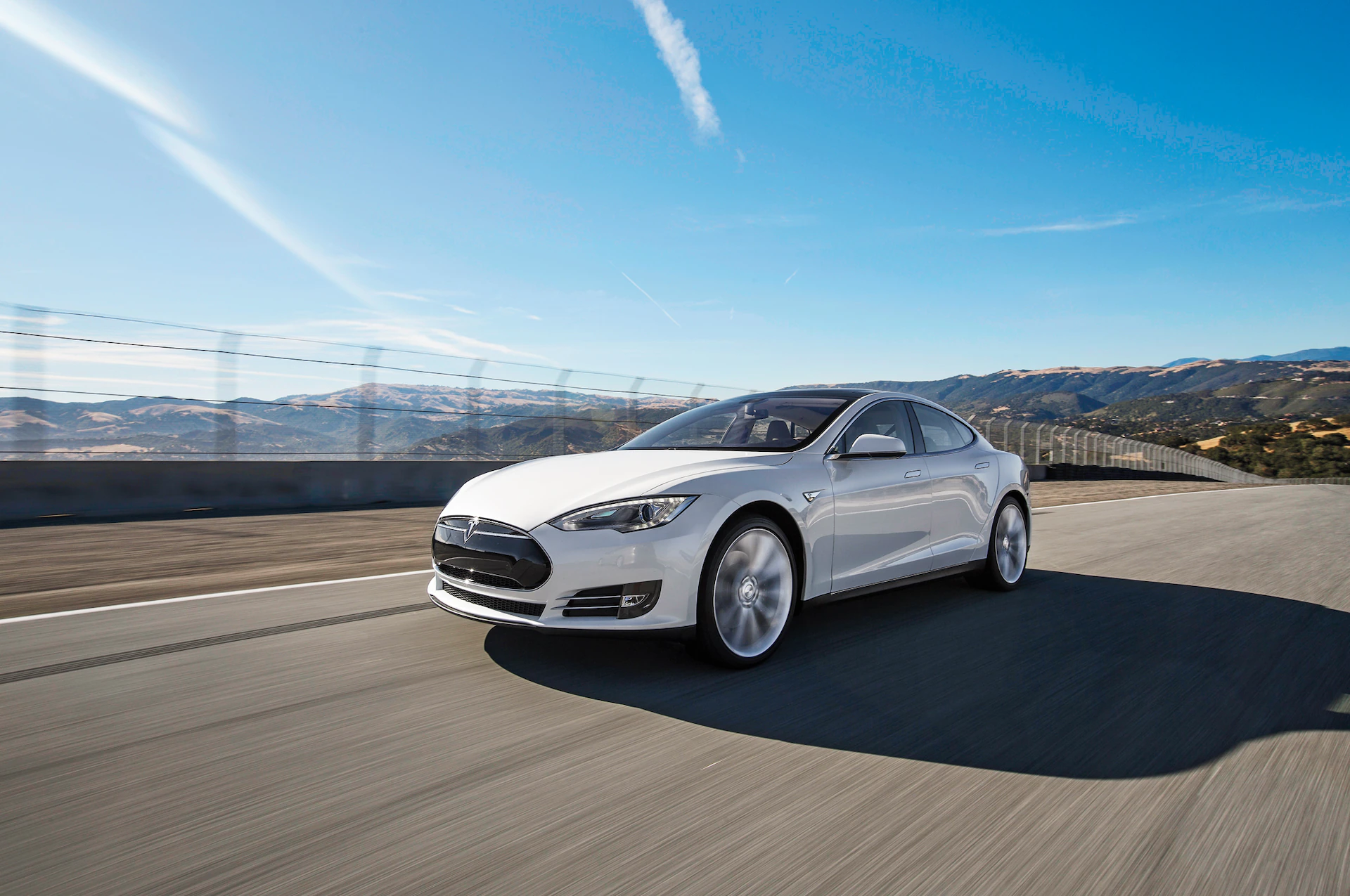
At that time, the development of the Model S was a truly ambitious undertaking for Tesla. Unlike the Roadster, which was based on the Lotus Elise chassis, the Model S was built on a completely new platform, where the batteries were located under the floor, which improved handling and safety, as well as increased interior space. One of the most revolutionary aspects of the Model S was its lithium-ion batteries with a long range of 426 km. The Model S became faster and cheaper than its predecessor and even received the highest safety ratings. And one of the most interesting aspects was the presence of autopilot, which greatly interested both investors and potential buyers.
Under Musk’s full leadership, the company produced perhaps its best electric car yet. Compared to its competitors, the Nissan Leaf was the first mass-market electric car, but it had significant limitations. The Chevy Volt was a hybrid, not a true electric car, and the BMW i3, while innovative, had significantly less range and performance. The Model S was a game-changer. It offered luxury, range, and performance that no other electric car had, but Tesla was still losing money, even though its most important years were ahead of it.
Model S
The Model 3 was first shown in 2016, and the first production cars appeared a year later. The Model 3 was supposed to be an affordable, high-performance electric car with advanced technology and the best range in the industry. However, its development was fraught with a number of problems - from production difficulties to business scandals surrounding Tesla and Musk. The Model 3 introduced a number of revolutionary innovations that helped it stand out in the market. One of its most noticeable features was its minimalist interior, dominated by a single 15-inch touchscreen that controlled almost all of the car's functions, eliminating the traditional layout of the dashboard. This approach simplified production and also strengthened Tesla's focus on being a more software-oriented company. Battery technology was improved again. Tesla developed an improved battery architecture to increase range and reduce costs. The Model 3's standard range was about 220 miles (354 km) on a single charge, with the more "charged" version exceeding 300 miles (482 km). At the time, these figures exceeded those of most competitors. Tesla also introduced Autopilot hardware as a standard feature, which equipped the Model 3 with cameras, sensors, and AI-based software that enabled semi-autonomous driving.
Despite its innovative design, the Model 3 was plagued by production difficulties. Elon Musk called the situation a manufacturing hell as Tesla struggled to meet its ambitious production plans. The company promised to build 5,000 Model 3s per week by the end of 2017, but that didn’t happen. One of the biggest problems was Tesla’s overreliance on automation. Robots broke down, and some assembly tasks that should have been done by machines, such as installing wiring harnesses, had to be done manually. Musk later admitted that Tesla had automated the production process too much and needed to reduce its reliance on robotics to meet demand.
In mid-2018, the company built an assembly line inside a massive tent outside its Fremont factory to speed up production, and this unconventional strategy helped Tesla finally meet its goal of 5,000 Model 3s per week by July 2018. But the company continued to spend money at an alarming rate. Many analysts doubted whether Tesla would survive long enough to ever become truly profitable. One of the main controversies at the time was Elon Musk’s 2018 tweet that he wanted to take Tesla private. In August, he tweeted that he was considering setting a price of $420 per share, once again drawing the attention of the Securities and Exchange Commission and further investigation. As a result, Musk was forced to resign as Tesla’s chairman and pay a $20 million fine, although he remained as CEO.
Despite all the challenges, the Model 3 was a huge success. It became the best-selling electric car in the world and played a crucial role in Tesla achieving its first sustained period of profitability. By 2020, the Model 3 had outsold all other electric cars combined in some markets, helping Tesla surpass major automakers like Ford and GM in market valuation. Tesla’s ability to scale the Model 3 transformed the company from a small luxury electric car maker into a global automotive giant. The Model 3 also laid the foundation for future Tesla vehicles, influencing the design and production of the Model Y, which largely uses its platform and manufacturing technology.
The end of the illusion
The success of the Model 3 and Model S, as well as Musk's image, created a whole fan base of Tesla supporters, so the company, riding the wave of success, unexpectedly announced the second generation of the Roadster in 2017. The new Roadster was offered in several variations with a collaboration with SpaceX, a bunch of improvements and bells and whistles, but without an exact release date, somewhere around 2020. Nevertheless, these ambitious promises worked and the company received the first pre-orders for the car of its "dream", which turned out to be much more unattainable than buyers thought. Initially, the automaker postponed the release date of the car, as if it needed to focus on the production of the Model Y and Cybertruck, stating that work on them would resume as soon as these cars were launched into mass production. In 2021, Musk said that the design of the Roadster would be completed in 2022, and production would begin in 2023. And then Tesla focused almost entirely on artificial intelligence, full autopilot software, and the Optimus humanoid robot project. The Roadster is essentially forgotten. This attitude has destroyed Tesla Motors’ aura as an innovator in electric vehicles. Former supporters of the company complain that Tesla has become another big automaker with a lack of ideas.
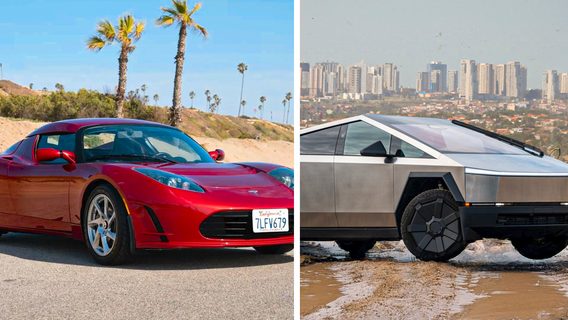
In 2019, Tesla introduced its Cybertruck, which Elon Musk had hinted at back when the Model S was released. The promised specifications of the SUV were quite ambitious.
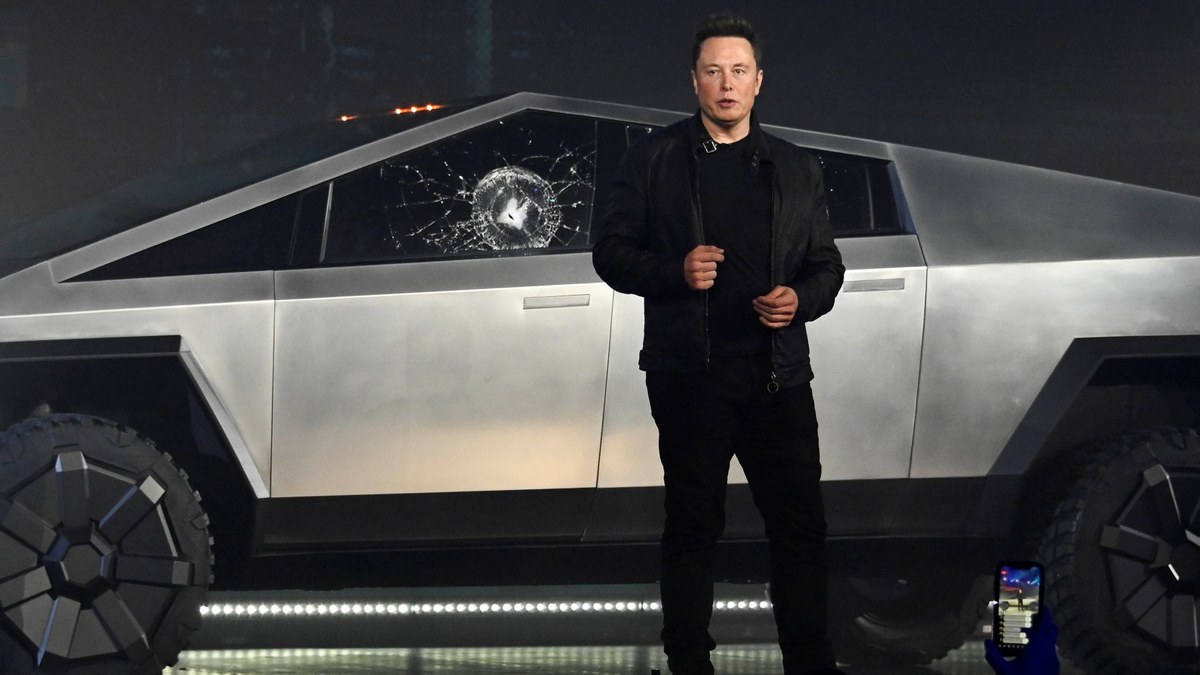
Load capacity of 1600 kg (actually 1130 kg), towing capacity of 6350 kg, (actually 5000 kg), and 2-meter platform (1.8 m), as well as a range of more than 800 km (as today's real tests show, it is about 362 km in the dual-engine version). The famous demonstration of breaking armored glass has become a kind of Internet meme . And all this, despite serious problems with the gaps between the panels, non-compliance with virtually all specifications, even the acceleration time from 0 to 100 km/h in 2.9 seconds is not the same as 2.6 seconds. The "garbage truck", as the Cybertruck is mockingly called, turned out to be such a bad car that even the most ardent Tesla fans cannot hide their frank disappointment. All this is confirmed by sales, which, to put it mildly, are far from the expected figures. Tesla had predicted it would sell 250,000 Cybertrucks a year, but the actual figure is only 40,000 cars. The figures are so bad that Tesla has started using the Cybertruck as a platform to advertise other electric cars. On US roads, the company's pickup trucks have been spotted carrying Model Ys in a closed transparent container with the slogan "meet the new Model Y."
Tesla is experiencing a frank stagnation and lack of fresh ideas. The face with which the company is associated has become one of the most disrespected people due to his political activities in the government of President Donald Trump. The company's shares began to fall even before the global tariff war began. It seems that Tesla Motors has gone full circle from a California startup that offered a real revolution in the field of electric cars to a withered tech giant that takes on a variety of projects, but in the process has lost its identity.
«У США тестувальник може отримувати $100 000 і навіть $500 000 на рік». Історія релокейту дніпровської IT-родини, де чоловік працює в EPAM, а дружина влаштувалася в Tesla
Марк і Вікторія Терещенки — IT-подружжя. Він працює на позиції Lead Test Automation Engineer у компанії EPAM, вона — Software QA Engineer у Tesla. У серпні 2021 року пара разом з 1-річним сином здійснила релокейт до США за L візою. Ми зв’язалися з українською родиною та поговорили про труднощі переїзду, зарплату в Америці та специфіку роботи в компанії Ілона Маска.
«Життя — це більше, ніж просто вирішення однієї проблеми за іншою». Ілон Маск написав колонку в китайському медіа. Які плани техногенія на найближче майбутнє?
Бізнесмен Ілон Маск написав колонку про сталу енергетику, мозкові імпланти та дослідження космосу в китайському виданні, що належить національній агенції з контролю за інтернетом та цензурою. Англійською текст переклав журналіст китайського держвидання «Сіньхуа» Янь Лю. Ми адаптували допис українською.
Українка стала Software QA Engineer в Tesla. Як проходила співбесіда і які умови роботи
Українка Вікторія Терещенко стала Software QA Engineer в Tesla. У блозі на DOU вона розповіла, як проходила співбеседу і які умови роботи в американській компанії.
Have important news to share? Message our Telegram bot
Key events and useful links in our Telegram channel