Хочете будувати кар’єру в Data Science та AI? Vodafone Big Data Lab відкриває новий набір —>
Наталя ХандусенкоHot News
20 September 2025, 14:48
2025-09-20
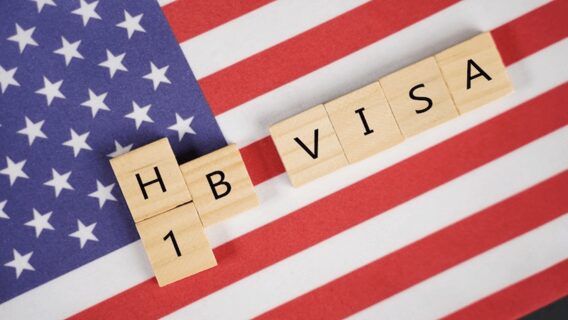
Trump to introduce $100,000 annual fee for H-1B visas. How it could affect the IT industry
The Trump administration said Friday it would require companies to pay $100,000 a year for H-1B work visas. In response, some tech giants advised their foreign employees to stay in the United States or return immediately. The move could deal a serious blow to the tech sector, which relies heavily on skilled workers from India and China.
The Trump administration said Friday it would require companies to pay $100,000 a year for H-1B work visas. In response, some tech giants advised their foreign employees to stay in the United States or return immediately. The move could deal a serious blow to the tech sector, which relies heavily on skilled workers from India and China.
Since taking office in January, Trump has launched a sweeping immigration crackdown, including moves to restrict some forms of legal immigration. The move to overhaul the H-1B visa program is his administration's most high-profile attempt to overhaul temporary work visas, Reuters reports .
"If you're going to train someone, train someone from one of our nation's great universities," Commerce Secretary Howard Lutnick said. "Teach Americans. Stop bringing in people to take our jobs."
Trump's threat to tighten controls on H-1B visas has become a major point of tension with the tech industry, which donated millions of dollars to his presidential campaign.
Microsoft, JPMorgan and Amazon responded to the announcement by advising employees holding H-1B visas to remain in the United States, according to internal emails reviewed by Reuters.
They advised workers with H-1B visas who were outside the US to return by midnight Saturday (04:00 GMT on Sunday) to be in time for the new fees to be implemented.
“H-1B visa holders currently in the U.S. should remain in the country and avoid international travel until the government provides clear travel guidelines,” said an email sent to JPMorgan employees by Ogletree Deakins, which handles visa processing for the American investment bank.
Critics of the H-1B program, including many American IT workers, say it allows companies to underpay and sideline Americans who could do the job. Supporters, including Tesla CEO and former Trump ally Elon Musk, say the program brings in highly skilled workers needed to fill talent shortages and keep companies competitive. Musk himself, a naturalized U.S. citizen born in South Africa, once held an H-1B visa.
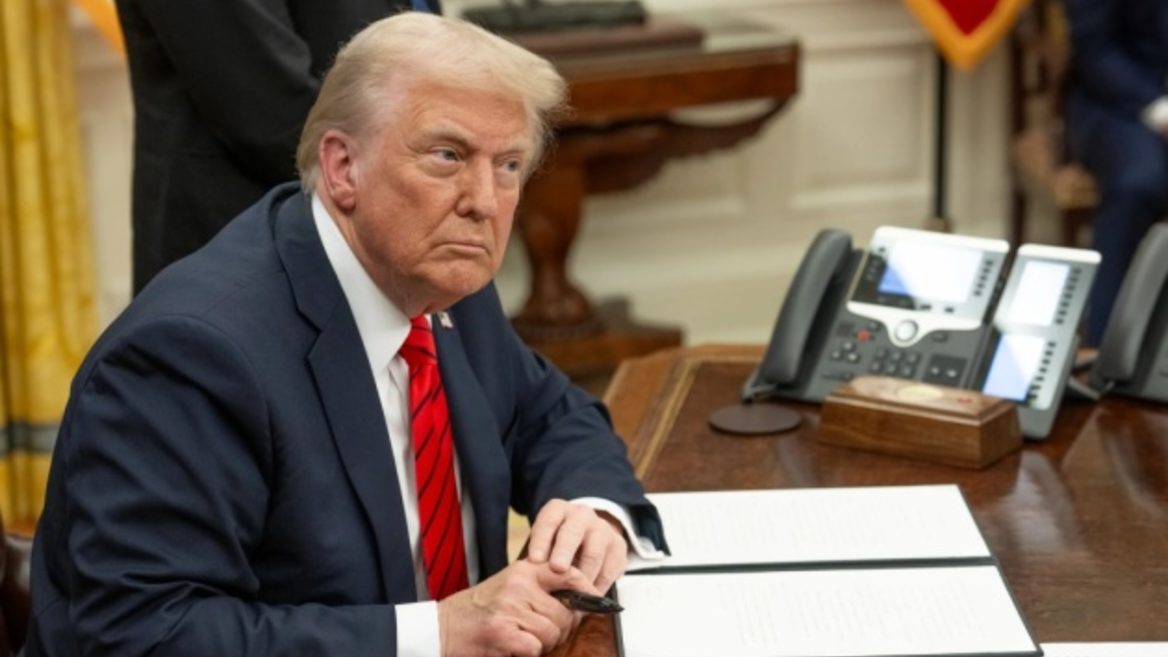
According to an executive order Trump signed on Friday, some employers have used the program to lower wages, putting U.S. workers at a disadvantage.
The executive order states that the number of foreign workers in science, technology, engineering, and mathematics (STEM) fields in the United States more than doubled between 2000 and 2019, reaching nearly 2.5 million, while overall STEM employment increased by only 44.5% during that time.
“Adding new fees “creates barriers to attracting the world’s smartest talent to the U.S.,” Didi Das, a partner at venture capital firm Menlo Ventures, said on social media X. “If the U.S. stops attracting the best talent, it will significantly reduce its ability to innovate and grow economically.”
The move could result in millions of dollars in additional costs for companies, which could hit smaller technology firms and startups particularly hard.
Lutik said the visa would cost $100,000 a year for three years, but the details were "still being worked out."
According to government data, India was the largest recipient of H-1B visas last year, receiving 71% of approved permits, while China came in second by a wide margin, with 11.7%.
In the first half of 2025, Amazon and its cloud computing unit AWS received approval for over 12,000 H-1B visas, while Microsoft and Meta Platforms each received over 5,000 approved H-1B visas.
Lutnik said on Friday that "all the big companies agree" to a fee of $100,000 per year for H-1B visas.
Aaron Reichlin-Melnick, policy director for the American Immigration Council, questioned the legality of the new fees. “Congress only authorized the government to set fees to recover the costs of processing an application,” he told Bluesky.
The H-1B program offers 65,000 visas annually to employers who hire temporary foreign workers in specialized fields, and another 20,000 visas for workers with higher education.
Almost all visa fees are paid by employers. H-1B visas are issued for a period of three to six years.