Хочете будувати кар’єру в Data Science та AI? Vodafone Big Data Lab відкриває новий набір —>
Ігор Вишневський That's Life
10 October 2025, 11:43
2025-10-10
“We invest either our own savings or our parents’ money.” Kyiv schoolchildren are developing a device to shoot down enemy FPVs. What they have already achieved and what difficulties arise
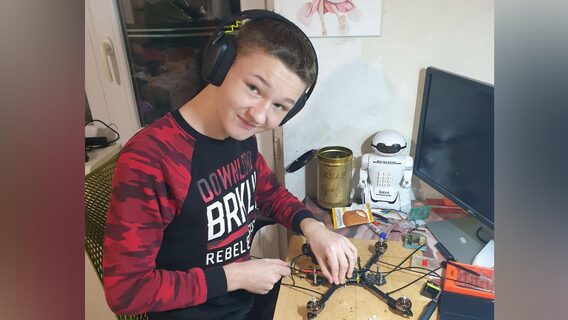
Kyiv tenth-grader Volodymyr Nikolaevsky, together with a friend, came up with a system that, using artificial intelligence and computing algorithms, will help the operator identify and shoot down FPV drones on the front line.
Kyiv tenth-grader Volodymyr Nikolaevsky, together with a friend, came up with a system that, using artificial intelligence and computing algorithms, will help the operator identify and shoot down FPV drones on the front line.
As Volodymyr himself said in an interview with DOU, his system will be approximately half a meter high.
«We need to place all the parts, the computers. On the sketches of the test model, we dealt with the motors: we drew centimeters by centimeters, how everything should be. This plan is painted more than half for the test model, to show it as an MVP sample,» the schoolboy shared.
According to him, everything in development should be based on AI algorithms.
«AI will help find targets: roughly speaking, its tools should search for spots in the sky and determine whether it is the same drone or a bird. And then the operator will see whether it is necessary to shoot down the target or not,» Volodymyr explained.
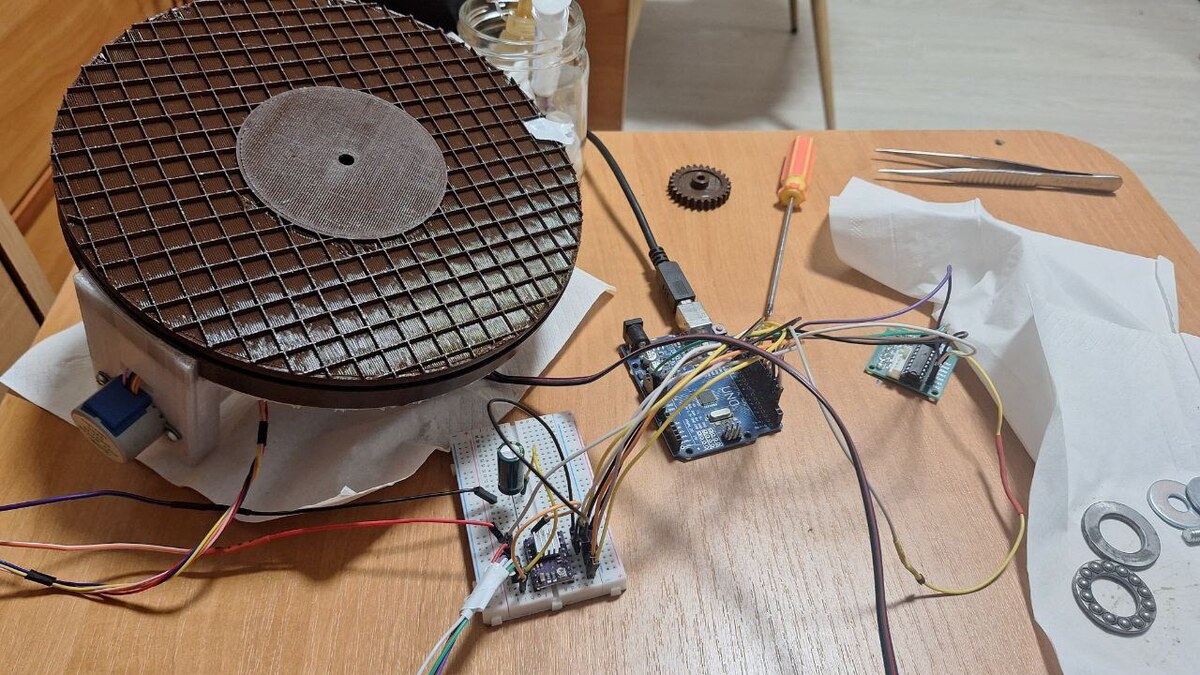
The young inventor stated that they now have a prototype, and they have tested the operation of the motors.
«We made a test 3D model at home, about 20 cm, on which we tested the motors to make sure they turned correctly by a certain number of degrees. Everything works perfectly,» said Volodymyr Nikolaevsky.
The most problematic point, as the schoolboy-inventor himself explains, is the mechanism for detecting drones in the sky.
«So far, I have been using general YOLO models, which are used, for example, to determine the number of people at airports, etc. But this is a very globalized model, small details are erased in it. Finding a drone for it is like seeing an ant in the ocean, it is difficult of course with the help of artificial intelligence,» he emphasized the main «stumbling block.»
According to him, the implementation of the project is being hampered by the fact that he and his friend do not have people to help and do not know which direction to move in to improve drone detection.
«Currently, AI can recognize a drone at a distance of ten to twenty meters, and we plan to do it at two hundred. We have neither zoom nor a pumped neural network. Everything else is mostly done: motors, finished control, adjustments, all turns and guidance are set up. There is one neuron left, which needs to be made almost from scratch. Because how to draw YOLO’s attention to the drone is still unclear. We need to figure it out, maybe someone knows how to do it,» he asked for advice.
Once he and his friend complete the preparation of the MVP model, the inventors plan to register on Brave1.
«For now, financially, we are investing either our own savings, or our parents’ money, or we are working on barter. My father’s school friend, a military volunteer, makes bearings and has 3D printers. He asked us to help him make FPV resets on Arduino. In return, he allowed us to print our model for free. This was very useful for us, because such printing is a little less than a quarter of the cost of everything that has been done so far,» he concluded his story.
Kyiv schoolchildren created a useful AR application for teaching first aid. How Firselp, which won gold at the Infomatrix 2025 international hackathon, works