Хочете будувати кар’єру в Data Science та AI? Vodafone Big Data Lab відкриває новий набір —>
Олег ОнопрієнкоІсторії
19 June 2025, 09:00
2025-06-19
“Now our equipment doesn’t harvest crops, but saves lives in minefields.” Interview with XTI Engineering executives about the company that transformed from agricultural machinery to a developer of machines for humanitarian demining
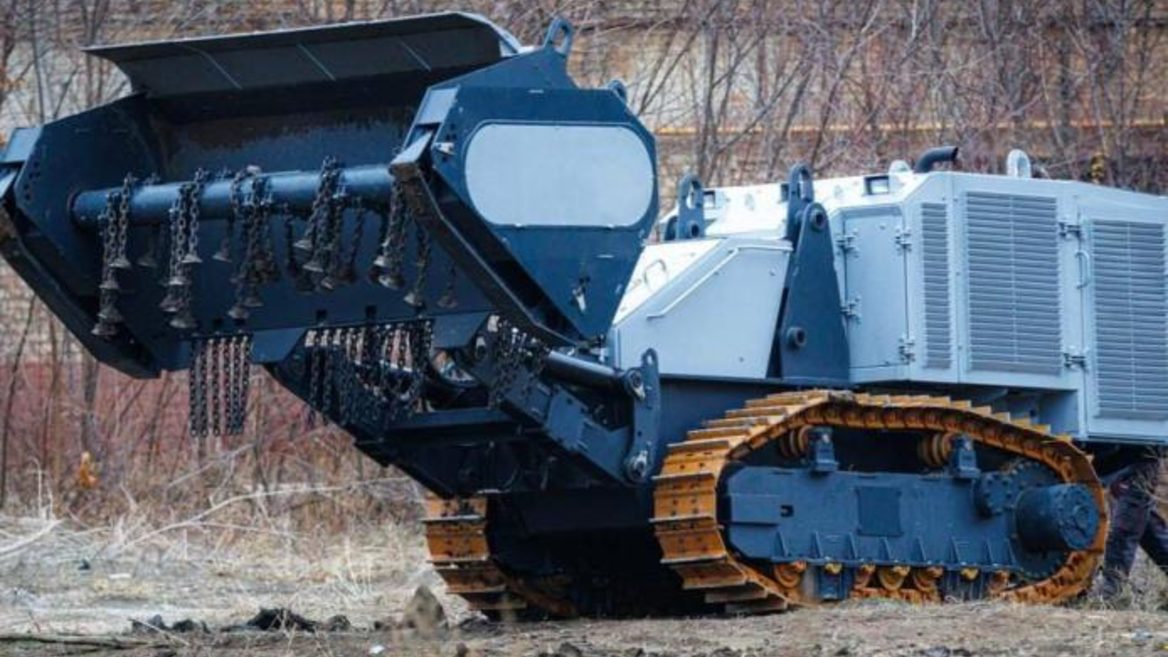
According to the Ministry of Defense, the area potentially contaminated with explosives is 139,000 km² — larger than the size of Greece. The speed of cleaning directly depends on the availability of equipment, and until recently it was not produced in Ukraine. In a conversation with dev.ua, the director of XTI Engineering Vadym Anosov and the managing director of the machine-building group Igor Tkachuk tell how, after the deoccupation of the Kharkiv region, they assembled the first prototype of a deminer in four months, how the Ukrainian machine "GART 5100" differs from foreign analogues, how testing with explosions is carried out, what has changed in cooperation with the state, and what the demining market looks like in Ukraine and the world.
According to the Ministry of Defense, the area potentially contaminated with explosives is 139,000 km² — larger than the size of Greece. The speed of cleaning directly depends on the availability of equipment, and until recently it was not produced in Ukraine. In a conversation with dev.ua, the director of XTI Engineering Vadym Anosov and the managing director of the machine-building group Igor Tkachuk tell how, after the deoccupation of the Kharkiv region, they assembled the first prototype of a deminer in four months, how the Ukrainian machine "GART 5100" differs from foreign analogues, how testing with explosions is carried out, what has changed in cooperation with the state, and what the demining market looks like in Ukraine and the world.
About XTI Engineering
XTI Engineering is a full-cycle Ukrainian engineering company specializing in the creation of special equipment for humanitarian demining. It was founded in 2014 by Vadym Anosov, an engineer by education and vocation, originally from Kharkiv. From the very beginning, he relied on local production and a team from the region.
The company has gone from a developer of agricultural machinery to a major player in the field of engineering solutions for security. After the de-occupation of the Kharkiv region in 2022, it was Anosov who initiated the launch of a new direction - the development of equipment for humanitarian demining, when the scale of the mine danger became apparent not only on paper, but also on the site of the mine threat.
XTI Engineering is distinguished by its full production cycle - from idea, 3D model and drawings to assembly, testing at its own testing site and service. This allows the company to quickly adapt equipment to the real demands of demining operators and avoid the slow bureaucracy typical of large players.
Today, the company's line includes several platforms for humanitarian demining, specially designed for Ukrainian conditions.
— Tell us about the XTI Engineering team. Are you looking for new specialists?
At the beginning, the team consisted of several experienced engineers who were at the origins and still manage the company's key areas.
XTI Engineering has a strong team. Key roles are filled by people who are not only well-versed in their field, but also capable of working comprehensively — from concept to launch of the finished product. The team includes specialists with experience in both defense and civil engineering, as well as in international engineering projects.
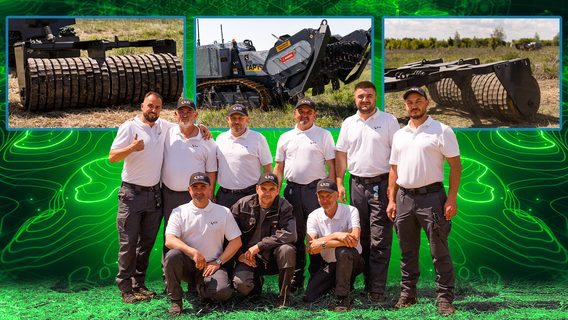
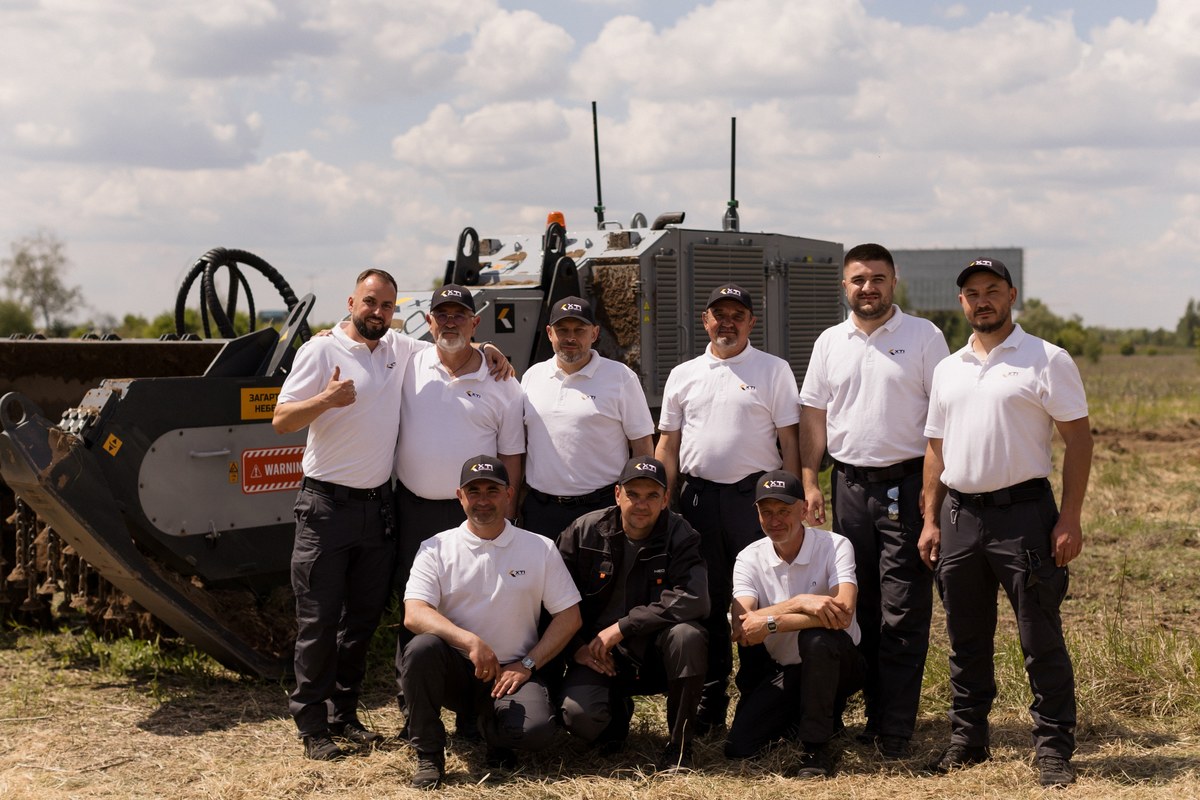
Our team consists of over 80 specialists: engineers, designers, automation specialists, electronics, managers and technical staff. We are young, ambitious and result-oriented. In our work, we combine innovation with practical experience - from drawings to a real machine in the field.
We are constantly looking for specialists, because there are many interesting tasks, and there is always less time than ideas. We are looking for not just “doers”, but people who are interested in creating something new and seeing the real result of their work. We provide specialists with the opportunity to participate in the full development cycle - from the first idea to tests at the testing ground. This gives our specialists a different quality of experience and motivation. With us, each engineer is a part of the real process of creating technology, and not a cog in a large system. And this is one of our strengths.
— How is the company structured? Is everything concentrated in Kharkiv?
XTI Engineering has all the key divisions inherent in a modern engineering company: R&D, production, service, and administration. This is a familiar structure for a company that deals with the full cycle — from idea to finished equipment.
We ensure the integrity of processes: engineers work closely with production, the technical team with R&D, and service with customers directly. This approach allows us to flexibly respond to needs and constantly improve products.
One of our consistent practices is the periodic participation of designers in the maintenance and operation of our machines. This provides a deeper understanding of what is needed and important for our partners and what changes need to be made to improve the quality and ease of operation of our equipment.
Regarding geography, we do not disclose some details for security reasons. Our team is based in different regions of Ukraine, and the main processes remain under our direct control. In the current conditions, this is critically important for stability and quality.
— What was the company doing before the full-scale invasion?
Before the full-scale invasion, XTI Engineering specialized in the development and production of agricultural and forestry machinery. The basis of the line was tractors of our own design, including electronically controlled transmissions and other high-tech systems. We created units that really competed with imported analogues - both in quality and in engineering logic.
We worked not only for the domestic market - we had access to European and Asian partners. This allowed us to keep the bar high for product requirements. We did not have the opportunity to "do it any other way", because on the foreign market the equipment must undergo real tests, including according to EU standards.
We did not start from scratch in the field of demining, but had real engineering experience in heavy equipment and automated systems. This allowed us to quickly retrain the team and apply already proven solutions in a new direction - the creation of machines for humanitarian demining.
— How did the transition to creating equipment for humanitarian demining happen? Was it a spontaneous decision or a strategic transformation?
For us, this was a natural and conscious step. After the deoccupation of part of the Kharkiv region, we saw the scale of the problem with mining with our own eyes. It was impossible to stand aside — both for engineers and for people who have experience in creating complex equipment. The Kharkiv Regional Military Administration also turned to us — help was needed immediately. There were no demining equipment at that time. We decided to act.
The transition was not spontaneous, but it was not planned either — it was a rapid adaptation to the realities of war. We did not invent a new role for ourselves, but simply started doing what we do best: design and produce equipment.
It's just that now the equipment is not working in the field harvesting, but in minefields, saving lives.
We do not focus on importing equipment or adapting existing solutions, we focus on full engineering within the country. This provides greater flexibility, speed and accurate consideration of Ukrainian conditions - both technical and logistical. In our work, we also take into account global experience - both positive and negative.
— Where did the idea to create demining machines come from?
For an agricultural region where every hectare is bread, life, and recovery, demining has become the number one issue. We have seen how it blocks people from returning home, prevents farmers from working, and slows down the economy.
Since our experience is in tractor equipment and heavy remote-controlled systems, the idea of creating humanitarian demining vehicles was a logical continuation of our work. This is not military equipment, but its contribution to the country's security is invaluable.
For us, this was the fastest way to start helping the state precisely where we are technically strong. And unlike companies that started from scratch or imported solutions, we already had a ready-made base and team to launch our own technology from scratch — taking into account the realities and needs of Ukrainian territories.
— What challenges did you face when designing the first sample? How long did it take to create the prototype?
The first challenge was to study the specifics — types of mines, methods of mining, working conditions of sappers and the machines themselves. This is not just engineering, this is a completely different world: equipment must work where any mistake costs lives. The team of engineers conducted serious research, relying on both international experience and the practice of Ukrainian sappers.
From the idea to the first trip to the minefields of the Balakliysk community, four months passed. This is fast, given the complexity of the task. For a month, tests were conducted on site — not at a training ground, but on a real territory with mines. We immediately tested the effectiveness.
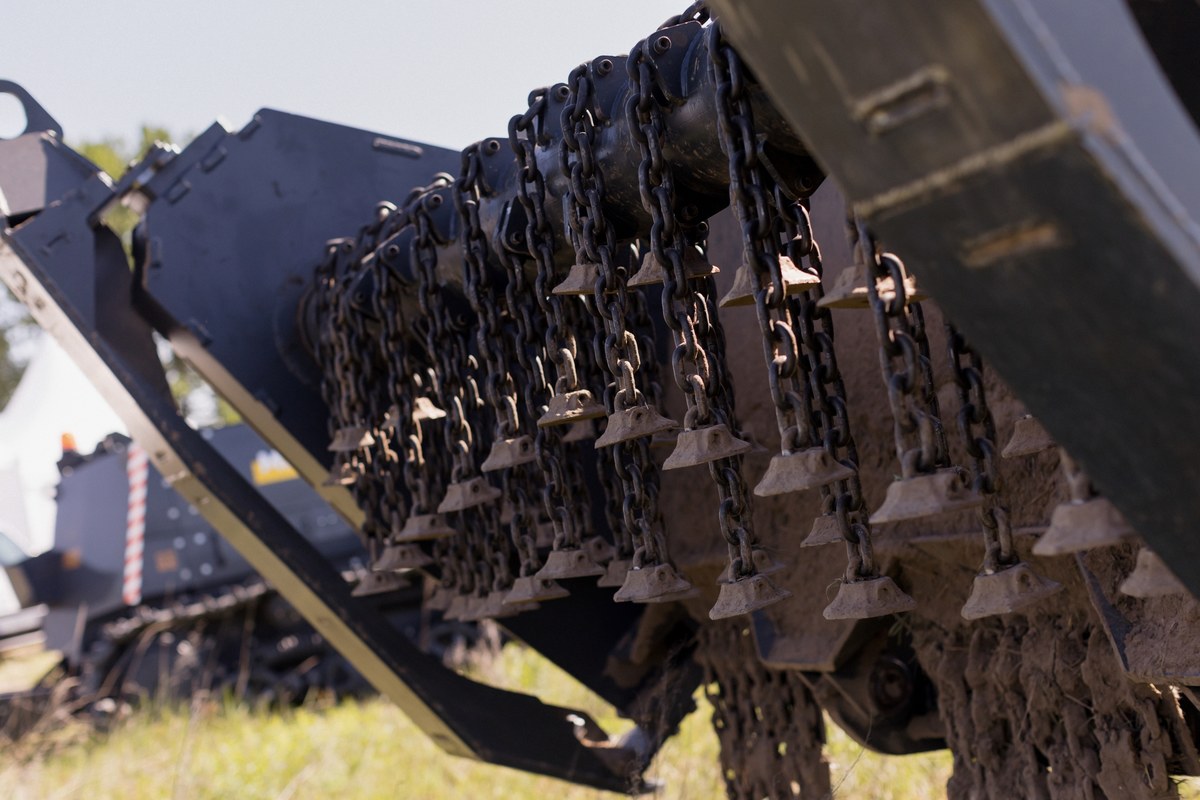
The first model was the MP.3100 soil preparation machine, then its continuation MP.3200 - it destroys tall vegetation and thus facilitates and accelerates the work of sappers. Modern analogues are often concentrated on classic milling machines. We have focused on adapting it specifically for humanitarian demining in Ukrainian field conditions - without excess weight, with the possibility of on-site repair and resistance to explosions.
This machine destroys anti-personnel mines without harming itself, and after being detonated on an anti-tank mine, it returns to work in 3-4 hours. Today, more than ten such machines are already in operation - this is a real result, not a concept.
— Did the first prototype meet your expectations? What had to be changed?
The first prototype showed that the direction was chosen correctly - the machine immediately performed its main functions. But, as is often the case in engineering, there is a long distance from "working" to "working reliably and safely."
First of all, we had to seriously improve mine resistance. In working conditions, any weak node is not just a repair, but a risk to life. We also significantly redesigned the remote control system: the basic version did not take into account some of the non-standard situations that arise in the field and did not fully compensate for the human factor.
Now the remote control system eliminates all known operator errors, adapts to the terrain and stabilizes operation even in difficult conditions. This is one of the key advantages over equipment that is manually controlled or has limited automation.
In other words, we didn't just make a "working prototype" - we came up with a reliable solution that is used today on the front lines of humanitarian demining.
— What were you guided by in the development process — perhaps you studied foreign models or used the experience of international experts?
Yes, we took a comprehensive approach to development. Engineers studied a wide range of international models — among serial demining machines alone, there are about 50 models, and this does not include experimental projects. Such a large selection indicates how complex and multifaceted this area is.
Thanks to international assistance and cooperation, many machines are already operating in Ukraine. Operators are familiar with their strengths and weaknesses, and it is this experience that we actively take into account in our developments.
We maintain close contact with both Ukrainian sappers (DSST, DSNS, Humanitarian Security, etc.) and international specialists working in the field of humanitarian demining, in particular FSD. Their openness and detailed feedback help us constantly improve our equipment, adapt the functionality to real needs and difficult working conditions.
This collaboration gives us an advantage over many competitors who do not have such deep and direct contact with users in the field.
— What does the engineering process look like today: how many iterations does each model go through, how is testing done?
Our engineering process is a constant movement. Each model goes through several iteration cycles, and this process is not linear: some solutions work immediately, but often one fix requires changes in adjacent systems - then larger changes begin.
Testing is comprehensive, from digital simulation, laboratory testing, to field testing in real mined areas. We carefully collect feedback from operators and use it to adjust the equipment.
This is a very dynamic and flexible process, where the speed of implementation of changes depends on the degree of complexity and criticality of the task. This approach allows us to maintain a balance between innovation, reliability and safety. And our own production base gives us the opportunity for rapid changes on site.
— How did cooperation with state authorities begin?
Our company constantly cooperates with state structures and authorities — both at the local and national levels — on humanitarian demining issues. We are actively involved in the process of optimizing and accelerating mechanized demining, in particular through the implementation of our technical solutions.
Our specialists constantly participate in the work of coordination bodies as experts. It is important to emphasize: there is a dialogue with the State, it is substantive. And most importantly, we are heard. The necessary changes are implemented promptly.
In general, the direction of humanitarian demining in Ukraine is developing rapidly. This is a response to the large-scale problem of mining.
At the same time, despite positive developments, the system is still in the process of formation. It is important that along with the development of approaches, coordination and standards, predictable and systematic financial support also grows - both at the level of state policy and in the context of specific programs. This is especially true for Ukrainian manufacturers, who have the potential to quickly scale up effective solutions. Supporting a national manufacturer is not only about the economy, but also about stability and security within the country.
The number of operators is constantly growing: if three years ago there were only a few, today there are already over 100, and this figure continues to grow. The fleet of vehicles for humanitarian demining is also expanding.
— Was the Kharkiv Regional State Administration the first to show initiative in cooperation?
Our cooperation began with an urgent need to quickly, effectively and safely demine the territories of the Kharkiv region mined by the occupiers. After the deoccupation of the region, a huge problem arose: it was necessary to return these lands to life as soon as possible. Tens of thousands of hectares turned out to be mined - agricultural lands, community territories, areas near power lines and other important objects.
At that time, there was a catastrophic shortage of both equipment and personnel. There were no mechanized demining equipment at all - an urgent solution was needed. The Kharkiv Regional Military Administration promptly responded to the challenge and turned to us with the initiative to create a specialized machine in the shortest possible time.
Within four months, our first machine went into the field — it demined the Kharkiv region. And today our machines continue this work. The head of the Kharkiv OVA, Oleg Synegubov, personally paid great attention to the issue of humanitarian demining, and thanks to the coordinated work of his team, the process in the region started quickly and with a focus on results. Subsequently, the Mine Action Coordination Center was created at the Kharkiv OVA, which also includes XTI Engineering.
— Why was your company chosen? Was there a tender or competition?
Our company was chosen due to its necessary competencies, experienced specialists, and willingness to work for results. We did not receive government funding for the development — the entire project was implemented with XTI Engineering's funds.
After completing the development, successful testing in real conditions, including with mine blasts, and passing certification, we began to participate in government tenders. We won some of them, so several of our machines were financed by the Kharkiv Regional Military Administration and transferred to the units of the State Emergency Service of Ukraine in the Kharkiv region. These were some of the first mechanized humanitarian demining vehicles in Ukraine.
It is worth noting separately that we also participate in and win tenders from international organizations.
— How did you start working with the Ministry of Defense? Was the process of obtaining approval, codification, and certification difficult?
We can't say much about it, but let's start by saying that humanitarian technology doesn't need codification.
At the same time, the entire certification process of our equipment — from laboratory tests to field tests with explosions (5 explosions equivalent to 6 kg of TNT) — was carried out with the participation of specialists from the Ministry of Defense.
The Ministry of Defense structures were actively involved in the process: they provided consultations, professional support, and pointed out important nuances, as this was our first such experience. We highly appreciate the constructive assistance from the Ministry of Defense in certification and testing.
Currently, we are also participating in events organized by the Ministry of Defense, in particular, at a specially created innovation testing ground in western Ukraine.
— How bureaucratized is the overall path of introducing innovations into state defense procurement?
We positively assess the experience of cooperation with state bodies, ministries and departments. We can confidently say that the state is really interested in the development of innovations. We feel this in our daily work and see in practice how new solutions are implemented in real processes.
Our company has the opportunity for open dialogue with high-level government officials: we can convey our vision, discuss, and debate.
We would like to separately note positive changes in the certification procedure - it has become much simpler and more unified with global standards. This applies to both our developments and solutions from other Ukrainian manufacturers.
XTI Engineering is a small company, but we constantly feel support from the state. We would especially like to note the constructive cooperation with the Ministry of Economy of Ukraine, the Ministry of Defense, the Ministry of Strategic Industry, the State Emergency Service and other structures.
We are sincerely grateful for this support — it allows us to move forward, innovate, and develop Ukrainian solutions to important challenges.
— What solutions are currently available in the XTI Engineering line? What is the difference between the MP.3200 and the GART 5100?
Our line currently includes several key models that cover different stages and tasks of humanitarian demining.
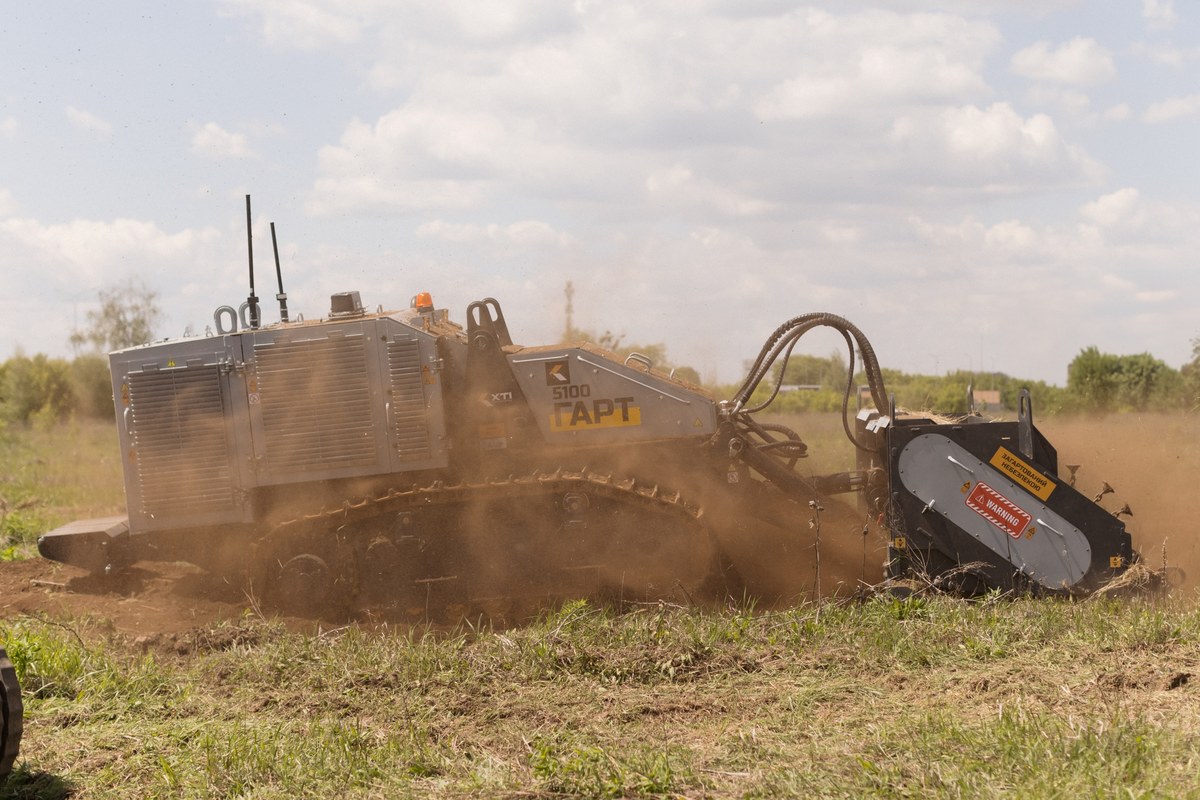
The MP.3200 is a machine for preparing the soil. It is not specialized in the destruction of mines, but in fact it also performs this function. In the deoccupied territories, the land is often overgrown with bushes, under which mines are hidden, and there may be stretch marks above the branches - it is very dangerous for a sapper there. The MP.3200 moves at a speed of up to 6 km/h, simultaneously destroying vegetation and mines, which greatly facilitates and accelerates the subsequent manual work of sappers who check the soil with a metal detector and neutralize the detected ERW.
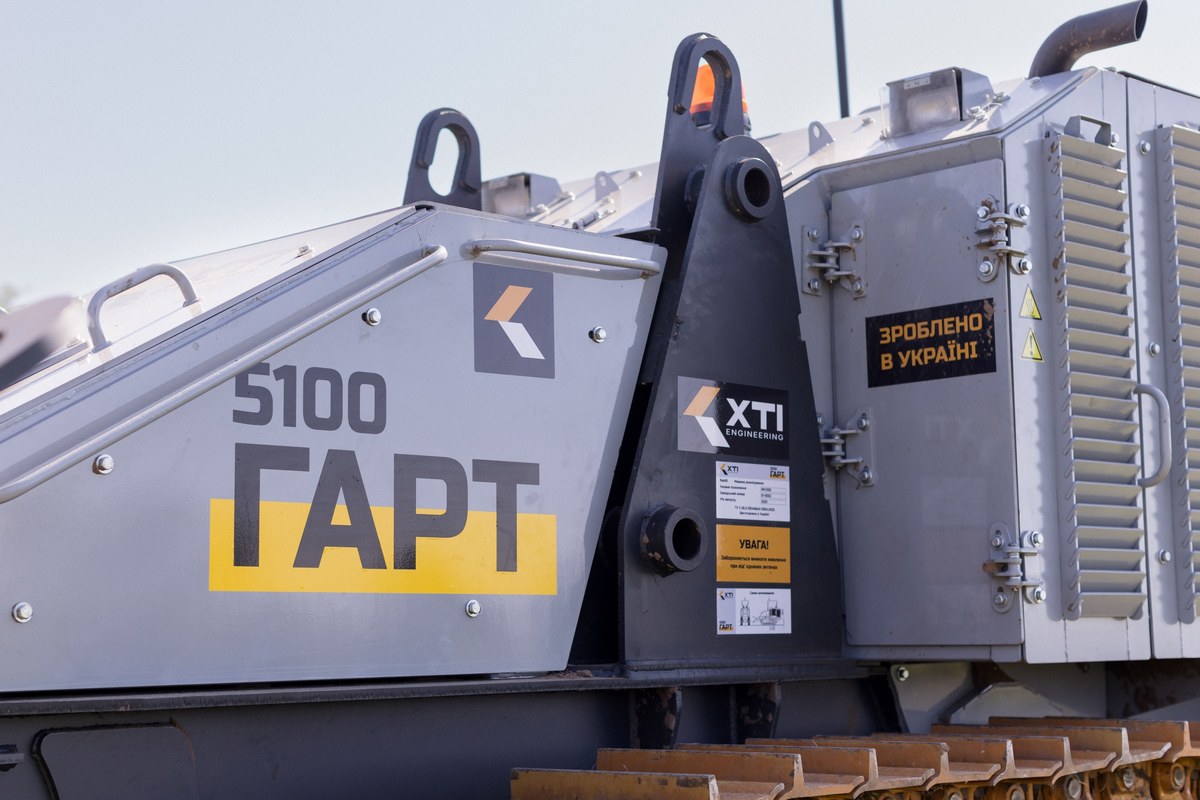
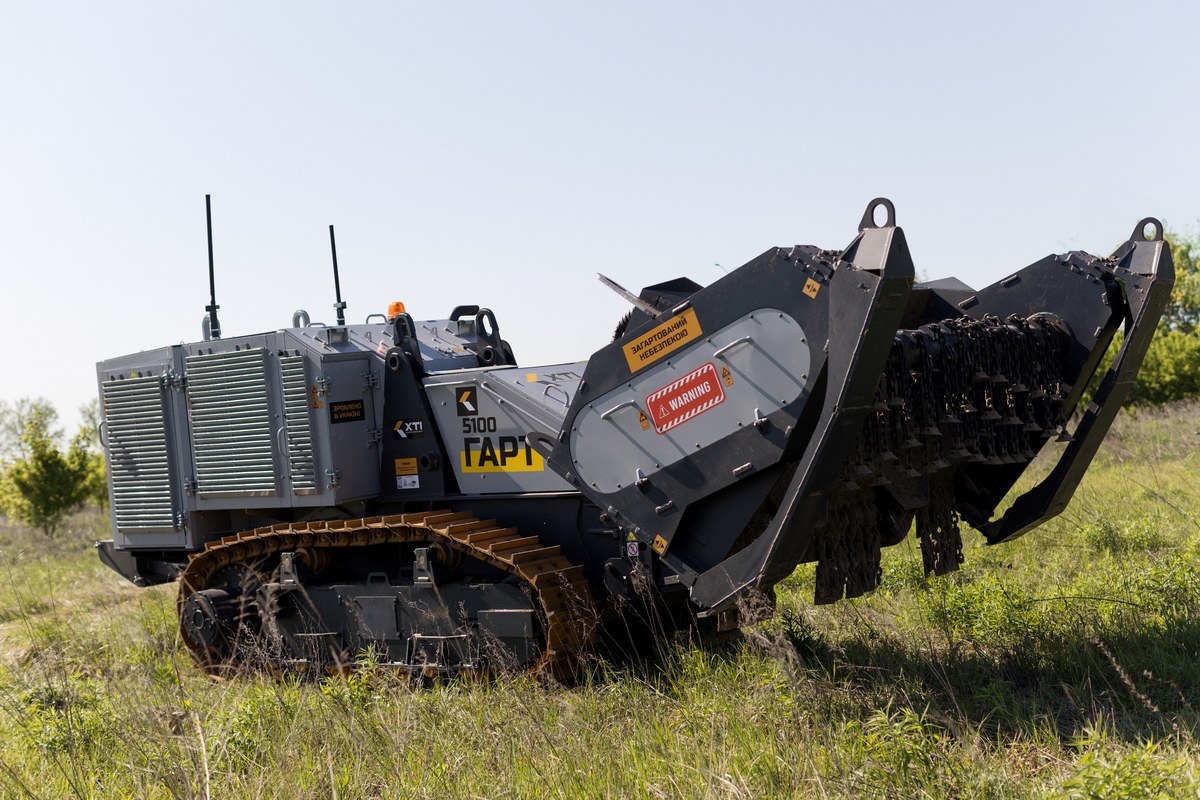
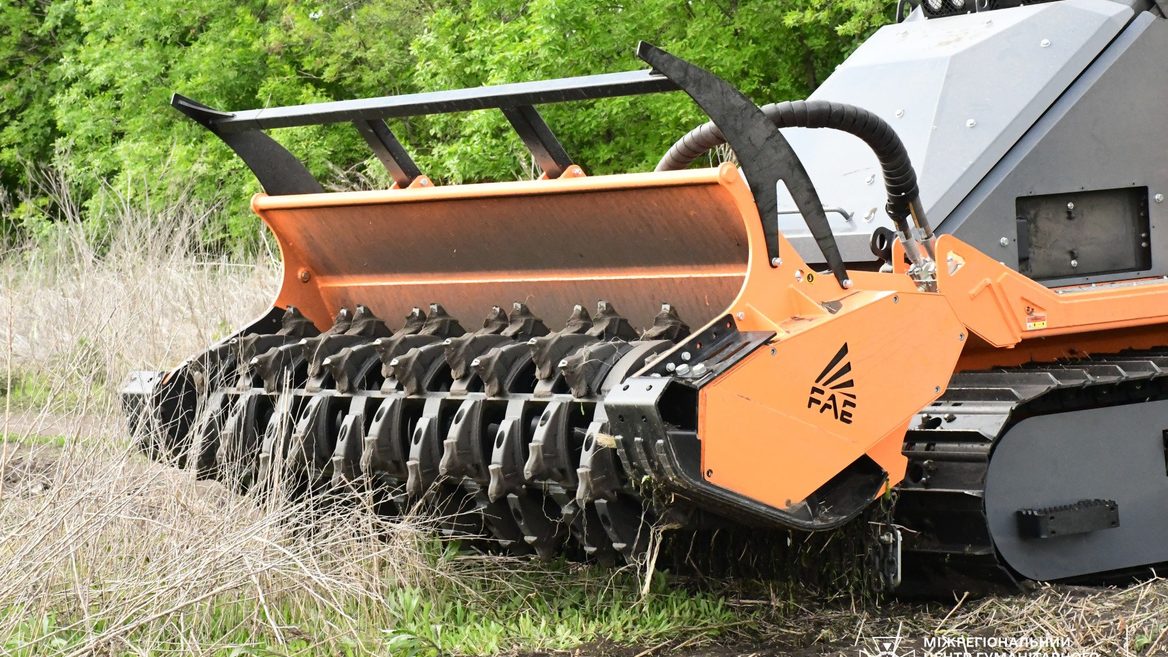
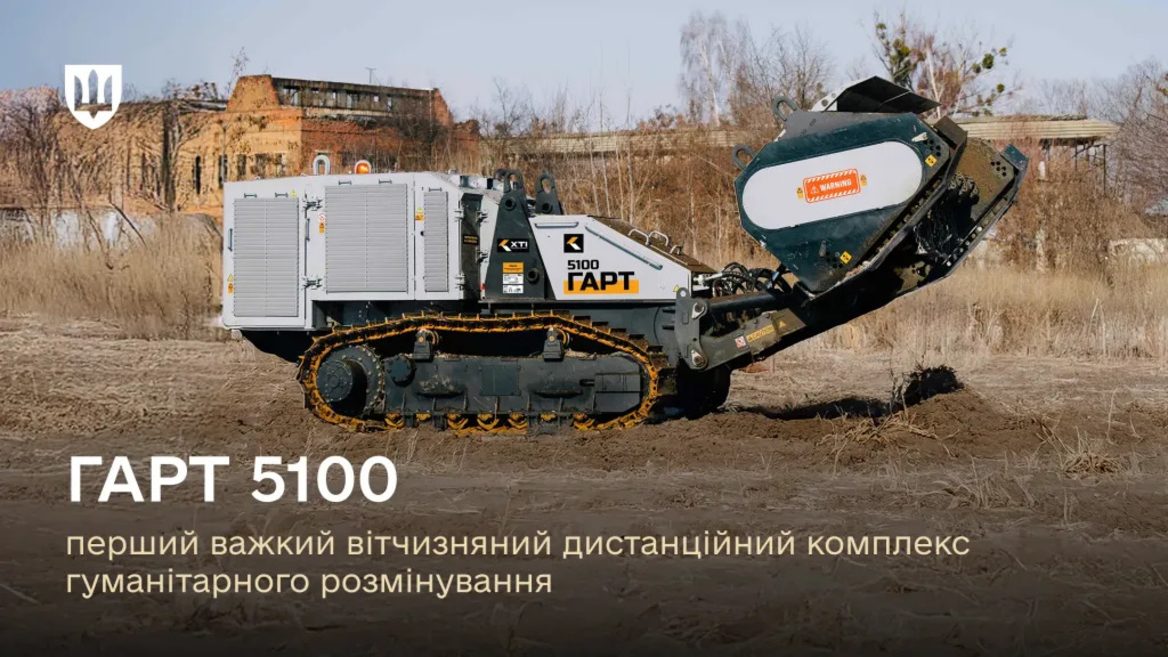
The GART 5100 is a heavy humanitarian demining complex that is specifically designed to destroy all types of explosive ordnance (EOD) at depths of up to 30 cm, while simultaneously dealing with vegetation. This process is slower and more energy-consuming, but also more comprehensive and safer, as the machine directly performs the demining.
We have an emphasis on the speed and practicality of the first machine (MP.3200), which ensures a safe and effective start of work in difficult conditions, and the second model (GART 5100) is a more in-depth and technically advanced development for large-scale demining, which allows working with different types of mines with high accuracy. This combination of two approaches makes our line more flexible and adaptable to the different needs of humanitarian demining operators.
The GART 5100 is a fundamentally new machine, developed from scratch. It is not an evolutionary development of the MP.3200, but rather a separate solution that meets other demining tasks and requirements. This allows it to perform more complex functions of deep and comprehensive demining of explosive objects, unlike the MP.3200, which focuses more on soil preparation and rapid clearance of areas from vegetation and some types of mines and cordons.
— How much does one unit of GART 5100 cost? What is the operating cost?
The nominal cost of one unit of the GART 5100 is about $500,000. The cost of ownership of this machine is significantly lower than that of foreign counterparts, making it a more profitable solution for humanitarian demining operators.
— Do you plan to update existing models or develop new ones? What areas are you considering (sapper, assault, transport platforms)?
Of course, we are not stopping at what we have already achieved - we are constantly working on improving existing models and developing new ones. The current priority is to create a small-class humanitarian demining vehicle that will complement our line and meet the needs for more mobile and compact solutions.
— You plan to produce 16 units of GART 5100 by the end of the year. Are these already contracted volumes or just production potential?
These are our plans for the near future and preliminary agreements with partners. At the same time, we continue to work on expanding production capacities to accelerate the demining of Ukrainian lands.
— How protected is production from hostile influences? Are there any plans to relocate or disperse capacity?
It is impossible to talk about complete safety at the moment, because the country is at war, and no production facility can be 100% protected from risks. As for the location of our facilities and the composition of the team, we do not comment on this issue. At the same time, our production is decentralized, and we constantly take all necessary measures for the safety of our personnel and the preservation of production facilities.
As with all Ukrainian manufacturers, our main risks are the challenges of war: logistical instability, power outages, and difficulties with material supplies. We are working to minimize these risks, but they cannot be completely avoided at this time.
— 80% of production consists of Ukrainian components. Which components still depend on imports?
The main import-dependent components are the internal combustion engine and hydraulic transmission. We manufacture other parts of our machines in Ukraine.
— How big is the market for automated demining machines in Ukraine now? Do you keep in touch with other manufacturers?
The market for automated demining machines in Ukraine is currently in a stage of active development, and we are an active part of it.
There are indeed several excellent companies in Ukraine that work in the field of automated demining systems, and we maintain friendly professional contacts with them.
However, the GART 5100 is a unique development of XTI Engineering, the only Ukrainian demining machine in its class that we have launched into mass production.
— What is the situation with the demand for humanitarian demining vehicles in the world? Do you plan to export?
The demand for humanitarian demining vehicles is growing worldwide, especially in regions where conflicts are ongoing or have recently ended. We plan to gradually enter international markets, as our developments already meet high standards and have confirmed certification.
Export is a logical step for the company's development, and we are actively working to establish cooperation with international partners and humanitarian demining operators.
— Who is already using or testing your machines?
Our machines are certified by the State Research Institute for Testing and Certification of Armaments and Military Equipment. More than 10 units of the serial model MR.3200 are operating in mined territories of Ukraine.
As for the GART 5100 demining complex, the first units are already being used in the Kharkiv region by the humanitarian demining operator "Humanitarian Security".
We continue to work on manufacturing new machines and providing them to other humanitarian demining operators in Ukraine.
— What are the company's plans for the near future?
The focus is on development, automation, and scaling. We are already creating new equipment, forming international partnerships, and preparing for the next stage of growth. In the coming years, we plan to strengthen our presence in the field of humanitarian demining, making innovations available in every region.
We want to be among those who are shaping a safe and technological Ukraine — together with the state, international partners, and business.